Foods to Avoid Before Your Baby's First Birthday
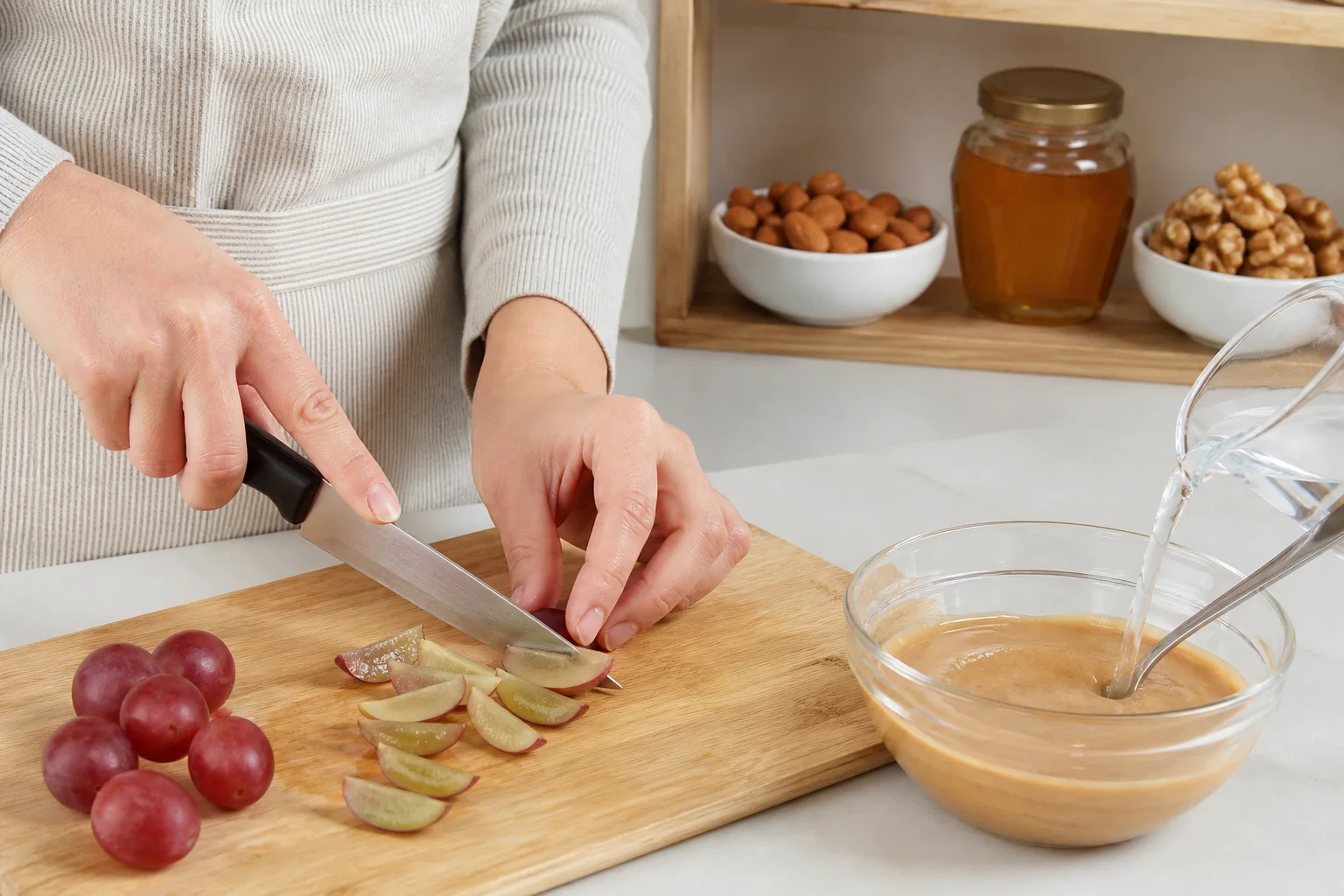
Avoid honey and cow’s milk as a main drink before 12 months. Choking prevention, food hygiene, and avoiding added salt and sugar remain important beyond the first birthday. Small amounts of milk in cooking are different from replacing a milk feed.
SUMMARY
Before 12 months, skip honey in any form (botulism risk), cow's milk as a drink (wrong nutrition for babies), choking hazards such as whole grapes, whole nuts, popcorn, and hot dogs, and added salt or sugar. Also avoid unpasteurized foods, high-mercury fish, and juice. Most of these have simple, safe swaps.
1. Honey, in any form
Why: honey can carry spores of Clostridium botulinum. An adult gut handles them without trouble. A baby's gut is not mature enough before 12 months, and the spores can grow and release a toxin that causes infant botulism, a rare but serious illness. Cooking and baking do not reliably destroy the spores, so this includes honey in baked goods, honey-sweetened cereals, and honey-based cough remedies.
Instead: mashed banana or a little puréed pear if you want sweetness. After the first birthday, honey is fine.
2. Cow's milk as a drink
Why: cow's milk is low in iron and vitamin E, high in protein and minerals that strain small kidneys, and it can irritate a young baby's gut lining. Given as a main drink before 12 months, it also crowds out breast milk or formula, which carry the right balance of nutrients.
Small amounts of pasteurized cow’s milk in cooking, plain whole-milk yogurt, and pasteurized cheese can be offered once solids start. These small servings do not replace breast milk or formula feeds. Cow’s milk as a main drink waits until 12 months.
3. Choking hazards
Why: babies do not chew well until well past their first birthday, and their airway is about the width of a drinking straw. Round, firm, or sticky foods are the most dangerous because they can lodge and block it completely.
| Avoid as-is | Safe version |
|---|---|
| Whole grapes, cherry tomatoes, blueberries | Quartered lengthwise, or mashed |
| Whole nuts, chunks of nut butter | Nut butter thinned with water or mixed into purée |
| Hot dogs, sausage rounds | Skip under 12 months, or cut into thin strips, never coins |
| Popcorn, hard candy, marshmallows | No safe version. Skip. |
| Raw carrot, apple, celery | Steamed until soft, or grated |
| Chunks of meat or cheese | Shredded, or cut into thin strips |
Keep your baby upright and stay close throughout meals. Learn infant choking first aid. If they cannot cough effectively, cry, or breathe, call emergency services and act immediately.
4. Added salt and sugar
Salt: a baby's kidneys are small and cannot clear a lot of sodium. Guidance is under 1 gram of salt a day for babies under 12 months, which is easy to exceed with adult food. Skip salted stock cubes, soy sauce, processed meats, salty snacks, and adult ready meals. Cook your baby's portion without salt, then season your own.
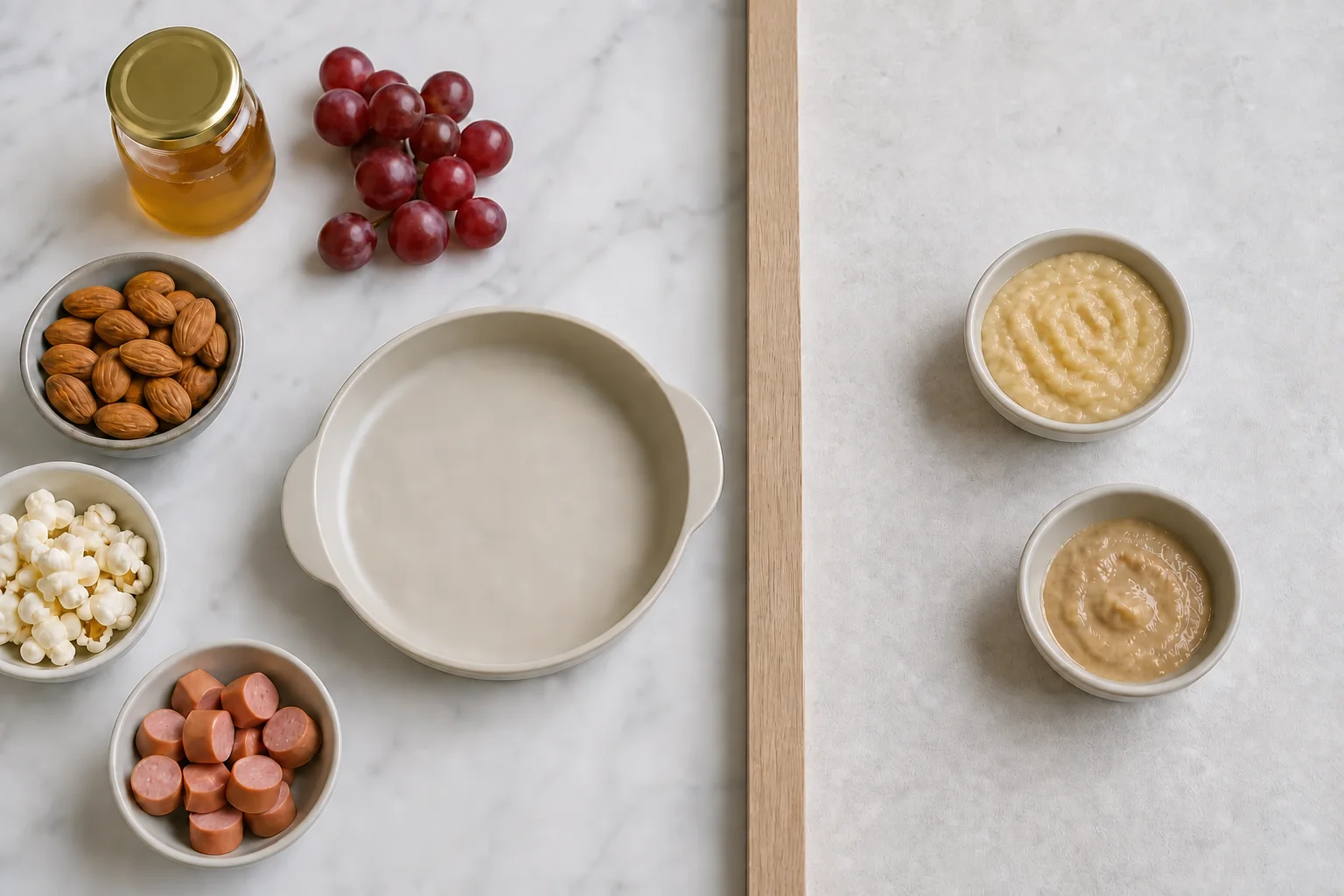
Sugar: added sugar builds a preference for sweet tastes and adds calories without nutrients. Skip sweetened yogurts, flavored cereals, biscuits, and anything with syrup. Fruit is fine. Juice is not needed at all under 12 months, and even after that, whole fruit is better.
5. Other items on the list
- Unpasteurized milk, cheese, or juice. Higher risk of harmful bacteria. Check labels.
- Raw or undercooked eggs, meat, fish, and shellfish. Cook thoroughly.
- High-mercury fish: shark, swordfish, king mackerel, bigeye tuna. Low-mercury fish such as salmon and cod, cooked well and checked for bones, are a good food.
- Rice drinks as a milk substitute (arsenic content).
- Whole cow's milk products marketed for adults with added flavors or sugars.
Common myths, briefly
- "A little honey in warm water soothes a cough." Not before 12 months. The risk does not depend on the amount.
- "Peanut and egg should wait until 1 year." Old advice. Current guidance introduces them around 6 months, in safe forms. See first foods and the 3-day rule.
- "Sugar-free means safe." Artificial sweeteners are also not recommended for babies.
When to call your pediatrician
After accidental honey exposure before 12 months, contact your pediatrician for advice. Constipation with weak crying, poor feeding, or floppiness needs prompt assessment; breathing difficulty or poor responsiveness needs emergency help. If choking prevents effective coughing, crying, or breathing, call emergency services and start infant first aid. The urgency after other foods depends on symptoms, not simply which food was eaten.
Frequently asked questions
Is cheese okay if cow's milk is not?
Yes. Small amounts of pasteurized cheese and plain yogurt are fine after solids start. The rule is about cow's milk as a main drink.
Can I use honey in baked goods?
No. Baking does not reliably kill botulism spores. Wait until after the first birthday.
Are eggs a choking hazard?
Well-cooked, mashed egg is safe and a good early allergen to introduce. Avoid large chunks of firm egg white.
Ready to build the "yes" list? Read baby's first foods and the 3-day rule. For the whole picture, see the first-month guide to starting solids.