Baby's First Foods: What to Feed First and the 3-Day Rule
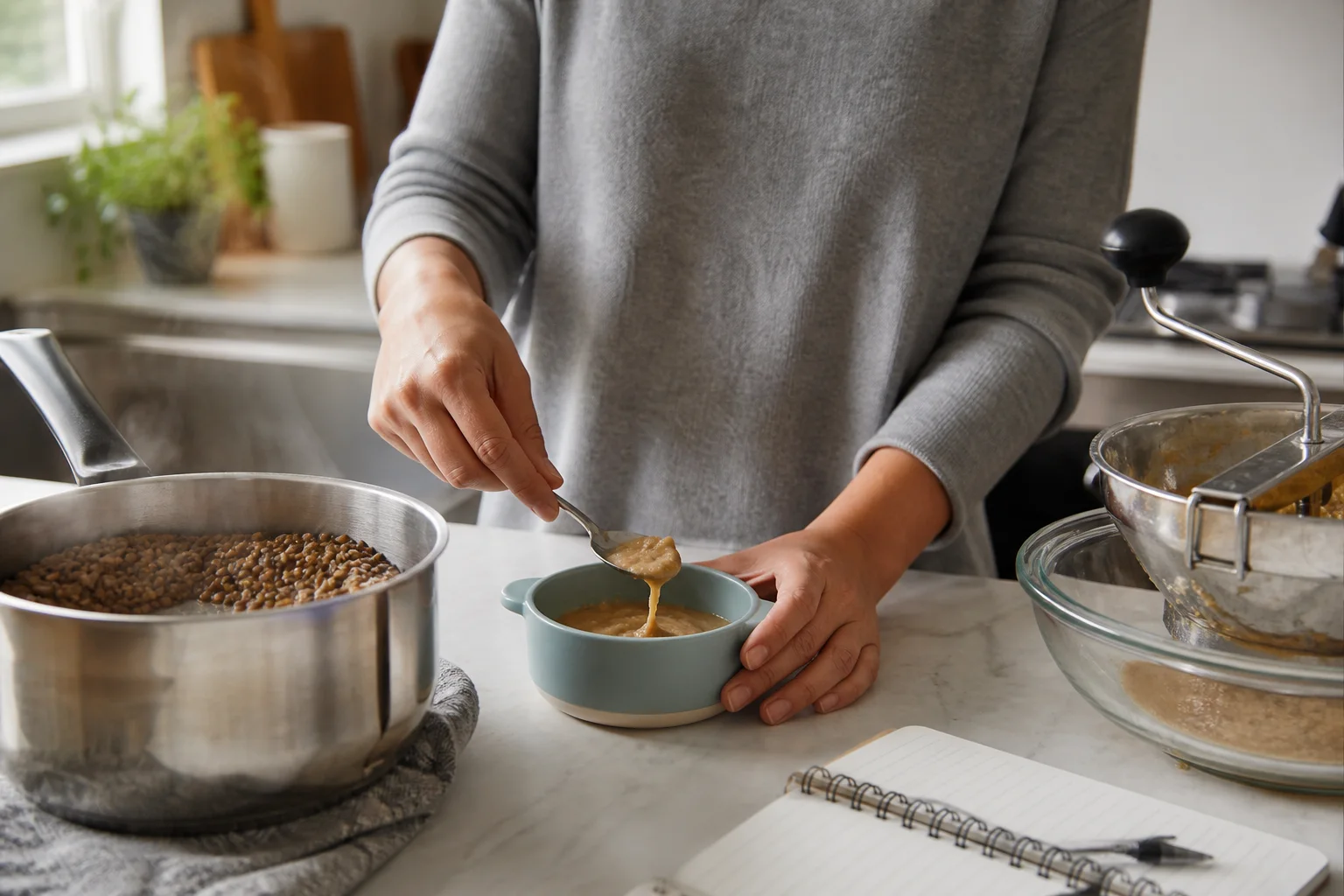
You have a ready baby, a tiny spoon, and a jar of something orange. Now the real question: which food goes first, and how do you know it is safe before you add the next one? The answer is simpler than the baby aisle makes it look.
SUMMARY
Start with single-ingredient foods, ideally something iron-rich such as iron-fortified infant cereal or puréed meat, then add mashed banana, sweet potato, or avocado. Introduce one new food at a time and wait 3 to 5 days before the next, so you can spot a reaction. Common allergens like peanut and egg can be introduced around 6 months, one at a time, unless your pediatrician says otherwise.
There is no single "correct" first food
Rice cereal was the traditional first food for decades. It is still fine, but it is not required. Current guidance from the AAP and CDC cares about three things: the food is a single ingredient, it is smooth enough to swallow, and it has no added salt or sugar. Any food that meets those three is a good first food.
One extra factor tips the choice: iron. A baby's iron stores from birth start to run low around 6 months, and breast milk alone is low in iron. That is why pediatricians suggest putting an iron-rich food early in the rotation, not necessarily first, but within the first couple of weeks.
Good first foods, and why
| Food | How to serve | Why it works |
|---|---|---|
| Iron-fortified infant cereal (oat, barley, multigrain, or rice) | Mix 1 teaspoon cereal with 4 to 5 teaspoons breast milk or formula. Thin, almost runny. | Easy iron. Familiar milk taste. |
| Puréed meat (chicken, beef) or lentils | Cook well, blend smooth with water or milk. | Iron that absorbs well, plus protein. |
| Mashed banana | Mash ripe banana with a fork. Thin with milk if needed. | Soft, no cooking, sweet enough on its own. |
| Sweet potato or carrot | Steam or bake, then purée. Freeze in ice-cube trays. | Mild, easy to batch, freezes well. |
| Avocado | Mash with a fork. | Healthy fat, no cooking. |
| Pear or apple | Cook until soft, then purée. | Gentle on the stomach. |
Vegetables first or fruit first? It does not matter much. The idea that fruit "spoils" a baby for vegetables is not supported by evidence. Offer both, and rotate.
The 3-day rule
Introduce one new food, then keep offering it for 3 to 5 days before adding the next new food. During that window, watch for:
- A rash, especially around the mouth or on the trunk
- Hives (raised, itchy welts)
- Vomiting or unusual diarrhea
- Swelling of the lips, face, or eyes
- Unusual fussiness or trouble breathing
If nothing happens, that food is cleared. Keep it in the rotation and feel free to combine it with other cleared foods. If something does happen, stop that food, note the date and symptoms, and call your pediatrician. Because you only added one thing, you know exactly what to report.
The rule is not about being slow for its own sake. It is about being able to name the cause. After the first month, once your baby has a base of 8 to 10 cleared foods, most families relax the spacing for low-risk foods like new vegetables.
Allergens: earlier than you might think
Older advice said to delay peanut, egg, and fish until after the first birthday. Research since 2015 shows the opposite: introducing these around 6 months, once a few basic foods are tolerated, lowers the chance of developing an allergy. Current AAP and NIAID guidance reflects this.
- Peanut: smooth peanut butter thinned with warm water or mixed into cereal. Never whole peanuts or spoonfuls of thick peanut butter, which are choking hazards.
- Egg: well cooked, mashed or blended into purée.
- Dairy: plain whole-milk yogurt or cheese is fine after solids begin. Cow's milk as a drink still waits until 12 months.
Introduce allergens one at a time, on the 3-day rule, and offer them at home during the day when you can watch. If your baby has severe eczema or a known egg allergy, talk to your pediatrician before the first taste. They may recommend testing or want the first exposure to happen in the office.
A sample two-week rotation
| Days | New food | Also offer |
|---|---|---|
| 1 to 3 | Iron-fortified oat cereal | — |
| 4 to 6 | Sweet potato | Cereal |
| 7 to 9 | Banana | Cereal, sweet potato |
| 10 to 12 | Puréed chicken or lentils | Any cleared food |
| 13 to 15 | Thinned peanut butter in cereal | Any cleared food |
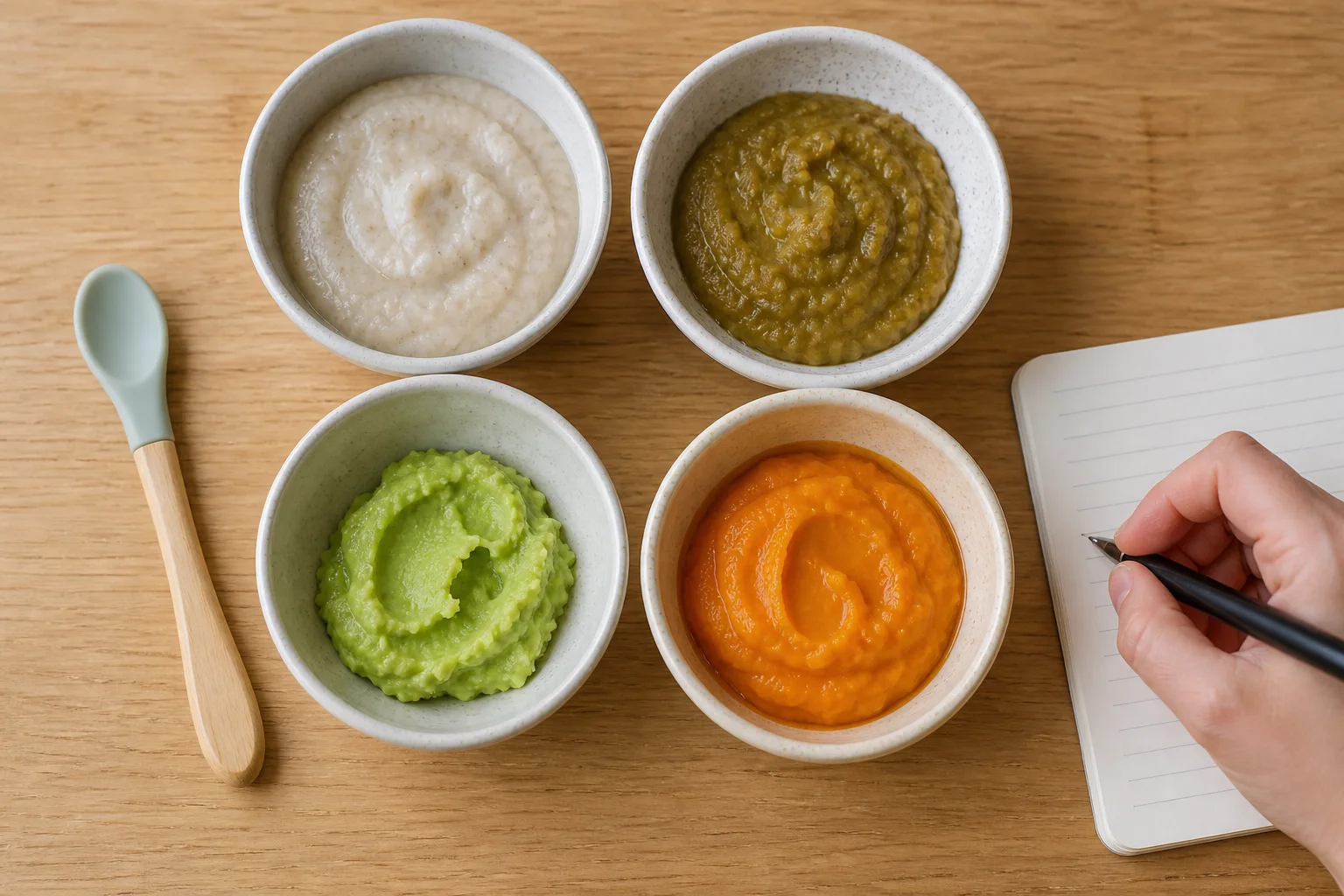
Keep a note on your phone: date, food, reaction. It takes ten seconds and makes any call to the pediatrician much shorter.
When to call your pediatrician
Call the same day for hives, swelling of the lips or face, repeated vomiting after a new food, or any trouble breathing. Trouble breathing is an emergency. Also ask before starting solids if your baby has severe eczema, a diagnosed food allergy, or a strong family history of allergy. Your pediatrician can tailor the order and timing of allergens for your baby.
Frequently asked questions
Do I have to start with rice cereal?
No. Any iron-fortified infant cereal or iron-rich purée works. Many pediatricians now suggest rotating grains instead of relying on rice alone.
Can I mix two cleared foods together?
Yes. Once each food has passed its own 3 to 5 days, combining them is fine. Only new foods need to be introduced alone.
Homemade or store-bought purée?
Either. Store-bought is convenient and safe. Homemade is cheaper and lets you control texture. Check store labels for added salt or sugar.
Not sure your baby is ready yet? Check the four readiness signs. For the whole picture, read the first-month guide to starting solids.
Sources
This article is general information for parents and is not medical advice. Every baby is different. Talk to your pediatrician about your baby's specific needs.