How Much Solid Food Should a 6-Month-Old Eat?

You made a whole bowl of purée. Your baby ate two spoonfuls and turned away. Did something go wrong? No. Two spoonfuls is the plan. Here is how much to offer in the first weeks, how often, and how to tell when your baby has had enough.
SUMMARY
Start with 1 to 2 teaspoons, once a day. Over the first month, work up to about 2 to 4 tablespoons per meal and add a second meal when your baby is eager. Breast milk or formula stays the main source of nutrition for the whole first year. Solids are for practice, not for filling up. Follow your baby's fullness cues and never try to finish the bowl.
Why so little at first
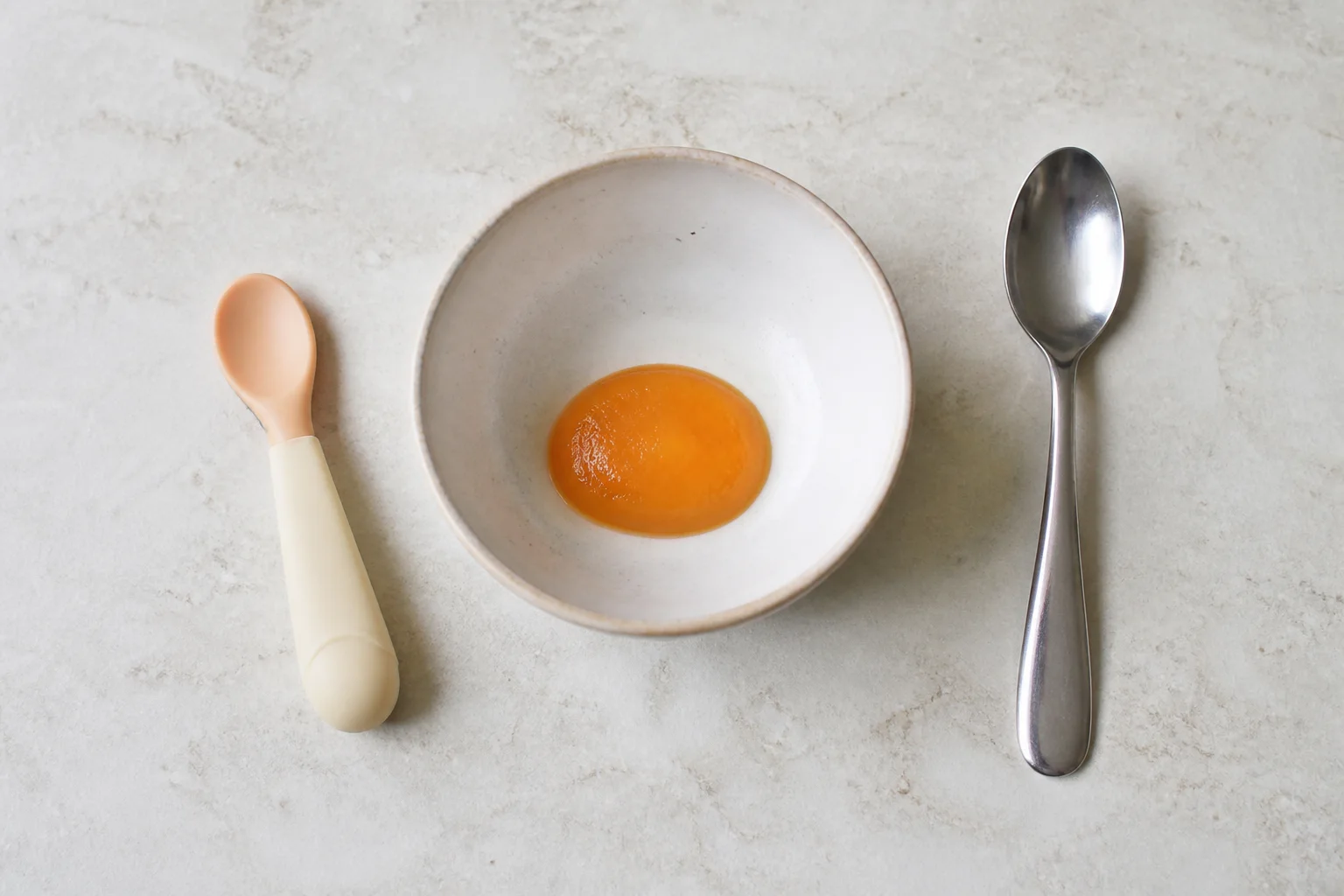
The first weeks of solids are not about calories. Your baby is learning a new physical skill: moving food from the front of the mouth to the back and swallowing it, instead of sucking. That takes practice, and practice comes in small doses. One or two teaspoons is enough for a full lesson. Offering more just means more on the bib.
It also protects milk intake. If solids fill your baby up, they drink less milk, and in the early months milk carries the nutrition that matters most. NHS and AAP guidance both frame early solids as "tastes" alongside milk, not a replacement for it.
Week-by-week: a rough guide
| Stage | Per meal | Meals per day | Notes |
|---|---|---|---|
| Week 1 to 2 | 1 to 2 teaspoons | 1 | Thin purée. Same time each day helps. |
| Week 3 to 4 | 1 to 2 tablespoons | 1 to 2 | Add a second meal if your baby leans in for more. |
| Month 2 of solids (about 7 months) | 2 to 4 tablespoons | 2 | Slightly thicker texture. Soft lumps are fine. |
| Month 3 of solids (about 8 months) | 4 to 6 tablespoons | 2 to 3 | Add soft finger foods. Milk feeds continue. |
These are ranges, not targets. Some babies eat at the top of the range from day one. Some take a month to get past a teaspoon. Both are normal. Your pediatrician tracks growth at each visit, and that is the number that matters, not the tablespoons.
How often, and when in the day
Once a day is enough to begin. Choose a time when your baby is alert and a little hungry but not upset. Many families pick mid-morning, about 30 to 60 minutes after a milk feed. A starving baby will not have patience for a spoon, and a full baby will not be interested. When your baby starts opening wide and finishing the first offering, add a second meal at a different time of day.
Milk first or solids first? In the first month, milk first. Solids come after, as an add-on. Later, once your baby is eating three meals a day, many families switch to solids first, then milk to top up.
Where the nutrition actually comes from
Through the whole first year, breast milk or formula remains the main source of calories, fat, and most nutrients. In the first weeks of solids, nearly all of your baby's energy still comes from milk. Solids slowly take a larger share over months 7 to 12, and by the first birthday, most babies get roughly half their calories from food. Do not cut milk feeds to "make room" for solids in the early months. Keep the usual milk schedule and add solids beside it.
Signs your baby has had enough
- Turns the head away from the spoon
- Closes the mouth or clamps the lips
- Pushes the spoon or the bowl away
- Gets distracted, plays with food, or fusses
- Slows down noticeably
Any of these means stop, even if the bowl is mostly full. Responsive feeding, which means following these cues instead of a target amount, is linked to healthier eating habits later. The bowl is not the goal. The skill is.
Signs your baby wants more
- Leans toward the spoon
- Opens wide before the spoon arrives
- Reaches for the bowl
- Fusses when the spoon goes away
Offer another spoonful. If this happens every day for a few days, move up a step in the table.
When to call your pediatrician
Bring it up if your baby refuses all solids past 7 months, if weight gain has slowed on the growth chart, if your baby is drinking much less milk after starting solids, or if you notice repeated vomiting or hard, painful stools after meals. Your pediatrician can check growth and adjust these general amounts to fit your baby.
Frequently asked questions
Should I reduce milk when solids start?
Not in the first months. Keep milk feeds the same and add solids alongside. Milk naturally decreases later as food takes a bigger share.
My baby ate a lot on day one. Is that a problem?
No, as long as milk intake stays normal and they seem comfortable. Some babies take to solids quickly. Just do not push past fullness cues.
How much water should a 6-month-old drink?
A few sips from an open cup with meals is fine once solids start. Milk is still the main drink. Juice is not needed under 12 months.
Wondering what to put in those two teaspoons? See baby's first foods and the 3-day rule. For the whole picture, read the first-month guide to starting solids.
Sources
This article is general information for parents and is not medical advice. Every baby is different. Talk to your pediatrician about your baby's specific needs.