Baby Bottle Refusal: Before Returning to Work

Offer when calm, not very hungry or full. Stop when your baby refuses.
SUMMARY
- Start with a small amount of breast milk or infant formula and offer more if hunger cues continue.
- UK guidance says a baby aged 6 months or older who can drink breast milk or infant formula from a cup may not need a bottle.
- Seek urgent medical advice if your baby is not feeding, has fewer wet nappies than usual or seems unusually drowsy.
For caregivers of babies in their first year preparing for time apart at work, the immediate question is how the baby will take milk with another caregiver.
Start with a calm opportunity
A breastfed baby may need time to learn bottle feeding. Consider starting pumping and bottle practice a few weeks before returning to work.
Once breastfeeding is going well, try expressed milk in a bottle offered by another trusted adult. Look for rooting, hand sucking or mouth opening; soothe a crying baby before offering a feed.

Offer, then follow your baby
Hold your baby semi-upright, close to you, with the head supported. Touch the teat to the lips and wait for your baby to open their mouth and draw it in.

Keep the bottle almost horizontal, only slightly tipped, to avoid milk flowing too quickly. Allow breaks and stop when sucking stops or your baby turns away, even if milk remains.
Respond to hunger cues instead of delaying milk to make your baby hungrier. Forcing feeds can distress babies.

Check the flow before buying more
Coughing, gulping, milk spilling or pulling away can mean the teat flow is too fast. Replace a blocked teat and ask a feeding professional for help if the flow remains difficult to manage.
Never prop a bottle or leave your baby alone with it, because they may choke. Use only breast milk or infant formula in the bottle; do not add cereal or food. Never dilute formula to make it easier to accept.
Could a cup be the alternative?
UK guidance says a baby aged 6 months or older who can drink breast milk or infant formula from a cup may not need a bottle. For a younger baby or one with feeding or medical difficulties, agree an alternative feeding plan with a clinician or feeding specialist.

Prepare the caregiver and your workday
Before returning, arrange a private pumping space, breaks, milk storage and a way to clean pump parts. While apart, try to express as often as your baby normally drinks breast milk to support your supply.
Label expressed milk with your baby’s name and the expression date, and check the caregiver’s storage rules. Breast milk may be offered cold or at room temperature; never microwave it because hot spots can burn the mouth. Clean pump parts that touch breast milk after every use.
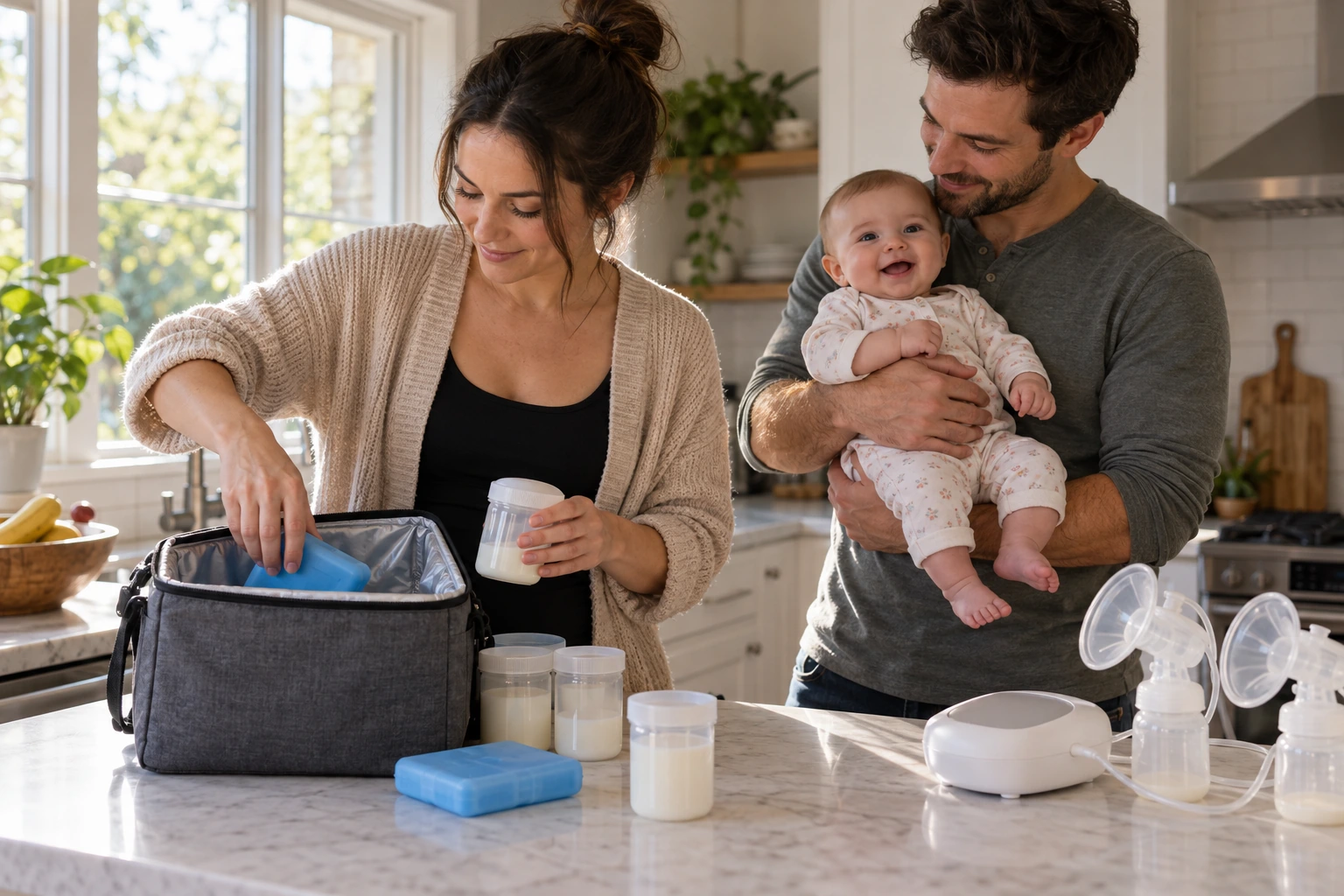
For the handover, share the milk being offered, the position and teat that seemed comfortable, the baby’s pause signals, and who to call if feeding fails. Walk through the plan together before the first workday.
When refusal needs medical help
Ask a clinician for advice if refusal persists, feeds seem painful or vomiting keeps interrupting feeds. Seek urgent medical advice if your baby is not feeding, has fewer wet nappies than usual or seems unusually drowsy.
Breathing trouble needs emergency help. Call your local emergency number if your baby has blue or grey lips or is difficult to wake.
Questions before the first workday
Do I have to switch to formula for work?
You can continue breastfeeding after returning to work and use expressed breast milk for bottle feeds while apart.
Is there a bottle that works for every baby?
There is no evidence that one bottle or teat type is best for all babies.
Sources
- NHS — How to combine breast and bottle feeding
- NHS — Bottle feeding advice
- Office on Women’s Health, U.S. Department of Health and Human Services — Breastfeeding and going back to work
- Office on Women’s Health, U.S. Department of Health and Human Services — Pumping and storing breastmilk
- NHS — Dehydration