Breast Milk Storage: Fridge to Thawed Feed
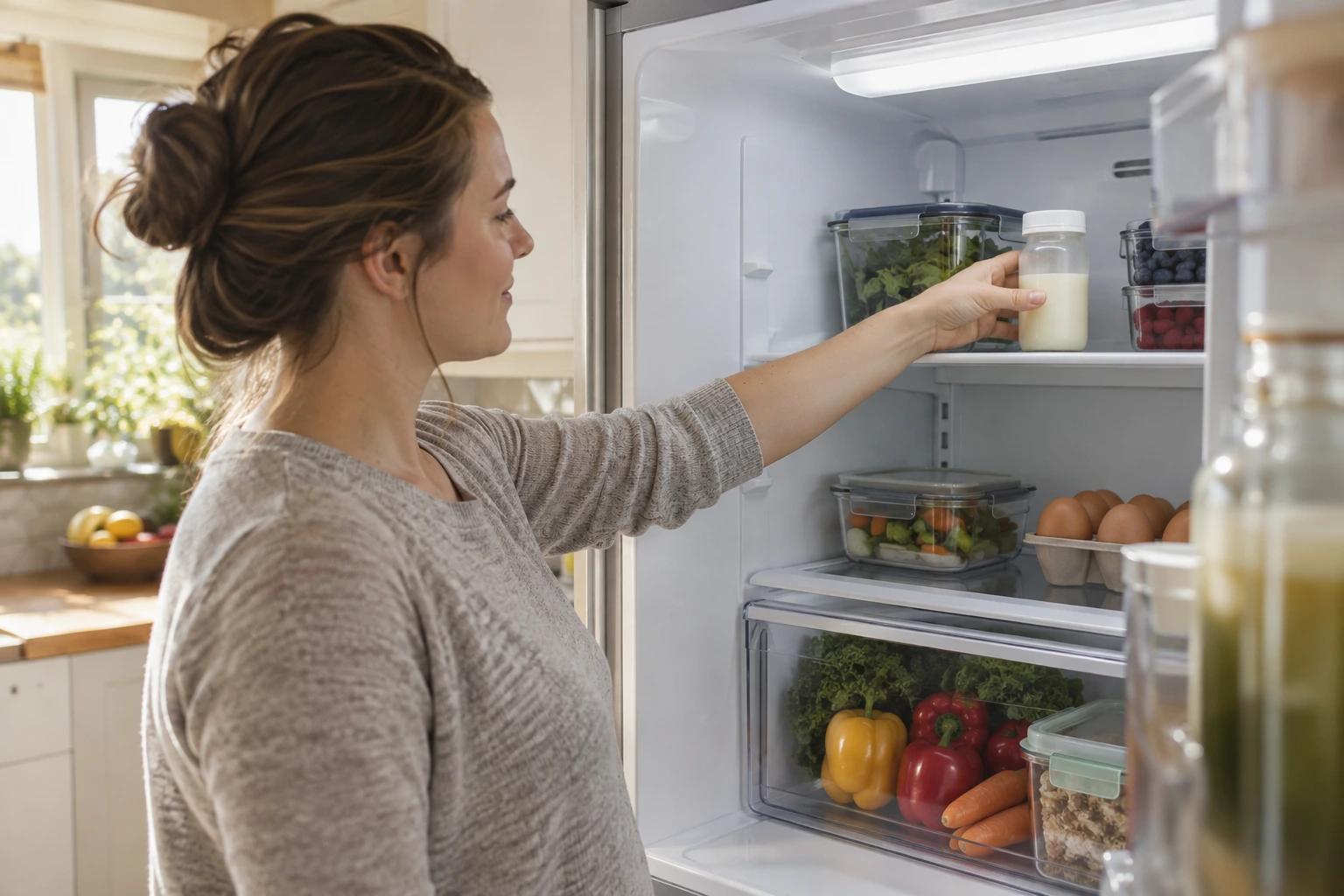
One container can carry several dates: expression, freezing, complete thawing, and warming. This guide helps you read that history before choosing the next step, with a shared record for everyone who handles your baby’s milk.
SUMMARY
Freshly expressed milk can be refrigerated at 4°C (40°F) or below for up to 4 days. S01 · CDC / Washington DOH S07 · HHS S08 · New York DOH
For healthy full-term babies, use refrigerated milk within twenty-four hours of complete thawing. S01 · CDC / Washington DOH S07 · HHS S05 · Minnesota DOH
Once warmed or brought to room temperature, use within two hours. S01 · CDC / Washington DOH S07 · HHS
Never refreeze completely thawed milk. S01 · CDC / Washington DOH S04 · Ochsner Health
Know which milk and which guidance you have
This guide is for adults caring for a baby under one year and covers milk expressed for that baby at home. It follows the US CDC framework throughout, including in the Korean and Japanese editions. Start with the container in front of you: was the milk freshly expressed, previously frozen, already warmed, or offered in a bottle? Those descriptions determine which row of the table is relevant. A date alone does not tell the whole story. The examples below show how to put the relevant event and time beside that date, so the next caregiver can follow the same reasoning.
These home-storage limits are for healthy, full-term babies; ask your pediatrician or baby’s care team for an individual plan if your baby was premature or is unwell. S05 · Minnesota DOH
Follow the storage temperature limits and keep hands, containers, and pump parts clean when expressing and handling milk. S01 · CDC / Washington DOH S03 · CDC / Washington DOH
If your baby was premature or has other health concerns, ask the care team whether extra pumping and handling precautions are needed. S03 · CDC / Washington DOH
Storage times belong to specific conditions
Read across each row as one instruction: milk state, temperature or event, and time limit belong together. The refrigerator row is for fresh milk; the thawed-milk row describes milk that was frozen before. Keep those labels visible if you copy the table onto a household note. The freezer recommendation also distinguishes a preferred period from an acceptable maximum. It is not a request to build a large freezer reserve. Use the table to plan the milk you actually intend to offer, whether that is one container for a short separation or several containers for a workday.
| Milk state | Conditions and limit |
|---|---|
| Fresh, room temperature | Freshly expressed milk can stay at room temperature of 25°C (77°F) or below for up to 4 hours. S01 · CDC / Washington DOH S07 · HHS |
| Fresh, refrigerated | Freshly expressed milk can be refrigerated at 4°C (40°F) or below for up to 4 days. S01 · CDC / Washington DOH S07 · HHS S08 · New York DOH |
| Frozen | At −18°C (0°F) or below, using frozen breast milk within 6 months is best, and up to 12 months is acceptable. S01 · CDC / Washington DOH S07 · HHS |
| Completely thawed, refrigerated | Use refrigerated milk within 24 hours of complete thawing. S01 · CDC / Washington DOH S07 · HHS |
| Warmed or room temperature | Once warmed or brought to room temperature, use within 2 hours. S01 · CDC / Washington DOH S07 · HHS |
| Bottle leftovers | Use milk left in a bottle within 2 hours after your baby finishes feeding, then discard any remaining milk. S01 · CDC / Washington DOH S07 · HHS |
When more than one limit applies, use the earliest deadline rather than adding the time limits together. S01 · CDC / Washington DOH
Prepare the container before the milk
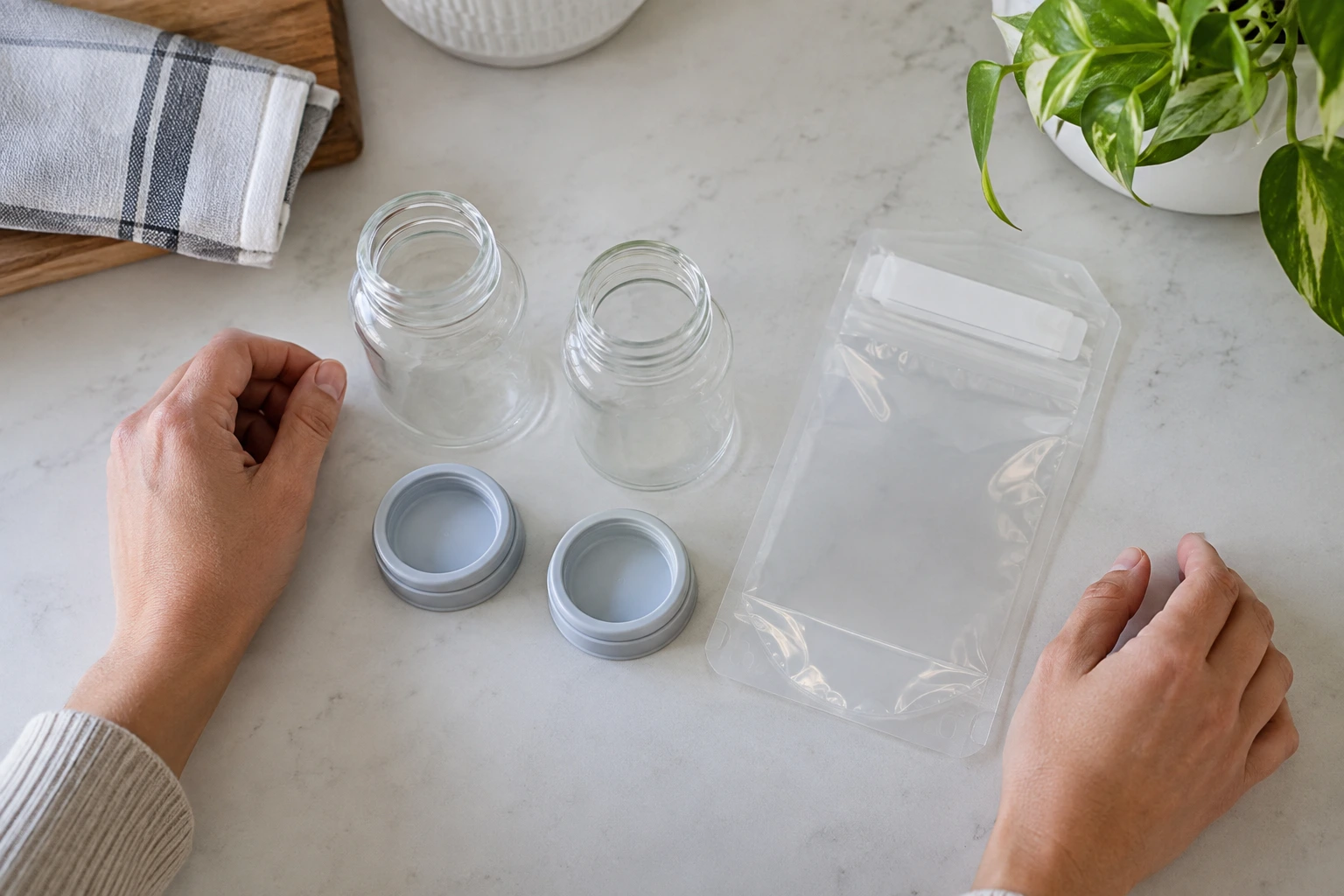
Set out the storage container and its matching lid before starting. The useful question is whether you know what each item is intended for, not whether the setup looks like a product photograph. Read the packaging for the storage bag or container you already own. A purpose-made milk bag and an ordinary kitchen bag can look similar at a glance. For a shared household routine, agree where clean equipment belongs and who will put it away after drying. This keeps the preparation steps separate from the later decision about how long a particular container has been stored.
Wash your hands with soap and water for 20 seconds before using the pump. S03 · CDC / Washington DOH
Use breast-milk storage bags or clean, food-grade glass or plastic containers with tightly fitting lids. S01 · CDC / Washington DOH
Do not store milk in disposable bottle liners or plastic bags not designed for breast-milk storage. S01 · CDC / Washington DOH
Make the refrigerator record unambiguous
A label reading only “Monday” leaves several questions open: the expression time, whether another batch was added, and whether the milk has ever been frozen. A more useful entry might identify the container as fresh milk and pair the calendar date with the expression time. This is an organizational example, not a new storage allowance. A phone note, paper log, or removable label can all hold the same information. Choose a format everyone handling the milk can find, rather than a detailed system that only the pumping parent understands. Check the appliance reading as well as the written date.
After pumping, seal the container, label the expression date and time, and put it straight into a refrigerator, freezer, or cooler with ice packs. S03 · CDC / Washington DOH
Store milk inside the refrigerator or freezer rather than in the door, where opening and closing causes temperature changes. S01 · CDC / Washington DOH S07 · HHS
Use an appliance thermometer to check storage temperature, especially when the appliance does not display a temperature. S08 · New York DOH
Freeze for an actual future feed
Freezing is a planning choice, not a final rescue step for an unidentified bottle at the back of the fridge. Consider which containers are likely to be used soon and which are intended for later. Marking that choice at the time of expression makes the record easier to follow. The amount in a storage portion is not a feeding target for every baby. It is simply how you divide the milk you have. Leave the original expression information available even when you add a freezing date, and keep that history if the bag moves to a different freezer.
If you do not expect to use fresh milk within 4 days, freeze it promptly rather than waiting until the end of the refrigerator limit. S01 · CDC / Washington DOH
Freeze milk in small portions, such as the amount usually offered at one feeding, to reduce waste. S01 · CDC / Washington DOH S02 · Children’s Health
Leave about 1 inch (2.5 cm) of space at the top because milk expands when frozen. S01 · CDC / Washington DOH S07 · HHS
Keep the expression date on the label and choose the oldest stored milk first when planning what to thaw. S01 · CDC / Washington DOH
Use freshly expressed milk refrigerated at 4°C (40°F) or below within 4 days; discard it if that limit has passed. S01 · CDC / Washington DOH
Start the clock at complete thawing
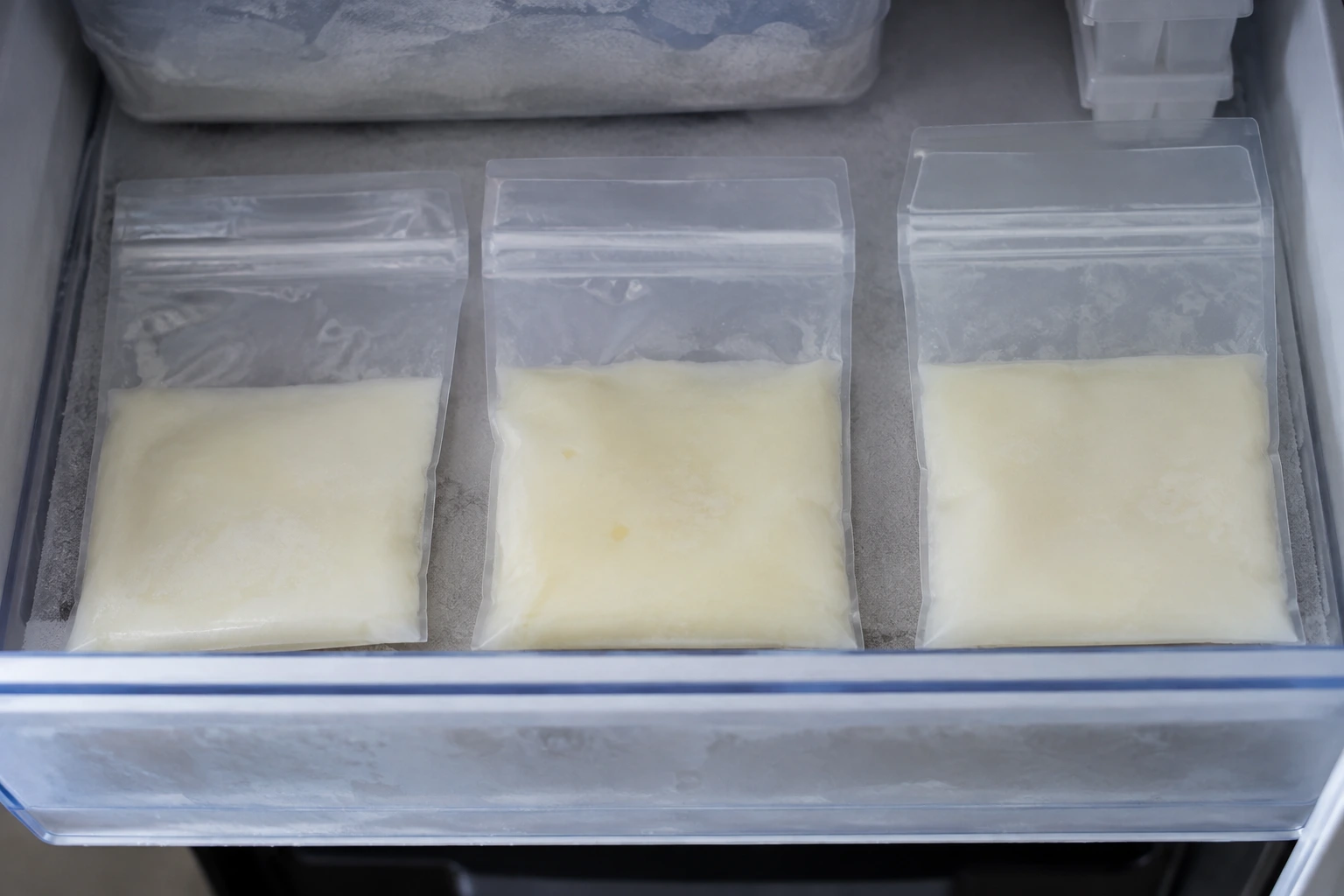
Taking a bag out of the freezer and finding it completely liquid are different events. In your log, give them separate names. An entry such as “moved to refrigerator” records a transfer, whereas “completely thawed” records the event that starts the refrigerated thawed-milk limit. Do not fill in a precise thawing time simply because you first noticed the bag later. The worked example assumes that the complete-thaw time is known. It illustrates the calculation; it does not tell you how long your own bag will take to thaw, or guarantee that every refrigerator behaves identically.
Choose the oldest stored milk first when planning what to thaw. S01 · CDC / Washington DOH S07 · HHS
Thaw milk overnight in the refrigerator, in warm or lukewarm water, or under lukewarm running water. S01 · CDC / Washington DOH
The 24-hour refrigerated limit starts when thawing is complete, not when the milk leaves the freezer. S01 · CDC / Washington DOH S07 · HHS
For example, milk known to have completely thawed at 08:00 on Tuesday must be used by 08:00 on Wednesday if it stays refrigerated. S01 · CDC / Washington DOH
Use refrigerated milk within 24 hours of complete thawing. S01 · CDC / Washington DOH S07 · HHS
Warming changes the next decision
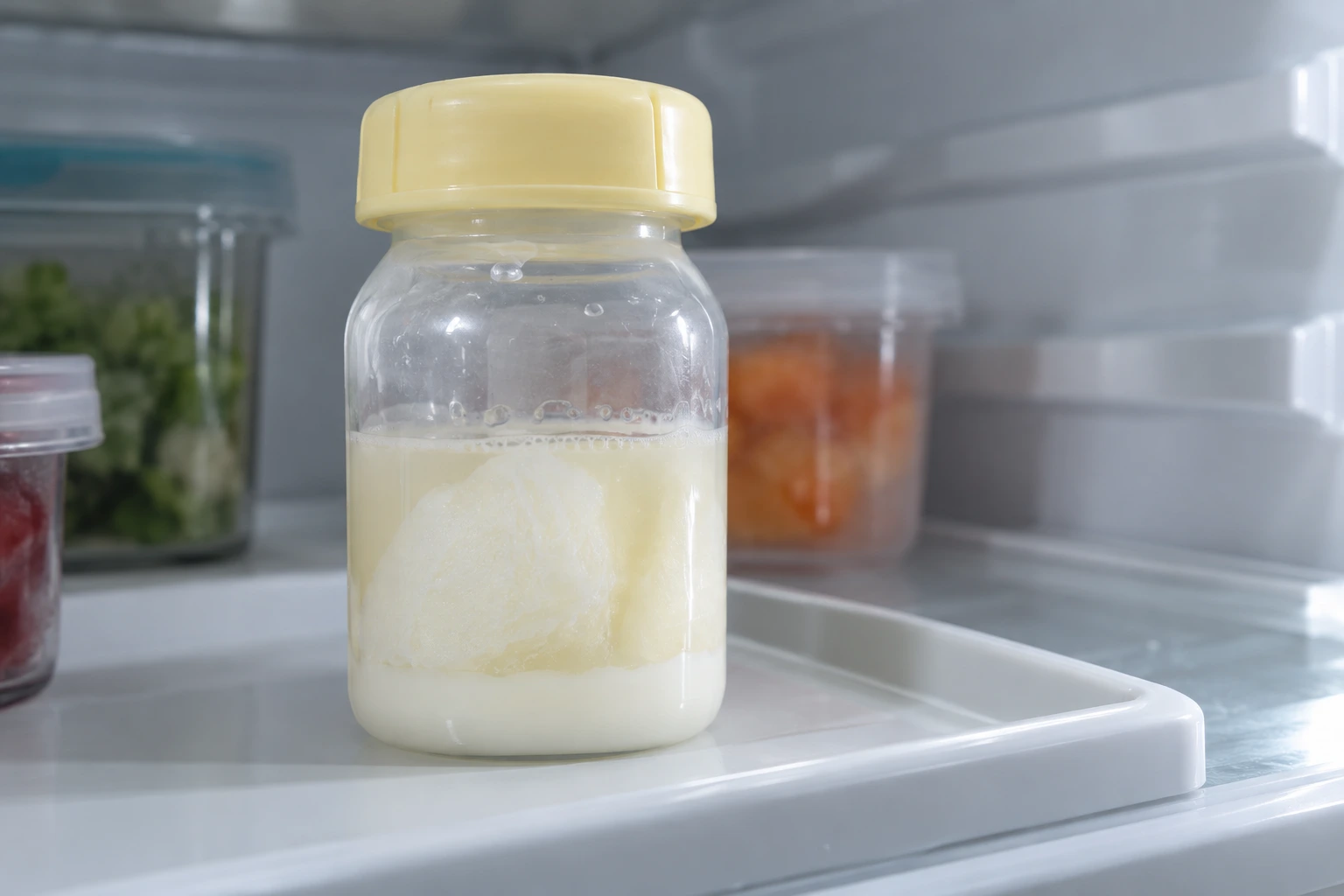
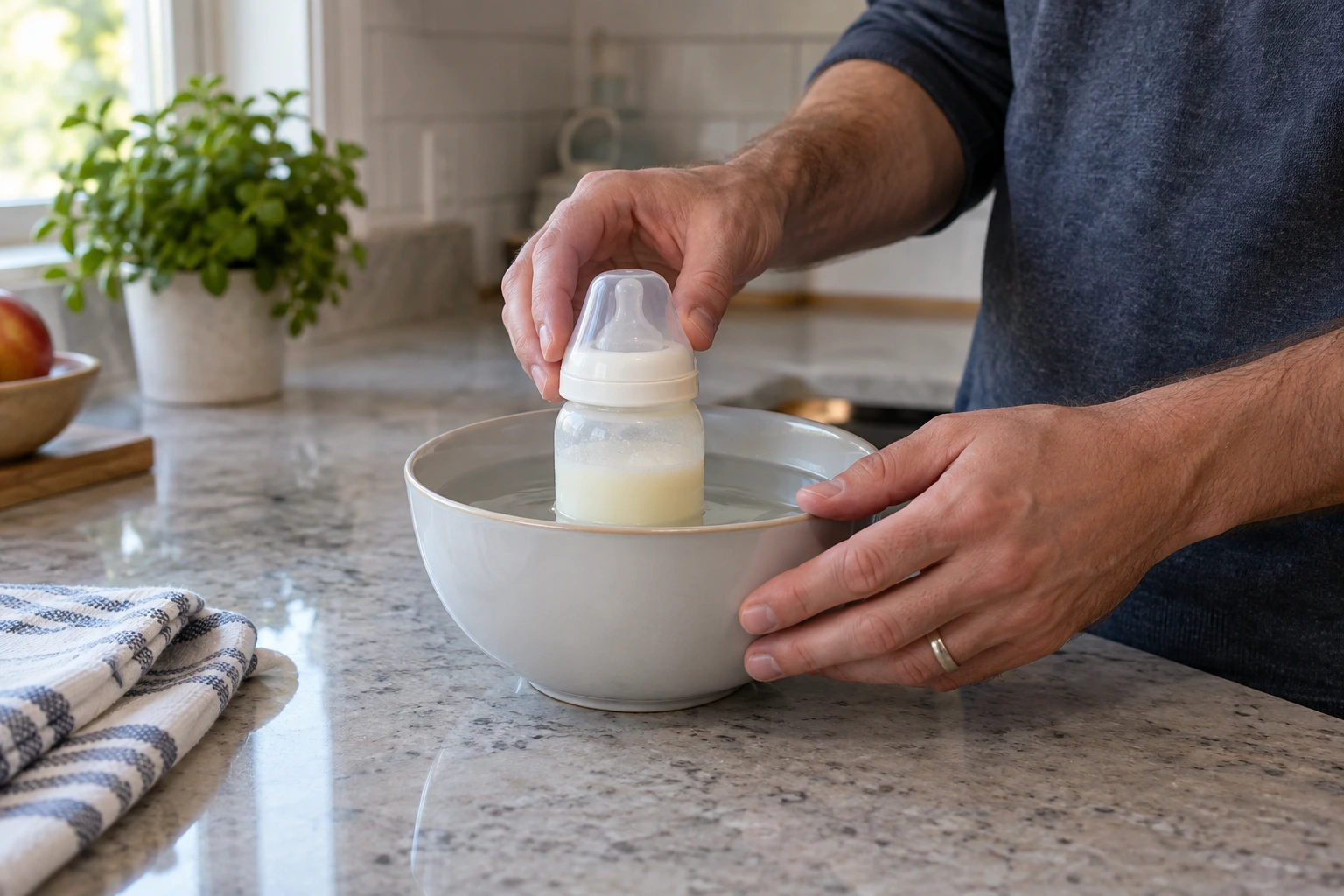
Before warming, decide which container you mean to use and read its existing deadline. Warming is an optional preparation step, so it deserves its own entry rather than being hidden under the word “prepared.” If another caregiver will offer the bottle, the handoff can name both events: when the milk was completely thawed and when it was warmed. A wrist check concerns temperature at the moment of feeding; it does not replace the storage record. The photograph shows the warming arrangement only. Neither the apparent water temperature nor the milk’s safe storage history can be established from a photograph.
Breast milk does not have to be warmed and can be offered cold or at room temperature. S01 · CDC / Washington DOH S07 · HHS
To warm milk, keep the container sealed and place it in warm water or hold it under warm, not hot, running water. S01 · CDC / Washington DOH S07 · HHS
Before feeding warmed milk, put a few drops on your wrist to check its temperature. S01 · CDC / Washington DOH S07 · HHS
Once warmed or brought to room temperature, use within 2 hours. S01 · CDC / Washington DOH S07 · HHS
When more than one limit applies, use the earliest deadline rather than adding the time limits together. S01 · CDC / Washington DOH
Separate ordinary appearance from handling history
A visible layer in a bottle may prompt a different question from an unreadable label. One is a question about appearance; the other is a missing history. Keep those questions separate when you contact a caregiver or clinician. Describe what you actually saw, along with what you know about expression, refrigeration, thawing, and warming. This guide does not provide a home test for declaring an uncertain bottle safe. Nor does it set a diagnosis from a photograph. The practical decision rests on the documented handling conditions and the applicable guidance, not on whether the bottle resembles an illustration.
Milk fat may separate during storage; swirl the milk to mix it back in. S01 · CDC / Washington DOH S07 · HHS
If you cannot establish that milk was stored safely, discard it rather than guessing. S04 · Ochsner Health
Combining milk keeps the older history
Combining containers can make a handoff look simpler while making the record harder to read. Before combining milk, look at the dates on both containers and consider whether keeping them separate would make the next feed easier to organize. If you do combine them, the final label should still identify the earlier history. An extra splash of newly expressed milk is not a reason to rewrite the original date. This section addresses combining cooled expressed milk; it does not introduce a new rule for infant formula, fortifiers, or a medical feeding plan.
Cool freshly expressed milk in the refrigerator before combining it with older cooled milk. S02 · Children’s Health
When combining cooled milk from different days, calculate storage time from the oldest milk. S02 · Children’s Health
Actions that do not extend a deadline
The common thread in these cautions is that changing the container’s location or temperature does not supply missing information about its past. Keep the original timeline visible when deciding what to do next. The leftover-bottle rule has a specific starting event, the end of that feeding, but an older deadline may already be running. Treat the instructions as concurrent limits, rather than a sequence of bonuses. If you are asking someone else for help, say whether the bottle had already been offered, not just whether it is now in the fridge.
Do not microwave breast milk: uneven hot spots can burn your baby’s mouth, and microwaving can damage nutrients. S01 · CDC / Washington DOH
Do not heat breast milk directly on the stove. S01 · CDC / Washington DOH
Never refreeze completely thawed milk. S01 · CDC / Washington DOH S04 · Ochsner Health
Use milk left in a bottle within 2 hours after your baby finishes feeding, then discard any remaining milk. S01 · CDC / Washington DOH S07 · HHS
When more than one limit applies, use the earliest deadline rather than adding the time limits together. S01 · CDC / Washington DOH
Keep pump care in the same routine
The milk record and the equipment routine answer different questions. A precise expression time does not tell the next caregiver whether the collection parts were cleaned. Keep the pump’s own instructions with the household supplies so everyone follows the same method for that model. Decide where washed parts will dry and where they will be stored after that. If your family needs extra precautions, put the care team’s instructions alongside the routine rather than relying on memory. For a separate household checklist, see our related hand-hygiene guide linked below.
Clean pump parts that touch the breast or milk after every use, following the manufacturer’s instructions. S03 · CDC / Washington DOH
Sanitizing pump parts at least daily is especially important for babies under 2 months, babies born prematurely, or babies with weakened immune systems. S03 · CDC / Washington DOH
Let clean pump parts air-dry completely before storing them in a clean, protected place. S03 · CDC / Washington DOH
Hand over the history, not just the cooler
A travel note can be brief and still answer the key questions: which child the milk is for, which container should be used first, and whether any container was previously frozen. Distinguish a fresh-milk transport allowance from the deadline on a bag that thaws on the journey. The receiving caregiver needs the existing history, not simply the time the bag arrived. Before a childcare day, ask how the provider wants the milk labeled and how they record warming and feeding. Use their required format while keeping the expression and thawing information understandable.
Freshly expressed milk can travel in an insulated cooler with frozen ice packs for up to 24 hours; on arrival, use it, refrigerate it, or freeze it. S01 · CDC / Washington DOH S07 · HHS
For childcare, label milk with your child’s name and check the provider’s labeling and storage requirements. S01 · CDC / Washington DOH
Previously frozen milk must stay cold and be used within 24 hours of complete thawing, including when it thaws during transport. S04 · Ochsner Health

After a power interruption
After a power problem, the fact that a bag used to be in the freezer is not the whole answer. Ochsner Health’s power-outage guidance distinguishes milk that still contains ice crystals from milk that has completely thawed. S04 · Ochsner Health Record what was found and when, rather than silently replacing the original label with a new freezing date. If the history is incomplete, make that uncertainty explicit. The exception for remaining ice crystals should not be applied to a bottle that is fully liquid. Keep the emergency guidance with your storage notes if power interruptions are part of your planning.
After a power outage, milk that still contains ice crystals can be refrozen because it has not completely thawed. S04 · Ochsner Health
Previously frozen milk must stay cold and be used within 24 hours of complete thawing, including when it thaws during transport. S04 · Ochsner Health
If you cannot establish that milk was stored safely, discard it rather than guessing. S04 · Ochsner Health
When a storage question becomes a care question
This guide cannot determine whether a particular bottle caused an illness. If you seek advice after a storage mix-up, describe the handling record and the baby’s actual symptoms without assigning a cause yourself. Keep the distinction between a question about unused milk and a concern about the baby clear. For emergency contact routes, the NHS source below is from the United Kingdom; its named services are not presented as Korean, Japanese, or US telephone numbers. Outside the UK, use the emergency or urgent-care service for your location.
Get emergency help immediately for breathing difficulty, blue or grey lips or skin, or a baby who cannot be woken; in the UK, call 999. S06 · NHS
If you are worried about your baby’s symptoms or unsure what to do, seek urgent medical advice; in the UK, contact NHS 111. S06 · NHS
A record another caregiver can use
The template below is an editorial aid for recording the events already discussed. It does not calculate a safe deadline automatically. Write the event next to each time, and leave an unknown field marked unknown rather than estimating a history you did not observe. When you hand over milk, read the relevant row together with the next caregiver. A container ID can be as simple as a letter on the lid. This separates two bottles that happen to contain similar amounts and makes a later clarification easier to discuss without relying on their appearance.
After pumping, seal the container, label the expression date and time, and put it straight into a refrigerator, freezer, or cooler with ice packs. S03 · CDC / Washington DOH
When more than one limit applies, use the earliest deadline rather than adding the time limits together. S01 · CDC / Washington DOH
| Field | Your note |
|---|---|
| Container ID / child’s name | ________________ |
| Expression date and time / amount and unit | ________________ |
| Storage location / measured temperature | ________________ |
| Freezing date / original history | ________________ |
| Moved to refrigerator / completely thawed at | ________________ |
| Warmed or reached room temperature at | ________________ |
| Feed finished / leftover amount | ________________ |
| Earliest applicable deadline / use or discard | ________________ |
| Unknown information / caregiver handoff | ________________ |
Frequently asked questions
Does the thawing clock start when I open the freezer?
The 24-hour refrigerated limit starts when thawing is complete, not when the milk leaves the freezer. S01 · CDC / Washington DOH S07 · HHS
Can I offer milk cold?
Breast milk does not have to be warmed and can be offered cold or at room temperature. S01 · CDC / Washington DOH S07 · HHS
Does combining two batches create a new date?
When combining cooled milk from different days, calculate storage time from the oldest milk. S02 · Children’s Health
What about ice crystals after a power outage?
After a power outage, milk that still contains ice crystals can be refrozen because it has not completely thawed. S04 · Ochsner Health
Official sources
Source pages checked September 22, 2026.
- S01 · CDC; hosted by Washington State Department of Health — Storage and Preparation of Breast Milk
- S02 · Children’s Health — Your guide to safely storing breast milk
- S03 · CDC; hosted by Washington State Department of Health — How to Keep Your Breast Pump Kit Clean
- S04 · Ochsner Health — How to Store and Protect Frozen Breast Milk During a Power Outage
- S05 · Minnesota Department of Health WIC — Human Milk Storage Guidelines
- S06 · NHS — When to get urgent medical help for babies and children under 5
- S07 · Office on Women’s Health, HHS — Pumping and storing breastmilk
- S08 · New York State Department of Health — Protect Yourself From Foodborne Illness