Safe Infant Formula Preparation
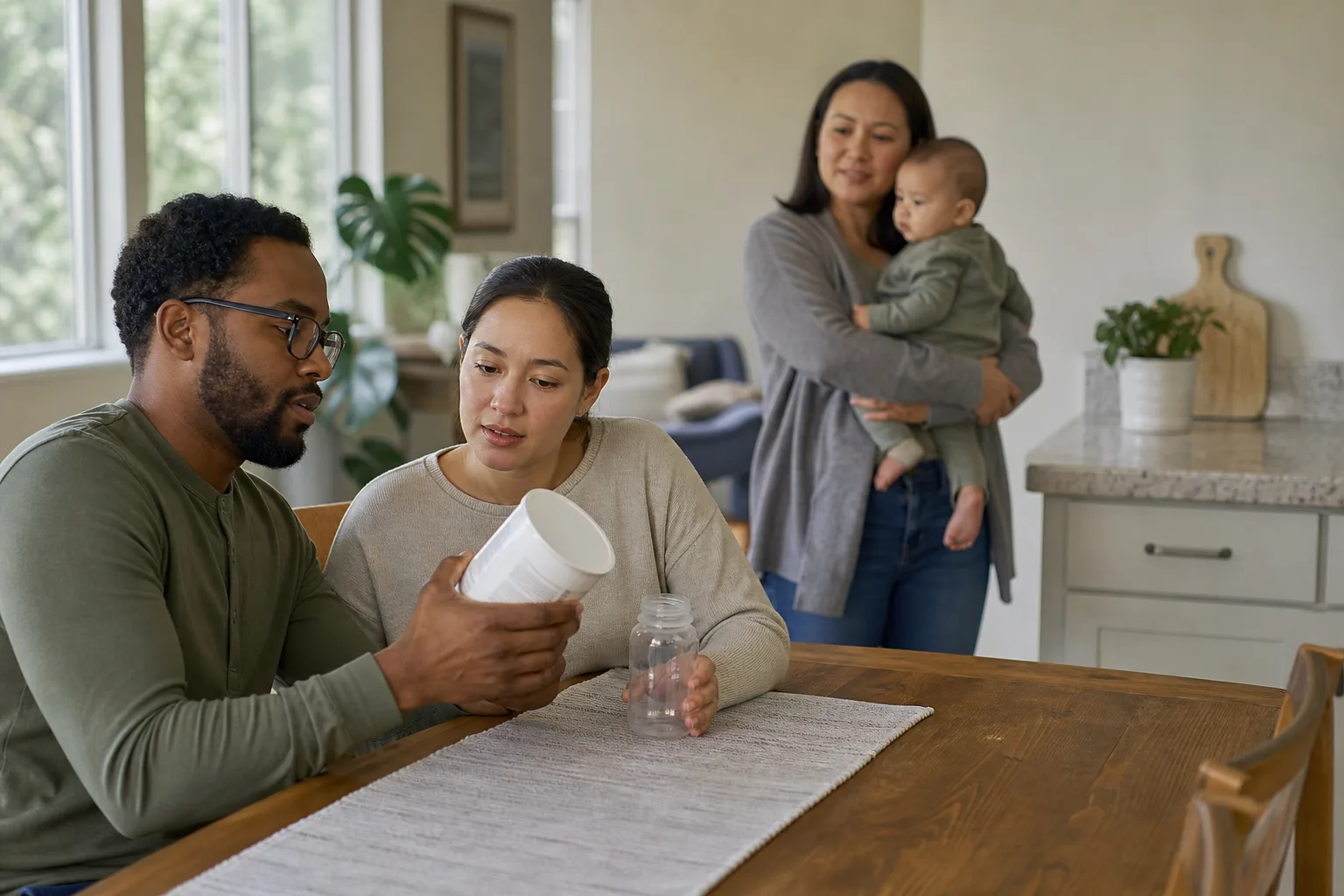
Powdered infant formula is not sterile. Safe preparation starts before the scoop: use the product label and current local guidance, clean hands and equipment, measure water first, add the exact powder amount, and track time after mixing and feeding.
SUMMARY
Wash hands and clean the preparation surface. Measure the exact water amount first, then add level scoops using only that product's scoop and label ratio. Follow local and product-specific water-temperature guidance, cool safely, and never microwave. Use prepared formula within two hours, within one hour after feeding starts, or refrigerate immediately and use within 24 hours; discard any bottle the baby has started.
Start with the product and local instructions
Begin with label and local guidance. Formula products differ, specialty formulas may have temperature restrictions, and national authorities do not phrase hot-water guidance identically. Use the current label for the exact ratio and handling steps, then apply your local health authority's guidance and any individual plan from the pediatrician. Never substitute a scoop from another container. Check the use-by date and container condition. Powdered formula is not sterile, so careful preparation reduces risk but cannot make unsafe storage or altered ratios acceptable.
Create a clean preparation zone
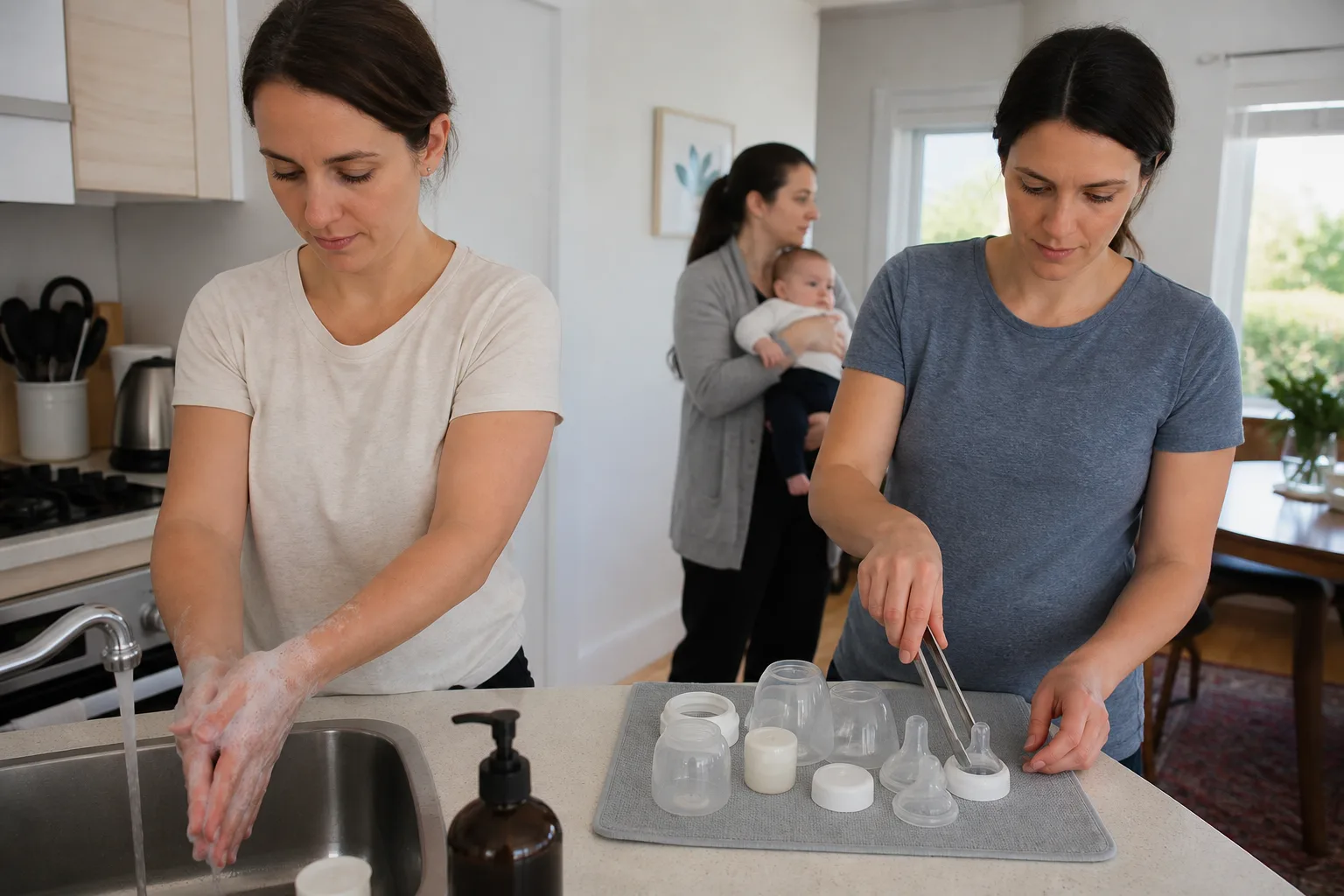
Wash hands with soap and water before touching clean feeding parts. Clean and disinfect the work surface. Keep bottle parts out of the kitchen sink, where drain germs can spread, and allow cleaned items to air-dry completely. Follow local guidance for sanitizing bottles, nipples, rings, and valves, especially for young or higher-risk babies. Keep the powder container dry and closed. Do not place a wet scoop inside it. Prepare the bottle away from the baby so hot water, spills, and distractions do not reach the child.
Measure water before powder
Use water first and exact powder. Pour the exact label amount of safe water into the clean bottle first. Then add the stated number of level scoops with the scoop supplied in that container. Powder first can make the apparent water level misleading. Extra powder can make the mixture too concentrated, while extra water reduces nutrient concentration and changes water balance. Neither is a safe way to treat constipation, extend the product, or increase calories. If you lose count or cannot confirm the ratio, discard the mixture and start again.
Apply temperature guidance in context
NHS household guidance says to use freshly boiled tap water cooled for no more than 30 minutes so it remains at least 70°C when mixed with powder. FDA consumer guidance describes hot-water extra precautions for babies younger than two months, born prematurely, or immunocompromised, and suggests sterile ready-to-feed liquid when possible. These are not interchangeable slogans. Follow the product, country guidance, and pediatrician. A specialty metabolic formula may carry a lower-temperature warning to protect nutrients.
Cool without contaminating the bottle
After mixing, keep the bottle capped while cooling it under cold running water or in an ice bath. Do not allow cooling water to touch the nipple or enter the bottle. Test a few drops on the inside of the wrist; it should feel warm, not hot. Never microwave formula because uneven heating can create hot spots that burn the baby's mouth. Warming is not required if the baby accepts safely prepared formula at another appropriate temperature. Do not leave a bottle out while waiting for it to cool indefinitely.
Use the correct clock
Remember two hours, one hour, and 24 hours. FDA guidance separates three limits: use an untouched bottle within two hours of preparation; once feeding begins, use it within one hour; if prepared formula will not be used immediately, refrigerate it at once and use it within 24 hours. These limits answer different questions and do not add together. A bottle that touched the baby's mouth must not return to the refrigerator because saliva can introduce bacteria. Mark the preparation time, and discard when the time is uncertain.
Protect higher-risk infants
Discuss higher-risk infant precautions with the baby's clinician. FDA identifies babies younger than two months, infants born prematurely, and babies with weakened immunity as being at higher risk from Cronobacter. Sterile liquid ready-to-feed formula is the safest formula option for these infants when breast milk is unavailable. If powder is necessary, the FDA hot-water method uses boiled water cooled about five minutes and still at least 158°F/70°C, unless a specialty label directs otherwise. Do not improvise a risk plan from online snippets.
Know when illness needs medical help
Formula preparation advice cannot diagnose a sick baby. Contact the pediatrician promptly for feeding much less than usual, repeated vomiting, fewer wet diapers, fever in a young infant, unusual crying, worsening jaundice, or marked sleepiness. Seek emergency help for severe breathing difficulty, blue or gray color, a seizure, limpness, or difficulty waking. Save the product container, lot information, preparation details, and symptom timing if a clinician asks, but never delay urgent care to reconstruct a perfect log.
Prepare one feed at a time when possible
NHS guidance recommends making one feed as the baby needs it because bacteria can multiply during storage. Before starting, place clean equipment, the correct scoop, a clock, and cooling supplies within reach. Keep the infant with another adult away from the preparation area. Read the label before measuring rather than relying on memory, because ratios can differ. Cap and mix as directed. This simple setup reduces skipped steps when the baby is hungry and the household is tired.
Understand liquid formula types
Ready-to-feed liquid is used without adding water and is sterile until opened. Liquid concentrate is also commercially sterile but must be diluted exactly as its label states. Powder is not sterile. Never treat these forms as interchangeable, and never add water to ready-to-feed formula. Follow opening and refrigeration limits on the product label. For a higher-risk infant, ask the clinician whether ready-to-feed or concentrate is preferred and whether any specialty product changes the standard temperature steps.
Plan travel without loosening safety
For travel, the safest plan depends on the water supply, refrigeration, trip length, and the baby's risk. Consider unopened ready-to-feed portions when appropriate. Keep feeding parts clean and separate, transport perishable prepared formula with reliable cold packs, and use a thermometer when required. Do not carry warm prepared formula for an uncertain period. Never pre-measure powder into a wet bottle. If safe water or time tracking cannot be assured, ask the pediatrician or local authority for a specific travel plan.
Use a short handoff checklist
When caregivers switch, state the formula type, exact preparation time, whether the bottle has touched the baby's mouth, and when it entered the refrigerator. Identify which scoop belongs to the container and close the lid. Note any clinician-specific temperature or concentration instruction. A brief spoken and written handoff prevents an untouched refrigerated bottle from being confused with a started bottle. If nobody can confirm the history, discard it. Wasting one uncertain feed is safer than relying on smell, appearance, or guesswork.
Frequently asked questions
Can one wet diaper rule out dehydration?
No. Use the full-day trend, feeding, and whole-body signs.
Should I give water to fix a low count?
Not to an infant under six months unless a clinician specifically directs it. Ask your pediatrician.
Can I wait until the log is complete?
No. Emergency signs or a clear contact threshold take priority over documentation.
Sources
This article provides general information and is not medical advice. Ask your pediatrician about reduced urine, feeding concerns, or guidance tailored to your baby.