Toddler Family Meals: What to Change

From 12 months, offer family foods in smaller portions, with softness, shape and size adjusted to your toddler’s eating skills.
SUMMARY
- Match food size, shape and texture to how well your child chews and swallows.
- From 12 months, offer three meals a day.
- Stay beside your toddler and watch throughout meals and snacks.
For caregivers planning family meals for a toddler aged 12–24 months.
One family meal, a toddler portion
Offer varied foods from the starchy food, fruit and vegetable, protein, and dairy or suitable alternative groups.
Do not add salt or sugar to your toddler’s food or cooking water. For a shared dish, set aside your toddler’s portion before adding salt or salty sauces for adults.

| Family food | How to adapt it |
|---|---|
| Rice, potato or pasta | Serve cooked rice, potato or pasta soft, and mash or cut it as your child needs. |
| Meat or fish | Remove all meat and fish bones, and finely shred or thinly cut tender meat instead of serving tough chunks. |
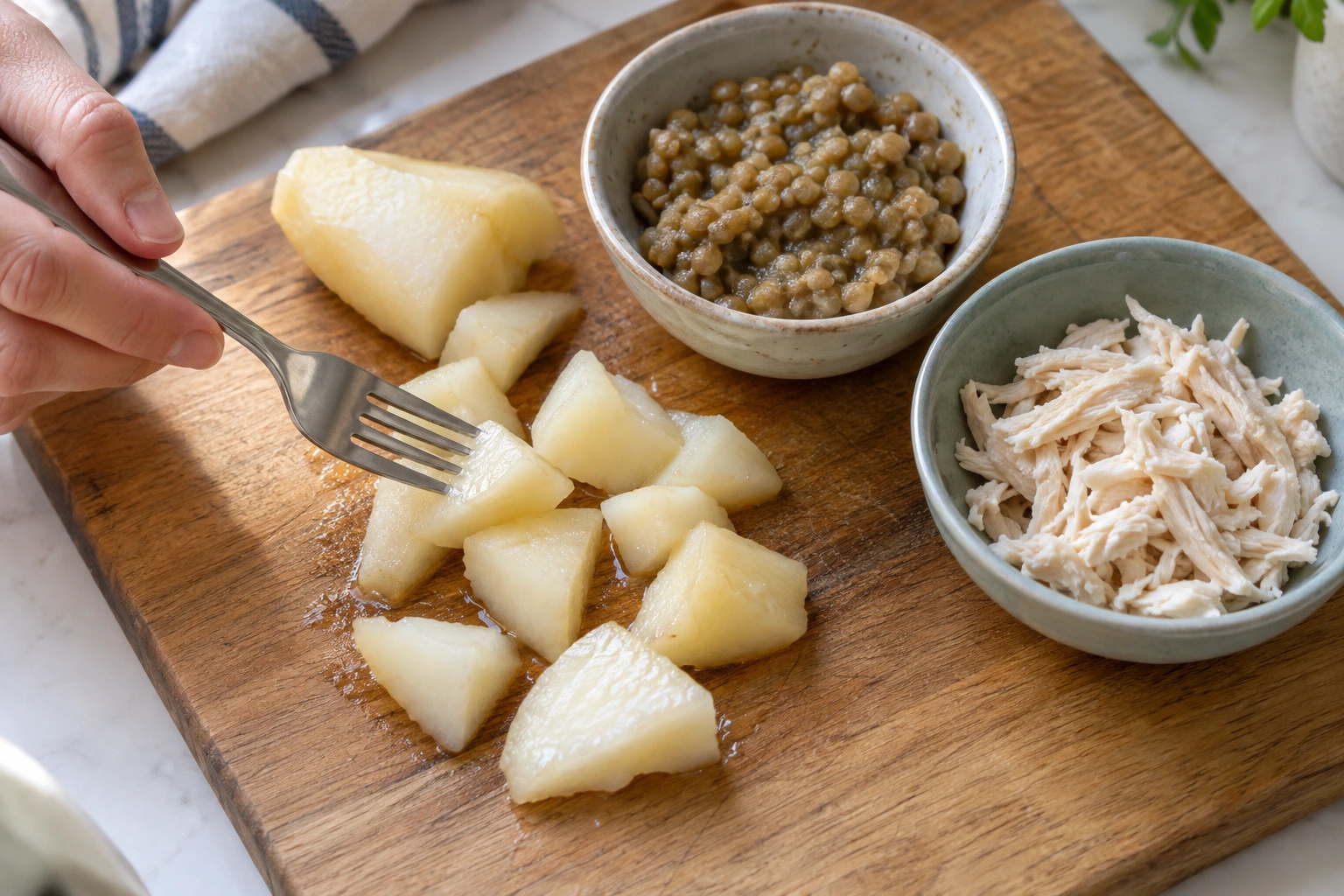
| Firm vegetables or fruit | Steam or simmer firm vegetables and fruit, such as carrot and apple, until soft, then cut them into suitable pieces. |
| Beans | Mash cooked beans rather than serving them whole. |
Choose texture before the next bite
Offer mashed, lumpy, chopped and finger foods your child can manage, rather than relying only on smooth purées.

Cut grapes and cherry tomatoes into quarters, and remove hard pips or stones from fruit. Do not give whole nuts or popcorn to children under 5 years.
Use smooth nut butter as a thin spread or mixed into food, never as a spoonful on its own.
A rhythm without a fixed plate target
From 12 months, offer three meals a day. Your toddler may also need two healthy snacks between meals, such as soft fruit or plain yoghurt.
Start with a small portion and follow your child’s hunger and fullness cues. Eat together when possible so your toddler can watch you eat and try foods.
Have your child sit upright to eat; do not let them eat while walking, crawling or lying down. Stay beside your toddler and watch throughout meals and snacks. Avoid eating in the car or stroller, and keep mealtimes calm and unhurried.

Where milk fits
From 12 months, pasteurized whole cow’s milk can be offered as a main drink. Milk accompanies a varied diet rather than replacing meals. Too much milk can leave less appetite for other foods.
If using a dairy alternative, discuss it with your child’s clinician and choose an unsweetened product fortified with calcium and vitamin D.
Refusing food or struggling to swallow?
It is common for toddlers to refuse an unfamiliar food, even without tasting it. If your child refuses food, do not force a bite; calmly take it away and offer it another time.

If your child is well, active and gaining weight, consider what they eat over a week rather than judging one unfinished meal.
If your child keeps accepting only certain textures, struggles to chew, or is not gaining weight, ask your child’s clinician about a feeding assessment.
When a meal needs medical help
Seek urgent medical advice if your child has trouble swallowing, coughs or chokes during meals, or has a wet, gurgly voice after eating or drinking.
If choking makes your child unable to breathe or cough effectively, get emergency help immediately and begin age-appropriate choking first aid.
If your child is coughing loudly, encourage coughing and stay with them. Do not sweep blindly inside your child’s mouth with your fingers.
Questions about the transition
Do I need a toddler milk?
For a toddler eating a varied diet, infant formula and toddler milks are not needed from 12 months.
Does family food mean stopping breastfeeding?
You can continue breastfeeding for as long as you and your child want.
Can I still use a pouch or jar on busy days?
Use food pouches or jars occasionally for convenience, rather than relying on them as everyday food.
Sources
- NHS — Over 12 months
- Oklahoma State Department of Health — Grandparent Toolkit: Nutrition Handouts — Choking Hazards
- NHS — Dysphagia (swallowing problems)
- NHS — How to stop a child from choking
- American Speech-Language-Hearing Association (ASHA) — ASHA Encourages Families to Learn the Signs of Pediatric Feeding Disorder