Baby Food Storage: Fridge, Freezer, Reheat
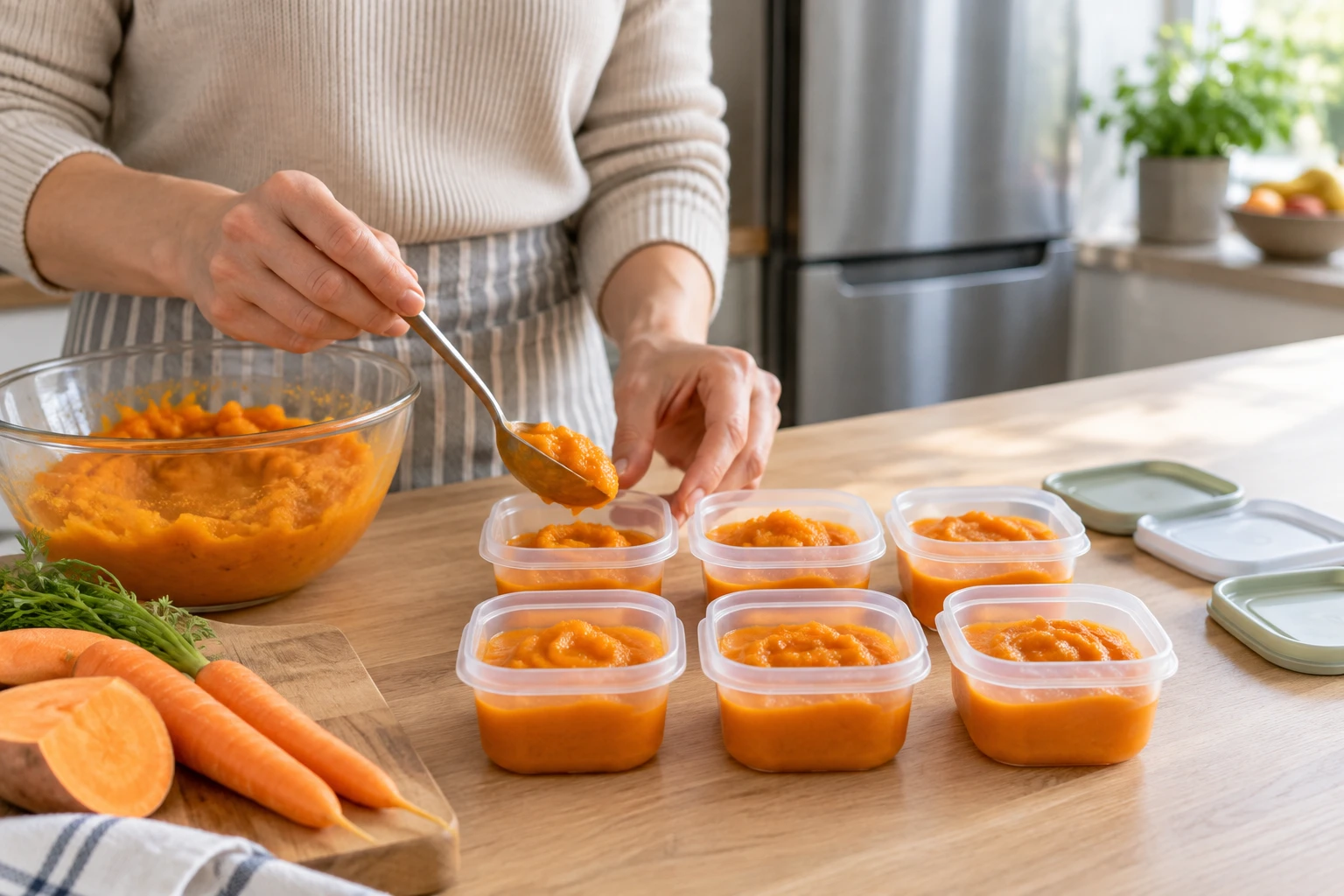
A row of little containers can make tomorrow’s meal feel settled, until someone asks when the food was cooked or whether the spoon has already been in the jar. This guide is for adult caregivers of babies under one year. It brings refrigerator and freezer periods together with cooling, thawing, reheating and the point at which a portion becomes a feeding leftover. The aim is a workable kitchen routine, with a clear handoff between whoever prepares the food and whoever serves it.
SUMMARY
Serve baby food into a separate bowl, refrigerate the untouched food, and discard what remains in the feeding bowl. [NHS]
Under UK NHS guidance, promptly cooled homemade baby food kept in the fridge should be used within 2 days; cooked rice has the shorter limit below. [NHS]
Cool cooked rice within 1 hour, then refrigerate or freeze it immediately; use refrigerated rice within 24 hours and reheat it only once. [NHS] [Food Standards Agency]
Reheat previously cooked baby food only once until steaming hot throughout, then cool it before feeding. [NHS]
Read the conditions before the calendar
This guide concerns solid foods introduced from around 6 months; during meals, keep your baby alert, upright in a highchair and supervised. [NHS]
These storage periods apply to safely prepared, promptly cooled food kept at the stated cold temperatures, not food left in a feeding bowl. [NHS] [Food Standards Agency]
This guide identifies the jurisdiction beside the advice: UK NHS and Food Standards Agency material for storage and reheating, Ireland’s HSE for frozen-meal taste and refreezing guidance, and Food Standards Australia New Zealand for kitchen hygiene. It does not present these as Korean or Japanese government rules. The same conditions appear in every language edition. Keep the product packaging or a photograph of it with the food record when another caregiver will serve the meal.
The UK Food Standards Agency advises a fridge temperature of 0–5°C and a freezer around −18°C, with the fridge checked weekly using a thermometer. [Food Standards Agency]
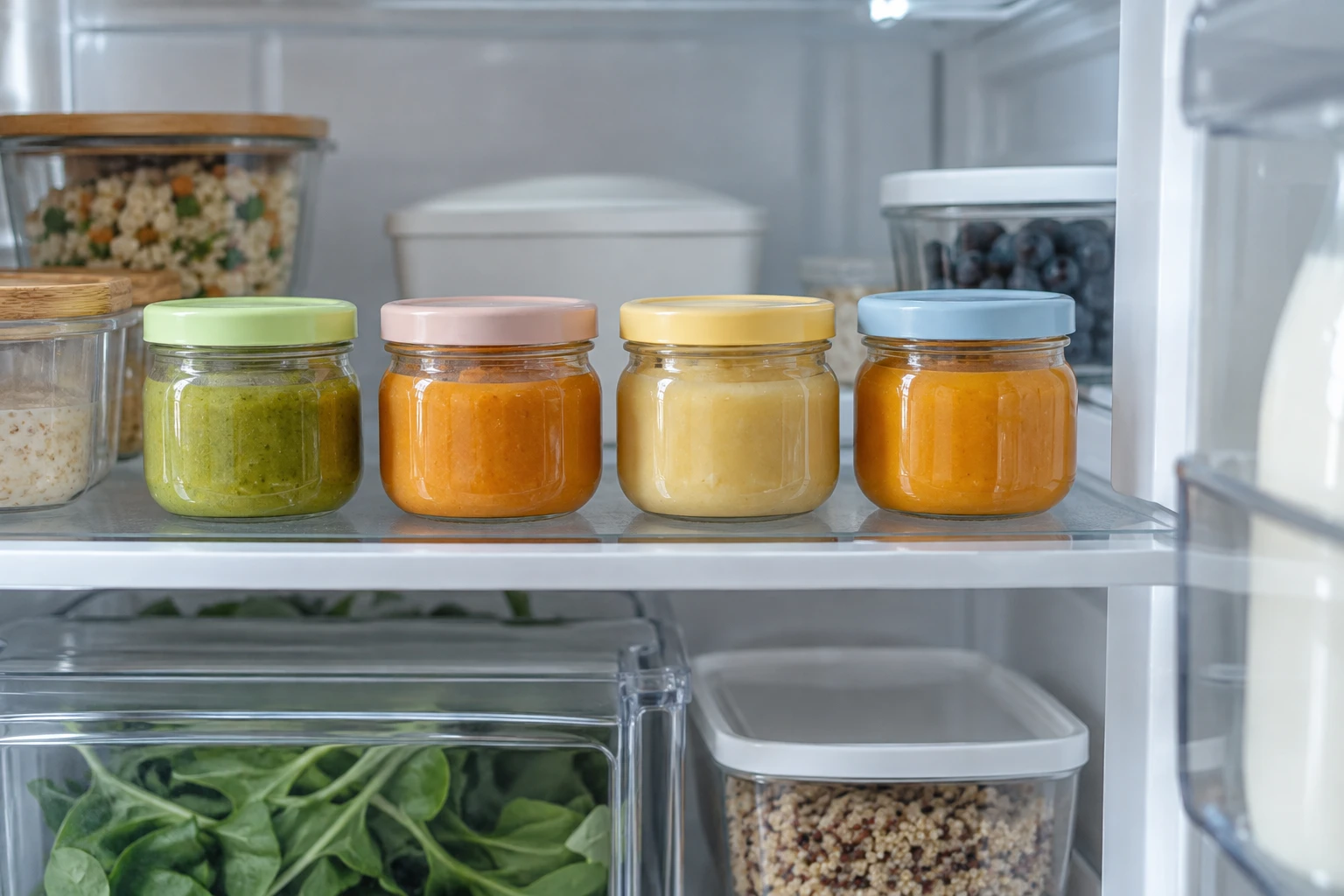
Baby food storage periods at a glance
Start by identifying the food and what has happened to it: a newly cooked batch, cooked rice, an unopened product, an opened product or a portion already used for feeding. The table distinguishes those situations. Read the named authority and the condition in each row before writing a date on the container. In particular, the freezer entry describes an Irish recommendation about taste; it is not an extra refrigerator allowance or a promise that every frozen meal is safe.
| Under UK NHS guidance, promptly cooled homemade baby food kept in the fridge should be used within 2 days; cooked rice has the shorter limit below. [NHS] |
| Ireland’s HSE recommends using homemade baby meals within 1 month of freezing for better taste, rather than presenting this as a safety expiry date. [HSE] |
| Cool cooked rice within 1 hour, then refrigerate or freeze it immediately; use refrigerated rice within 24 hours and reheat it only once. [NHS] [Food Standards Agency] |
| For packaged baby food, follow the label’s storage, opening, use-by and heating instructions. [Food Standards Agency] [Food Standards Agency] |
Use the rice-specific cooling and storage rule for rice dishes, and follow the product label for packaged baby food. [NHS] [Food Standards Agency] [Food Standards Agency]
For rice porridge, the rice condition stays visible even when vegetables are blended into it. [NHS] [Food Standards Agency] In your own notes, use the actual ingredients rather than a nickname such as “green lunch.” This makes the choice of row reviewable by the next person without asking them to reconstruct the recipe from its colour.
Why the freezer numbers differ
The HSE’s 1-month freezer recommendation concerns taste; it does not establish that every portion is safe until that date or unsafe immediately afterward. [HSE]
Freezing does not kill bacteria; they can become active again as food thaws. [Food Standards Agency]
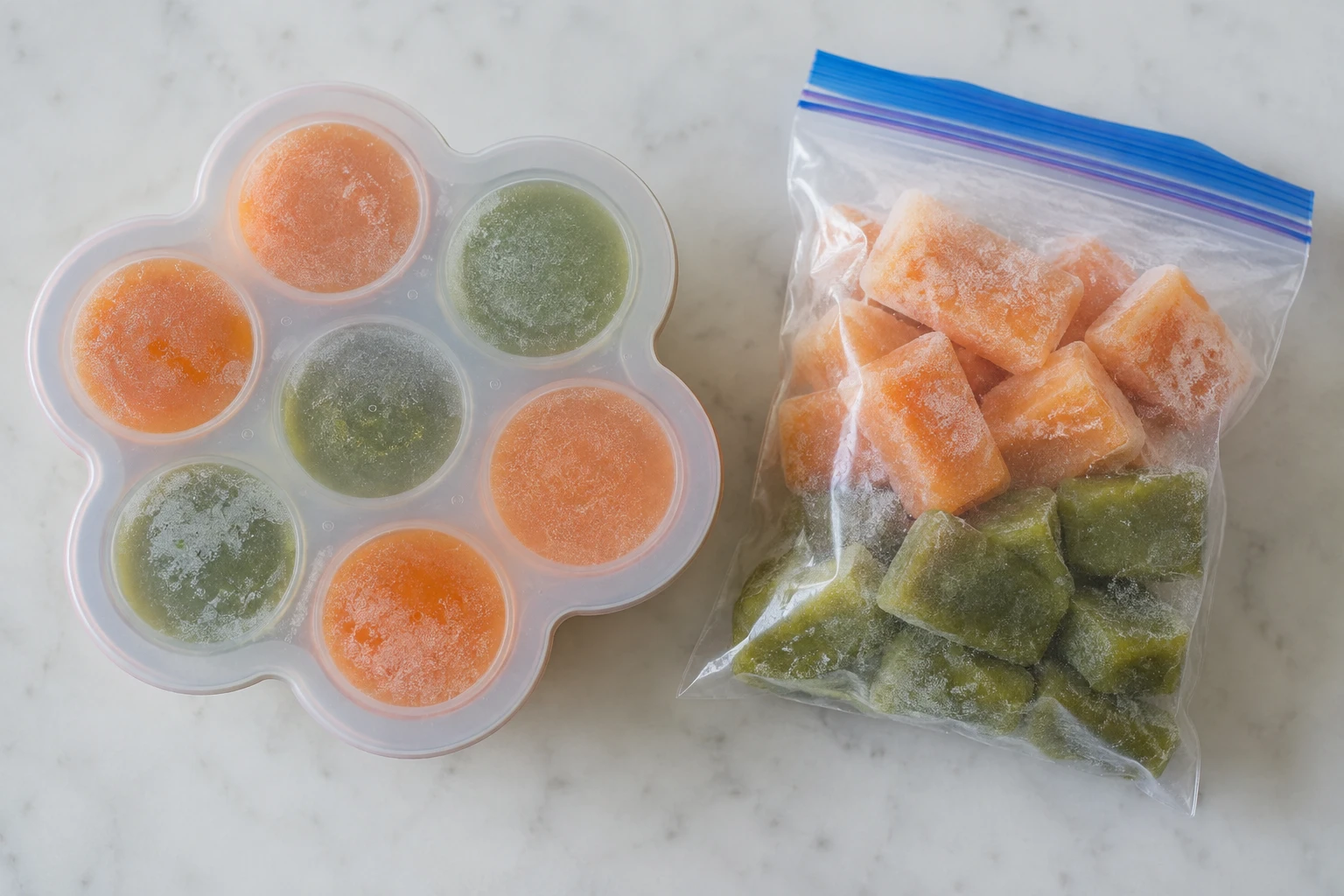
The NHS baby-food page gives a refrigerator deadline but no freezer period in months, while Ireland’s HSE gives a taste-focused freezer recommendation. [HSE] [NHS] Following Ireland’s HSE baby-food guidance, do not refreeze food once it has thawed. [HSE] The freezer column is useful for planning batches; it is not a reason to stop recording how the food was handled.
Date homemade baby food when freezing it and store the frozen portions in an airtight container or freezer bag. [HSE] [Food Standards Agency]
A freezer label can be plain: food name, ingredients, cooking date and freezing date. Leave room for a thawed date to be added later. A list on the freezer door may suit a large batch; a label on each container may suit several caregivers. Choose the form that makes the food’s history easiest to read. There is no special branded container or app required by this article.
Cooling begins when cooking ends
Following UK FSA guidance, divide cooked food into small portions to cool, and let hot or warm food cool before putting it in the fridge or freezer. [Food Standards Agency]
The NHS advises cooling batch-cooked baby food quickly, ideally within 1–2 hours, before refrigerating or freezing it. [NHS]
These instructions describe prompt cooling, not a requirement to leave the pot on the worktop until a timer rings. Before you start cooking, decide which containers will hold the portions and where they will go. Once the meal is made, that decision has already been taken. The useful record is the actual cooking and chilling time, not an estimate written the next morning when nobody can remember whether the kitchen was cleared before or after the baby’s nap.
Rice porridge needs its own clock
Uncooked rice can contain Bacillus cereus spores that survive cooking, and time at room temperature can allow bacteria or toxins to make cooked rice unsafe. [Food Standards Agency]
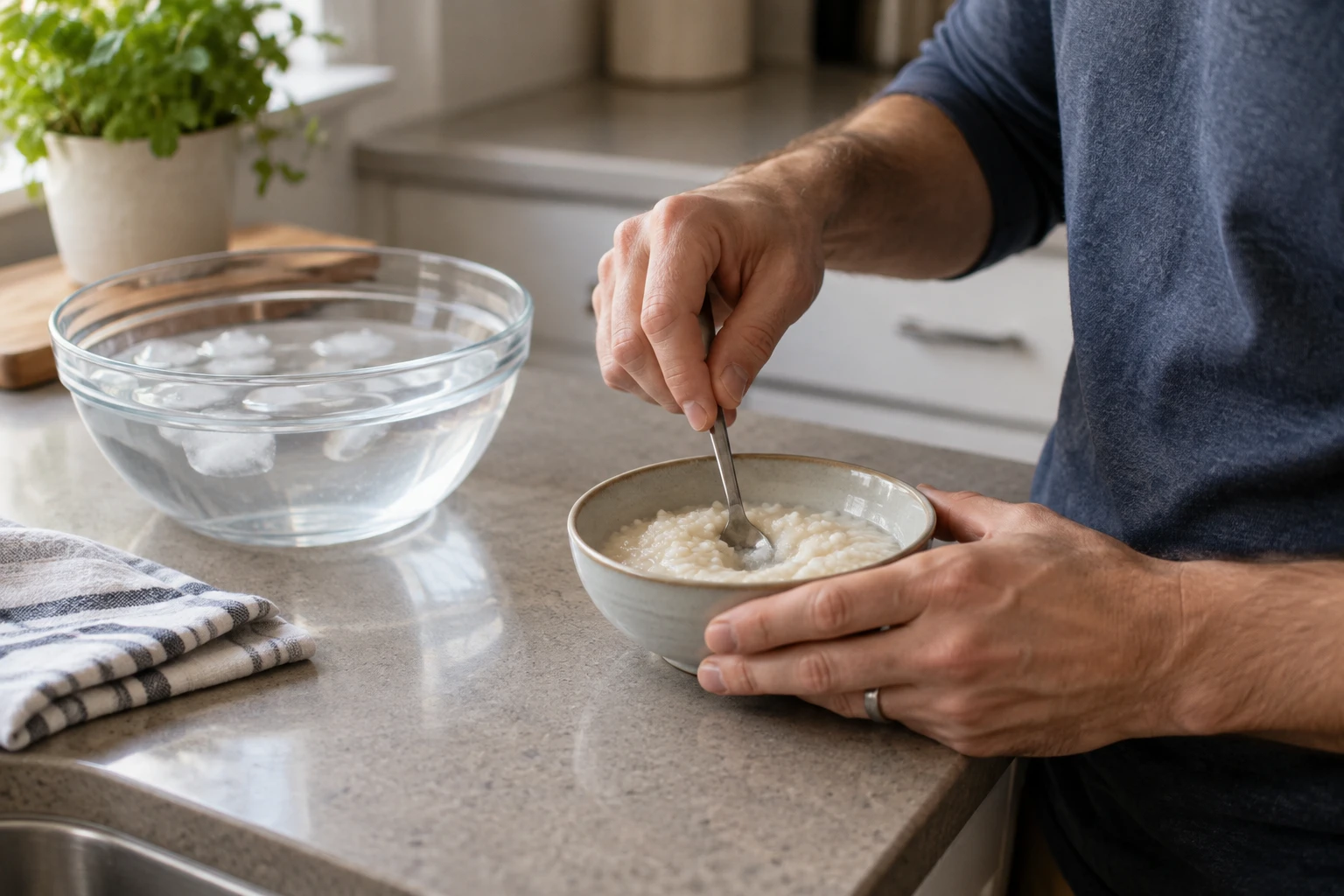
Rice often forms the base of a baby’s meal, which makes this exception easy to overlook in a general puree chart. Put “contains rice” in the ingredient field even if the finished meal looks mainly like carrot or chicken. The cooking time and chilling time are the useful entries here. A photograph of the container may show what was served, but it cannot supply the missing time when the rice left the cooker.
Cool cooked rice within 1 hour, then refrigerate or freeze it immediately; use refrigerated rice within 24 hours and reheat it only once. [NHS] [Food Standards Agency]
Reheating rice does not remove the need for correct cooling and storage beforehand. [Food Standards Agency]
Keep preparation and storage connected
Wash hands with soap and water for about 20 seconds before preparing food and after changing a diaper. [NHS]
Wash utensils and work surfaces with hot, soapy water, and keep utensils for raw meat separate from those for ready-to-eat food. [Food Standards Australia New Zealand]
Store raw meat, poultry and fish in clean, sealed containers on the bottom shelf of the fridge so they cannot drip onto prepared baby food. [NHS] [Food Standards Agency]
A storage routine starts before the lid closes. Set out a clean serving spoon and the feeding bowl as separate items, so the person serving the meal can see which belongs to the stored batch. After a diaper change interrupts cooking, the next action belongs to hand hygiene before food handling resumes. [NHS] Our family hand-hygiene guide is linked below for caregivers who want to agree on that routine together.
Thaw the portion you intend to use
Thaw baby food thoroughly in the fridge and use it within 24 hours after thawing, or microwave-defrost it immediately before reheating; never thaw it on the counter. [NHS] [Food Standards Agency]
Write “thawed” with a date and time, rather than replacing the original cooking label. The two entries describe different events. If someone moves a container from freezer to refrigerator for the next caregiver, the handoff can simply say what was moved and when. Keep the original ingredient description visible as well. This is particularly useful when several similar-looking frozen portions were prepared on different days.
Reheating and serving are different steps
Reheat previously cooked baby food only once until steaming hot throughout, then cool it before feeding. [NHS]
When reheating on the hob, stir frequently and make sure the food is hot throughout. [Food Standards Agency]
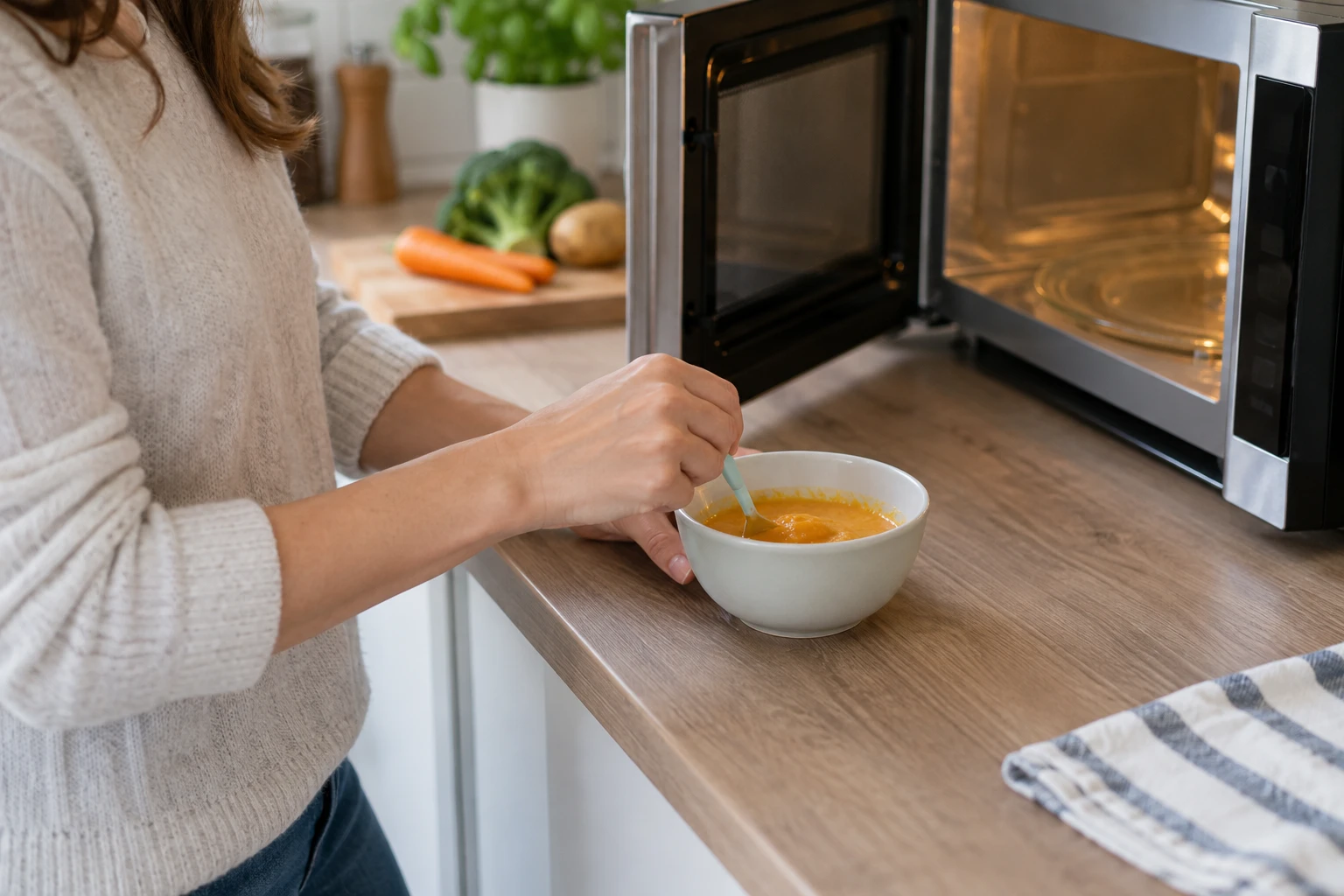
A reheating check answers whether the food has been heated thoroughly. The serving check answers whether it is ready for the baby’s mouth. Keep both steps in the routine and in any written handoff. “Warmed” on its own does not say which check was completed. A note can instead have separate spaces for the method used, whether the food was stirred, and whether the serving temperature was checked after cooling. That wording describes the actions without pretending that a photograph can measure them.
Stir microwaved baby food thoroughly and check its temperature after cooling, before feeding your baby. [NHS]
Microwaved food can be hot at the edges while still cold in the centre, so stirring helps it heat more evenly. [Food Standards Agency]
Follow the food package or microwave manufacturer’s reheating, stirring and standing instructions, because the time needed varies with the food and its amount. [Food Standards Agency]
There is deliberately no “press this button for every puree” recipe here. A home microwave, a small pan and a packaged meal come with different instructions. Keep the food category and the product directions beside the chosen method. The article’s photographs illustrate the handling steps; they do not show a measured temperature or certify that a pictured portion has completed its heating and cooling checks.
The feeding bowl ends the storage plan
Serve baby food into a separate bowl, refrigerate the untouched food, and discard what remains in the feeding bowl. [NHS]
Never save, store or reheat a half-eaten portion of prepared baby food. [NHS] [HSE]
Imagine a jar in the refrigerator and a bowl on the highchair tray. They may contain the same recipe, but the handoff needs to distinguish the untouched supply from the portion used for feeding. Calling both “leftovers” hides that distinction. Our short video uses this exact contrast: a separate serving bowl, the untouched container returned to cold storage, and the used portion discarded after the meal.
Outings and uncertain storage histories
Transport perishable baby food in an insulated cooler with a cold source. [NHS]
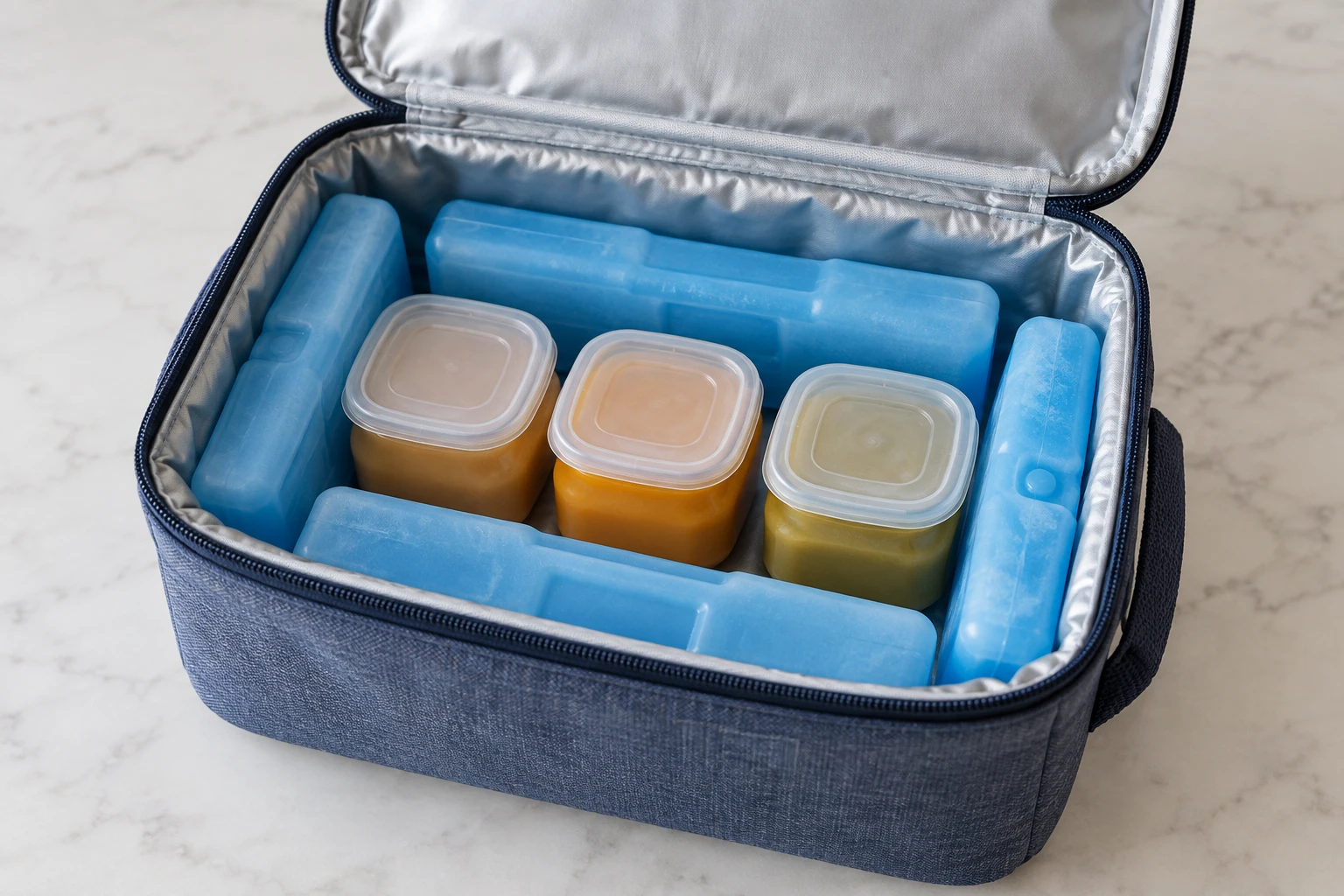
For food taken on an outing without being kept cold, the UK NHS says to eat it as soon as possible, within 4 hours at most, and throw away any leftovers. [NHS]
For food with a use-by date, a normal smell does not establish safety because you cannot smell the microbes that cause food poisoning. [Food Standards Agency]
For an outing, put departure time, the food’s label and the cold-storage arrangement in the same note. Read the outing condition in its own context; the cooling instructions above concern a different stage of preparation. At a handoff, “probably still fine” is an opinion; the times and storage conditions are the information the next caregiver can actually check. If a fact is missing, mark it unknown instead of filling it in from memory as though it were certain.
What changes are ordinary, and what needs help?
A different container, a different batch colour or a different mealtime does not tell the whole storage story. The notes about ingredients, dates and handling explain the context. If your baby is unwell after a meal, use the care signs below instead of trying to diagnose the cause from a photograph of the food. Food history is something to share with the clinician, not a substitute for assessing the baby.
Seek urgent medical advice if you are worried about a baby under 12 months with possible food poisoning, especially if milk feeds stop, fluids will not stay down, or diarrhoea contains blood. [NHS]
Fewer wet diapers, few or no tears, unusual drowsiness or a sunken soft spot need urgent medical advice because they can signal dehydration. [NHS]
Get emergency help now if your baby is difficult to wake, has severe breathing difficulty, or vomits blood or yellow-green or green fluid; call your local emergency number. [NHS] [NHS]
While arranging advice for vomiting or diarrhoea, continue breast or usual-strength formula feeds if tolerated; do not dilute formula. [NHS]
When calling for help, describe what happened in ordinary language: what food was offered, when it was eaten, what symptoms appeared, whether milk feeds continued and how wet diapers compare with usual. Have the package and preparation record nearby if available. Do not delay an emergency call to complete the form. The telephone numbers and care pathways in the linked NHS pages are UK services; use the corresponding urgent or emergency service where you live.
A record another caregiver can use
Copy this template onto a label or into a shared note. Blank fields are intentional: a record should describe the actual batch rather than an example that someone might mistake for today’s food. The selected storage rule can be written in words, with the source or package beside it. Keep preparation events separate from serving events, and close the record when the portion is eaten or discarded.
Food / ingredients: ____
Homemade or product name: ____
Cooked / opened at: ____
Refrigerated at: ____
Frozen at: ____
Thawed at: ____
Storage rule and source / package: ____
Use by: ____
Reheated at / method / check: ____
Cooled and serving temperature checked: ____
Feeding began at: ____
Untouched supply location: ____
Portion eaten / discarded at: ____
Unknown details / caregiver initials: ____
Frequently asked questions
Can I save a jar after feeding directly from it?
Never save, store or reheat a half-eaten portion of prepared baby food. [NHS] [HSE]
Is a normal smell enough?
For food with a use-by date, a normal smell does not establish safety because you cannot smell the microbes that cause food poisoning. [Food Standards Agency]
How long can thawed baby food wait?
Thaw baby food thoroughly in the fridge and use it within 24 hours after thawing, or microwave-defrost it immediately before reheating; never thaw it on the counter. [NHS] [Food Standards Agency]
Can I warm the same portion again?
Reheat previously cooked baby food only once until steaming hot throughout, then cool it before feeding. [NHS]
For related routines, the guides below cover family hand hygiene, cleaning feeding equipment and a written daycare handoff. They are companion reading, not alternative storage limits. If several adults care for your baby, the record above can sit beside those routines so everyone uses the same names for the untouched supply, the serving portion and the food that has already been offered.
Official sources
- HSE — Baby foods: homemade
- NHS — Storing and reheating food
- Food Standards Agency — How to chill, freeze and defrost food safely
- Food Standards Agency — Home food fact checker
- Food Standards Australia New Zealand — Food safety basics
- NHS — How to wash your hands
- Food Standards Agency — Cooking your food
- NHS — Food poisoning
- NHS — Dehydration
- NHS — Preparing food safely
This article provides caregiver education, not a pediatrician’s diagnosis or an individual treatment plan. It uses the regional sources identified above and does not claim clinician review. Follow your child’s existing clinical feeding plan and local medical advice. Photographs are AI-generated illustrations of handling, not documentary evidence.