Bottle Cleaning, Sanitizing and Drying
A bottle has several small parts, and this guide follows each one from the end of a feed to its place in the cupboard. It is written for adults caring for babies under one year, with separate explanations of everyday cleaning, extra sanitizing, drying, and the differences between US and UK guidance.
SUMMARY
In the US routine described here, clean bottles after every feed, wash before sanitizing, and let all parts air-dry completely before storage. [Texas WIC] [HSE] [Iowa WIC / CDC]
Texas WIC recommends daily sanitizing, especially for babies younger than 2 months, babies born prematurely, or babies with weakened immune systems. [Texas WIC]
The practical question is which stage each item has reached: used, washed, sanitized when required, drying, or ready for storage. This guide uses that sequence throughout, so the person taking over can identify the next step without guessing what someone else meant by “done.”
What each stage is for
Cleaning, sanitizing, and storing infant feeding items correctly help prevent germs from contaminating the milk offered to a baby. [AAFP] [CDC / Washington DOH]
Sanitizing is an additional germ-removal step after cleaning, so a sterilizer cycle does not replace washing feeding items first. [CDC / Washington DOH] [HSE]
Thorough air drying before storage helps prevent germs and mold from growing on milk-contact pump parts, wash basins, and bottle brushes. [CDC / Washington DOH]
In this article, “sanitizing” follows the wording used by CDC, while “sterilising” identifies the UK NHS procedure. These names appear on appliances too, but the article refers to the actual method and instructions, not the name printed on the box. Choose the relevant regional pathway before comparing settings.
Start with the whole bottle, not just the body
The parts to consider include the bottle, nipple, ring, cap, and any valves supplied with that bottle design. [Iowa WIC / CDC]
After every feed, take the bottle apart and clean the separate parts rather than treating an assembled bottle as one washable object. [Texas WIC]
Do not just rinse and refill a used bottle or add fresh milk to a partly used bottle; clean and dry it fully to help prevent germ growth. [AAFP]
Lay out the manufacturer’s parts diagram if the bottle is unfamiliar. An inventory for your own household can simply name the body, ring, nipple, cap, and any extra pieces. That list is an organizational aid, not a rule that every bottle must have the same number of parts or the same assembly order.
A hand-washing routine you can follow
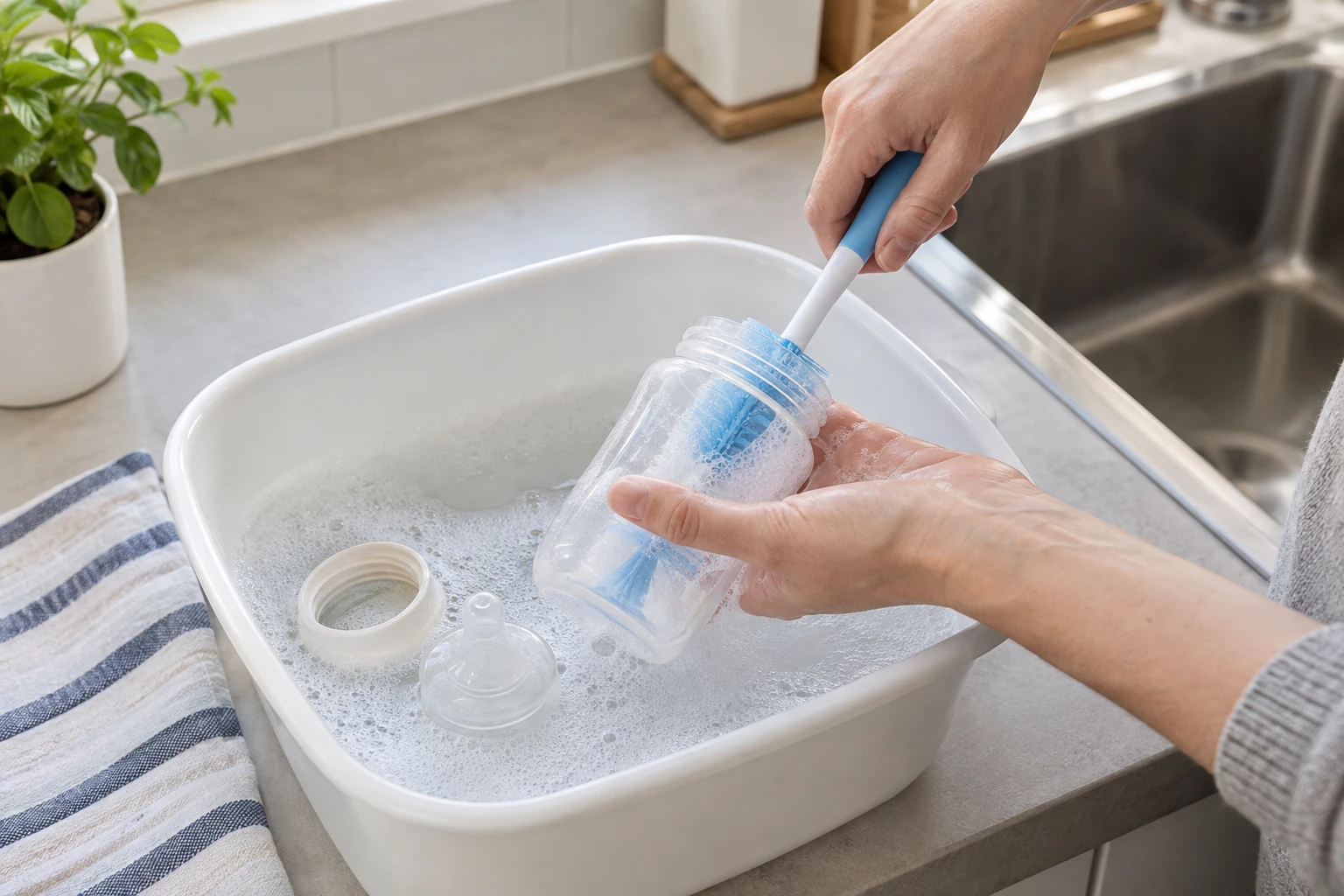
Before cleaning feeding equipment by hand, wash your hands well with soap and water for 20 seconds. [Iowa WIC / CDC]
Rinse the disassembled feeding items under running warm or cold water, keeping the parts out of direct contact with the sink. [Iowa WIC / CDC]
Use a clean basin reserved for infant feeding items rather than washing directly in the sink, where germs may contaminate the equipment. [Iowa WIC / CDC]
Fill the basin with hot soapy water, scrub the parts with a clean brush reserved for feeding items, and squeeze water through the nipple holes. [Iowa WIC / CDC]
Rinse washed items under running water or completely beneath fresh water in a separate basin used only for infant feeding items. [Iowa WIC / CDC]
For a shared kitchen, describe the washing setup in ordinary words: which basin, which brush, and where the rinsed parts go. You do not need a detailed chart for every household task. A clear description of this one setup is enough for another caregiver to understand the routine described here.
Using a dishwasher without guessing its settings
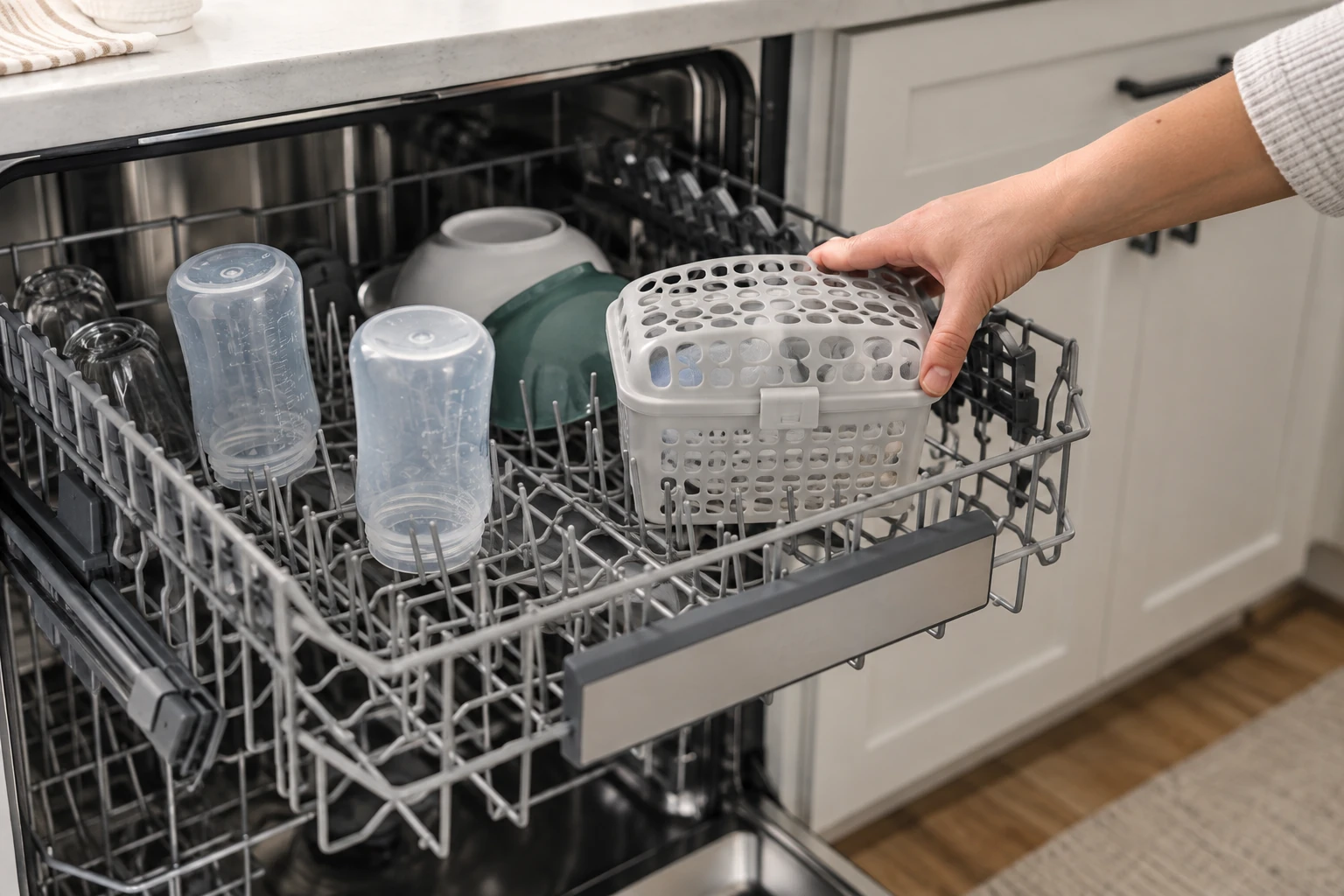
Use the dishwasher method only for dishwasher-safe items, separating the parts and rinsing them under running water before loading. [Iowa WIC / CDC]
Place small dishwasher-safe parts in a closed-top basket or mesh laundry bag so they do not end up in the dishwasher filter. [Iowa WIC / CDC]
Texas WIC lists a dishwasher using hot water and a heated drying cycle, or a sanitizing setting, as a method for sanitizing bottle parts and nipples. [Texas WIC]
Wash your hands before unloading clean feeding items, and air-dry any parts that are still wet before putting them away. [Iowa WIC / CDC]
Read the dishwasher manual alongside the bottle instructions. In your record, write the actual cycle name rather than just “machine washed.” The US method above names particular conditions; a household note should preserve those conditions instead of turning them into a general statement about every dishwasher program.
When sanitizing differs by age and region
For older, healthy babies, Texas WIC says daily sanitizing may not be necessary when feeding items are cleaned carefully after every use. [Texas WIC]
In the UK, NHS recommends sterilising all feeding equipment until a baby is at least 12 months old. [NHS]
For a baby born prematurely or with other health concerns, the healthcare team may give additional instructions for safe pumping and pump hygiene. [CDC / Washington DOH]
These regional pathways should remain visibly separate in a family handoff. The Korean and Japanese versions present the same US and UK sources; they do not relabel either one as a Korean or Japanese national standard. Write down which guidance your household is using, along with any individual care instructions you have received.
Heat methods and product instructions
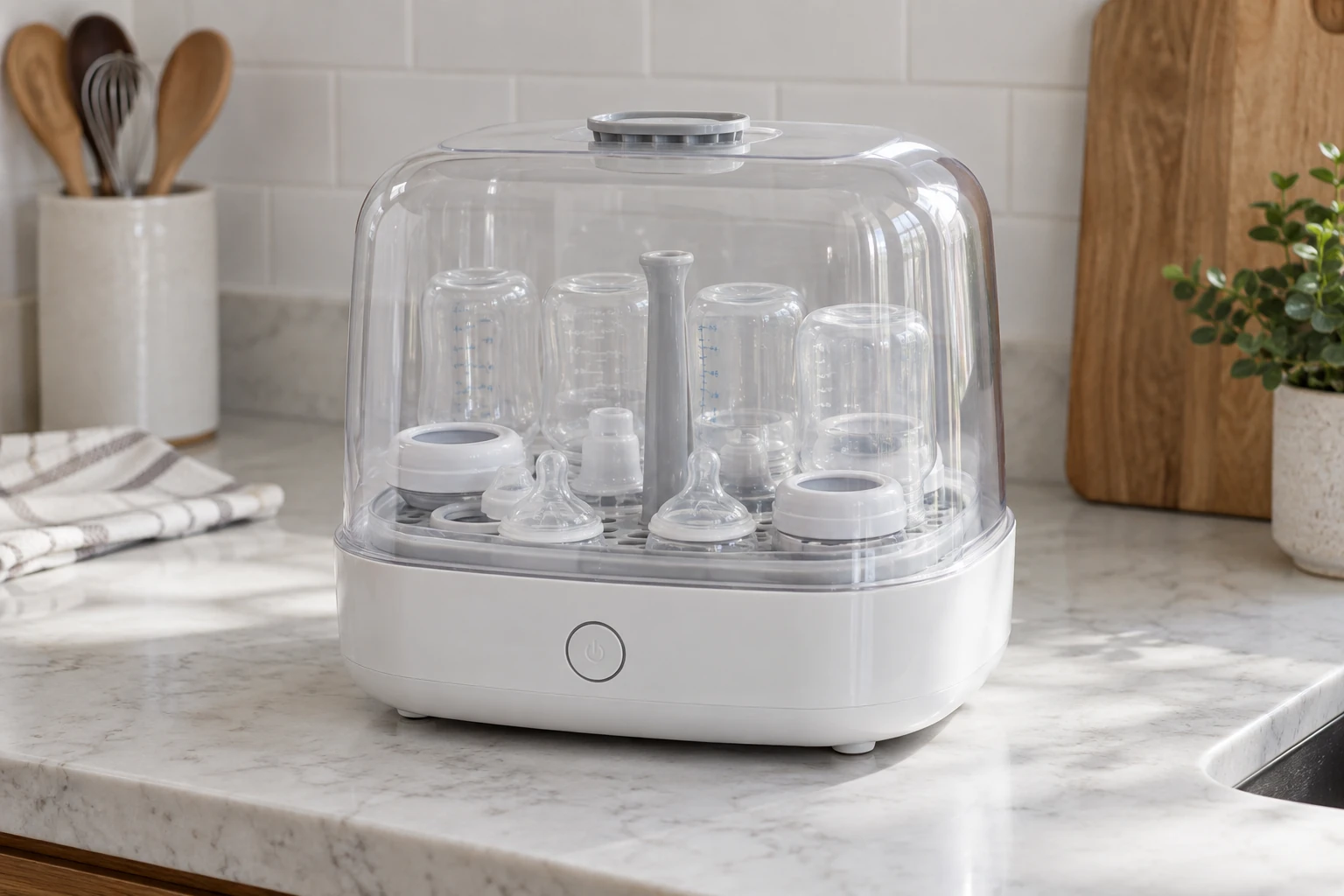
Clean feeding items before sanitizing, and check the manufacturer’s instructions to find out which sanitizing method each item can tolerate. [HSE] [NHS]
The US AAFP bottle guide describes covering separated boil-safe items with water, bringing it to a boil, boiling for 5 minutes, and removing items with clean tongs. [AAFP] [NHS]
The UK NHS boiling method instead specifies at least 10 minutes with boil-safe feeding equipment kept fully submerged. [NHS]
For an electric or microwave steam system, follow its manufacturer’s directions for sanitizing, cooling, and drying the disassembled items. [AAFP]
There is deliberately no universal microwave time in this guide. The place to record that setting is beside the exact device model and its instructions. The same applies when a household changes bottle brands, replaces a valve, or starts using a different pump: the written routine should name the equipment it describes.
Air drying and protected storage
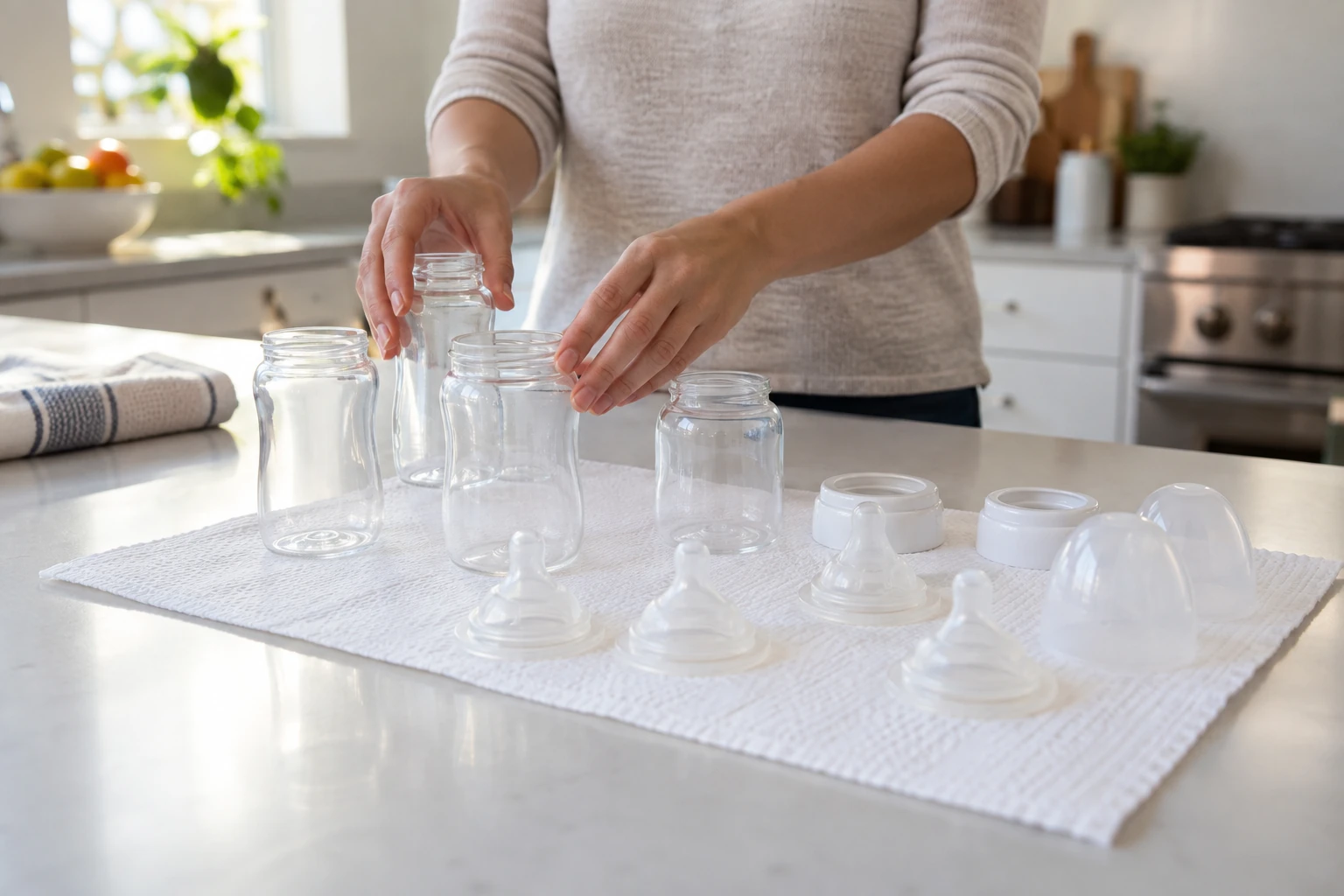
Place washed or sanitized parts on a clean, unused dish towel or paper towel in a place protected from dirt and dust, and let them air-dry thoroughly. [Iowa WIC / CDC] [CDC / Washington DOH]
Do not rub or pat bottle parts dry with a dish towel, because the towel may transfer germs to the items. [Iowa WIC / CDC]
Once bottle parts are completely dry, wash your hands with soap and water before reassembling the clean parts. [AAFP]
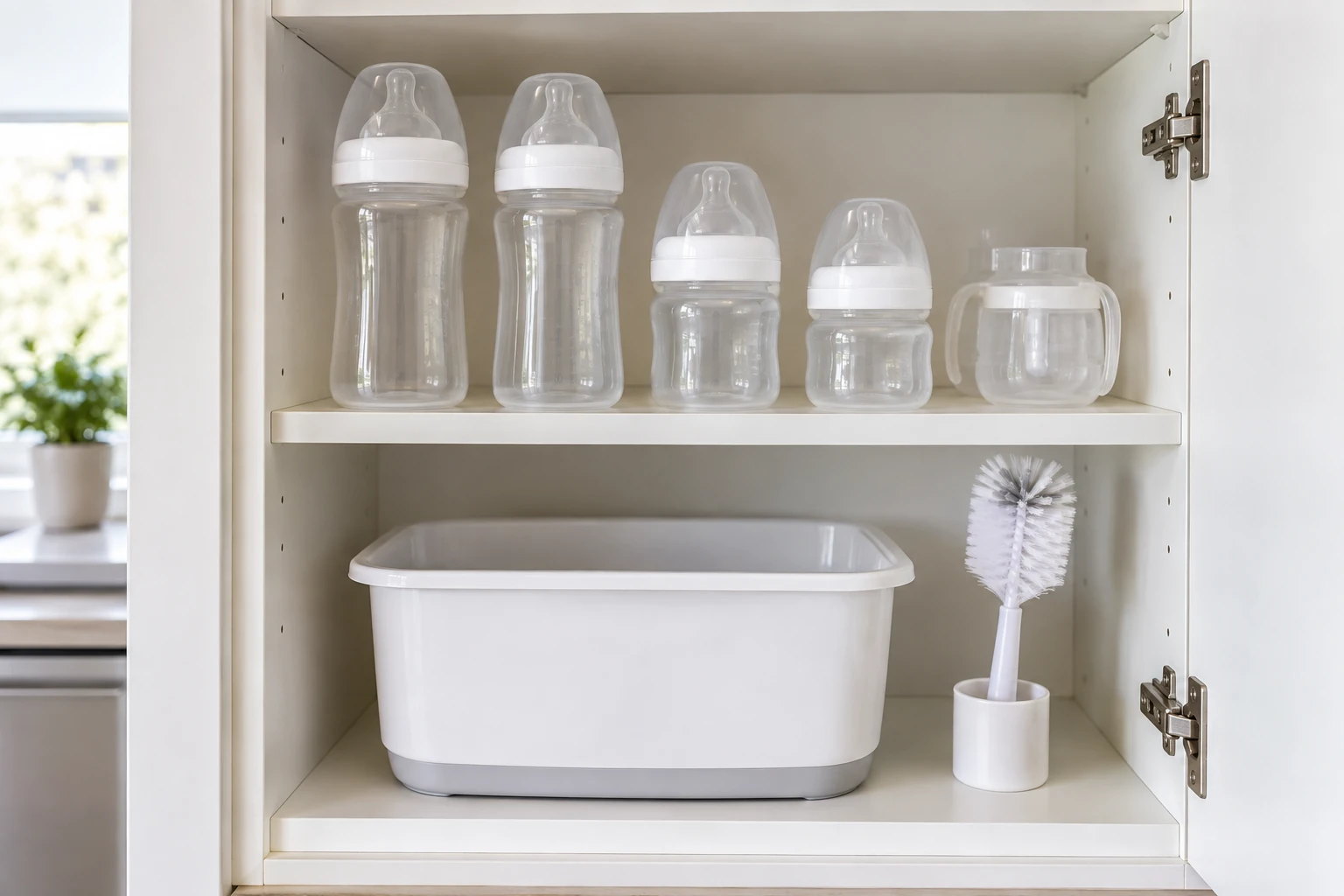
Store clean, dry feeding items in a protected clean area, such as a closed kitchen cabinet used only for clean dishes. [Texas WIC]
In the NHS pathway, leave bottles and teats in the steriliser until needed when possible; if removed, fit the teats and lids immediately. [NHS]
A useful handoff says “drying on the counter” or “dry and put away,” not just “clean.” The guide’s drying discussion follows CDC; the separate NHS storage sentence above belongs to its own pathway. Do not merge the two into a made-up instruction that neither source gives.
The brush, basin, and rack need a routine too
The CDC-derived steps in Iowa WIC guidance call for rinsing the bottle brush and basin after each use, air drying them, and washing them every few days. [Iowa WIC / CDC]
Wash the basin and bottle brush after every use when the baby is younger than 2 months, was born prematurely, or has a weakened immune system. [Iowa WIC / CDC]
Clean the racks, brushes, and containers used for washing and drying bottles as part of equipment care. [AAFP]
The record template below includes a line for these supporting tools. Keep that line separate from the bottle itself: “bottles finished” does not tell the next adult when the brush or basin was last washed. This is a way of describing completed work, not a request to buy a particular rack or cleaning accessory.
Pump parts and formula scoops are not all alike
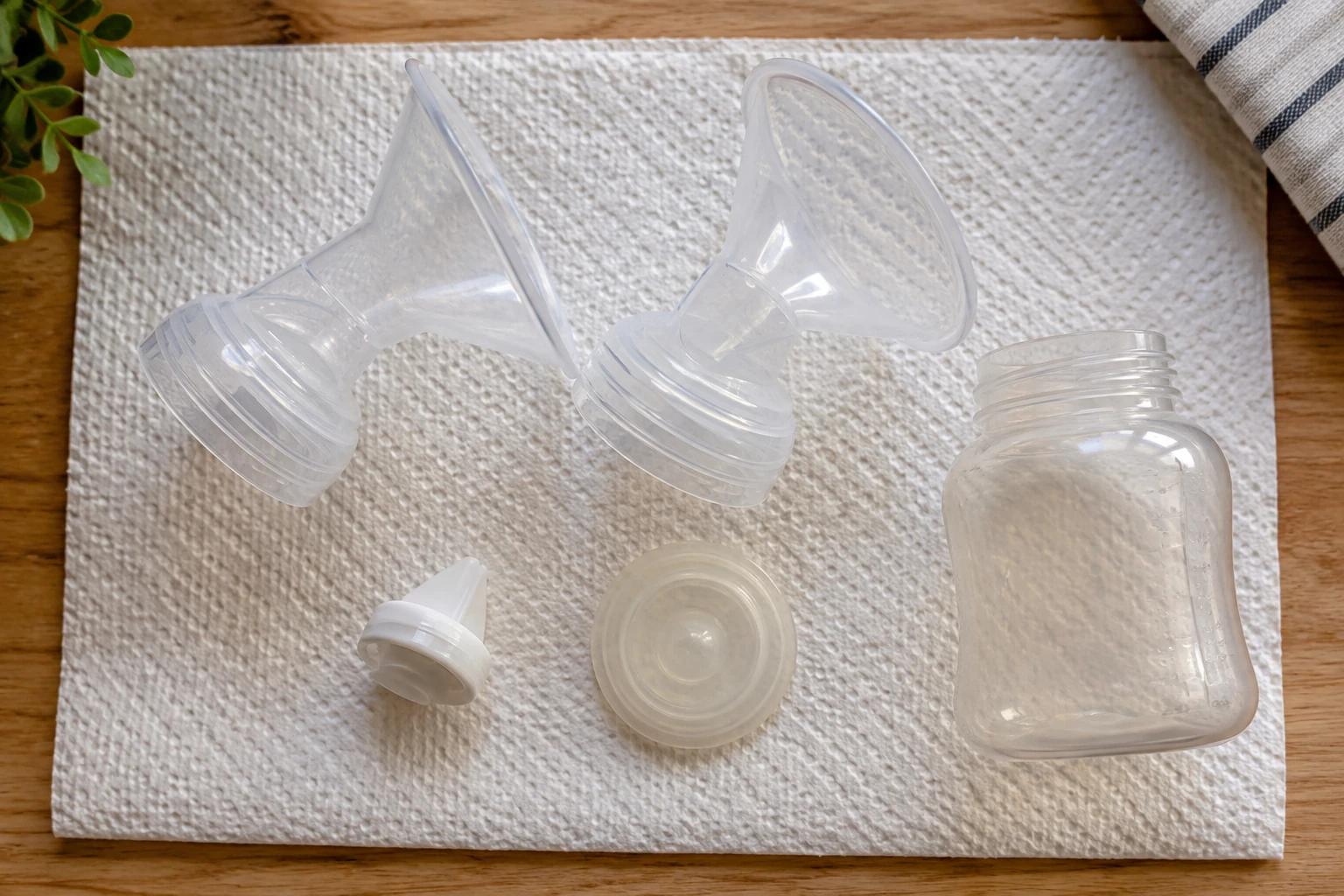
After every pumping session, separate all parts that touch the breast or milk and clean them as soon as possible. [CDC / Washington DOH]
Follow the pump manufacturer’s cleaning instructions, and if a brush is used, choose a clean brush reserved for infant feeding items. [CDC / Washington DOH]
Inspect the clean pump kit before every use, and discard and replace moldy tubing immediately. [CDC / Washington DOH]
Follow the CDC handout’s instruction to wash milk-contact parts after every pumping session rather than treating refrigeration between sessions as the cleaning step. [CDC / Washington DOH]
A scoop used for dry formula needs washing only if dirty or contaminated; wash a soiled scoop as carefully as a bottle and let it air-dry completely before using it again. [AAFP] [FDA release]
Never clean the inside of a formula container; if cleaning an unopened container’s exterior, use a disinfectant wipe or paper towel sprayed with disinfectant and let it dry completely before opening. [FDA release]
Shortcuts to avoid and equipment to replace
Wiping the pump controls and counter does not replace washing milk-contact parts with soap and hot water as directed in the CDC handout. [CDC / Washington DOH]
Check bottles and nipples regularly, and discard cracked or torn nipples and cracked or chipped bottles. [MedlinePlus] [NHS]
The AAFP bottle guide includes a bleach sanitizing option only when the other methods are unavailable, with its own dilution and handling instructions. [AAFP]
This guide does not reproduce a chemical recipe or combine it with a product label from another country. For that option, use the directly linked official instructions and the relevant product guidance. The ordinary routine developed here is washing, a compatible heat method when required, and the drying or storage pathway already identified.
When the next step is medical help
The following is a brief safety boundary for caregivers reading a cleaning guide, not a way to diagnose an infection from a bottle. Describe the baby’s current symptoms and any equipment concern separately when speaking to your pediatrician or another healthcare professional. The guide cannot determine the cause of an illness or decide treatment for an individual baby.
Get emergency medical help immediately if your baby has difficulty breathing, blue or grey lips, or cannot be woken; use your local emergency service. [NHS]
A baby younger than 3 months with a temperature of 38°C or higher needs immediate medical help under the NHS urgent-care guidance. [NHS]
If you are worried about your baby’s symptoms or unsure what to do, seek urgent medical advice rather than waiting for every warning sign to appear. [NHS]
A record for the next caregiver
Use this as a blank household note, not a medical checklist or a timed drying rule. The details most useful to another adult are what was done, which method was used, and what remains unfinished. You can keep it on paper or in your usual family notes; no new tracking app is required.
| Field | Your note |
|---|---|
| Date and caregiver | ________________ |
| Equipment and model | ________________ |
| Regional or individual care instructions | ________________ |
| Disassembly and washing completed | ________________ |
| Sanitizing method and cycle used | ________________ |
| Still drying or dry and stored | ________________ |
| Brush, basin, and rack care | ________________ |
| Damage noticed and replacements | ________________ |
| Unfinished steps and questions | ________________ |
Putting the record into words
Imagine handing over after a feed with one batch already in the cupboard and another still on the counter. The note might read: “The blue-ring bottle is drying; the capped bottles are in the cupboard. I washed the basin and brush. Please check the remaining batch before marking storage complete.” This is a fictional example of wording, not a prescribed schedule or a claim about how long drying takes.
For the method field, describe what actually happened. “Parts separated, hand washed, rinsed” communicates a different stage from “dishwasher cycle finished.” If you used a sanitizing method, record its name separately. If a step was interrupted, leave it unfinished in the note instead of marking the whole routine complete. The aim is to make the next action understandable to the person who was not there.
For an unfamiliar device, the question field might say: “Please check which parts the manufacturer allows in the dishwasher.” For a baby with an individual care plan, it might say: “Please confirm the instructions the healthcare team gave us.” Those are questions to resolve with the appropriate source, not instructions supplied by this article. A record can hold uncertainty honestly; it does not have to present every task as already settled.
Questions that come up at the sink
Can I just rinse a bottle and refill it?
Do not just rinse and refill a used bottle or add fresh milk to a partly used bottle; clean and dry it fully to help prevent germ growth. [AAFP]
Does any dishwasher cycle replace sanitizing?
Texas WIC lists a dishwasher using hot water and a heated drying cycle, or a sanitizing setting, as a method for sanitizing bottle parts and nipples. [Texas WIC]
Can I dry parts with a towel to finish sooner?
Do not rub or pat bottle parts dry with a dish towel, because the towel may transfer germs to the items. [Iowa WIC / CDC]
Does a clean formula scoop need daily washing?
A scoop used for dry formula needs washing only if dirty or contaminated; wash a soiled scoop as carefully as a bottle and let it air-dry completely before using it again. [AAFP] [FDA release]
The short video’s drying reminder
After washing or sanitizing, let parts air-dry completely before storage. [Iowa WIC / CDC] [CDC / Washington DOH]
Don’t rub dry with a towel. [Iowa WIC / CDC] [CDC / Washington DOH]
Check local sanitizing guidance. [Texas WIC] [NHS]
Official sources
- Texas WIC — How to Mix Infant Formula — Safe Formula Preparation
- CDC / Washington DOH — How to Keep Your Breast Pump Kit Clean
- NHS — Sterilising baby bottles
- NHS — When to get urgent medical help for babies and children under 5
- HSE — How to prepare equipment for bottle feeding
- Iowa WIC / CDC — Infant Nutrition Module — cleaning and sterilizing bottles, printed pages 9–10
- AAFP — Preparing for Parenthood: How to Clean Baby Bottles
- MedlinePlus — Buying and caring for baby bottles and nipples
- FDA release — What to Know About Safely Handling Infant Formula
This article is general parent education, not an individual diagnosis or prescription, and has not been reviewed by a named clinician. It explains the linked US and UK sources; your baby’s healthcare team and equipment instructions remain the place for individual questions. Photographs are AI-generated illustrations of the described equipment and routines.