Mastitis and Engorgement: What Helps

Mastitis and engorgement need gentle care: use cold for comfort, feed to your baby’s cues, and avoid deep massage or extra pumping to “empty” the breast.
For the adult who is breastfeeding or pumping, the immediate decisions are how to ease pain, keep feeding manageable and recognize when to get help.
SUMMARY
- Never deeply massage a sore breast.
- Feed as tolerated; do not pump extra.
- Get medical help if symptoms worsen at any time or do not improve within 12–24 hours of home care.
What might be happening?
| Situation | Typical pattern |
|---|---|
| Early engorgement | Early postpartum engorgement usually causes fullness, firmness and pain in both breasts around days 3–5 after birth, although timing varies. |
| A tender firm patch | A so-called blocked duct can feel like a tender firm patch; inflammation and swelling narrow the milk passages rather than leaving a solid plug to squeeze out. |
| Mastitis symptoms | Mastitis often starts quickly in one breast with heat, swelling and pain, sometimes with fever, chills or body aches. |
Redness can be harder to see on darker skin, so also pay attention to warmth, swelling and pain.
Fever can occur with inflammation even without a bacterial infection; a clinician decides whether antibiotics are needed.

Keep feeding manageable
Extra milk removal can drive more production and worsen swelling, so do not add pumping sessions just to clear a lump.
Continue feeding to your baby’s cues as comfortably as possible, without trying to empty the affected breast.

If a very full breast makes latching difficult, hand express a little milk to soften the area before trying again, and ask a feeding specialist to check the latch.
If feeding is too painful or your baby refuses the affected side, hand express only enough for your baby’s feed rather than repeatedly draining the breast.
If severe swelling stops milk flowing even with gentle hand expression, do not force repeated attempts on that side; use the other breast and get prompt feeding support until swelling eases.
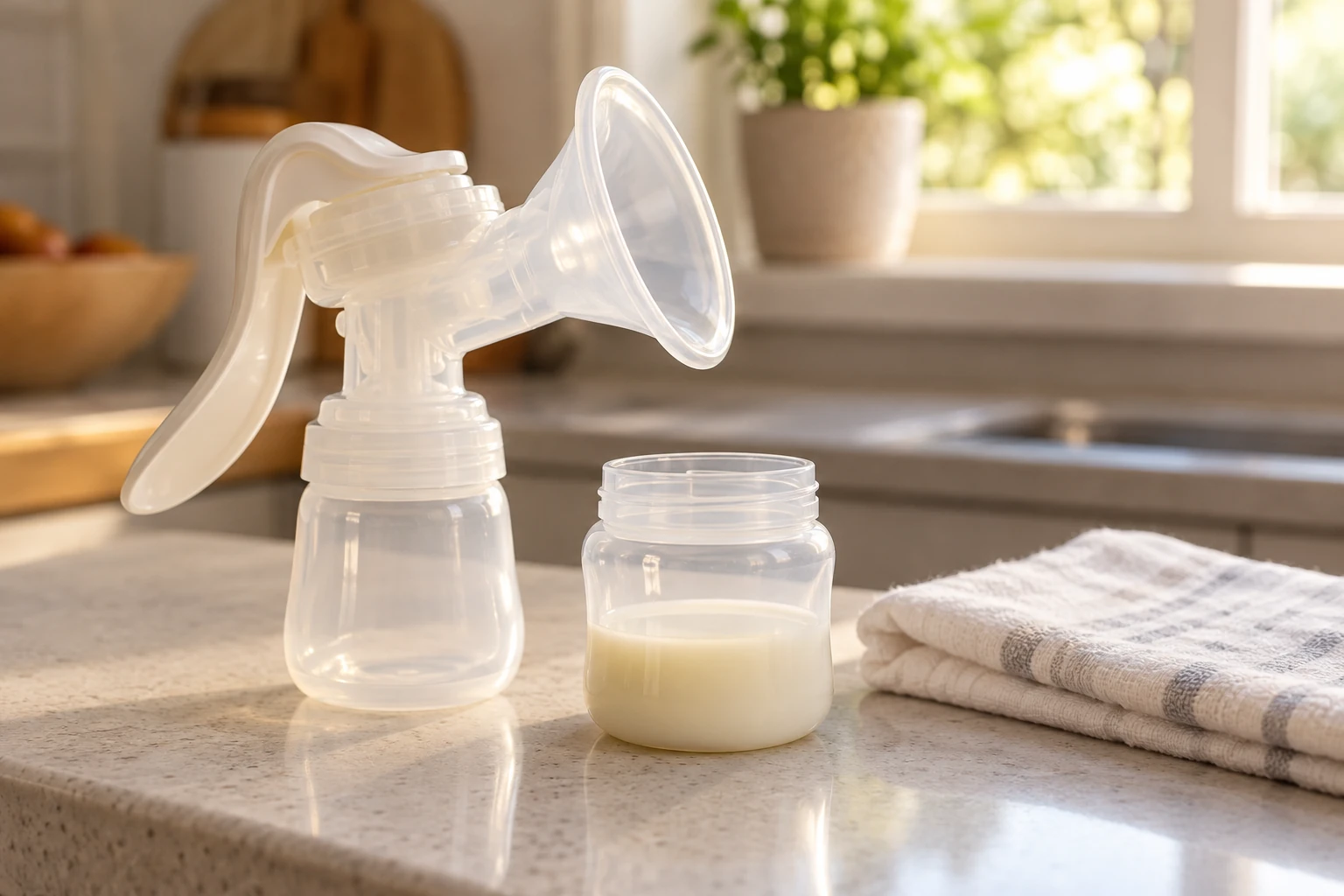
If you exclusively pump or are separated from your baby, keep expression close to your baby’s usual feeding frequency and intake, with a comfortable flange fit and suction rather than stronger or longer pumping.
Cold, comfort and pain relief
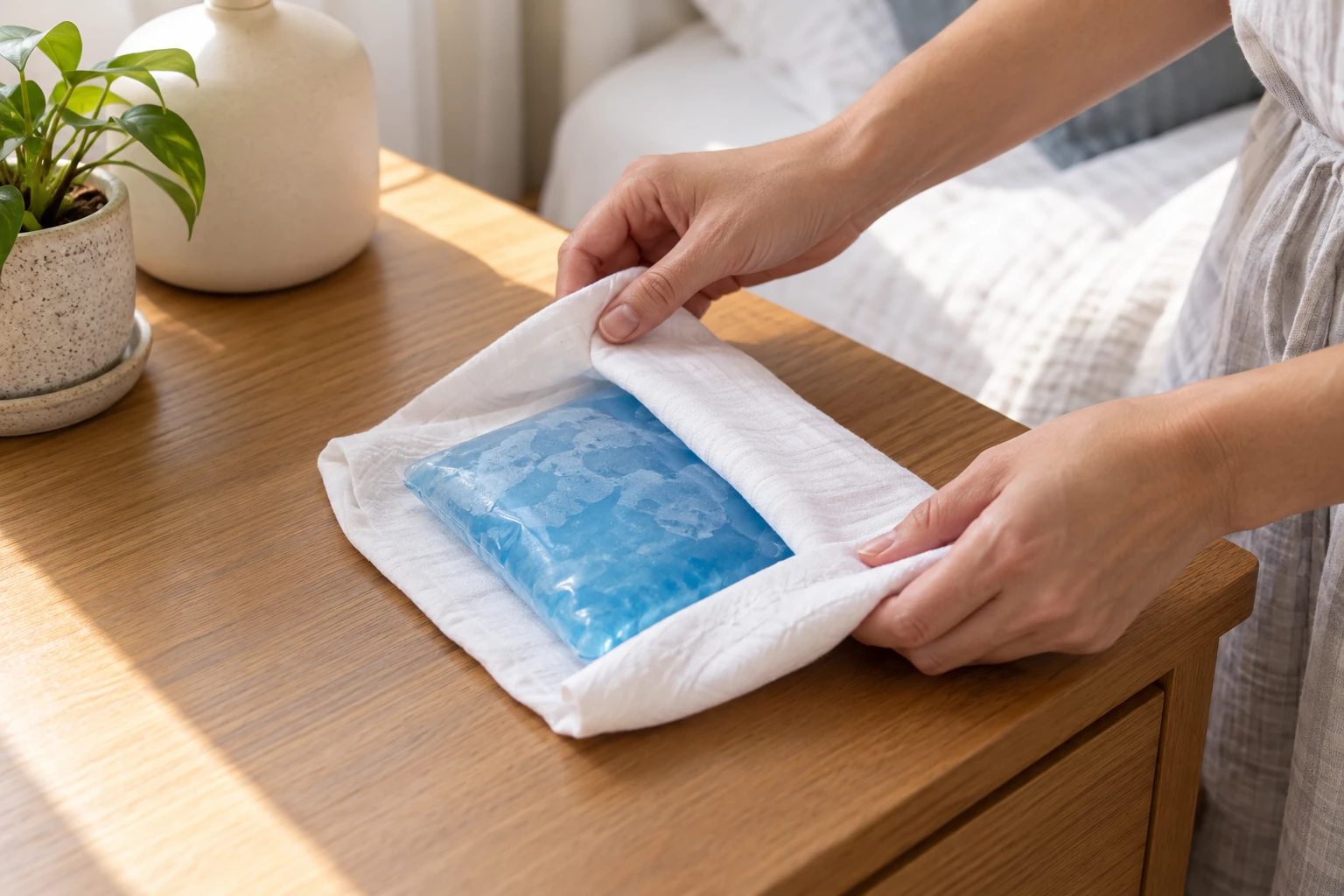
For pain, place a cloth soaked in cold water on the sore breast for 10 minutes every hour.
Rest when you can and wear a comfortable supportive bra that does not press tightly on the breast.
Heat may feel comforting briefly, but strong or prolonged heat can worsen inflammation; cold is the main comfort measure here.
Paracetamol can relieve pain during breastfeeding; ibuprofen may also be suitable, but check with a pharmacist or clinician before using it, follow the product directions and discuss any medical conditions or other medicines.
Avoid making the sore area worse
Do not use a vibrating massager, electric toothbrush or forceful kneading to break up a lump; these can injure tissue and increase inflammation.
Avoid salt-water or Epsom-salt soaks and oils on the breast as a treatment for mastitis.
Do not stop breastfeeding suddenly because you have mastitis; get help planning a gradual change if you want to wean.
When home care is not enough
Get medical help if symptoms worsen at any time or do not improve within 12–24 hours of home care.
If you feel increasingly unwell, or fever or a racing heartbeat lasts beyond 24 hours, get medical assessment rather than continuing home treatment alone.
A painful hot or red breast with a lump or swelling needs urgent medical advice, particularly if the lump grows or you feel unwell.
An abscess is a collection of pus; a clinician may arrange ultrasound, and treatment usually needs drainage rather than massage.

If antibiotics have not started helping after 48 hours, contact the prescriber again for reassessment.
Call your local emergency number immediately for confusion, slurred speech, very fast breathing, or blue, pale or blotchy skin when you are unwell.
If you are not breastfeeding and develop mastitis-like symptoms, see a clinician rather than assuming it is a blocked milk duct.
Questions that come up next
Can my baby have milk from the sore breast?
Bacterial mastitis itself is not a reason to throw away your milk: feeding from the affected breast is generally safe for your baby.
If medicine is prescribed, confirm that the specific medicine is suitable for breastfeeding.
What about a white spot on the nipple?
Do not pop, scrape or pierce a white nipple bleb; this can injure the nipple and worsen narrowing, so ask a clinician about persistent pain.
Why does the same spot keep hurting?
If symptoms keep returning, arrange a feeding and medical review; repeated inflammation in the same place may need imaging to check for an underlying problem.