Breast Pump Flange Sizing: Measure in mm
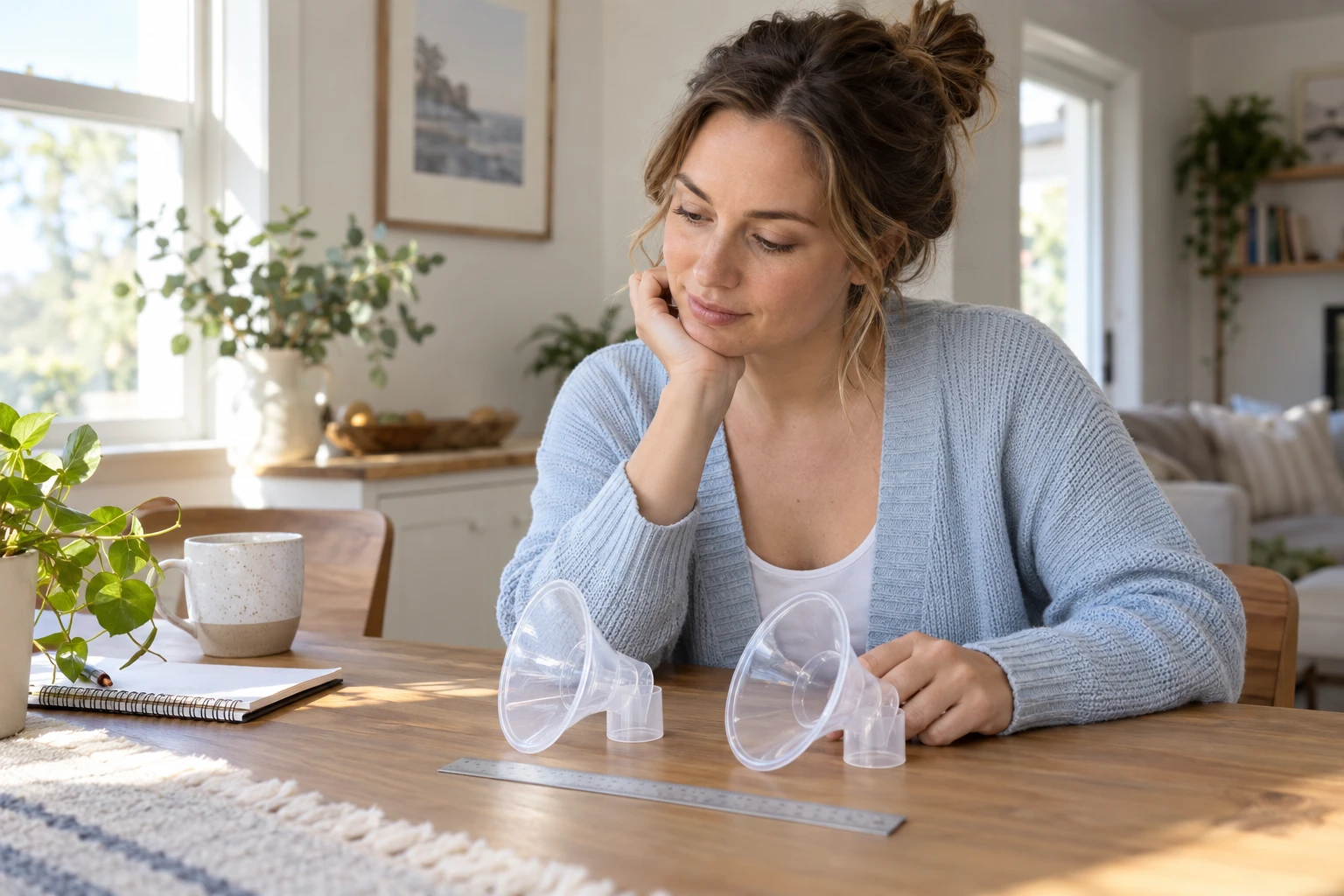
For breast pump flange sizing, measure each nipple at its base in mm, excluding the areola, then use your pump’s guide and check comfort while pumping.
SUMMARY
Measure both sides separately.
Choose a starting size from your pump’s current sizing guide.
If pumping hurts, pause and check fit and suction.
What the size refers to
The flange is the funnel-shaped part against the breast; its tunnel is the passage where the nipple moves.
The nipple is the projecting part; the areola is the surrounding darker skin.
Breast size does not tell you nipple diameter, so bra size cannot select a flange.
Measure the nipple, not the surrounding skin
Measure before a feed or pumping session, rather than immediately afterward.
Use a millimeter ruler to measure across the nipple base, from one edge to the other, without including the areola.
If the nipple base is oval, measure its widest diameter.
The two nipples may need different flange sizes.
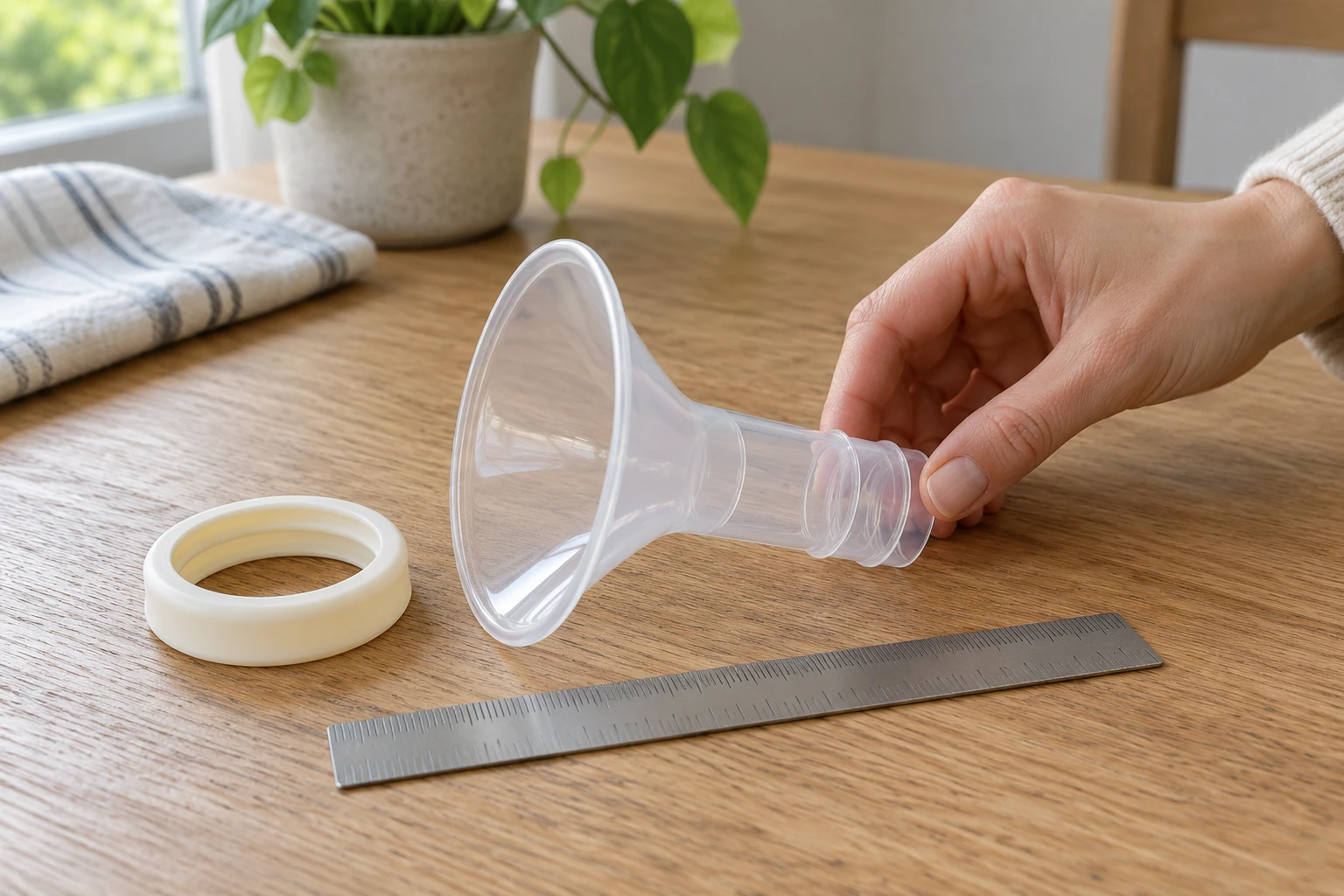
If you use a printed tool
Print a paper sizing tool at 100% scale.
For the Elvie paper tool, check that a credit card’s short edge matches the calibration line before measuring.
With that tool, choose the opening closest to the nipple base without touching or squeezing it.
Turn the measurement into a starting choice
Nipples can widen and lengthen under suction, so a measurement is only a starting point.
Medela’s Canadian guide adds 4 mm to nipple diameter, then chooses the closest available shield or insert tunnel as a starting size.
Its example starts with a 15 mm nipple: 15 + 4 = 19 mm, with 18 mm selected as the closest available starting size.
Use this as a Medela example, not a size conversion rule for every pump or insert.
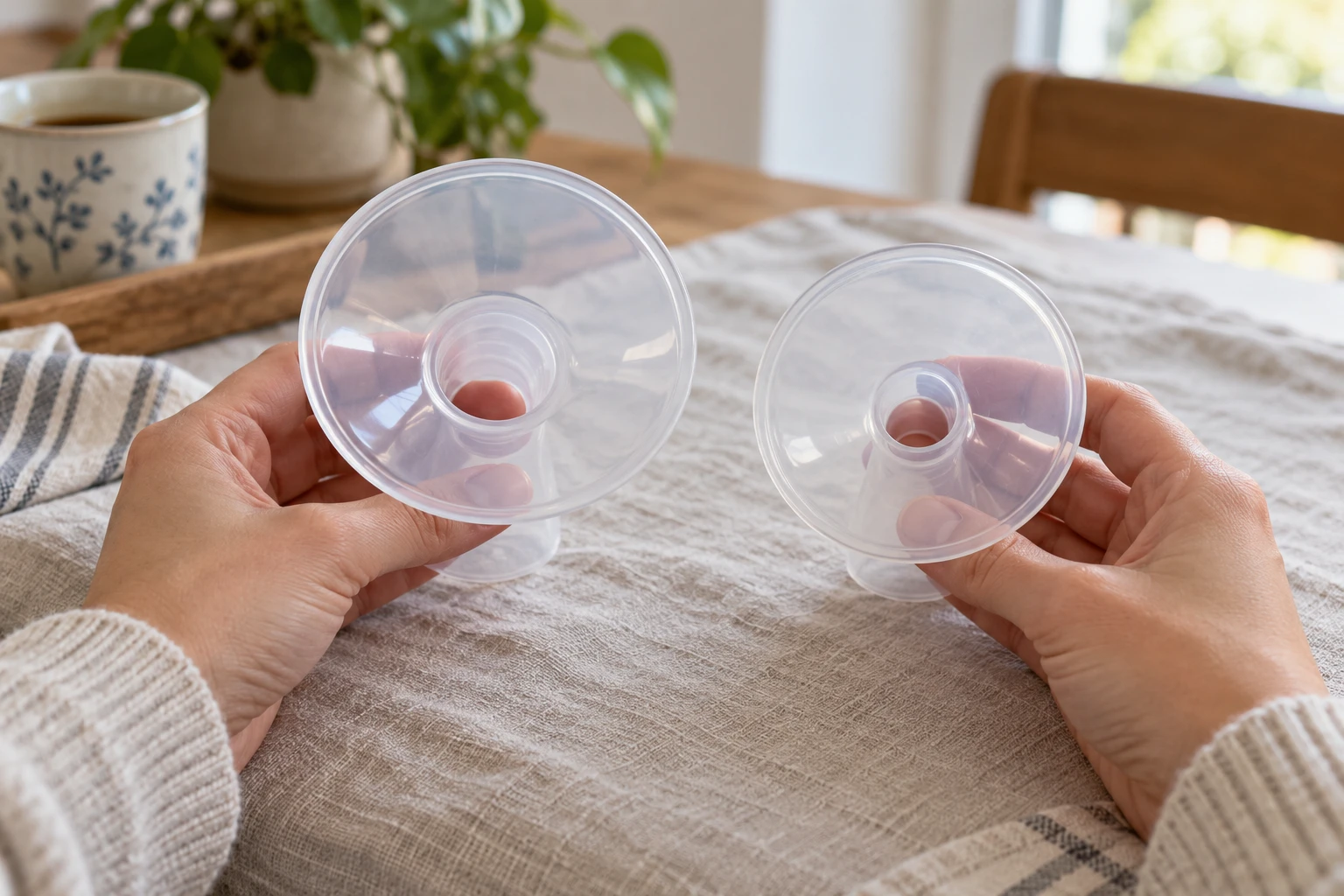
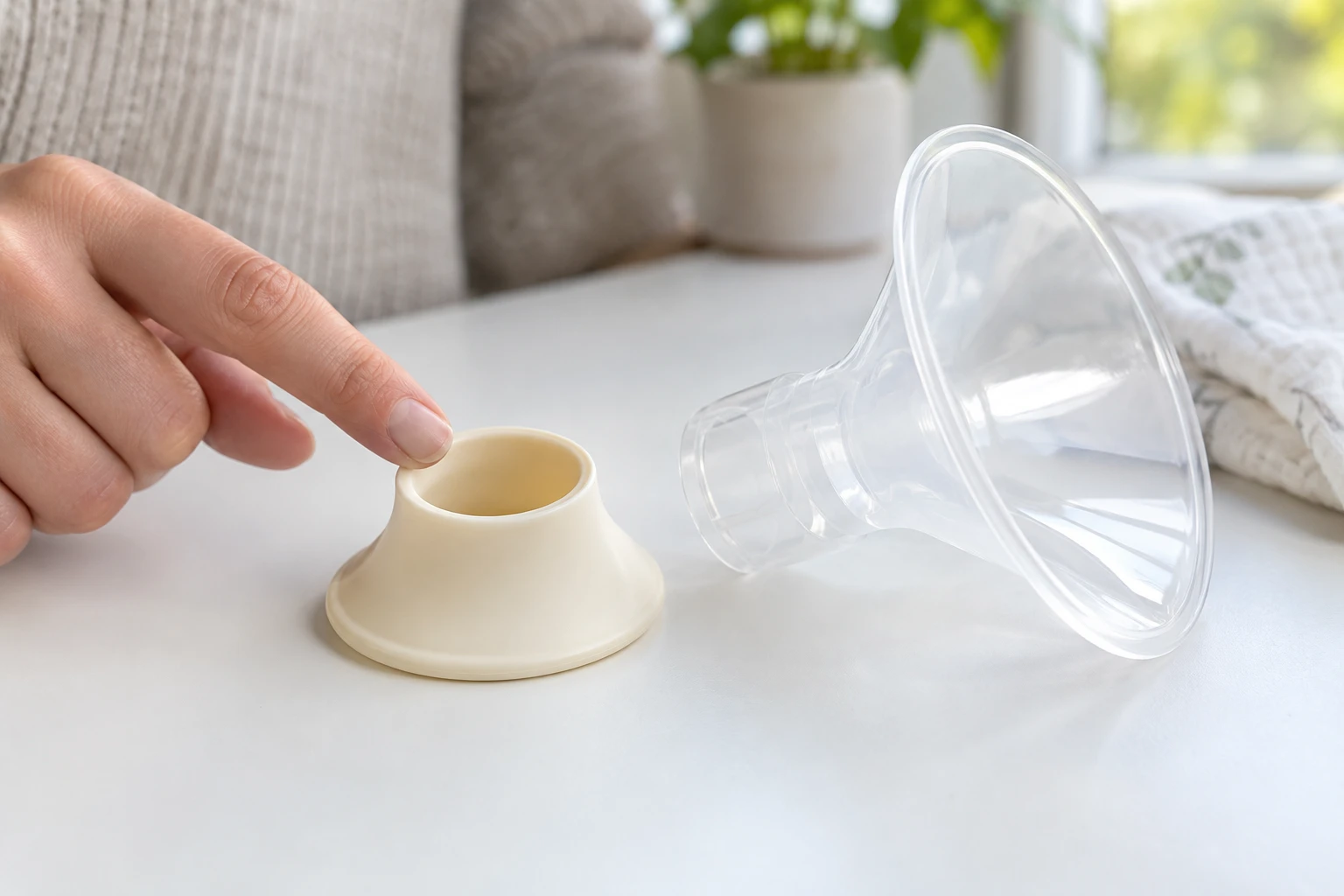
Before buying an insert, check the manufacturer’s instructions for compatibility with your pump and shield.
Try the fit while pumping
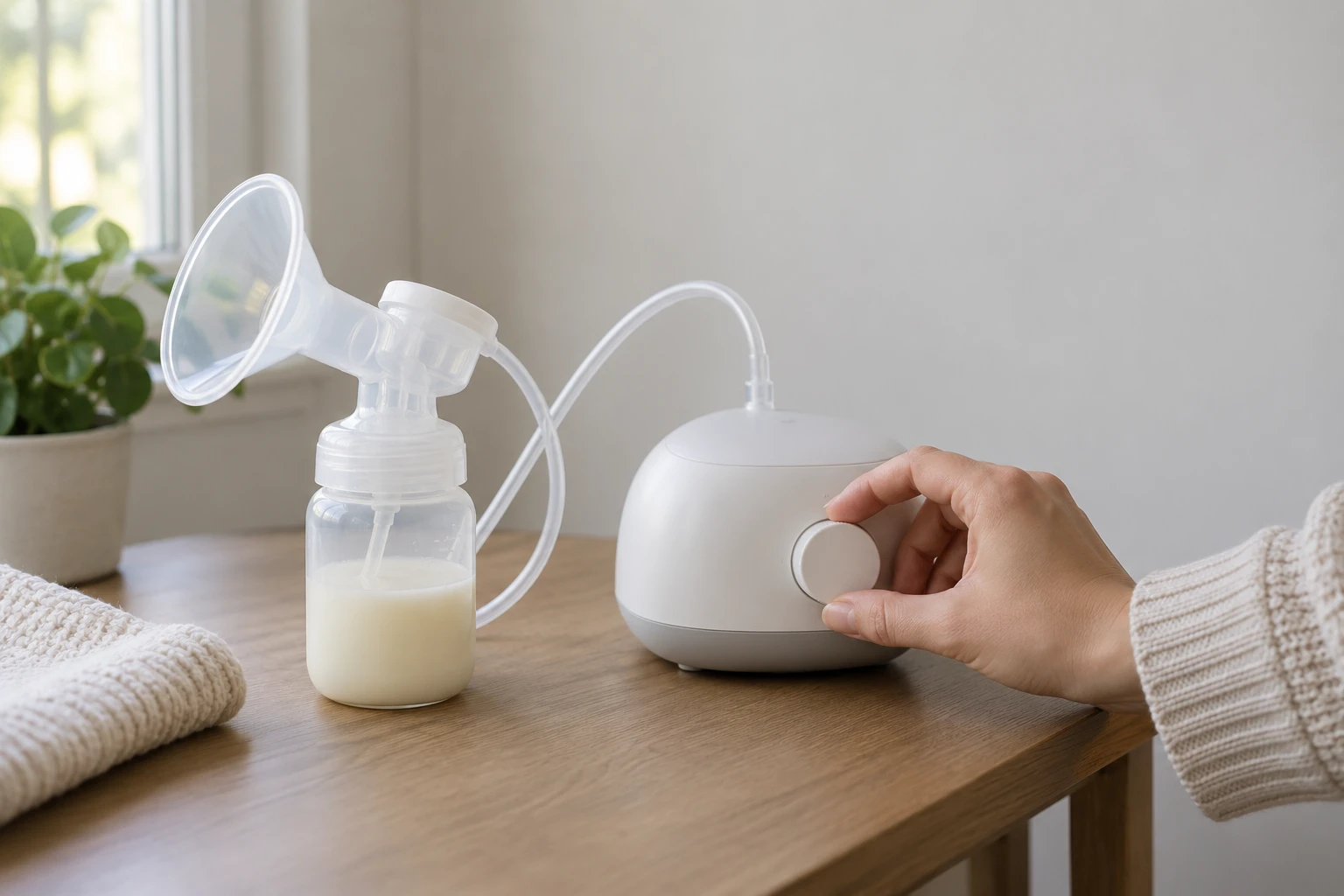
A good fit lets the nipple move freely without painful rubbing.
- Center the nipple in the tunnel and hold the flange gently against the breast without pressing it in.
- Start with low suction and increase gradually only while it remains comfortable.
- After milk lets down, check that it flows freely and that the breasts feel softer and comfortable after pumping.
The pump should not bruise the breast or catch the nipple in the funnel.
When something feels wrong
| What you notice | What to check |
|---|---|
| Painful rubbing | If a centered nipple rubs painfully against the tunnel, a larger size may be needed. |
| Excess areola drawn in | If too much areola is pulled into the tunnel, a smaller size may fit better. |
| Skin color changes | Whitening or increasing redness during pumping is a reason to reassess fit and comfort. |
Milk volume varies with lactation stage and feeding patterns, so assess movement and comfort as well as output.
Recheck size if comfort or nipple shape changes during your pumping journey.
When to get help
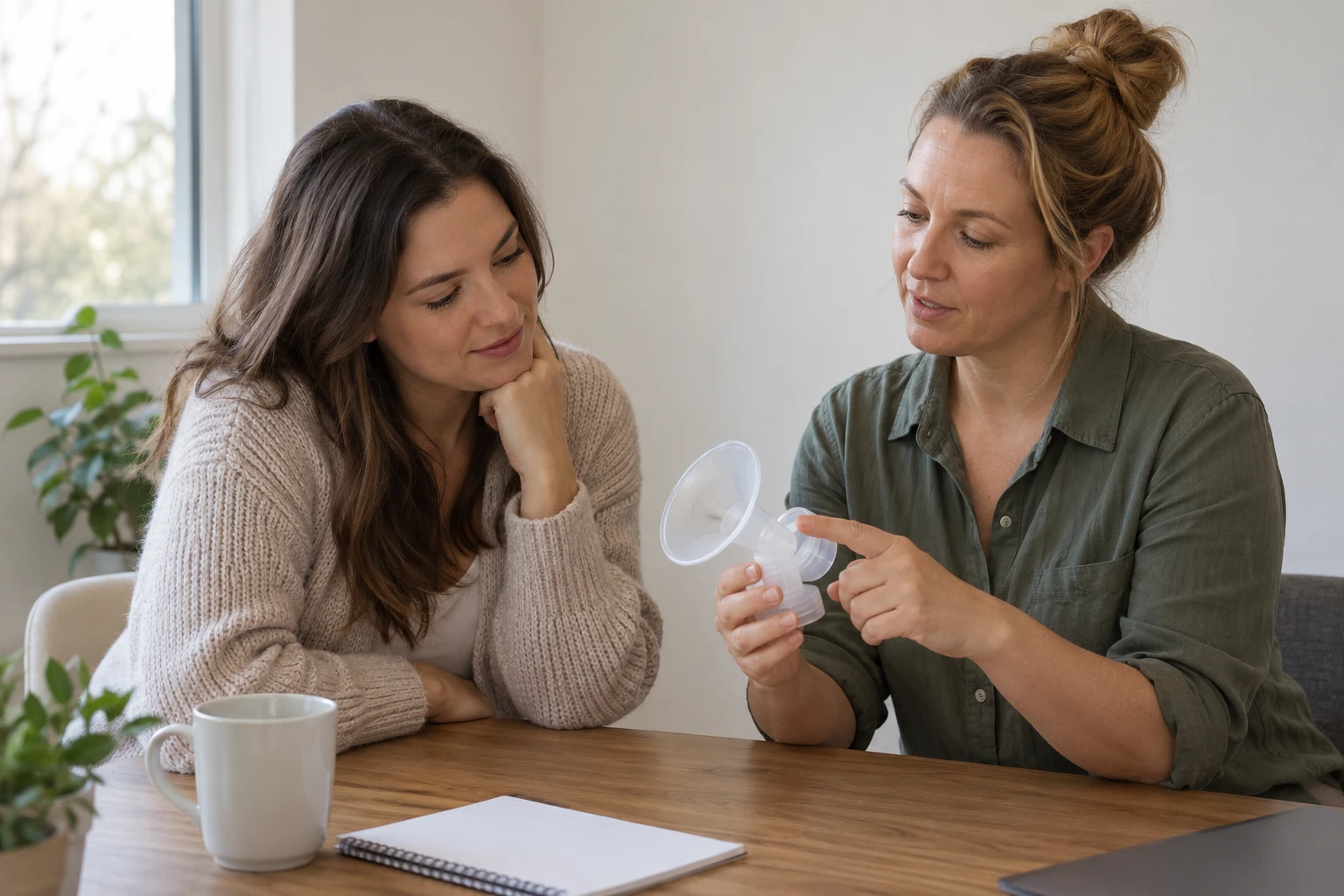
If discomfort continues after adjusting size, alignment and suction, ask a lactation professional or clinician to watch a pumping session.
Seek help promptly for cracked or bleeding nipples.
Seek urgent medical advice if any part of the breast is red, hot or swollen, or if breast pain comes with a very high temperature, feeling hot or cold, or shivering.
A question before buying
Does a pregnancy measurement still count?
A pregnancy measurement is provisional because nipple size can change after birth and during ongoing pumping.