Hospital Bag Checklist: Mom, Baby and Dad
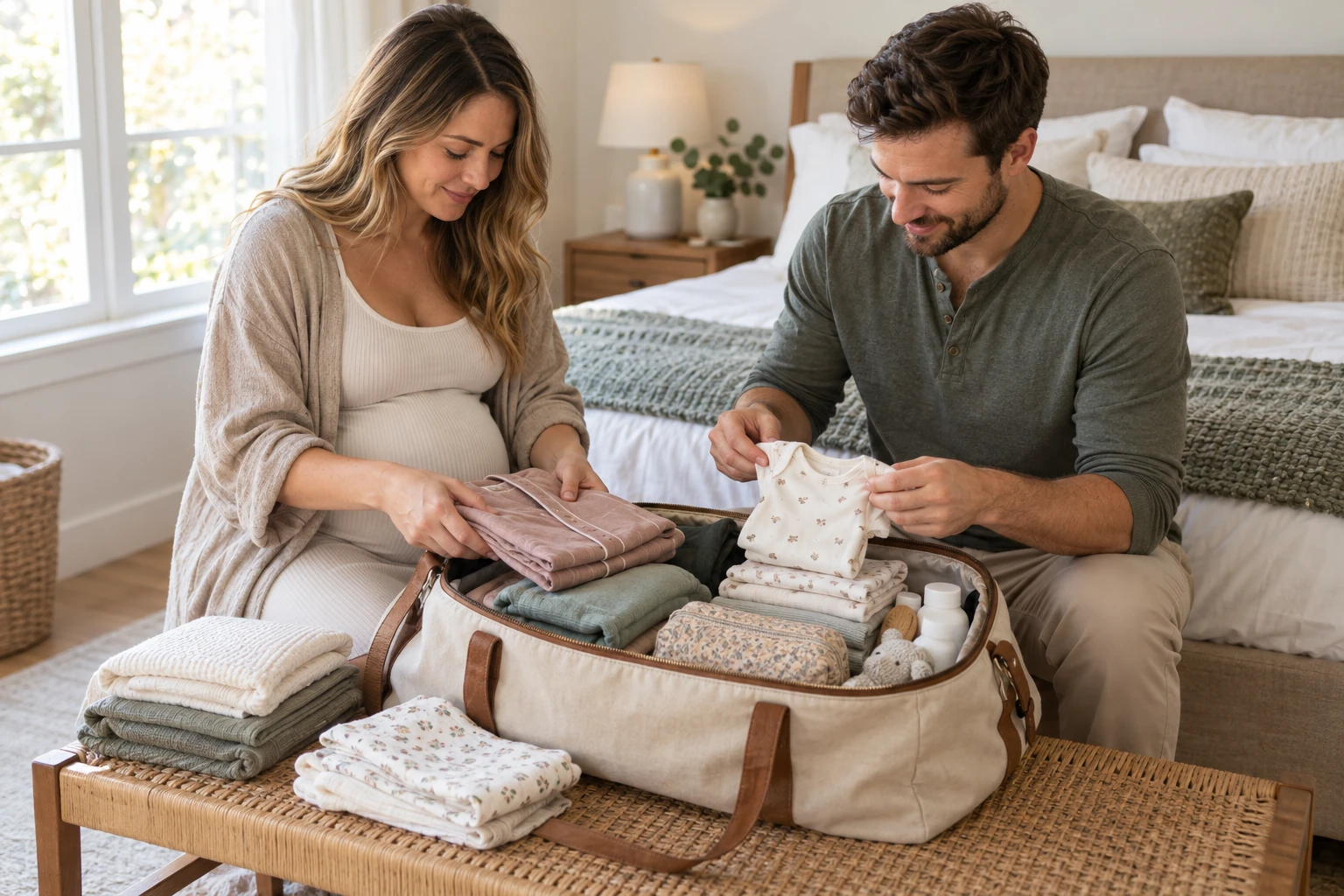
Pack maternity records and medicines, comfortable clothes and maternity pads, newborn clothes and nappies, and your partner’s essentials.
For the weeks before birth and the first newborn days, work through the mother’s, baby’s and partner’s items together. Start with the hospital’s own list, then use the sections below to sort the bag.
SUMMARY
- Ask your maternity unit what you need to bring before buying extra supplies.
- Aim to have your bag packed at least 3 weeks before your due date.
- Use a rear-facing car seat for your newborn’s first car ride home.
Before buying or packing more
Confirm the required paperwork, baby supplies and visiting arrangements with your hospital.
The timing and quantities here are UK packing suggestions; confirm your own hospital’s requirements.
Pack lightly because hospital storage space is limited, and leave valuables at home.
One practical way to organize the bag is to use a pouch for admission, one for the mother and one for the baby, with the partner’s things in a separate small bag. Put items you want first near the opening.
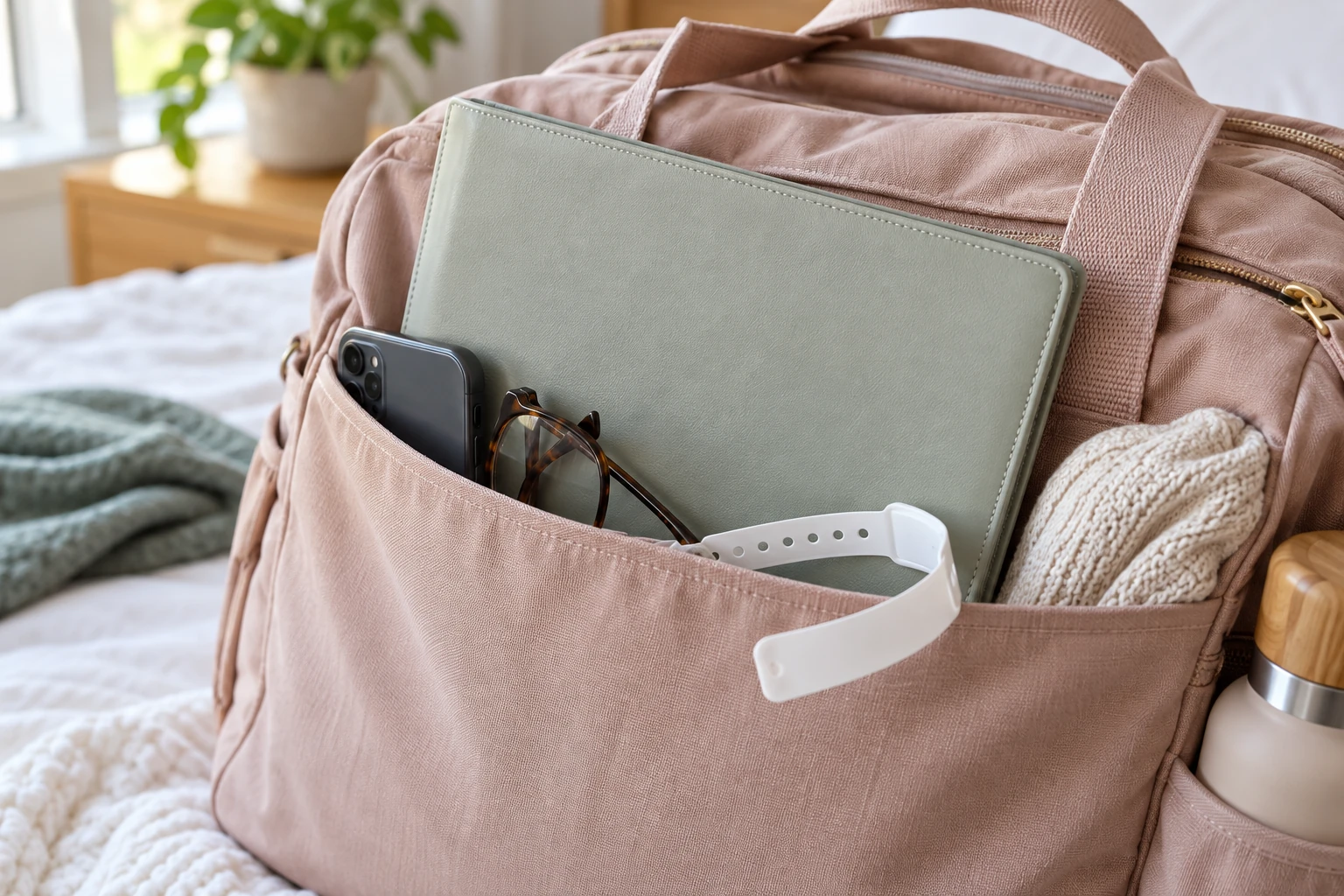
For the mother
Think in terms of labour, washing and changing, feeding, and going home.
| Packing group | What to bring |
|---|---|
| Records | Bring your pregnancy records, hospital paperwork and a birth plan if you have one. |
| Medicines | Bring any prescribed medicines you take. |
| Clothing | Pack loose clothes for labour, nightwear and 3 changes of comfortable clothing. |
| Underwear and bras | Allow 5 or 6 pairs of underwear and 2 or 3 comfortable bras as a packing guide. |
| Feeding access | If you plan to breastfeed, choose front-opening or loose nightwear and include nursing bras. |
| Pads | Pack 2 packets of highly absorbent maternity or sanitary pads, plus breast pads. |
| Washing | Bring a toothbrush, toothpaste, lip balm, hairbrush, washcloth and towels. |
| Footwear | Pack slippers and waterproof sandals for the shower. |
| Everyday items | Include a refillable water bottle, snacks, your phone and its charger. |

For the newborn
Wash baby clothes before packing them.
| Packing group | What to bring |
|---|---|
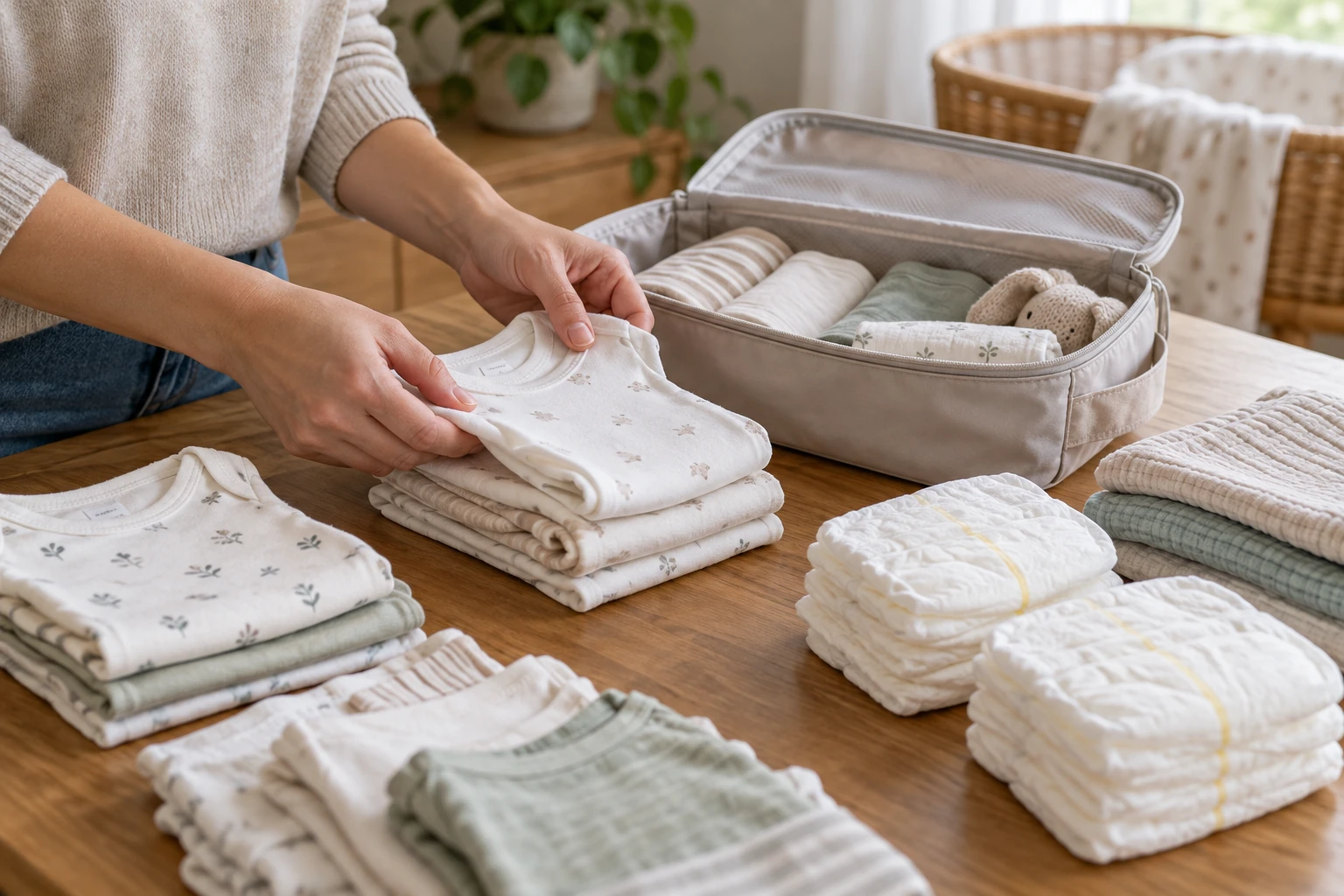
| Clothes | Pack bodysuits, sleepsuits, socks, a cardigan and an outfit for going home. |
| Changing | Include newborn nappies, cotton wool or baby wipes, and muslin cloths. |
| Quantity | Ask your hospital how many clothes and nappies to bring for your expected stay. |
For the husband or birth partner
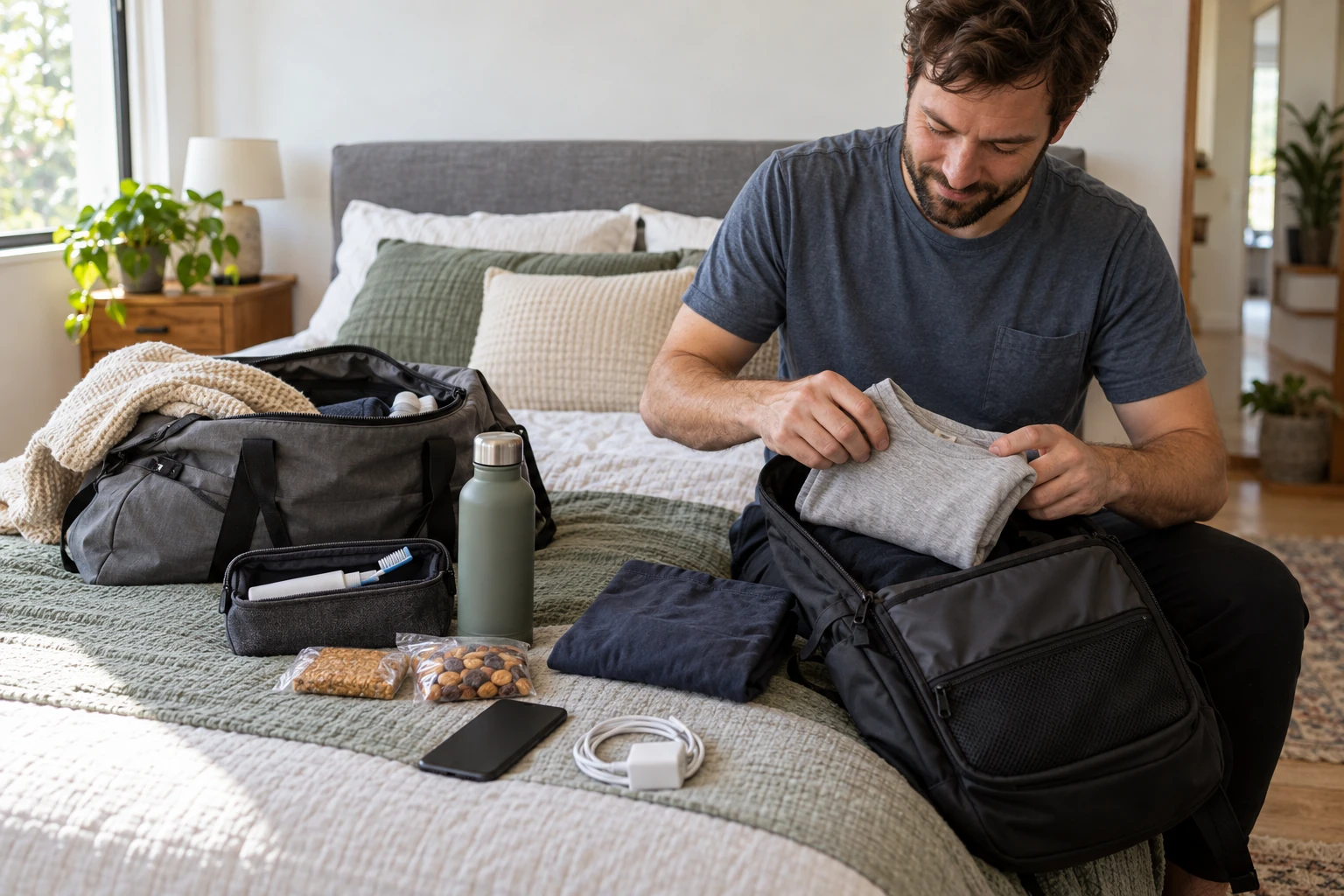
Give the partner’s essentials their own space. Walk through where things are together so either person can find them.
For your husband or birth partner, pack a change of clothes, toiletries, phone and charger, snacks, drinks, regular medicines and glasses if needed.
Plan the route and parking, and save the maternity unit’s phone number.
If you have other children or pets, arrange who will care for them while you are away.
The trip home belongs on the checklist
Your newborn needs a car seat for the drive home.
Choose a car seat suitable for your newborn that fits your vehicle, and practise installing it before birth.
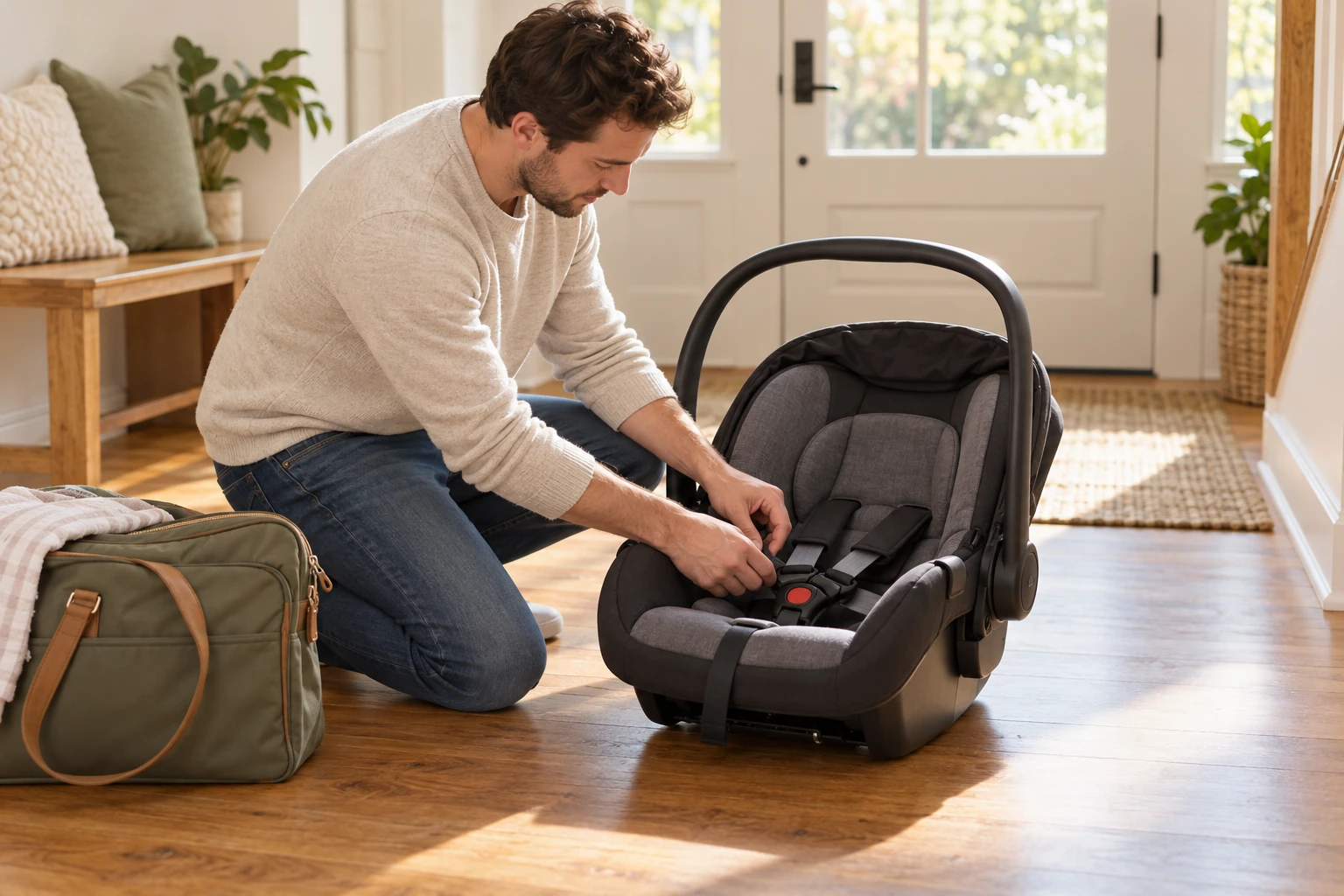
Use the back seat and follow both the car-seat manual and vehicle manual for installation.
Never put a rear-facing car seat in front of an active passenger airbag.
Dress your baby in thin layers under a snug harness; if needed, put a blanket over the buckled harness rather than underneath it.
If your baby is premature or very small, ask the hospital team to assess the right seat and travel position before discharge.
Questions before closing the bag
Should I buy formula and bottles for the stay?
Ask your maternity unit which feeding supplies to bring for your planned feeding method.
Does the car seat need to come onto the ward at admission?
You can plan to bring the car seat on discharge day; check the timing with your maternity unit.
What if we forget something?
Your partner or support person can bring items you forgot.
Sources
- NHS — Hospital bag checklist – what to pack for you and your baby
- Health Service Executive — Hospital bag for labour and birth
- Pregnancy, Birth and Baby / Healthdirect Australia — Birth bag checklist
- American Academy of Pediatrics / HealthyChildren.org — Rear-Facing Car Seats for Infants & Toddlers
- NHS — Choosing a baby car seat