Baby Safe Sleep Space Guide

A safe sleep setup is deliberately simple: place the baby on the back on a firm, flat, level infant sleep surface covered only by a fitted sheet. Repeat the same setup for every nap and night.
SUMMARY
Place baby on the back for every sleep. Use a safety-approved crib, bassinet, or portable play yard with a firm, flat, level mattress and fitted sheet only. Keep pillows, blankets, bumpers, toys, positioners, weighted products, and loose items out. Share a room but not a sleep surface for at least the first six months.
Start every sleep on the back
Begin with back for every sleep. Place the baby on the back for naps and nighttime sleep, even if another position seems calmer. Side sleeping is unstable and can become stomach sleeping. Reflux does not make stomach sleeping, a wedge, or an inclined mattress safer for a healthy infant. The airway anatomy and gag reflex help protect a baby who spits up while lying on the back. A clinician may create an individual plan for a rare medical condition, but a product advertisement or social video should never replace that advice.
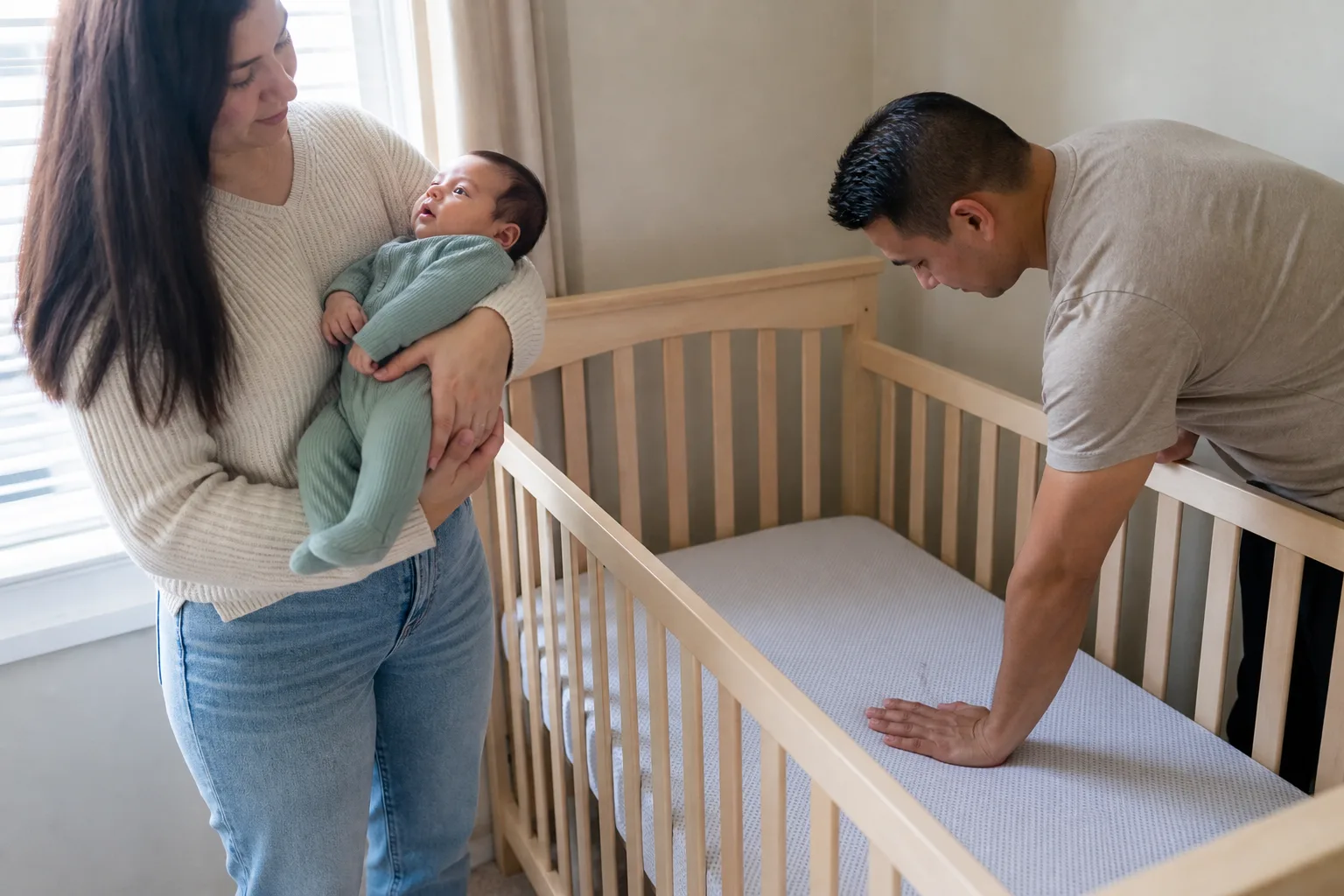
Use a surface designed for infant sleep
Check firm flat and level. A safety-approved crib, bassinet, or portable play yard should have a firm mattress or pad that returns to shape, stays flat like a table, and remains level rather than angled. It must fit the product without dangerous gaps. Adult mattresses, sofas, armchairs, beanbags, nests, and padded loungers are not substitutes. Check current local product standards, assembly instructions, age and weight limits, and recall information. Never add another mattress or soft layer to make the surface feel more comfortable.
Keep the sleep area completely clear
Maintain fitted sheet only. Cover the approved mattress with one tight fitted sheet and remove pillows, quilts, loose blankets, bumpers, stuffed toys, loveys, positioners, wedges, pods, and weighted blankets or swaddles. Keep cords, monitor leads, curtain strings, bags, and small objects outside reach. A bare-looking crib is not unfinished; it is the intended setup. Inspect the space before every sleep because another caregiver, older child, or daytime routine can place an object back without realizing the risk.
Room share without bed sharing
Place the infant sleep space near the caregiver's bed for at least the first six months. Room sharing means close but separate surfaces. The baby does not sleep on the adult mattress, sofa, armchair, or with another child, adult, twin, or pet. Proximity can make feeding and checking easier without adding soft bedding to the baby's space. Position the crib so adult bedding cannot fall inside and so cords remain out of reach. If the room is small, preserve a safe walkway and follow the sleep product's clearance and assembly instructions.
Plan nighttime feeding before exhaustion hits
Feed and comfort the baby while awake, then return the baby to the separate clear sleep space before you sleep. Sofas and armchairs are especially dangerous places to doze with an infant. If you might fall asleep during a feed, plan support from another adult and remove hazards from the feeding area, then move the baby back as soon as you wake. Avoid alcohol, smoking, and sedating substances around infant care. A practical handoff states when the baby last fed and confirms that the crib is clear.
Move sleep out of sitting devices
Car seats are essential for travel but are not regular sleep spaces at home. If the baby falls asleep in a car seat, stroller, swing, sling, or other sitting or carrying device, transfer to a firm, flat, level infant sleep surface as soon as practical after travel. Support the head and body during the transfer and keep the crib ready. Never place a car seat on a bed or soft surface. Follow harness instructions during travel, and never loosen the harness merely to make sleep look more comfortable.
Adjust safely when rolling begins
Discuss room share separate surface when motor skills change. Keep placing the baby on the back at the start of every sleep. If the baby can roll both ways independently and rolls after being placed down, repeated repositioning is not necessary, but the sleep area must remain completely empty. Stop swaddling as soon as the baby shows signs of trying to roll. Never use a strap, wedge, blanket, or anti-roll positioner to hold a pose. Check product milestones and ask the pediatrician about unusual movement or developmental concerns.
Know when sleep behavior needs help
Safe-sleep setup reduces risk but does not diagnose illness or guarantee prevention of SIDS. Call the pediatrician for repeated pauses that concern you, unusual noisy breathing, poor feeding, fever in a young infant, marked sleepiness, or a major change from baseline. Seek emergency help for severe breathing difficulty, blue or gray color, a seizure, limpness, or difficulty waking. Do not rely on a consumer monitor to rule out danger, and do not delay emergency action while reviewing an app recording or rearranging the room.
Make a ten-second pre-sleep check
Before placing the baby down, confirm five things: back position, approved infant product, firm flat level surface, fitted sheet only, and no reachable objects. Look above and beside the crib for cords or adult bedding. Confirm the baby is not overheated and keep the head uncovered. Repeat the check at home, childcare, relatives' homes, and hotels. A short consistent routine is easier for every caregiver to remember than a collection of products. Write the rules near the changing area rather than placing a sign or object on the crib.
Avoid products that promise prevention
No consumer product can prevent SIDS. Positioners, wedges, inclined sleepers, special mattresses, and monitoring claims can create false reassurance or add hazards. Weighted sleep products are not safe for infants. Use sleep products only for their approved purpose and within their limits. Registration cards and recall alerts help caregivers learn about safety notices. If a baby has reflux, prematurity, airway disease, or another condition, ask the treating clinician for a specific plan instead of buying a device that claims to maintain one position.
Keep temperature and clothing simple
Dress the baby for the room without hats indoors or excessive layers. Check the chest or back rather than cool hands alone; sweating, a hot chest, or flushed skin can suggest overheating. A wearable sleep garment may be used only if it is correctly sized, unweighted, appropriate for the baby's development, and does not cover the head or face. It never changes the need for a clear crib. Keep smoke and vaping exposure away from the baby before and after birth, and maintain routine immunizations and clinical care.
Give every caregiver the same instructions
Grandparents, babysitters, childcare workers, and partners should hear the complete setup, not only 'watch the baby.' Demonstrate where the approved sleep space is, remove decorative items before the handoff, and explain that the rules apply to short naps too. State that the baby begins on the back and that a sleeping baby in a sitting device moves to the crib. If rolling has started, explain the swaddle plan. Consistent instructions reduce improvisation during a tired night and make it easier to spot when a product or room has changed.
Frequently asked questions
Can one wet diaper rule out dehydration?
No. Use the full-day trend, feeding, and whole-body signs.
Should I give water to fix a low count?
Not to an infant under six months unless a clinician specifically directs it. Ask your pediatrician.
Can I wait until the log is complete?
No. Emergency signs or a clear contact threshold take priority over documentation.
Sources
This article provides general information and is not medical advice. Ask your pediatrician about reduced urine, feeding concerns, or guidance tailored to your baby.