Diaper Size Guide: 5 Signs to Size Up
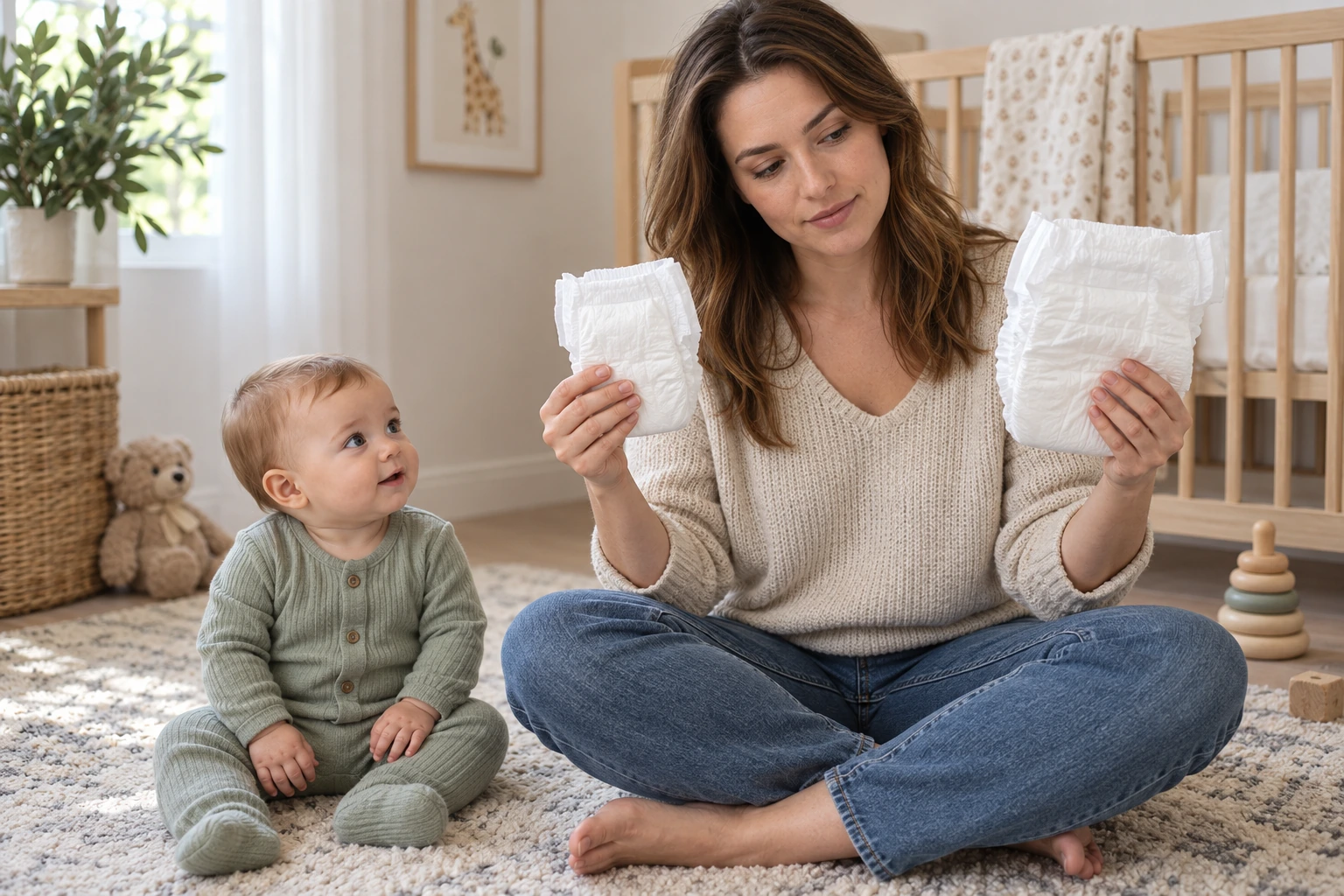
Choose a diaper using your child’s current weight and the product’s size range, then check the fit at the waist, legs and bottom.
SUMMARY
- Start with the pack’s weight range.
- Pull the leg ruffles outward.
- Reassess the size if it leaves red pressure marks.
For caregivers choosing disposable diapers for newborns, babies or toddlers, the decision is whether to keep the current size, adjust the fit or try the next size.
Start with weight, then check the fit
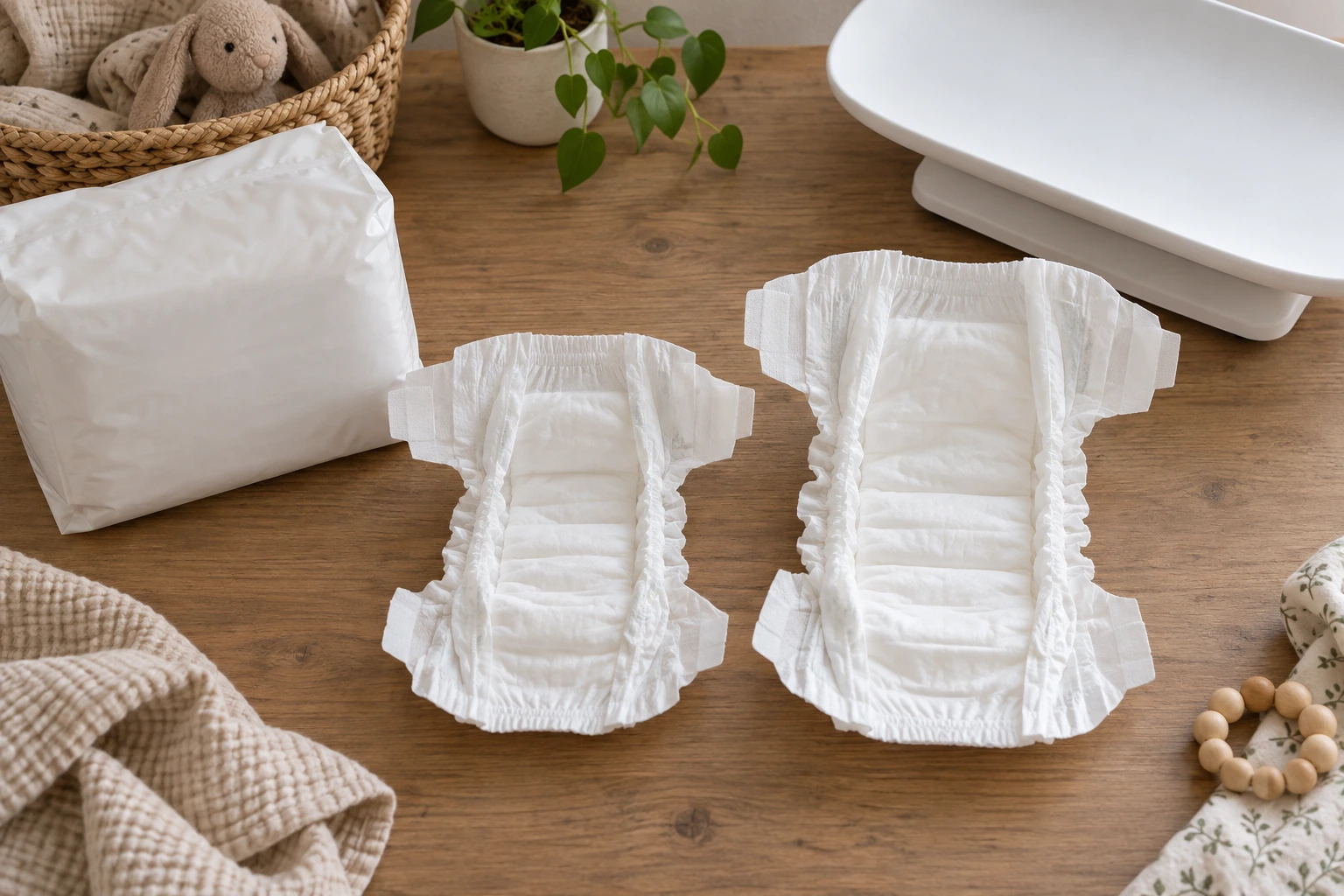
Children of the same age or weight can need different fits. Use the weight range on the exact pack you are buying; size numbers and S/M/L labels are not a universal conversion chart. If two size ranges include your child’s weight, compare their fit rather than changing size at a fixed age.
A kilogram example from Japan
These are selected rows from the Japanese Pampers guide. Use them as a product example when reading overlapping weight ranges.
| Product example | Published weight range |
|---|---|
| S taped | 4–8 kg |
| M taped | 5–12 kg |
| L taped | 9–14 kg |
| M pants | 6–12 kg |
Five signs to reassess the size
1. Red pressure marks
Red pressure marks around the waist or thighs can mean the diaper is too tight.
2. Tabs struggle to reach
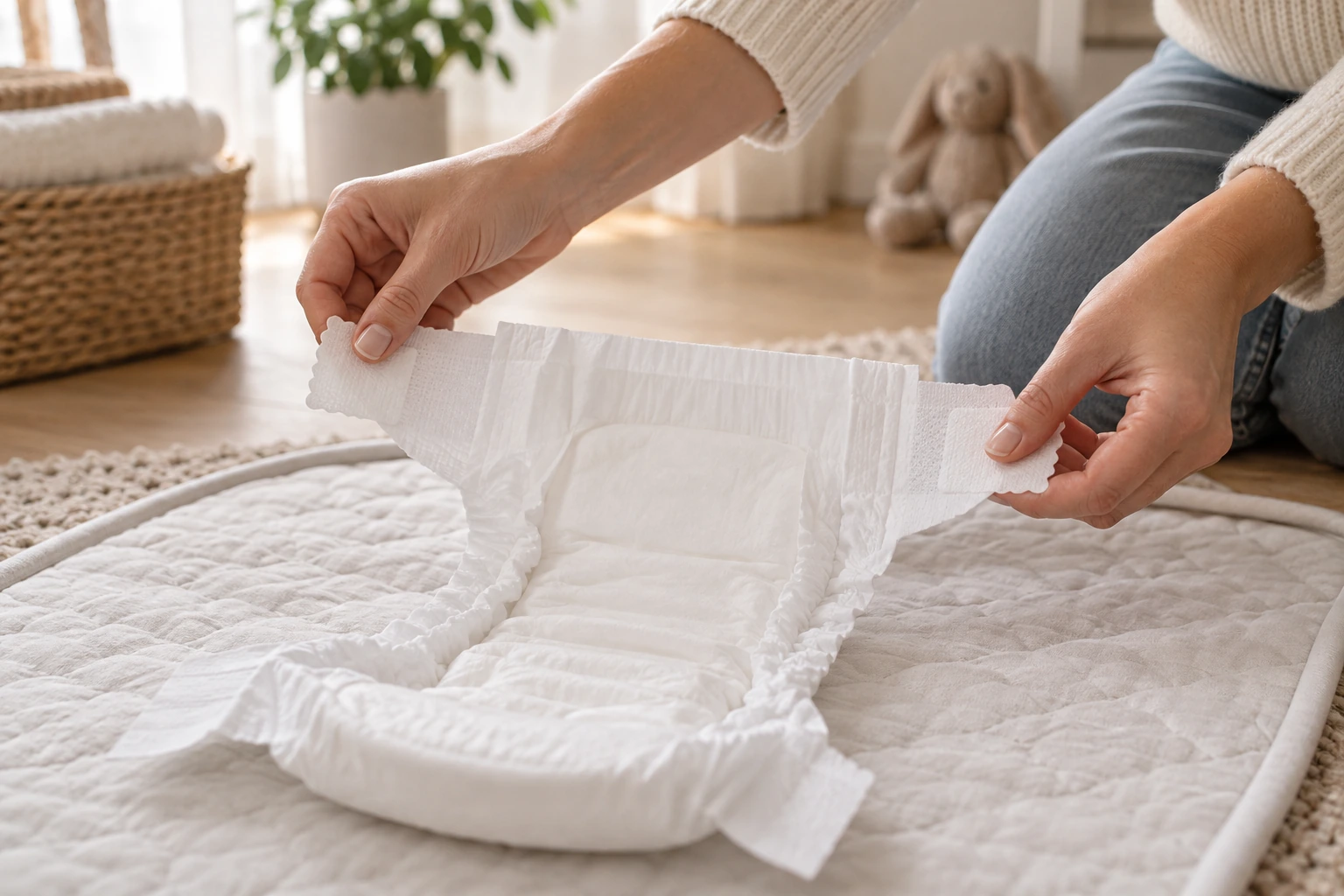
Tabs that no longer reach the intended fastening area comfortably are a reason to reassess the size.
3. Waistband feels tight
A waistband with no comfortable room underneath is another sign to reassess the fit.
4. Bottom is not fully covered
If the diaper no longer covers the bottom fully, consider the next size.
5. Leaks keep happening
Repeated leaks or blowouts despite correct fastening and outward leg cuffs can be a sign to try the next size.
When a diaper leaks, check this first
A leak alone does not prove the diaper is too small; a diaper that is too large can leak through gaps. Before changing size, straighten the diaper, fasten the tabs evenly and gently pull the leg ruffles outward.
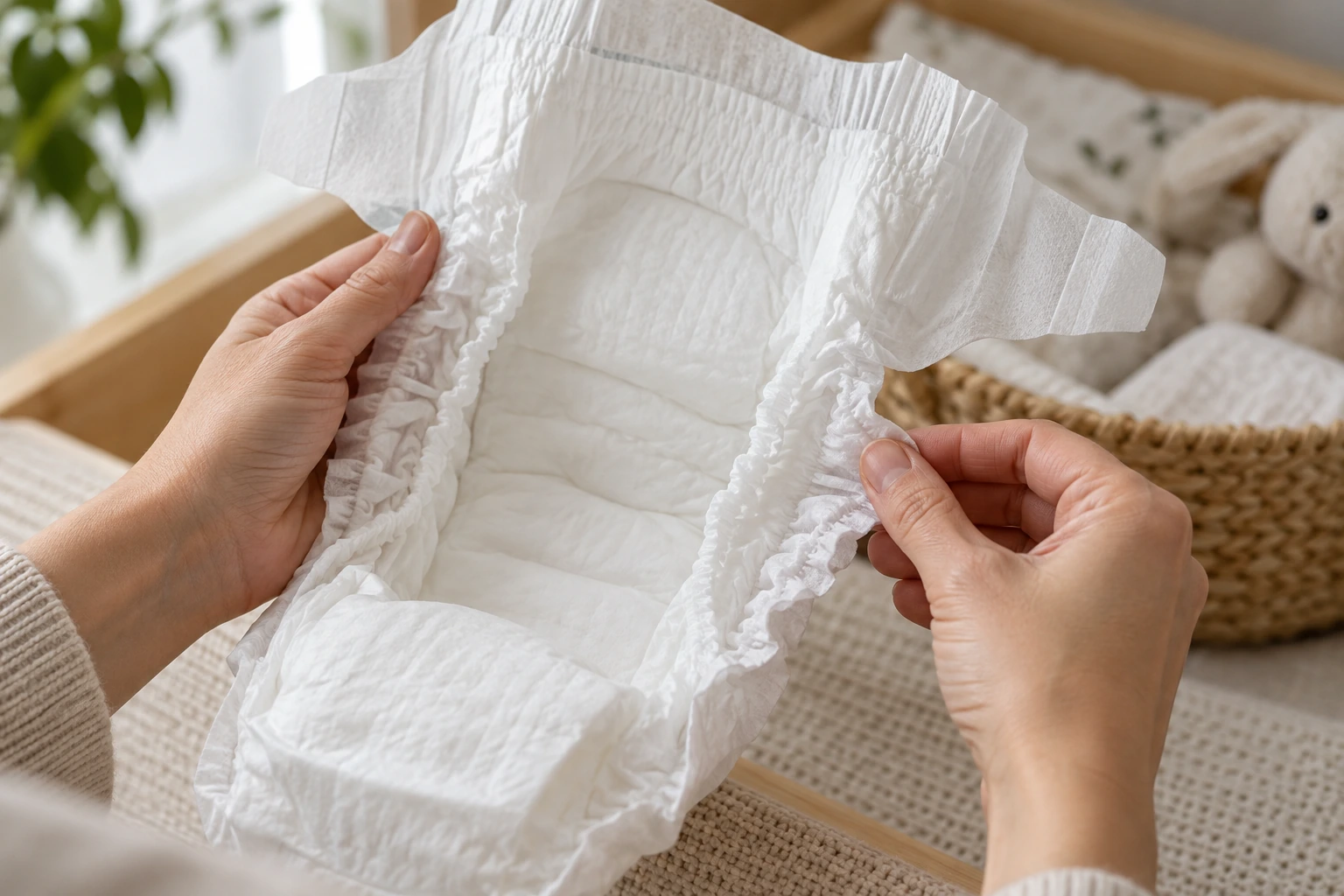
Do not tighten the diaper excessively to stop a leak; tight nappies can irritate the skin. Change wet or soiled diapers as soon as possible, including after moving to a larger size. Use a changing mat on the floor when possible; never leave a baby alone on a changing table.
Trying the next size
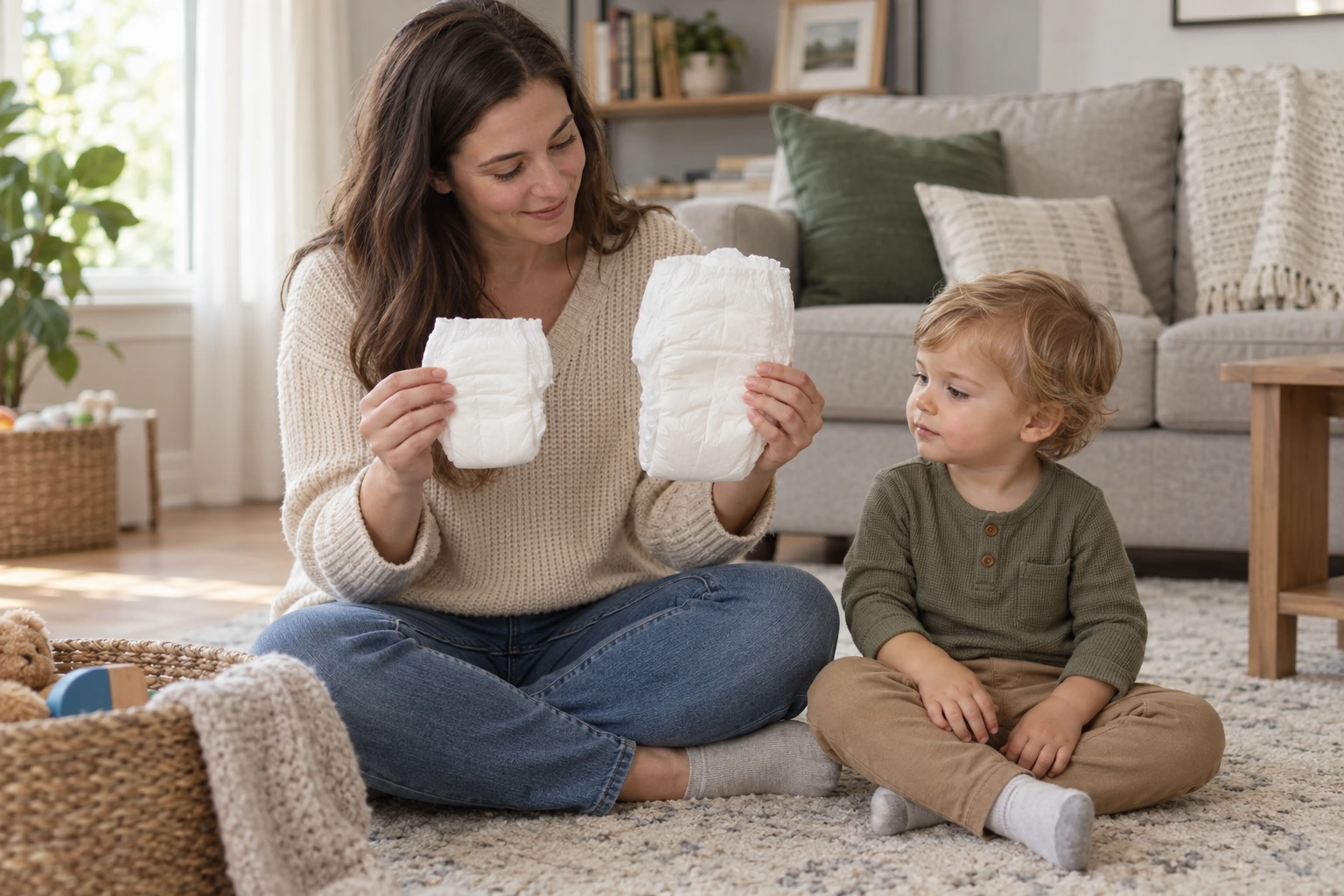
The new size should cover the bottom, fit around the legs without gaps and feel snug without red pressure marks.
When red skin needs care
A rash may come from wetness, rubbing or irritating wipes as well as a poor fit. Contact your child’s healthcare professional if a diaper rash does not go away, worsens or spreads, or if your child has a fever or seems very uncomfortable.

Questions before buying
Does switching to pants keep the same size?
Do not assume taped diapers and pants with the same letter have the same weight range; check the new product’s pack.
Should I buy a large box of the next size?
Try a small pack of the candidate size before stocking up.