Newborn Umbilical Cord Care

Umbilical cord care is less about making the stump fall off quickly and more about protecting a normal drying process. Clean hands, a dry surface, and attention to the baby’s overall condition usually matter more than special products.
SUMMARY
Keep the stump clean and dry, wash hands before and after contact, and keep the diaper edge from rubbing it. If it becomes soiled, follow local instructions for gentle cleaning and dry it afterward. Do not pull it or apply powders, oils, creams, herbs, or antiseptics unless your maternity or pediatric team specifically advises them. A small spot of blood around separation may occur, but spreading redness, swelling, pus, foul odor, persistent bleeding, fever, poor feeding, or unusual sleepiness needs prompt medical advice.
Evidence anchors: American Academy of Pediatrics / HealthyChildren — Umbilical Cord Care · WHO — Recommendations on maternal and newborn care for a positive postnatal experience
What the cord stump is doing after birth
After the cord is clamped and cut, the short piece left at the navel no longer has a blood supply. It gradually loses moisture, darkens, shrinks, and separates as the skin underneath heals. This is a normal tissue transition rather than a wound that needs to be scrubbed clean several times a day. The useful aim is to keep new contamination and prolonged moisture away while letting the stump complete that transition. A dry, dark, stiff stump can therefore look more dramatic than it feels to the baby. Its appearance should always be interpreted beside the skin around it and the newborn’s feeding, temperature, alertness, and comfort.
Families often focus on the day the stump will fall, but no single day defines healthy healing. Separation can happen earlier or later, and pulling does not speed healing safely. Friction, dampness, and products can change how the surface looks. A photograph taken in the same light, or a brief dated note, can be more informative than repeated touching. The question is not whether today’s color is attractive; it is whether the change fits drying and shrinking without spreading inflammation or a baby who seems unwell.
Normal drying and separation can look untidy
During drying, the stump usually changes from a softer yellow-brown or pale remnant toward brown or black. It may bend, become string-like, or appear attached by a small dry point before it releases. Around separation, a tiny smear or spot of blood on clothing can occur because the final surface has been disturbed, much like a small scab lifting. That limited spotting should settle rather than soak material, recur repeatedly, or accompany swelling and discharge. A little clear or slightly blood-tinged moisture immediately after separation also differs from ongoing wetness that repeatedly marks clothing.
Odor requires context. A drying stump can have a mild tissue smell, yet a strong foul odor combined with pus, spreading redness, warmth, tenderness, or swelling is not simply part of drying. Likewise, a small ring of normal skin at the base differs from redness that expands into the abdominal skin. Rather than comparing the stump with a perfect online photograph, compare it with its own previous appearance and the baby’s behavior. When a change is unexpected, limit handling and ask the maternity or pediatric team to look at a clear image or examine the baby.

Why clean and dry care is the default
Clean, dry care means washing your hands before and after contact, leaving the stump open to ordinary air when practical, and avoiding routine substances that keep it moist or introduce organisms. It does not mean ignoring visible urine or stool. If the area becomes soiled, local newborn-care instructions may recommend gentle cleaning with clean water and careful drying. The exact method can vary with the birth setting and local infection guidance, so discharge instructions take priority. What remains consistent is gentle handling: no digging under the stump, no forceful rubbing, and no repeated cleaning just to change its color.
Dry care works because healing tissue does not benefit from being continually covered by wet cotton, an occlusive dressing, or layers of cream. More treatment is not automatically more hygienic. Each extra touch is another opportunity to transfer organisms, and each damp layer can delay drying. The routine should therefore be intentionally uneventful. Look once during ordinary care, note whether the surrounding skin is calm, and then leave the area alone. This approach also makes meaningful change easier to notice because the stump is not constantly altered by different products or cleaning techniques.
Diapers, clothing, and everyday friction
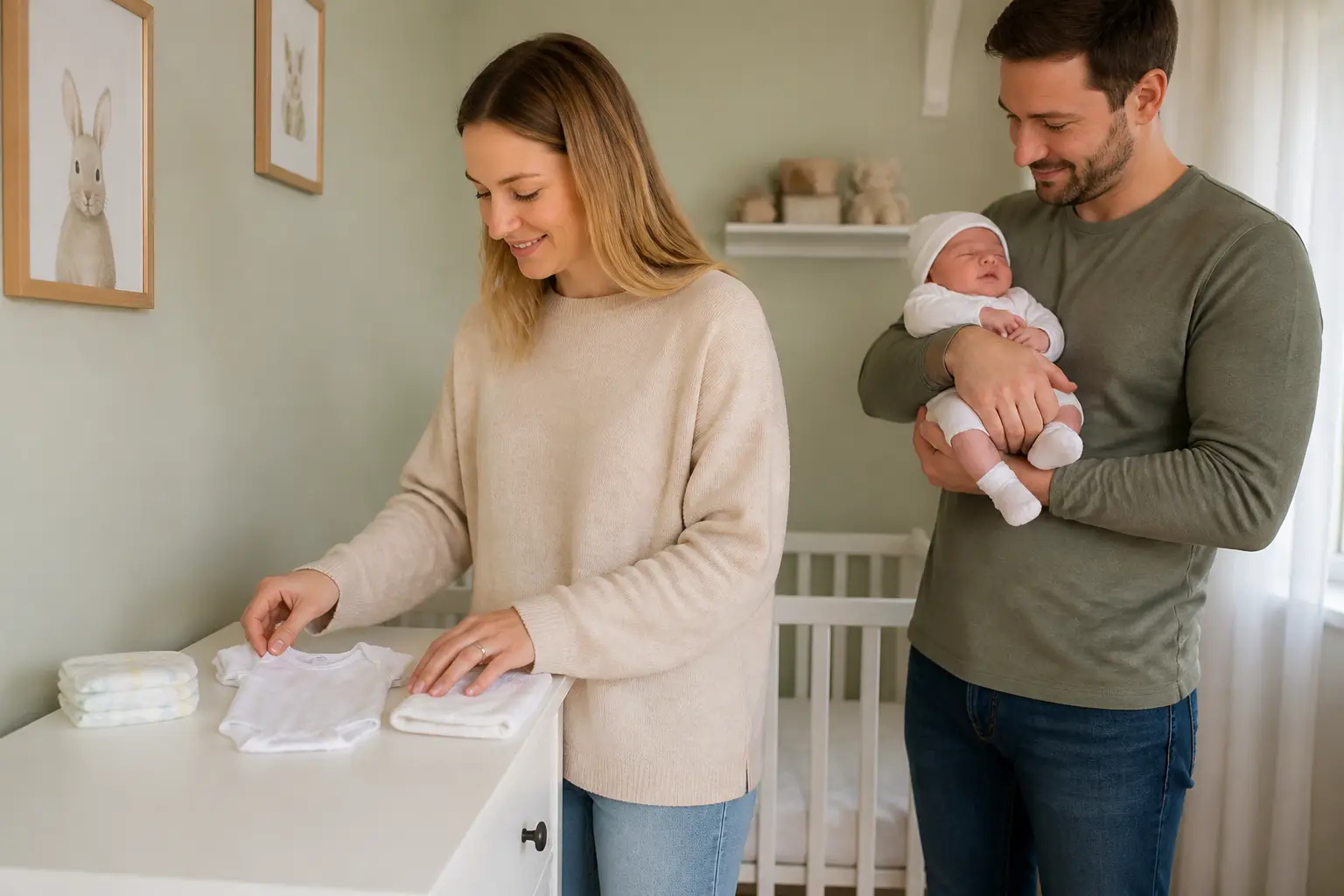
The diaper edge should sit below the stump when possible so urine, stool, and repeated rubbing do not remain against it. Some newborn diapers have a shaped front; an ordinary diaper can often be folded down if that is what the local team demonstrated. The point is not to expose the baby to cold or leave clothing unsafe. It is simply to prevent a tight, damp waistband from pressing across the healing base. Soft, clean clothing that does not snag the stump is usually compatible with dry care, and the baby can still be dressed comfortably for the room temperature.
Friction can create confusing signs. A waistband or fastener may cause a small spot of blood without infection, while a damp diaper may create irritation that resembles early redness. Correcting the rubbing and checking whether the change settles can provide useful context, but a newborn should not be observed at home for prolonged spreading redness or systemic illness. If the stump catches on fabric, do not trim or pull it. Free the fabric gently if possible, keep the baby supported, and contact the care team when it cannot be released without manipulating the stump.
Bathing and what to do if it becomes soiled
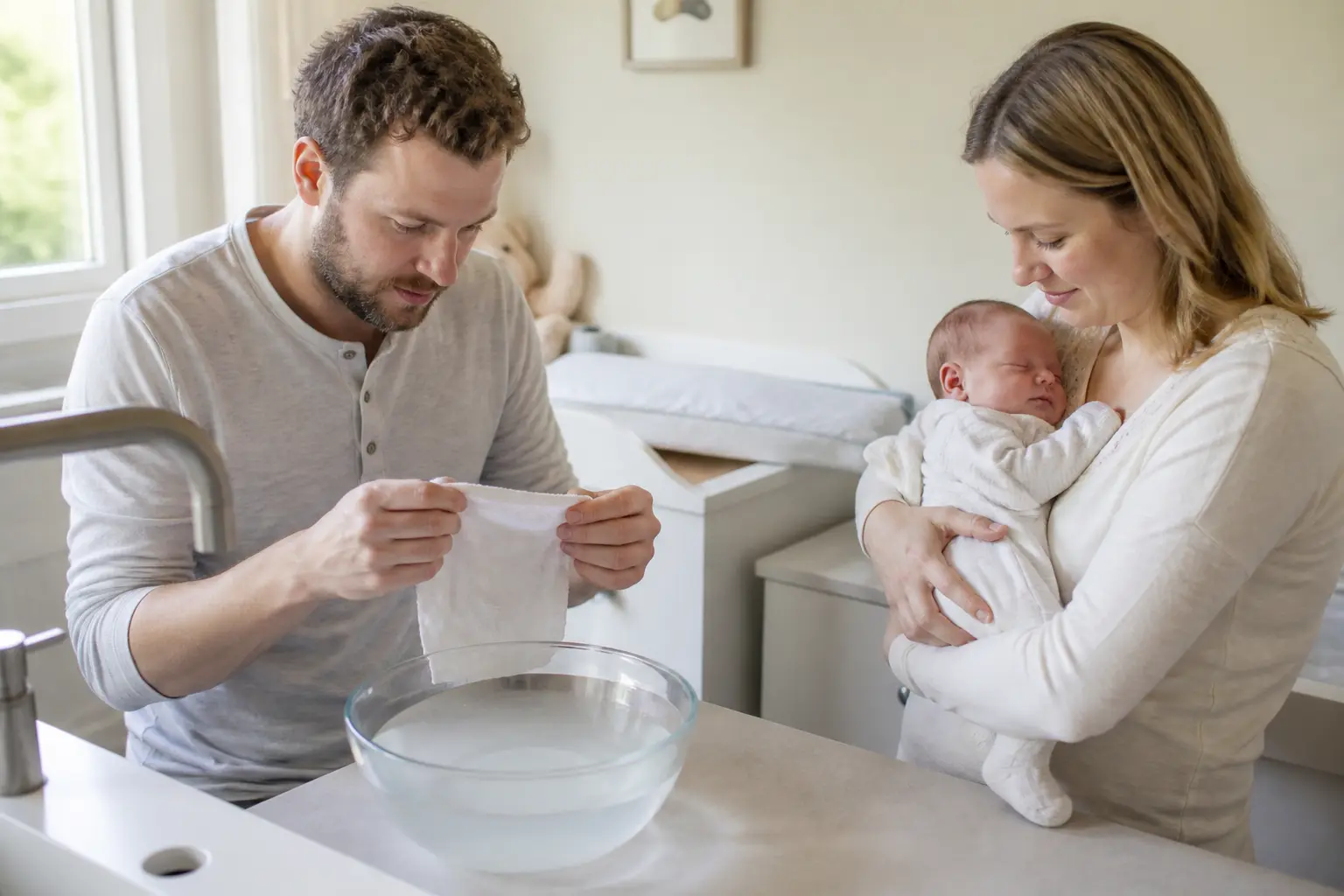
Advice about bathing while the stump is attached differs across services. Some recommend sponge washing until separation; others allow bathing when the baby is kept warm and the stump is dried carefully afterward. Follow the instructions from the place of birth, because they reflect local practice and the baby’s circumstances. Whatever method is used, bathing should not become soaking the stump for long periods or scrubbing it to remove normal dark tissue. Prepare the towel and clean clothing before beginning so the baby and the area can be dried promptly.
Stool contamination deserves a calm, practical response because stool carries many organisms. Wash your hands, clean only as instructed, use fresh material rather than a reused cloth, and pat the area dry. Do not conceal remaining moisture under powder or a tight dressing. If contamination is difficult to remove, if the base looks injured, or if the baby was born prematurely or has medical vulnerabilities, call for individualized guidance. The care team may want a lower threshold for examination even when a general guide would otherwise suggest routine observation.
Products, antiseptics, and chlorhexidine context
Powders, oils, herbal preparations, ash, toothpaste, alcohol, peroxide, antibiotic ointment, and leftover antiseptic can irritate tissue, trap moisture, or introduce contamination. Their familiarity does not make them appropriate for a newborn stump. In many settings, major guidance supports clean, dry care without routine topical products. There are, however, specific high-mortality or home-birth contexts in which WHO guidance includes chlorhexidine application. That recommendation is context dependent and does not mean families should buy an antiseptic and improvise a schedule.
The safe rule is to use a product only when the maternity or pediatric team has named the exact product, concentration, method, frequency, and duration for this baby and this setting. A hospital-applied dye or antiseptic can also change the stump’s color, so tell the next clinician what was used. If relatives suggest a traditional remedy, explain that the stump is healing tissue with direct access to vulnerable newborn skin. Keeping the routine simple protects both the baby and the interpretation of any new redness, odor, or discharge.
After the stump separates
Once the stump releases on its own, the navel may look rawer and more moist than expected for a short time. The surface generally dries and closes without needing to be covered. Continue clean hands and protect the area from diaper friction. A tiny spot of blood that stops is different from active bleeding that continues, repeatedly wets clothing, or returns whenever the baby moves. Do not place a coin, binder, bandage, or tight wrap over the navel to change its shape. These do not create an inward belly button and can retain moisture or injure skin.
An outward bulge under intact skin is often an umbilical hernia rather than a problem caused by cord care. It may become more visible when the baby cries. That deserves routine pediatric discussion, while a bulge that is suddenly firm, discolored, very tender, associated with vomiting, or cannot relax needs prompt assessment. Separately, a small moist red lump that persists in the navel can be an umbilical granuloma. It is not something to burn, tie, or treat with household chemicals; a clinician should confirm the cause before treatment.

Persistent moisture is a reason to clarify the cause
A navel that remains wet, repeatedly stains clothing, or drains after the expected healing period should be assessed rather than managed with increasingly strong home remedies. A granuloma is one possible explanation, but ongoing drainage can have other causes that cannot be distinguished safely from a description alone. Note the fluid’s color, amount, odor, and frequency without repeatedly pressing the area to produce more. A photo beside the date and information about when the stump separated can help the clinician understand the pattern.
Persistent bleeding also deserves context. A small separation spot should stop with ordinary gentle pressure as advised locally. Bleeding that does not stop, returns repeatedly, or appears elsewhere on the body may point beyond local friction and requires prompt medical contact. Tell the clinician about vitamin K at birth, medicines, family bleeding history, and any bruising or blood in stool or vomit. The aim of the record is not home diagnosis; it is to shorten the path to the right examination.
Local infection changes the meaning of redness
The skin immediately touching a drying stump may look slightly different, but redness that spreads outward, increasing warmth, swelling, tenderness, pus, or a strong foul smell raises concern for omphalitis, an infection around the umbilicus. Newborn infections can progress quickly because immune defenses are still developing. Waiting for a dramatic photograph or trying multiple antiseptics first can obscure progression and delay care. Marking the edge of redness on the baby is not a substitute for assessment; a clear photo and a prompt call are safer.
A clinician may need to examine how far the redness extends, whether the tissue is tender, and whether the baby has systemic signs. Treatment decisions depend on that examination and the baby’s age and condition. Do not squeeze the base to look for pus and do not send only a close-up while omitting how the baby feeds and wakes. The surrounding story matters: temperature, feeding amount and stamina, wet diapers, vomiting, breathing, color, and unusual irritability or sleepiness help establish urgency.

The newborn’s whole condition sets urgency
Fever, low temperature, poor feeding, repeated vomiting, unusual sleepiness, weak responsiveness, breathing difficulty, gray or blue color, or a baby who simply looks markedly different from baseline can signal serious illness even when the stump itself looks modest. Follow the newborn fever threshold and emergency route given at discharge; very young infants need prompt professional assessment for temperature abnormalities. If breathing is difficult, the baby is hard to wake, collapses, has a seizure, or changes blue or gray, use emergency services rather than continuing photographs or cleaning.
For a non-emergency call, give the baby’s exact age, gestational age, birth and medical history, when the stump separated, what products were used, the temperature and method, feeding changes, wet diapers, and the direction of redness, odor, drainage, or bleeding. This compact timeline helps the clinician decide whether the baby should be seen immediately. Cord care remains simple because the observation is sophisticated: protect normal drying, avoid interference, and let local changes plus the newborn’s overall function determine the next step.
Frequently asked questions
When should the stump fall off?
Timing varies. Let it separate on its own and ask for review if healing or drainage is not progressing as your local team expected.
Can I use alcohol or peroxide?
Do not use them routinely unless your newborn team specifically directs the exact product and method.
Is a little blood normal?
A small spot around separation can occur. Bleeding that persists, recurs, or soaks clothing needs prompt advice.
Should the navel be covered?
Routine tight dressings are not part of clean, dry care. Follow any specific medical dressing instruction given for your baby.
What should I report when calling?
Give age, temperature and method, feeding and wet diapers, separation date, products used, and changes in redness, odor, drainage, or bleeding.
Sources
This guide provides general education and does not replace diagnosis or an individualized plan from your pediatrician.