Potty Training: Readiness Before Routines
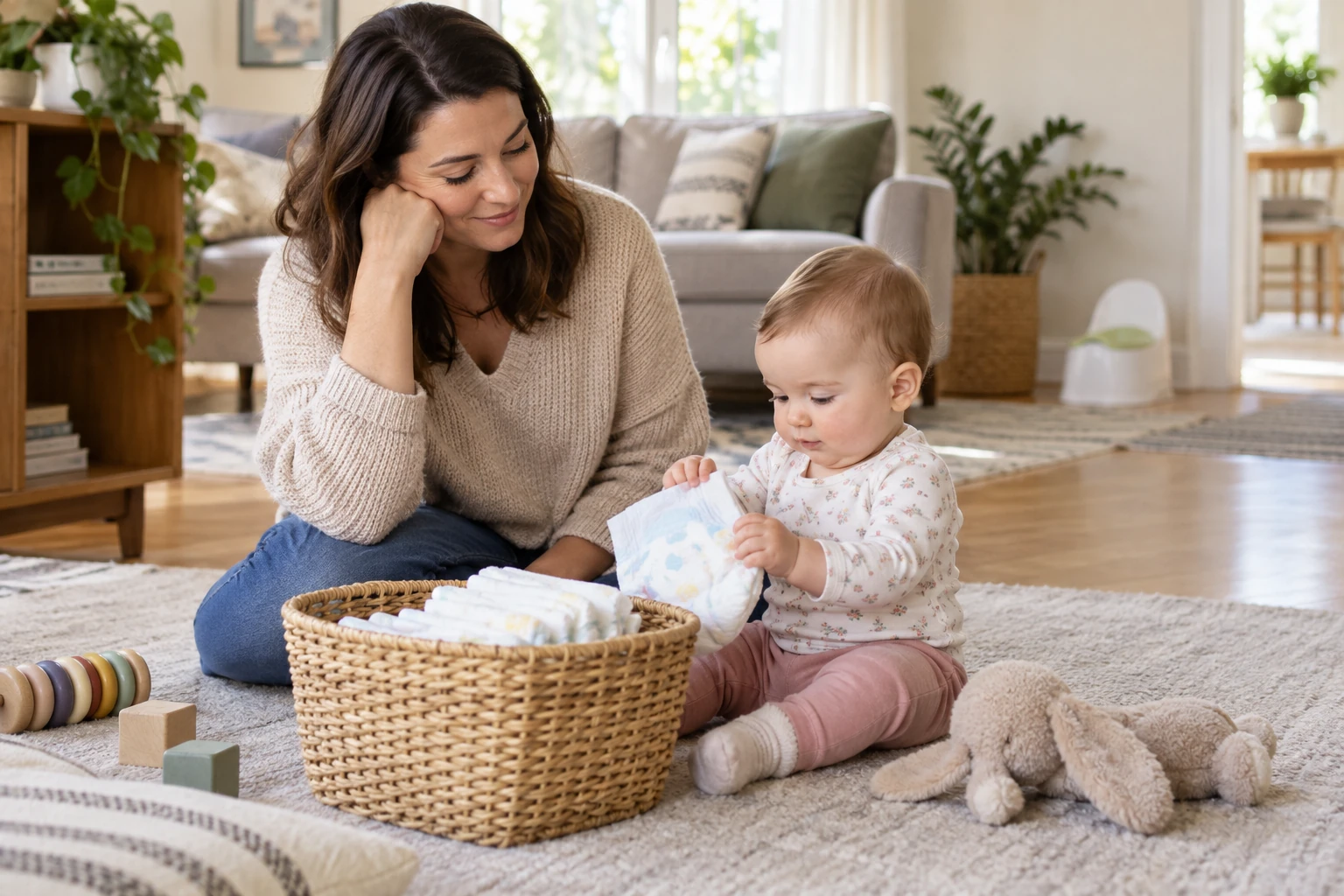
Thinking about starting potty training? Look at your child’s skills, prepare a comfortable seat and begin without pressure. This guide covers starting ages, practice, accidents and constipation. For babies under one, independent toileting is not an expectation.
SUMMARY
Watch your child's readiness.
Never force potty sitting.
Pain or constipation? Ask your clinician.
What age guidance actually means
Before eighteen months, most children cannot fully control their bladder and bowel muscles.
MedlinePlus places the usual appearance of toilet-training readiness signs between 18 and 30 months, so that range describes a common pattern rather than a deadline for an individual child.
Learning to use a toilet brings together awareness of bladder and bowel signals, the ability to follow instructions and manage clothing, and a willingness to participate.
Current NHS guidance says almost all children can be potty trained between 18 months and two-and-a-half years and advises starting without waiting for every sign or a request to use the potty.
Readiness signs to notice
Sitting steadily and keeping their balance on the potty or toilet is one useful readiness sign to discuss alongside communication and interest.
Staying dry for at least two hours during the day is one listed readiness sign for toddlers; it belongs beside the other skills, not as a stand-alone pass mark.
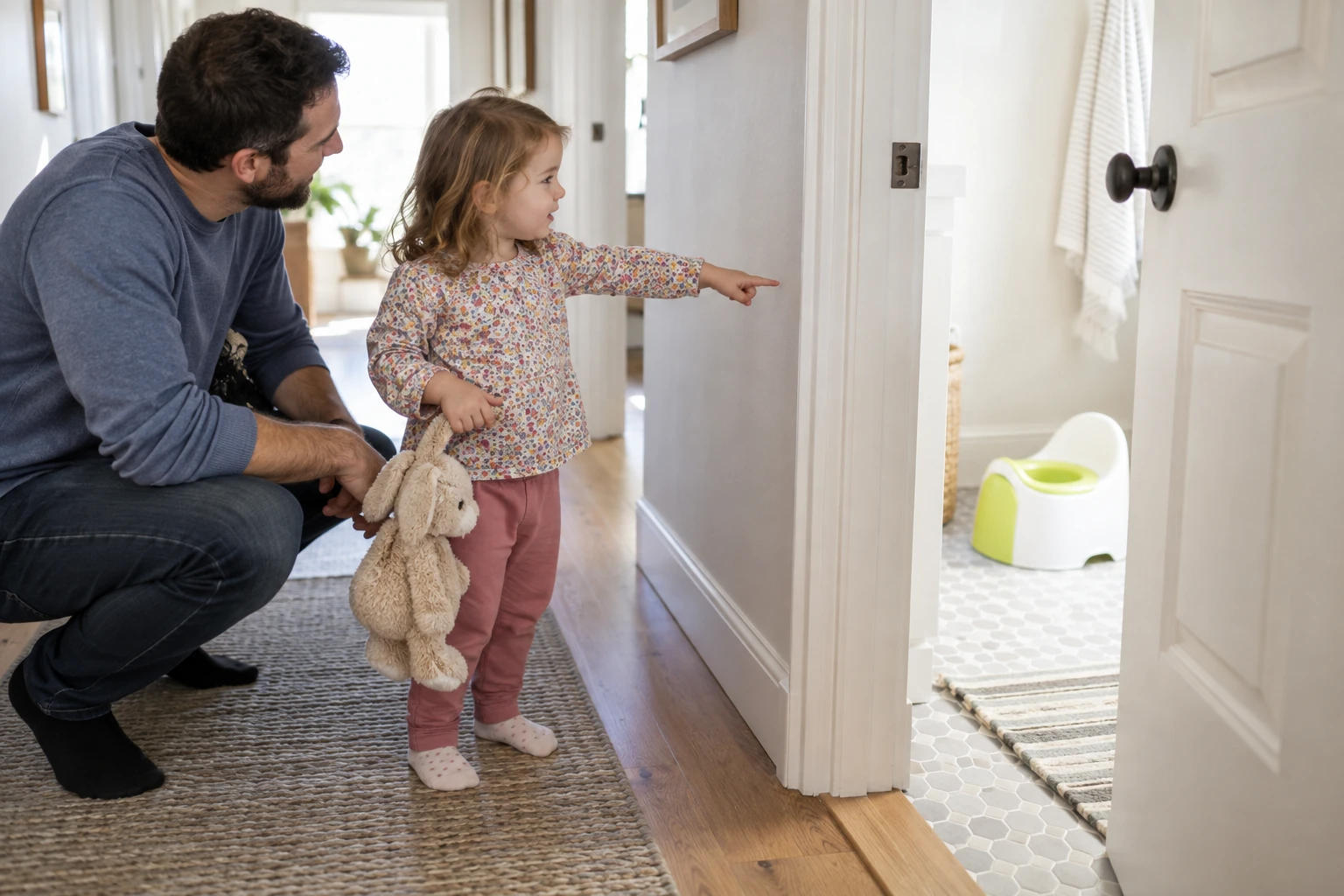
A toddler may communicate needing the bathroom through words or expressions, point out a wet or dirty diaper, or show an interest in the toilet and underwear.
Understanding simple instructions, getting to the bathroom, and helping pull clothes down and up are practical skills that support the transition from diapers to toilet use.
In a child learning to use the potty, pausing activity, squatting or grunting may signal an approaching bowel movement, and noticing the need to pee can take longer.
Some toddlers do not announce a need to go, so NHS guidance recommends routine opportunities as well as gentle responses to any signals the child does show.
Prepare a comfortable seat
Choose a relatively settled period for your child's training, because a move, a new baby, a major illness or another family crisis can make the transition harder.
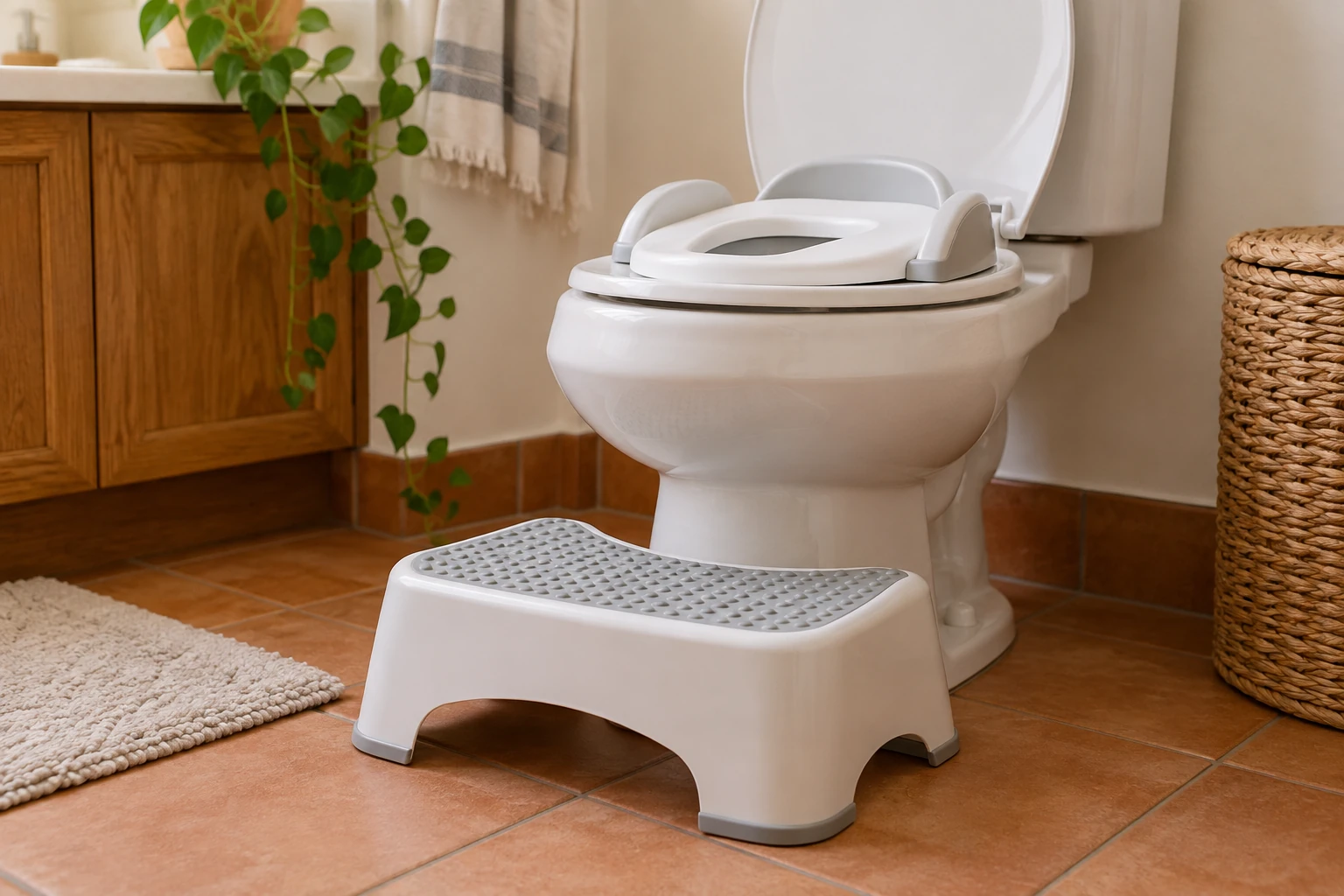
A child-sized potty should allow the child's feet to reach the floor, so the seating arrangement supports the child rather than leaving their legs hanging above the ground.
If you choose an adult toilet instead, use a child seat and foot support; the NHS advises a step high enough for the seated child's knees to be above their hips.
The practical kit can stay simple: a suitable potty or toilet setup, clothes that pull down easily, and spare clothes for accidents are more relevant than buying many accessories.
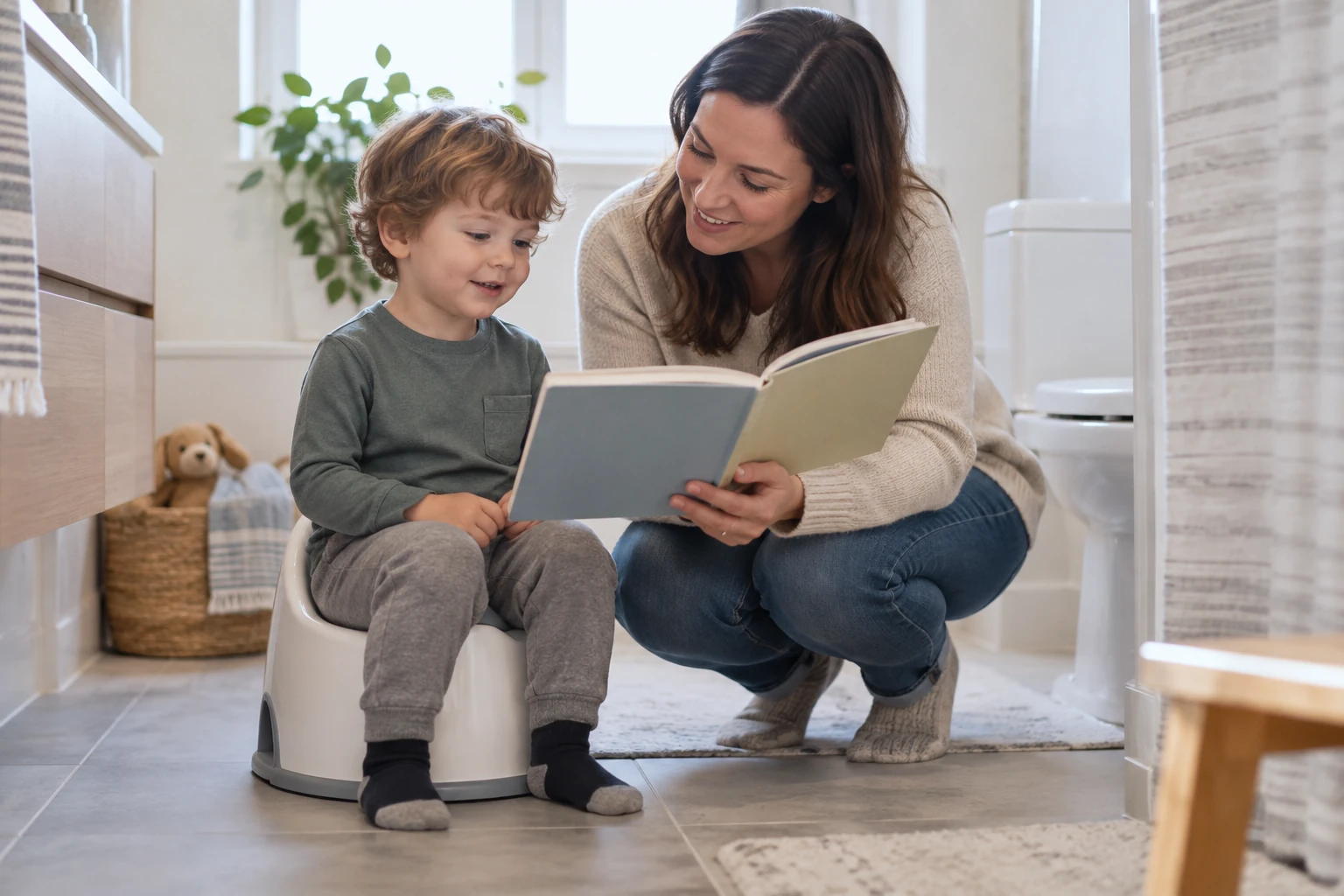
For a toddler preparing to learn, reading a potty story together or showing a toy using a potty are ways to introduce the idea before expecting the whole routine.
Build a gentle toddler routine
Before changing your child's daytime routine, explain that they will be practising with the potty or toilet so the new arrangement is not an unexplained surprise.
A gradual introduction can begin with your child sitting on the potty fully clothed, followed by sitting without a diaper or pants once that child feels comfortable.
Never force potty sitting.
Let the child get off the potty when they want to, rather than treating a completed sit or a bowel movement as something they must deliver for the adult.
Once your child is practising, offer the potty at familiar moments such as waking and after meals, and stay with the child while they sit.
Praise the child's effort and communication even when no urine or stool appears, because trying the routine and telling you about their body are also parts of learning.
Use ordinary words for pee, poop and body parts, and avoid describing the child or their bodily functions as naughty, disgusting or shameful during toilet learning.
Boys can learn to urinate while sitting first and learn to stand later, so learning to aim while standing does not have to be part of the initial routine.
Finish with hygiene and a shared approach
Teach girls to wipe from front to back, and expect to provide wiping help, especially after bowel movements, rather than assuming toilet use already means independent hygiene.
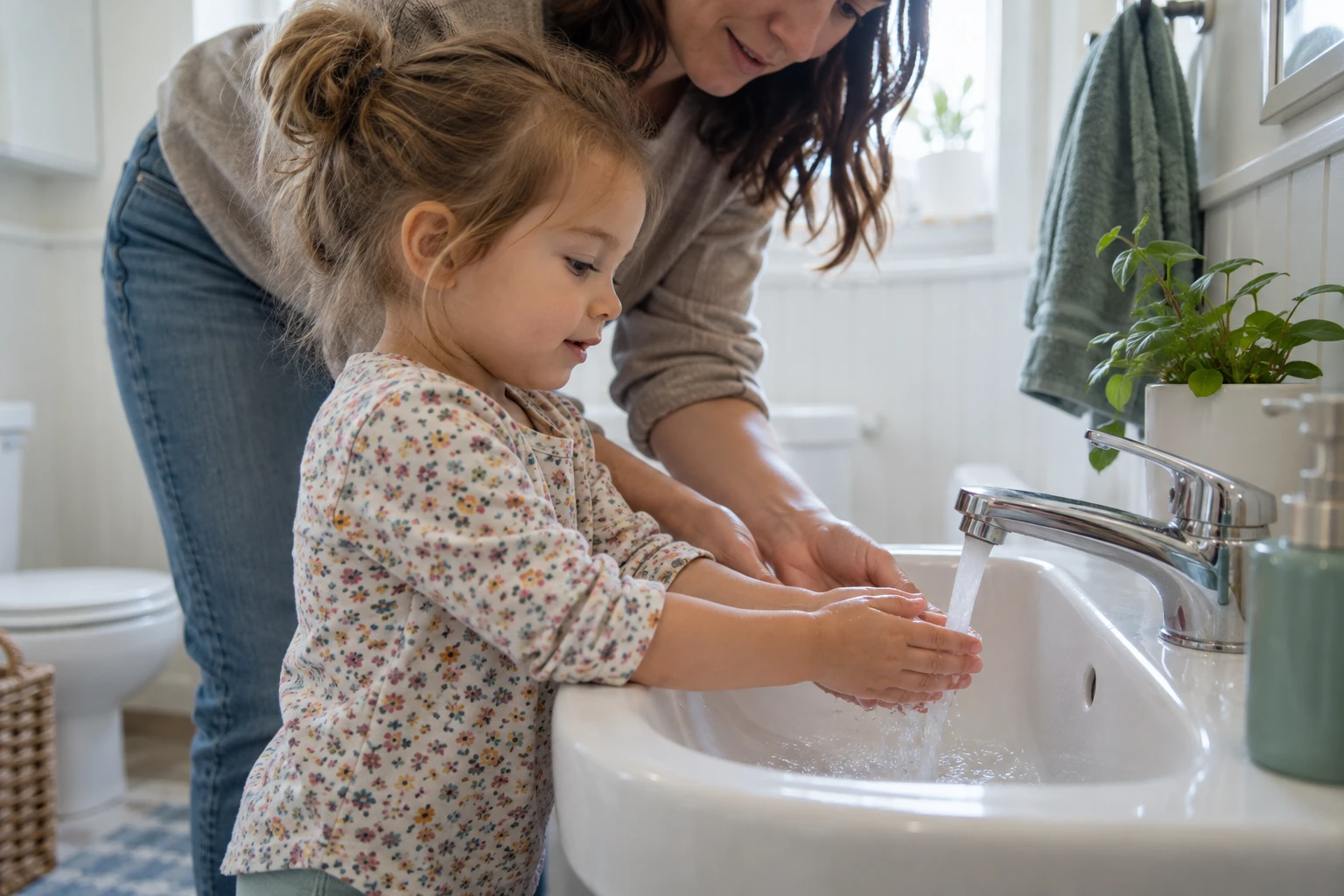
Teach handwashing after toilet use, and wash your own and your child's hands after diaper changes as part of the everyday hygiene routine.
After a potty has been used, empty its contents into the toilet and clean the potty before the next use.
Discuss the approach with other caregivers, including nursery staff, so the words, clothing arrangements and opportunities to practise are reasonably consistent across the child's day.
For outings during your child's training, take spare clothes and, if useful for your family, a travel potty, while keeping the same calm approach to accidents.
Diapers, underwear and different plans
When toddler daytime training begins, the NHS approach switches from daytime diapers, including pull-ups, to underwear while retaining diapers for sleep at first.
The Canadian Paediatric Society instead suggests trying underwear after at least a week of successful potty use, illustrating why families may receive different transition plans.
The NHS daytime approach keeps diapers for naps and night sleep initially, then considers underwear for naps once the child is regularly waking dry.
Normal variation and changes in context
Accidents are an expected part of learning, so respond with calm cleanup and reassurance rather than scolding, punishment or a demand that the child explain what went wrong.
MedlinePlus describes about three to six months for many children to learn toilet use, but this is a general description and not a promise that a particular child will finish on schedule.
Dry nights often come after dry days, and a child who manages daytime toileting may still need a diaper for sleep for months or longer.
Starting nursery, moving home or welcoming a new baby can coincide with setbacks, and keeping familiar routines and offering extra support may help during those changes.
Bathroom sounds or smells can be uncomfortable for some children, so a reluctance to enter that room may deserve a conversation about the environment and support.
When more practice is the wrong response
Hard, dry or lumpy stools, painful passage and behaviour that delays a bowel movement can be signs of constipation rather than a problem to solve by more potty practice.
When stool stays in the colon too long, more fluid is absorbed and it becomes harder to pass; pain or stress about training may then encourage further holding.
If constipation develops during potty training, take a break from training until the constipation stops and discuss a suitable plan with the child's clinician.
If your child refuses to poop in the toilet, allowing a bowel movement in a diaper can help avoid withholding while you seek advice about constipation or painful stools.
Do not give a child a laxative unless their doctor has told you to do so; an over-the-counter label does not replace an individual treatment plan.
If you suspect a medicine is contributing to constipation, discuss it with the child's doctor before stopping the medicine or changing how it is given.
In a constipated child, stool leaking into underwear can look like diarrhea, so new soiling should be described to a clinician rather than automatically labelled deliberate behaviour.
When to contact a clinician
Pain or constipation? Ask your clinician.
Seek medical care right away if constipation comes with rectal bleeding, blood in the stool, abdominal bloating, constant abdominal pain, vomiting or weight loss.
Contact the child's clinician for painful urination, suddenly frequent or urgent urination, or new repeated wetting after earlier toilet success instead of assuming the child is being difficult.
The Canadian Paediatric Society advises discussing toilet learning with a doctor if a child is not using the toilet by age four; this is a reason for support, not a diagnosis by itself.
Children with disabilities or other additional needs can learn toileting skills, but may need more time, extra support or adaptations planned with their clinician and caregivers.
You can ask a health visitor, pediatric clinician or primary-care clinician for help whenever toilet learning or your child's progress worries you, without waiting for a particular birthday.
If movement, communication or other health needs make these steps difficult, ask the child's clinician to help adapt the plan instead of treating a standard checklist as a test the child must pass.

What to tell the clinician
A clinician may ask about stool frequency and appearance, how long symptoms have lasted, blood, eating habits, medicines, childcare and the toilet-training routine.
Writing down bowel movements and what the stool looks like can provide useful information to share at the appointment.
A record does not replace assessment or justify delaying care when urgent symptoms are present.
Frequently asked questions
When should we consider starting?
MedlinePlus places the usual appearance of toilet-training readiness signs between 18 and 30 months, so that range describes a common pattern rather than a deadline for an individual child.
Should I keep a resisting child on the potty?
Never force potty sitting.
Do dry days mean dry nights?
Dry nights often come after dry days, and a child who manages daytime toileting may still need a diaper for sleep for months or longer.
Do I need to buy rewards?
Specific encouragement can recognise the child's efforts without buying rewards, because the Canadian Paediatric Society does not consider rewards necessary for toilet learning.
What if the child resists the whole process?
If a child resists training, MedlinePlus advises stepping back and waiting a few weeks before trying again, rather than continuing to press for a result every day.
Related guides
Sources
- MedlinePlus / U.S. National Library of Medicine — Toilet training tips
- NHS Best Start in Life — Potty training your child
- Canadian Paediatric Society — Toilet learning
- NIDDK / National Institutes of Health — Symptoms & Causes of Constipation in Children
- NIDDK / National Institutes of Health — Treatment for Constipation in Children