Baby Sunscreen: When and How to Use It
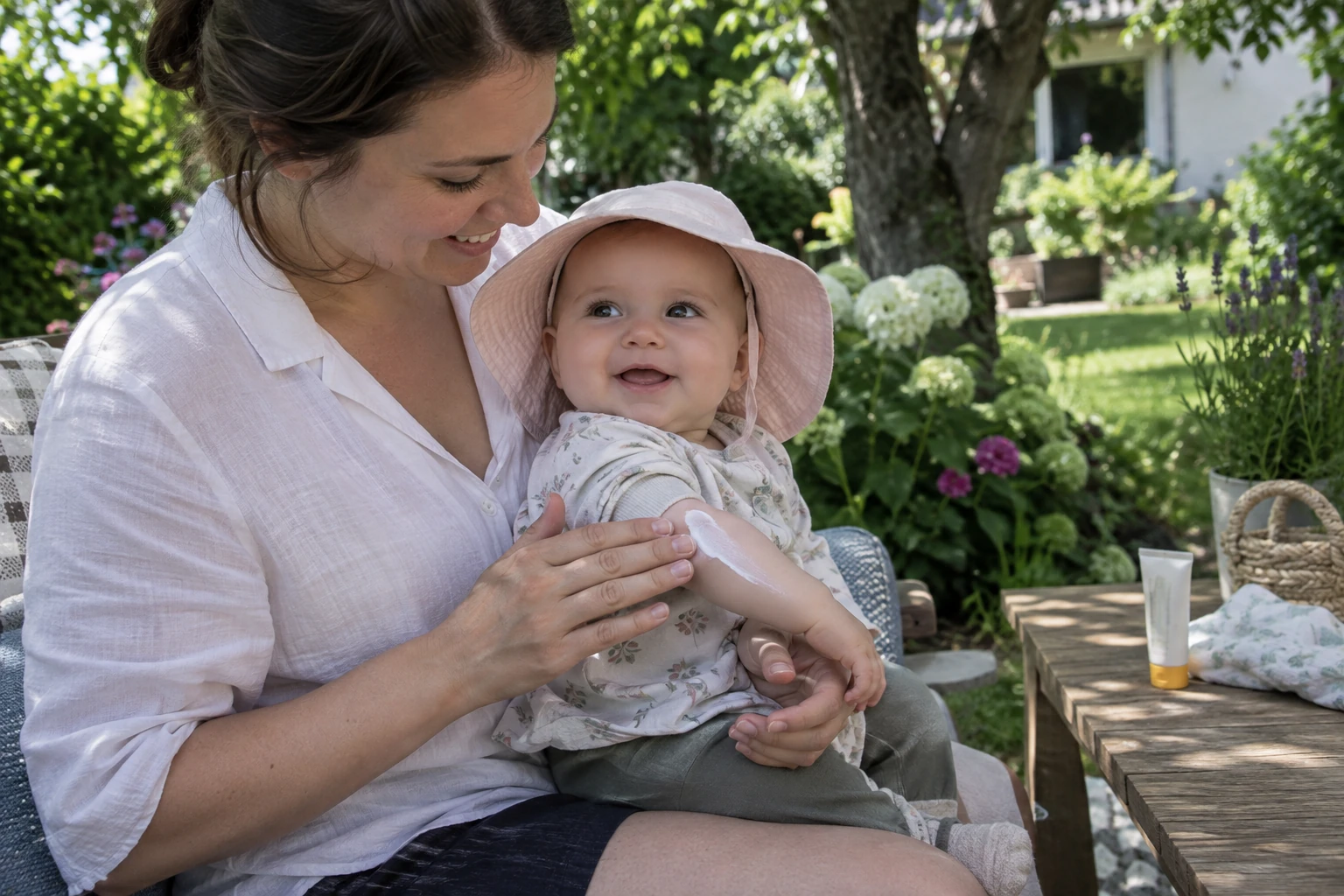
For babies 6 months and older, use sunscreen on uncovered skin alongside shade and protective clothing; before 6 months, keep babies out of direct sunlight.
SUMMARY
- Apply sunscreen 15 minutes before going outdoors, following the product instructions.
- Reapply sunscreen every 2 hours while outdoors, or more often if the label directs.
- Reapply immediately after swimming, sweating or towel drying.
For caregivers of babies in their first year and young toddlers, the first decision is age; the next is which skin will remain uncovered during the outing.
When can you start?
Start routine sunscreen use at 6 months. For babies younger than 6 months, avoid direct sunlight and use shade, lightweight covering clothes and a brimmed hat.
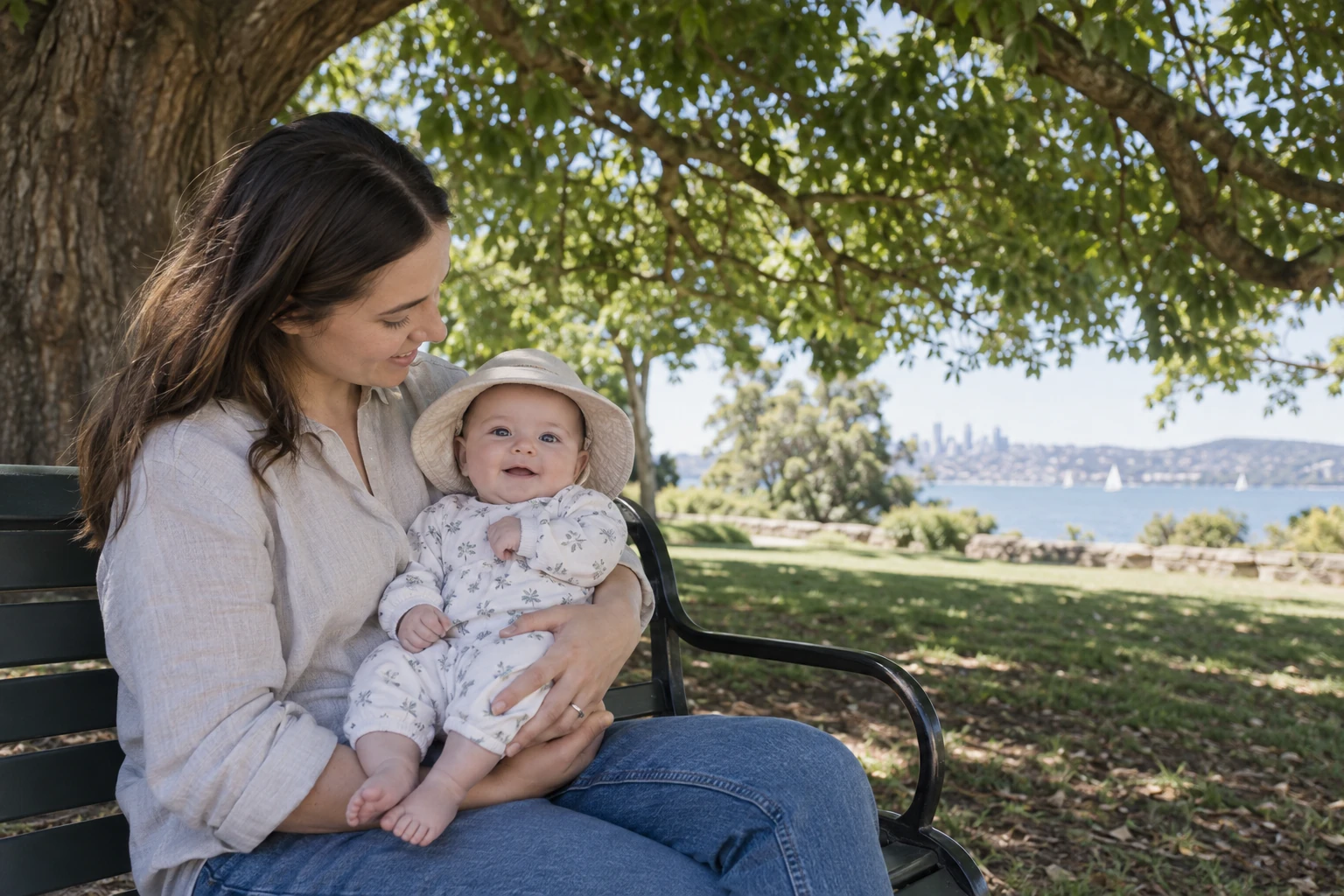
US guidance allows sunscreen on small areas, such as the face, before 6 months if protective clothing and shade are unavailable. UK guidance does not recommend sunscreen for babies under 6 months.
These are US and UK recommendations. Before six months, plan the outing around shade and covering, and discuss any unavoidable exposed areas with your baby’s clinician.
Choose by protection, not packaging
From 6 months, choose a broad-spectrum, water-resistant sunscreen with SPF 30 or higher. Broad-spectrum means protection against UVA and UVB; SPF mainly describes protection against UVB, the rays chiefly responsible for sunburn.
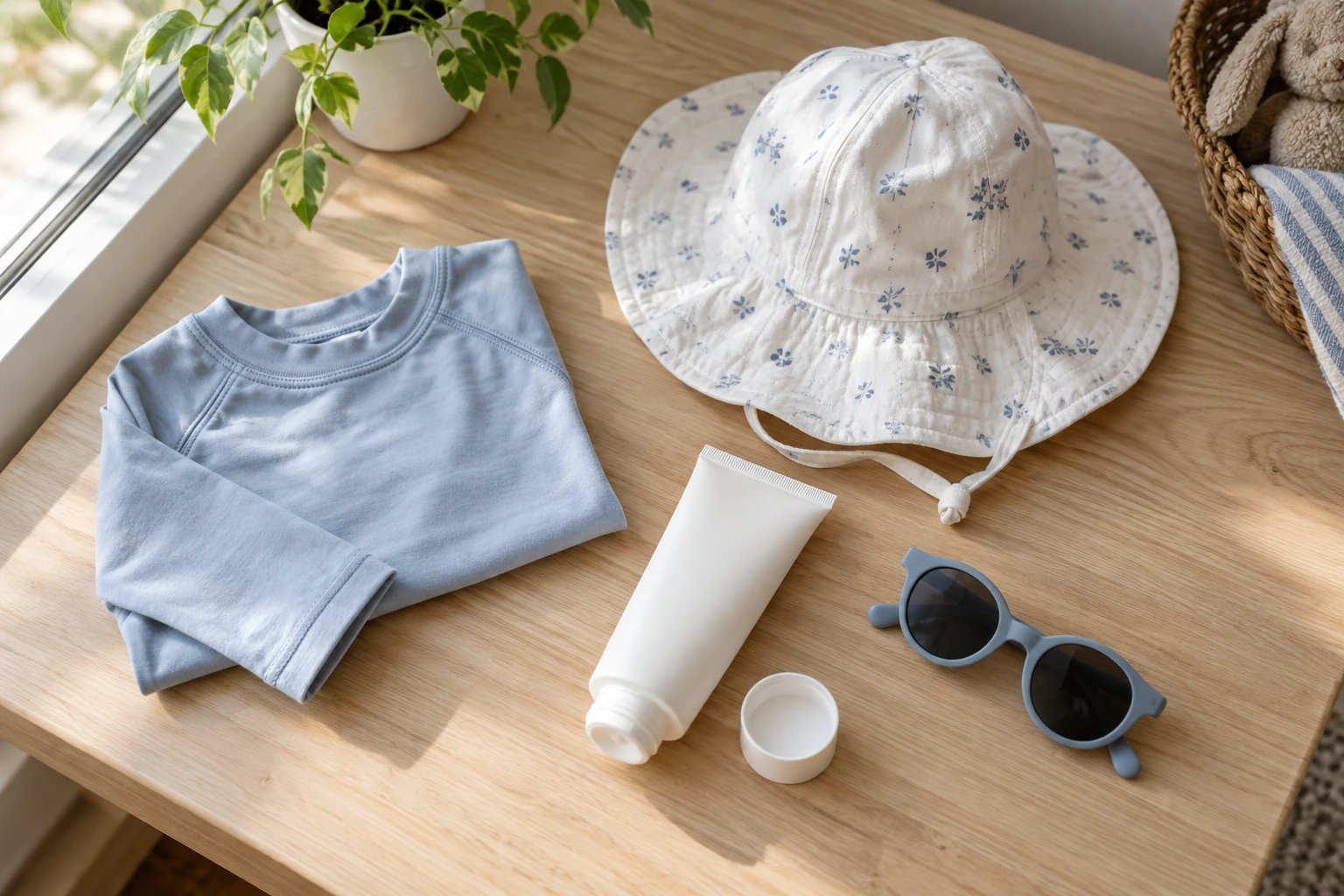
Zinc oxide or titanium dioxide sunscreens may cause less irritation to sensitive baby skin. A cream is a suitable option for applying sunscreen to the face.
Do not spray sunscreen directly onto a baby’s face or near the mouth, and avoid inhaling the spray.
Cover the skin before the outing
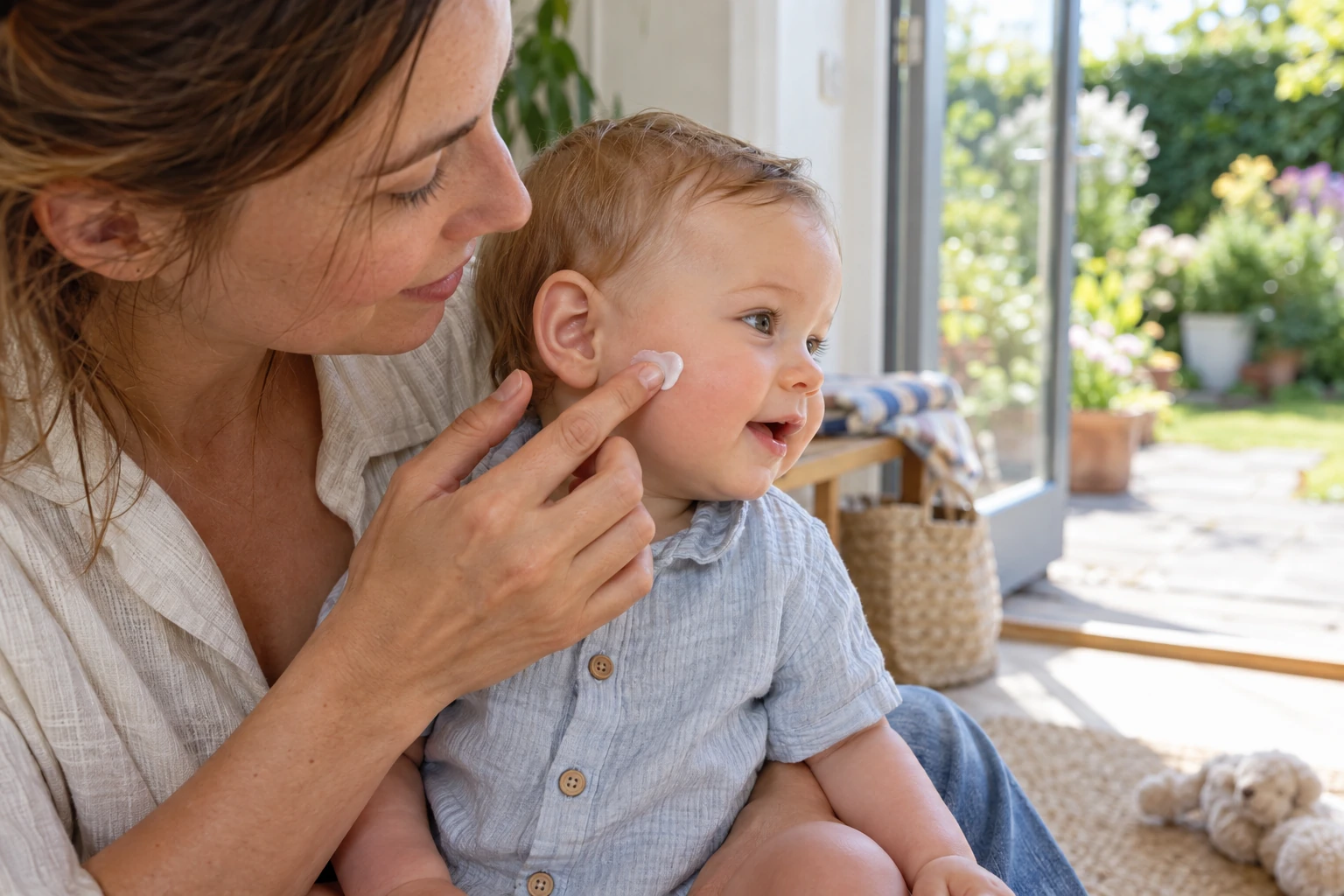
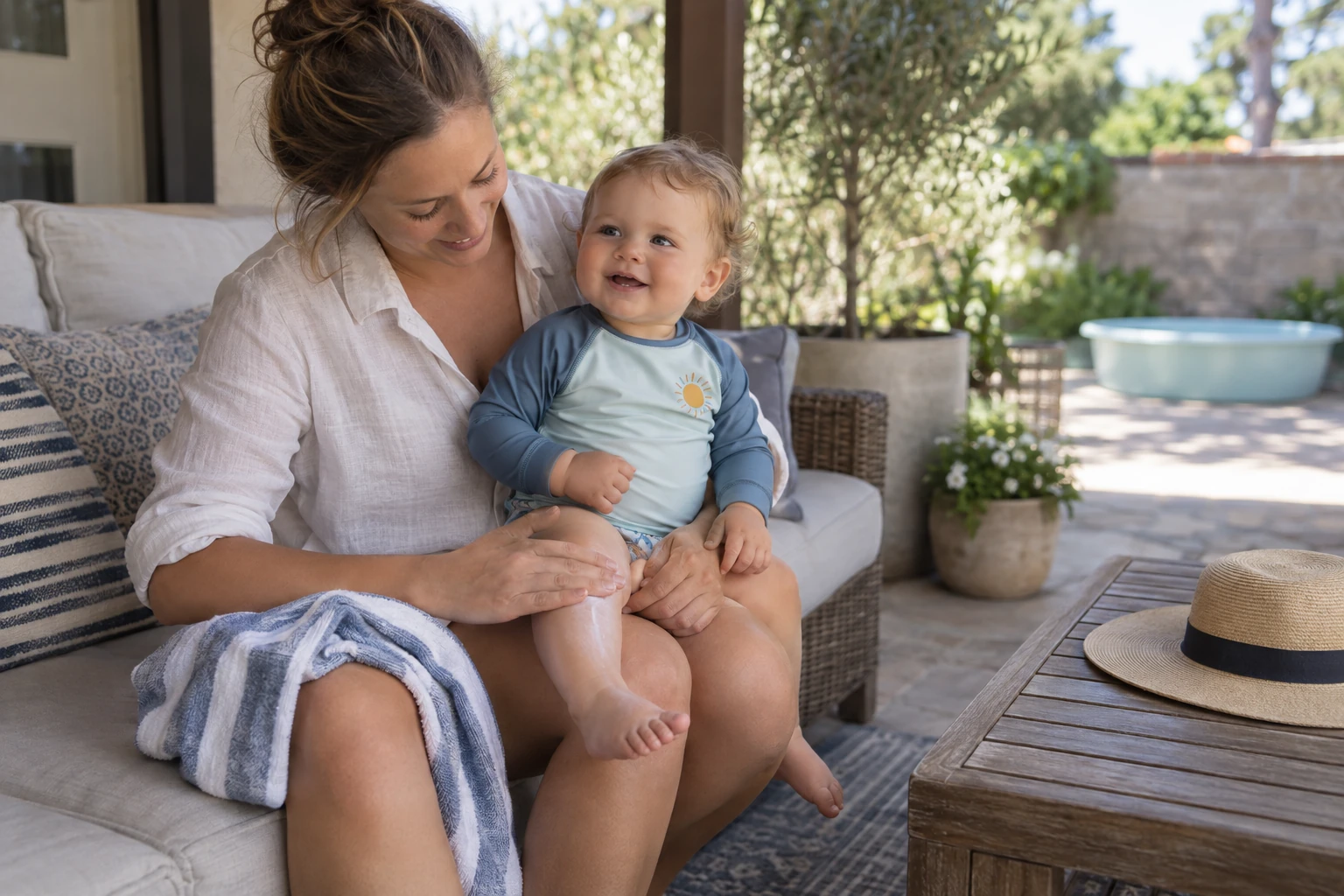
Apply sunscreen 15 minutes before going outdoors, following the product instructions. For babies 6 months and older, apply a generous, even layer to all uncovered skin, including the face, ears, neck, backs of hands and tops of feet. Keep sunscreen out of the eyes and mouth.
When should you reapply?
A higher SPF does not let you wait longer before reapplying.
| Situation | When to apply again |
|---|---|
| Staying outdoors | Reapply sunscreen every 2 hours while outdoors, or more often if the label directs. |
| Swimming, sweat or towel | Reapply immediately after swimming, sweating or towel drying. |
On US labels, water resistance of 40 or 80 minutes refers to tested protection during swimming or sweating. No sunscreen is waterproof.
Keep shade in the plan
Use shade and protective clothing first, even when you use sunscreen. Use lightweight covering clothes and a hat that shades the face, ears and neck.
Do not cover the stroller with a blanket; it can cause overheating, and you should check your baby regularly for being too hot. For babies 6 months and older, protect uncovered skin outdoors even on cloudy days because UV rays can pass through clouds. Wash sunscreen off your baby’s skin once you are back indoors.
Rash or sunburn: what to do
If a rash develops after sunscreen use, talk with your baby’s doctor. Sunburn can feel hot or sore, and redness may be hard to see on darker skin.

Get urgent medical advice for sunburn in a baby or young child; if your baby is younger than 1 year, call their doctor right away. Seek urgent medical advice for blistering or swollen sunburn, a very high temperature or shivering, or unusual tiredness or sickness after sun exposure. Move out of the sun and cool the skin with a cool damp towel without chilling your baby; do not apply ice or pop blisters.
Questions before the next outing
Can I use last year’s sunscreen?
Do not use sunscreen past its expiry date or if its color or consistency has obviously changed. Keep the sunscreen container away from excessive heat and direct sunlight.
Why does mineral sunscreen leave a white film?
Zinc oxide or titanium dioxide sunscreen can remain visible on the skin after rubbing it in.
What if sunscreen gets into the eyes?
If your baby rubs sunscreen into their eyes, gently wipe their eyes and hands clean with a damp cloth.