Baby Oral Thrush: Signs, Treatment and Care

White patches that stick inside your baby’s mouth may be oral thrush; ask a clinician to check them.
SUMMARY
- Contact a clinician within 24 hours if your baby drinks less than usual or the mouth bleeds.
- Seek urgent medical advice for fewer wet diapers than usual or unusual drowsiness.
- In the UK, a baby under 4 months with signs of thrush should see a GP.
Milk coating or thrush?
Oral thrush, also called oral candidiasis, is a mouth infection caused by Candida yeast. Taking antibiotics can increase the chance of thrush.
Some babies have little discomfort; others become unsettled during feeds or drink less because their mouth is sore.
| What you notice | What it can mean |
|---|---|
| Tongue only | A white coating only on the tongue can be milk residue. |
| Elsewhere in the mouth | Look for white patches inside the cheeks or lips, and on the gums, tongue or roof of the mouth. Thrush patches do not come off with gentle wiping; leave persistent patches for a clinician to assess. |

Some babies also have a diaper rash that does not clear up.
How treatment is chosen
A baby who is otherwise well and feeding comfortably may improve without medicine, but feeding difficulty generally needs treatment. A clinician or pharmacist can select an antifungal medicine suitable for your baby’s age and explain how to apply it.

UK Daktarin miconazole oral gel must not be used in babies under 4 months or those whose swallowing reflex is not sufficiently developed. For premature babies or babies with slow neuromuscular development, the UK label raises the lower age limit to 5–6 months.
If this gel is prescribed, use small divided portions as directed. Never put this gel at the back of the throat or on a nipple to give it to your baby, because of choking risk.
Follow the full treatment course your clinician specifies rather than stopping as soon as the patches begin to fade. Arrange reassessment if the infection has not cleared after 7 days of treatment, or sooner if symptoms worsen.
Feeding and parental nipple symptoms
Keep offering regular milk feeds. Smaller feeds more often may help when your baby takes less at a time. You can continue breastfeeding if tolerable, or express milk if feeding is too painful.

Ask for assessment if your nipples burn or itch. Nipple pain can also come from a poor latch. Tell the clinician about both your symptoms and your baby’s so treatment needs can be assessed together.
Cleaning and preventing irritation
Wash your hands after diaper changes and before feeds. After each feed, promptly wash bottles in hot soapy water and rinse under clean, cold running water before sterilizing.
Wash feeding items in a washing-up bowl, using a clean brush reserved for bottles.
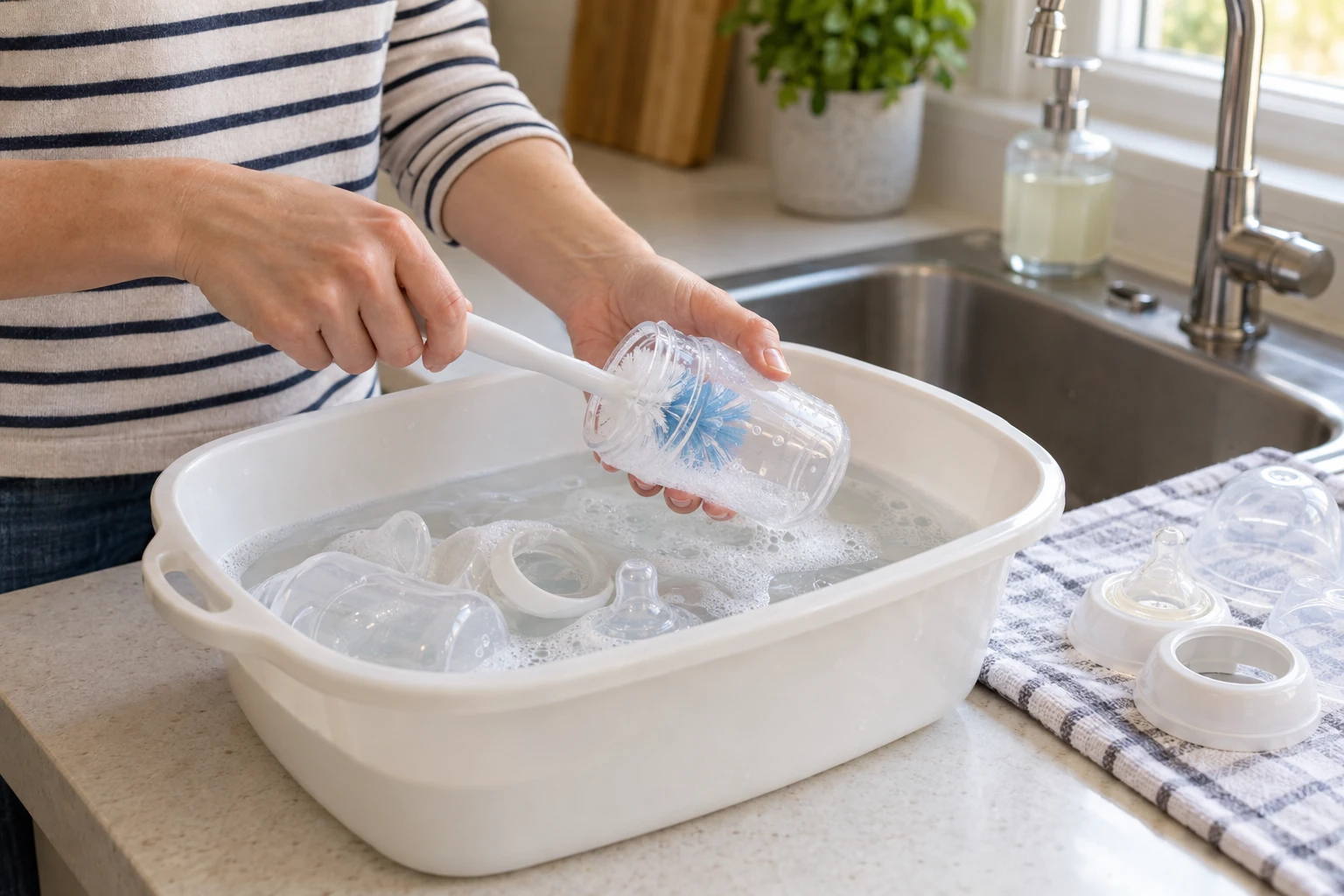
UK guidance recommends sterilizing pacifiers, teats and mouth-contact toys during thrush, while some US pediatric guidance does not recommend extra boiling specifically for thrush.
UK guidance recommends sterilizing feeding equipment, including bottles and teats, until babies are at least 12 months old. Follow your clinician’s local plan and the equipment manufacturer’s cleaning and sanitizing instructions.
Avoid prolonged pacifier sucking, which can irritate the lining of the mouth.
When to seek help
Seek care now if your baby is under 1 month old and seems unwell or behaves unusually.
Seek urgent assessment for a temperature of 38°C or higher under 3 months, or 39°C or higher at 3–6 months. Seek urgent advice sooner if you think your baby has a fever or you are worried about how they look or feed, even without a reading at those thresholds.

Call your local emergency number if your baby is difficult to wake, has trouble breathing or has blue or grey lips.
Practical questions
Must I replace every pacifier?
You do not need to throw pacifiers away solely because your baby has thrush.
Can my baby still attend childcare?
In Ireland, children with thrush can attend childcare if they are well enough.