Baby Teething & First Oral Care Guide
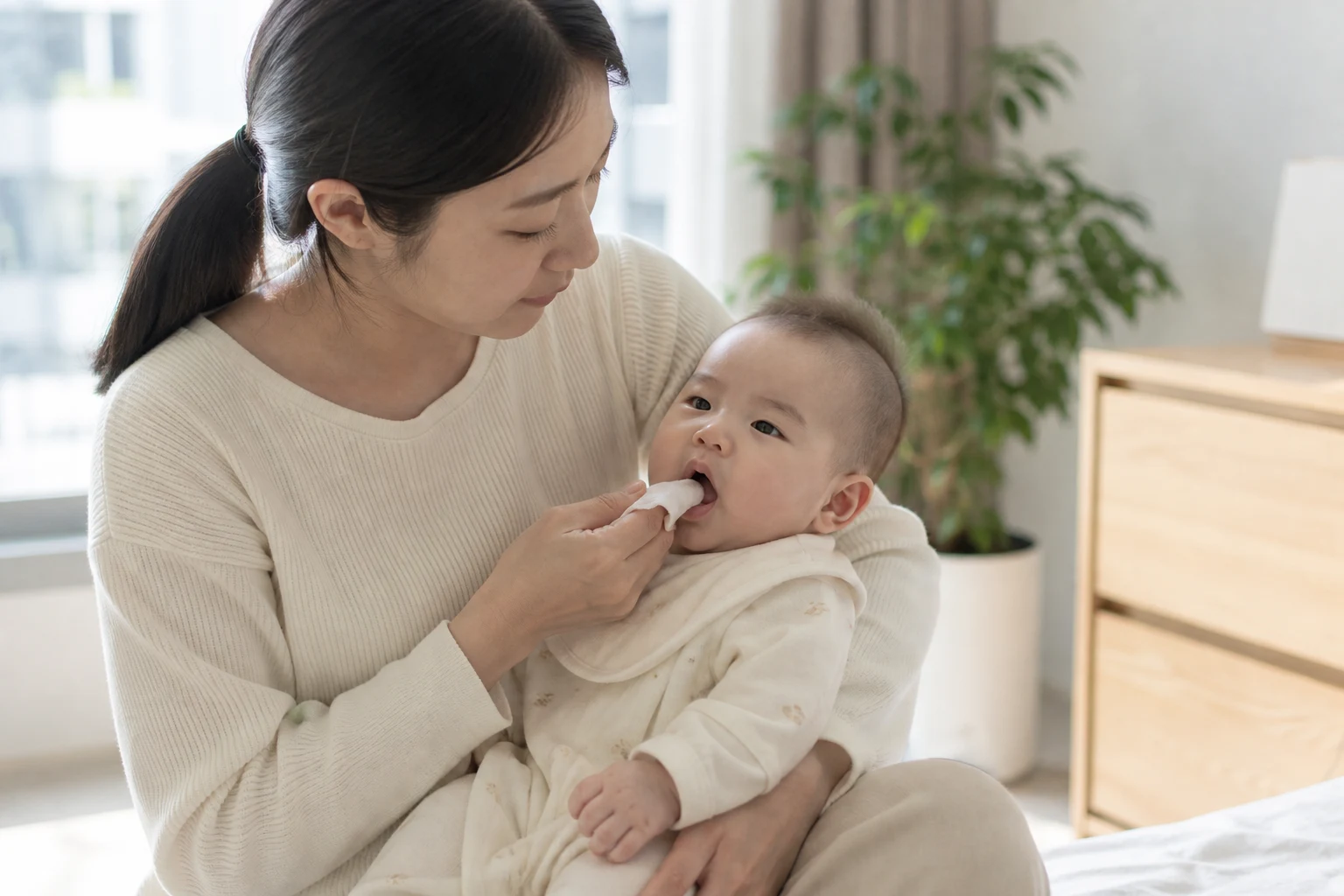
Teething is a developmental period, not an explanation for every fever, poor feed, or distressed cry. Build care around gentle comfort, a clean mouth, safe products, and a clear plan for medical or dental help.
SUMMARY
Use a clean finger for gentle gum massage or offer a clean firm rubber teether cooled in the refrigerator, not frozen. Avoid benzocaine or lidocaine gels, homeopathic tablets, and teething jewelry. Wipe gums with a clean damp cloth; when the first tooth appears, brush twice daily with a soft infant toothbrush and a rice-grain smear of fluoride toothpaste. Arrange a dental visit within six months of the first tooth and no later than the first birthday. Fever above 38.3°C, marked illness, poor intake, dehydration, breathing trouble, or unusual sleepiness needs medical assessment rather than being blamed on teething.
Recognize common teething changes
Start with safe teething comfort. Tooth eruption often comes with drooling, a wish to chew, tender or swollen gums, and mild irritability. Timing varies widely, and a later first tooth alone does not prove a problem. Observe several ordinary periods rather than forcing the mouth open repeatedly. Note which gum area looks different, how long the change lasts, and whether the baby still feeds, wakes, interacts, breathes, and urinates as usual. A mouth clue is useful only when interpreted with the baby's full condition.

Separate teething from illness
Teething can coincide with a slight temperature rise, but AAP guidance says a temperature above 101°F or 38.3°C is probably not from teething. Measure rather than guessing by touch, record the method, and follow age-specific fever advice. Vomiting, diarrhea, widespread rash, breathing change, marked lethargy, poor feeding, dehydration, or a baby who appears particularly miserable needs broader assessment. Do not delay care because a tooth seems close to erupting. Young infants or babies with medical conditions may need a lower threshold for contact.
Soothe without numbing the mouth
Use first-tooth brushing. Wash your hands and rub the tender gum gently with one clean finger. A simple firm rubber teether can be cooled in the refrigerator and offered while an adult watches. Do not freeze it: very hard frozen material can injure sensitive gums. Stop if the baby coughs, gags repeatedly, becomes distressed, or the object is damaged. Comfort, holding, and a calmer routine may help. Ask a clinician before giving pain medicine because the product, dose, age, weight, and health history all matter.
Avoid products with serious risks
Remember products to avoid. FDA and AAP sources advise against benzocaine or lidocaine teething products because they provide little benefit and can cause serious harm. Homeopathic teething tablets have no established benefit and have raised safety concerns. Amber and other teething necklaces do not relieve pain and create choking or strangulation hazards. Never tie a teether to the baby's neck, clothing, crib, or seat with a long cord. Advertising language such as natural or fast acting does not replace evidence, an ingredient review, or professional guidance.
Clean gums and start brushing at the first tooth
Before teeth erupt, a clean damp soft cloth can make gentle mouth cleaning familiar. Once the first tooth appears, use a soft infant toothbrush and a rice-grain smear of fluoride toothpaste. Brush all visible tooth surfaces gently twice daily, especially after the last feed before sleep. The caregiver should apply the toothpaste and keep the tube out of reach. Do not scrub inflamed tissue, force the mouth open, or use an adult-sized amount. A safe supported position and enough light matter more than a perfect two-minute session with a young baby.
Protect teeth between brushing sessions
Avoid putting the baby to bed with a bottle containing milk, formula, juice, or another sweet drink. Liquid can remain around the teeth and support decay. Do not share spoons or clean a pacifier in an adult's mouth, because decay-associated bacteria can pass between mouths. Inspect the teeth in normal light occasionally; repeated white, tan, brown, or black changes deserve professional review rather than vigorous home scraping. If feeding or sleep needs make the routine difficult, ask the pediatrician or dentist for an individualized plan.
Establish a dental home
AAP and ADA guidance supports a first dental visit within six months after the first tooth erupts and no later than the first birthday. The visit is preventive: the dentist can assess eruption, enamel, brushing position, fluoride exposure, feeding and sleep habits, and injury planning. Ask the pediatrician or dentist about fluoride varnish and whether the local water supply contains fluoride. Bring the exact toothpaste product and a short description of the routine if you are unsure about amount or technique. Do not wait for visible decay before arranging care.
Know when to call
Use medical and dental warning signs. Contact the pediatrician for significant fever, poor intake, fewer wet diapers, persistent vomiting or diarrhea, unusual sleepiness, or a baby who seems unwell. Contact a dentist promptly for a chipped, displaced, loose, darkening, or lost baby tooth; spreading mouth swelling; pus; persistent bleeding; or pain that disrupts feeding and sleep. After injury, do not push a tooth back or replace a knocked-out baby tooth. Breathing or swallowing difficulty, rapidly spreading face or neck swelling, uncontrolled bleeding, seizure, blue or gray color, or difficulty waking requires emergency help.
Build a repeatable daily routine
Pair oral care with events that already happen. Wipe the gums after a calm feed when practical, inspect the teether during washing, and brush after breakfast and after the final feed once teeth appear. Keep the toothbrush, toothpaste, clean cloths, and teether in a consistent adult-controlled place. A short routine performed gently every day is more useful than occasional forceful cleaning. If the baby resists, pause, adjust support, and try again when calm; urgent symptoms still need professional advice rather than repeated home examination.
Choose and maintain a teether
Prefer a one-piece design that is large enough not to swallow and simple enough to clean. Follow the maker's age and cleaning directions, and check seams, surface breakdown, trapped liquid, and loose material before each use. Refrigerate only if the instructions permit. Do not improvise with jewelry, food bags, hard household objects, or long cords. Discard damaged items rather than repairing them with tape or glue. Supervision means the adult is close enough to see the baby's face and respond immediately, not merely in the same home.
Use the correct toothpaste amount
A rice-grain smear is a thin trace across a small part of the bristles, not a pea-sized mound. Use fluoride toothpaste from the first tooth, as current AAP guidance recommends, and help with brushing. Keep the package closed and stored high because a baby cannot control swallowing or measure a dose. At age three, guidance changes to a pea-sized amount when the child can learn to spit, but the caregiver still supervises. Ask the dentist if local fluoride exposure, enamel changes, or special medical needs alter the plan.
Prepare for a dental or pediatric call
Write the baby's age, temperature and measurement method, start time, feeds, wet diapers, sleep and alertness, mouth location, visible color or swelling, recent injury, and everything applied or given. Name the exact product and dose rather than saying teething medicine. For a non-emergency question, a clear photograph in normal light may help if obtained without forcing the mouth. For breathing trouble, uncontrolled bleeding, rapidly spreading swelling, or altered responsiveness, seek emergency help first and do not delay to document the scene.
Keep expectations realistic
Teething discomfort comes and goes, tooth timing varies, and brushing a moving baby is a learned caregiving skill. The goal is not a perfectly still child, a completely dry chin, or an instant cure. The goal is to protect the airway, avoid harmful products, keep emerging teeth clean, notice meaningful change, and connect the family with dental and pediatric care. If repeated care becomes a struggle, ask a dental professional to demonstrate positioning with the baby's real size and movement pattern.
Frequently asked questions
Can one wet diaper rule out dehydration?
No. Use the full-day trend, feeding, and whole-body signs.
Should I give water to fix a low count?
Not to an infant under six months unless a clinician specifically directs it. Ask your pediatrician.
Can I wait until the log is complete?
No. Emergency signs or a clear contact threshold take priority over documentation.
Sources
This article provides general information and is not medical advice. Ask your pediatrician about reduced urine, feeding concerns, or guidance tailored to your baby.