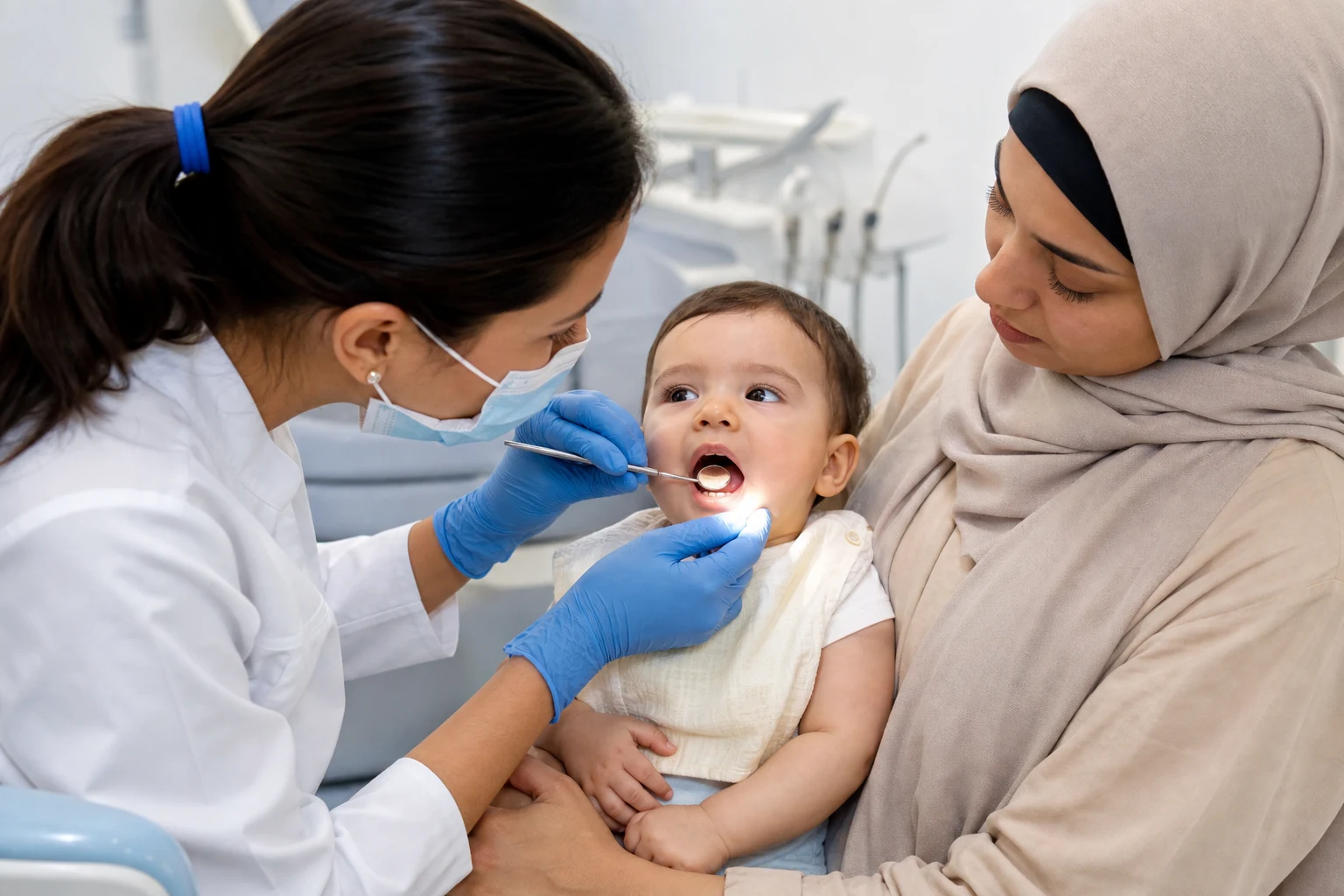
Baby Teething & Mouth Warning Signs

Call for help based on the whole pattern. Higher fever, marked illness, reduced drinking or urination, breathing or swallowing difficulty, spreading swelling, significant bleeding, or a tooth injury should not be managed as routine teething.
Summary
Contact the pediatrician for temperature above 38.3°C with apparent illness, persistent pain, poor feeding, vomiting or diarrhea, fewer wet diapers, unusual sleepiness, or symptoms outside the usual pattern. Contact a dentist promptly for a chipped, loose, displaced, darkening, or lost baby tooth; swelling; pus; persistent bleeding; tooth color changes; or pain that disrupts feeding and sleep. Emergency help is needed for breathing difficulty, inability to swallow saliva, rapidly spreading face or neck swelling, uncontrolled bleeding, seizure, blue or gray color, or difficulty waking. For a baby 3 months old or younger, a rectal temperature of 38°C (100.4°F) or higher needs an immediate pediatrician call even without other symptoms.
Know when to call
Contact the pediatrician for significant fever, poor intake, fewer wet diapers, persistent vomiting or diarrhea, unusual sleepiness, or a baby who seems unwell. Contact a dentist promptly for a chipped, displaced, loose, darkening, or lost baby tooth; spreading mouth swelling; pus; persistent bleeding; or pain that disrupts feeding and sleep. After injury, do not push a tooth back or replace a knocked-out baby tooth. Breathing or swallowing difficulty, rapidly spreading face or neck swelling, uncontrolled bleeding, seizure, blue or gray color, or difficulty waking requires emergency help.
Separate teething from illness
A small temperature rise within the normal range can accompany teething, but a true fever should not be attributed to it. If a baby is 3 months old or younger and has a rectal temperature of 38°C (100.4°F) or higher, call the pediatrician immediately, even without other symptoms.
AAP teething guidance also says a temperature above 101°F or 38.3°C is probably not from teething. This does not mean waiting for that temperature before seeking care. Measure rather than guessing by touch, record the method, and follow age-specific fever advice. Vomiting, diarrhea, widespread rash, breathing change, marked lethargy, poor feeding, dehydration, or a baby who appears particularly miserable needs broader assessment. Do not delay care because a tooth seems close to erupting. Young infants or babies with medical conditions may need a lower threshold for contact.
Recognize common teething changes
Tooth eruption often comes with drooling, a wish to chew, tender or swollen gums, and mild irritability. Timing varies widely, and a later first tooth alone does not prove a problem. Observe several ordinary periods rather than forcing the mouth open repeatedly. Note which gum area looks different, how long the change lasts, and whether the baby still feeds, wakes, interacts, breathes, and urinates as usual. A mouth clue is useful only when interpreted with the baby's full condition.
Avoid products with serious risks
FDA and AAP sources advise against benzocaine or lidocaine teething products because they provide little benefit and can cause serious harm. Homeopathic teething tablets have no established benefit and have raised safety concerns. Amber and other teething necklaces do not relieve pain and create choking or strangulation hazards. Never tie a teether to the baby's neck, clothing, crib, or seat with a long cord. Advertising language such as natural or fast acting does not replace evidence, an ingredient review, or professional guidance.