Brush Baby's First Tooth
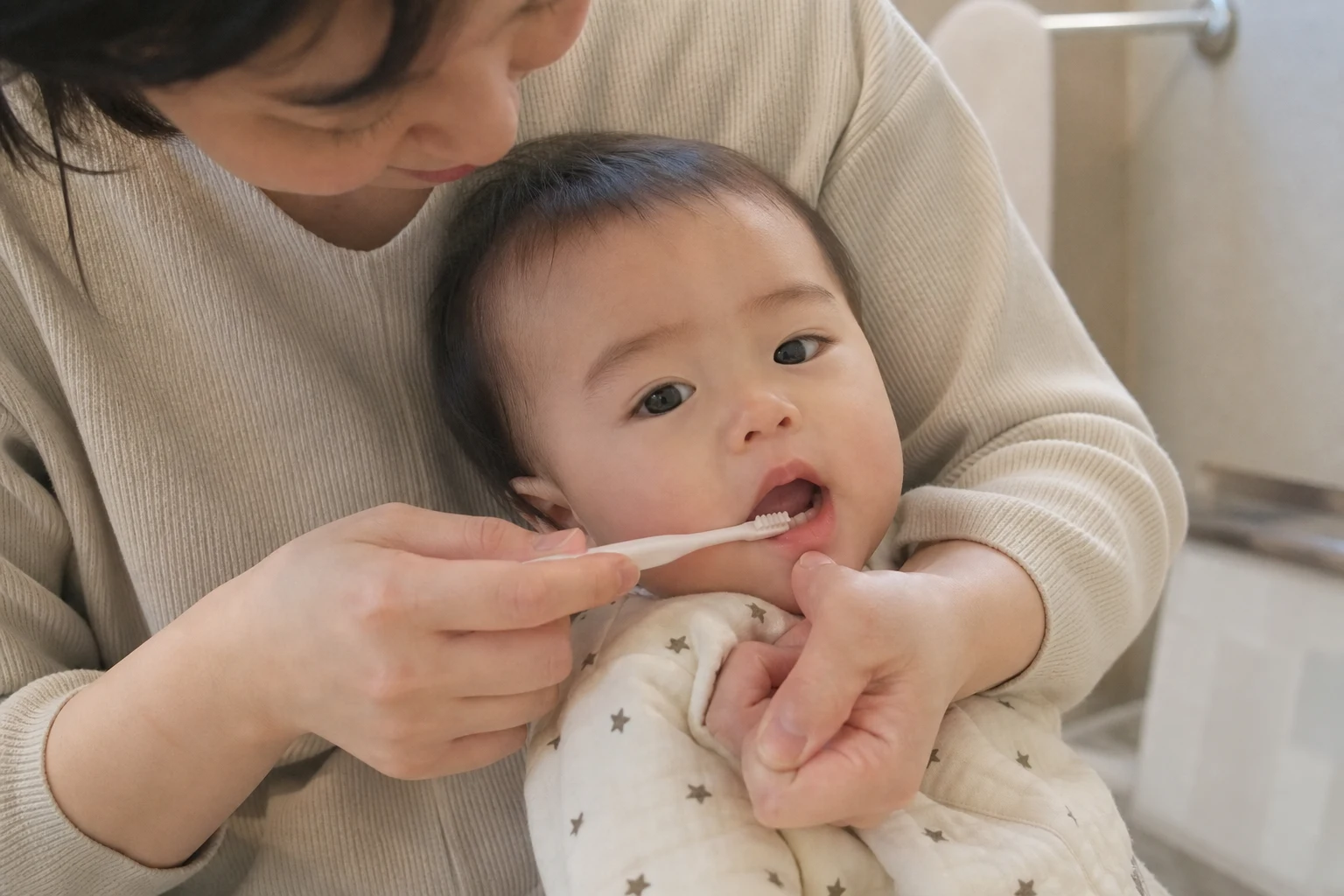
The first visible tooth changes the routine: use a soft infant toothbrush and a smear of fluoride toothpaste no larger than a grain of rice. Brush gently twice a day, especially after the last feed before sleep.
Summary
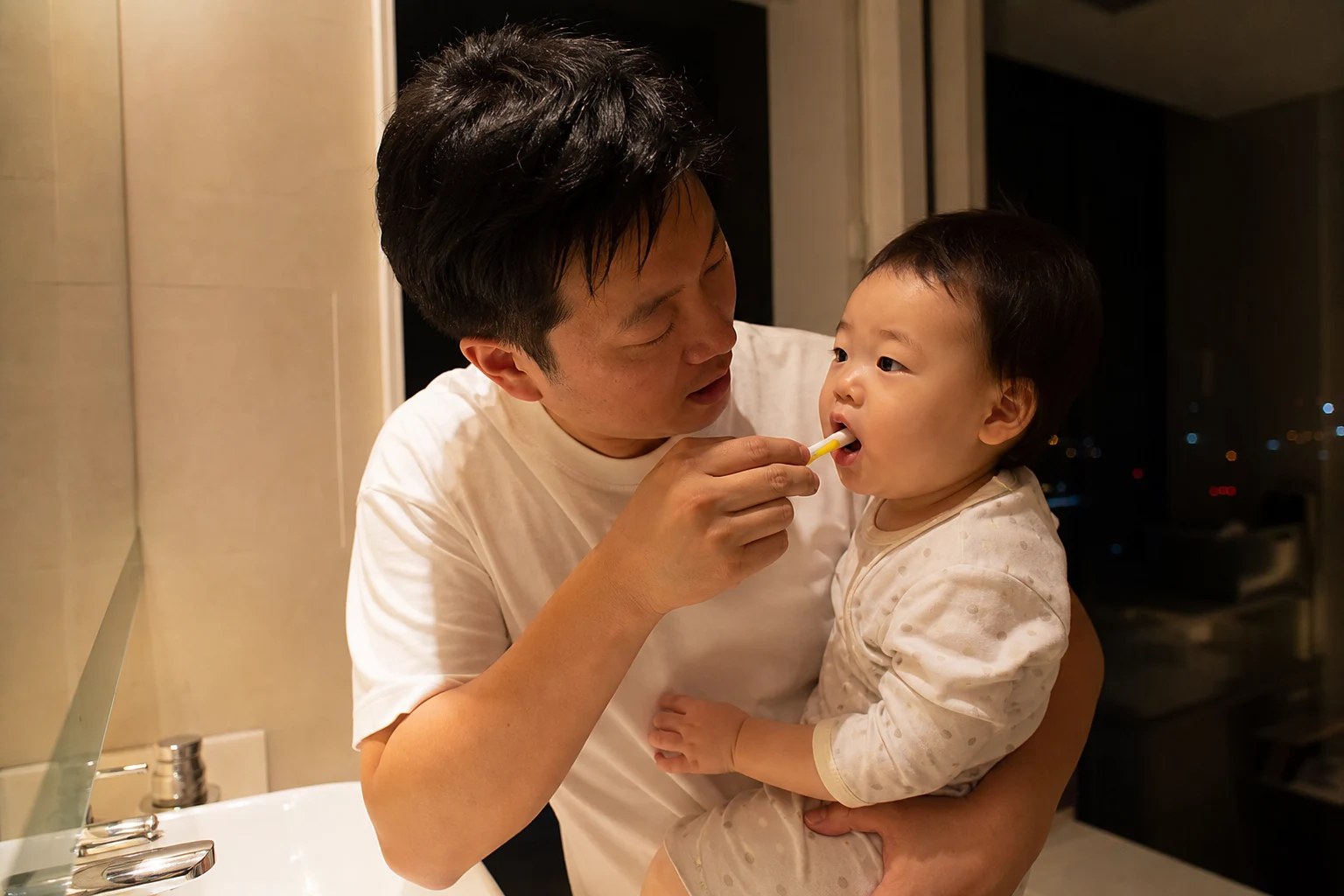
Hold the baby securely with the head supported and enough light to see the gumline. Lift the lip gently and brush every visible surface with small motions. Use only a rice-grain smear of fluoride toothpaste until age three; the caregiver applies it and stores the tube out of reach. Do not put a baby to bed with a bottle of milk, formula, juice, or another sweet drink. Arrange a dental home by the first birthday or within six months of the first tooth.
Clean gums and start brushing at the first tooth
Before teeth erupt, a clean damp soft cloth can make gentle mouth cleaning familiar. Once the first tooth appears, use a soft infant toothbrush and a rice-grain smear of fluoride toothpaste. Brush all visible tooth surfaces gently twice daily, especially after the last feed before sleep. The caregiver should apply the toothpaste and keep the tube out of reach. Do not scrub inflamed tissue, force the mouth open, or use an adult-sized amount. A safe supported position and enough light matter more than a perfect two-minute session with a young baby.
Protect teeth between brushing sessions
Avoid putting the baby to bed with a bottle containing milk, formula, juice, or another sweet drink. Liquid can remain around the teeth and support decay. Do not share spoons or clean a pacifier in an adult's mouth, because decay-associated bacteria can pass between mouths. Inspect the teeth in normal light occasionally; repeated white, tan, brown, or black changes deserve professional review rather than vigorous home scraping. If feeding or sleep needs make the routine difficult, ask the pediatrician or dentist for an individualized plan.
Establish a dental home
AAP and ADA guidance supports a first dental visit within six months after the first tooth erupts and no later than the first birthday. The visit is preventive: the dentist can assess eruption, enamel, brushing position, fluoride exposure, feeding and sleep habits, and injury planning. Ask the pediatrician or dentist about fluoride varnish and whether the local water supply contains fluoride. Bring the exact toothpaste product and a short description of the routine if you are unsure about amount or technique. Do not wait for visible decay before arranging care.
Know when to call
Contact the pediatrician for significant fever, poor intake, fewer wet diapers, persistent vomiting or diarrhea, unusual sleepiness, or a baby who seems unwell. Contact a dentist promptly for a chipped, displaced, loose, darkening, or lost baby tooth; spreading mouth swelling; pus; persistent bleeding; or pain that disrupts feeding and sleep. After injury, do not push a tooth back or replace a knocked-out baby tooth. Breathing or swallowing difficulty, rapidly spreading face or neck swelling, uncontrolled bleeding, seizure, blue or gray color, or difficulty waking requires emergency help.