Baby First Dental Visit: When to Go
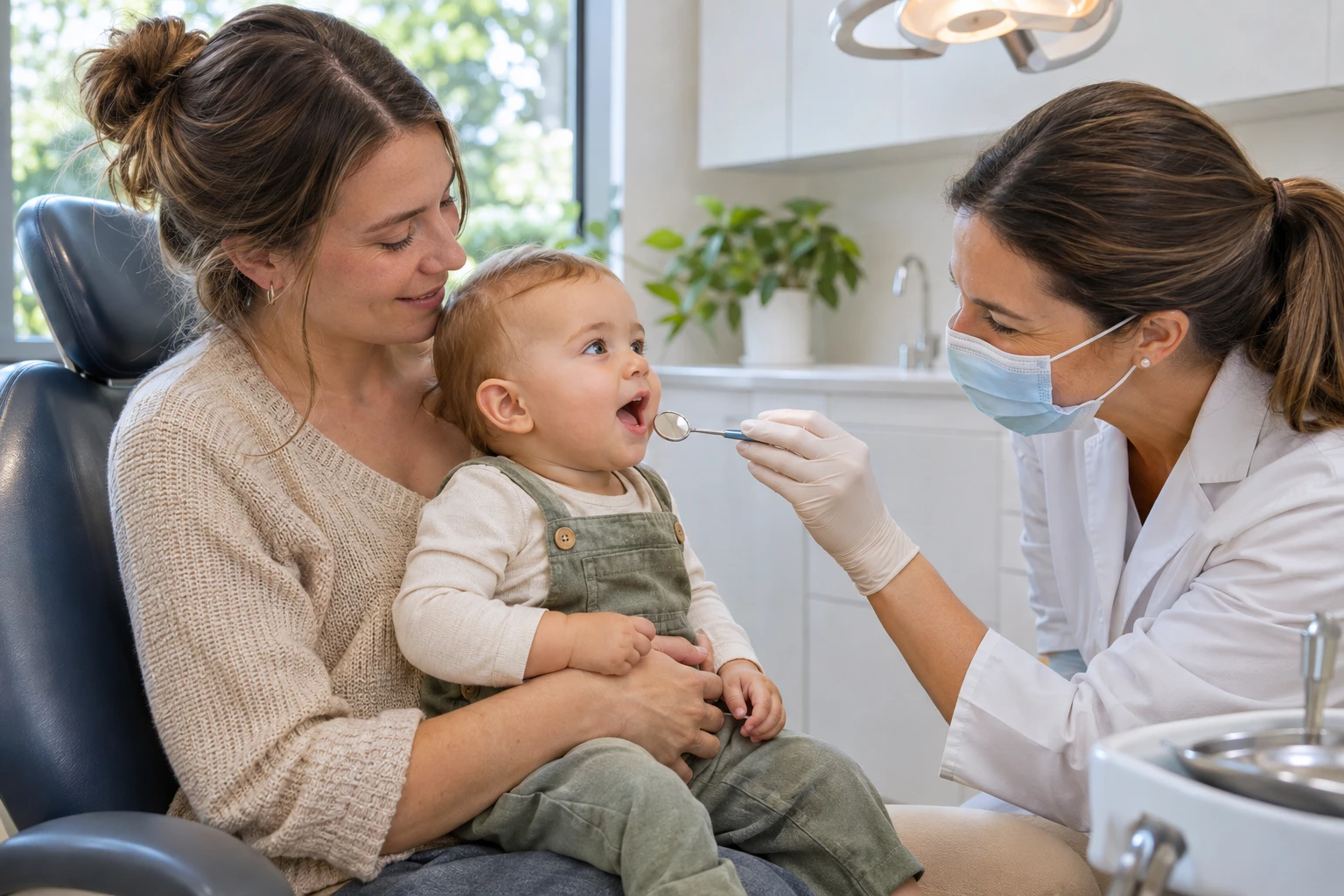
Arrange the first dental visit within six months of the first tooth appearing and no later than your baby’s first birthday.
For caregivers of babies and toddlers. The visit timing and toothpaste amounts here follow US pediatric dental guidance.
SUMMARY
- Make brushing part of bedtime and one other daily routine.
- Before leaving the appointment, ask when your child should return for a check-up.
- Arrange a dental assessment for new white, brown or black tooth spots, even if your child has no pain.
Why begin before there is a problem?
Baby teeth help children chew and speak clearly and keep space for the permanent teeth.
The first tooth often appears around six months, but some babies do not start teething until after twelve months.
Keep the first-birthday dental visit even if no teeth have appeared yet.
If your toddler is already past their first birthday and has never seen a dentist, arrange that first visit now.
Booking and the first appointment
Pediatric dentists have extra training in caring for children, including children with special health care needs.
At the first visit, the dentist reviews your child’s health history, examines the mouth and assesses the risk of tooth decay.
You can use the visit to discuss brushing, milk feeds, sweet snacks and sucking habits.

Questions to bring
- Which toothbrush and locally available fluoride toothpaste should we use?
- Can you show me how to reach the back and inside surfaces?
- Do any teeth need cleaning between them yet?
- What should we change about our feeding or bedtime routine?
The dentist may recommend fluoride varnish, a coating applied to the teeth, if your child is at risk of decay.
Six-monthly check-ups are common in US pediatric dental guidance, but your dentist should set the interval for your child’s needs.
Build a brushing routine
From the first tooth, gently brush all tooth surfaces twice a day with a small, soft-bristled toothbrush.
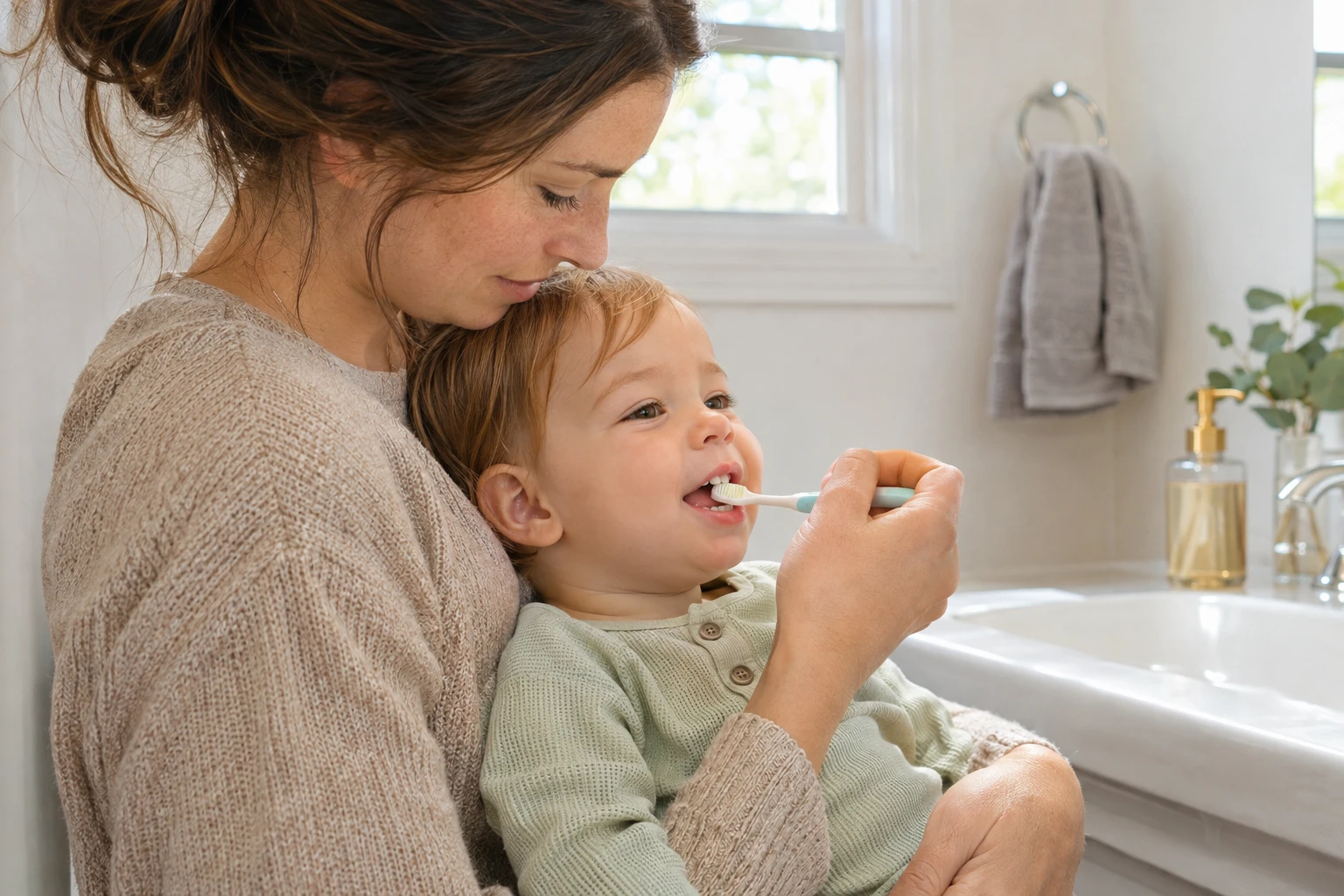
Young children still need an adult to brush or help clean their teeth, even when they enjoy holding the brush themselves.
A brushing game can help your toddler join in, but an adult still needs to help clean the teeth.
Choose the amount by age
| Stage | Daily care |
|---|---|
| Before the first tooth | Before the first tooth appears, gently clean the gums with a soft, damp cloth. |
| First tooth to under 3 | For children under 3, use a rice-grain-sized smear of fluoride toothpaste. |
| Ages 3 to 6 | For children aged 3 to 6, use a pea-sized amount of fluoride toothpaste. |
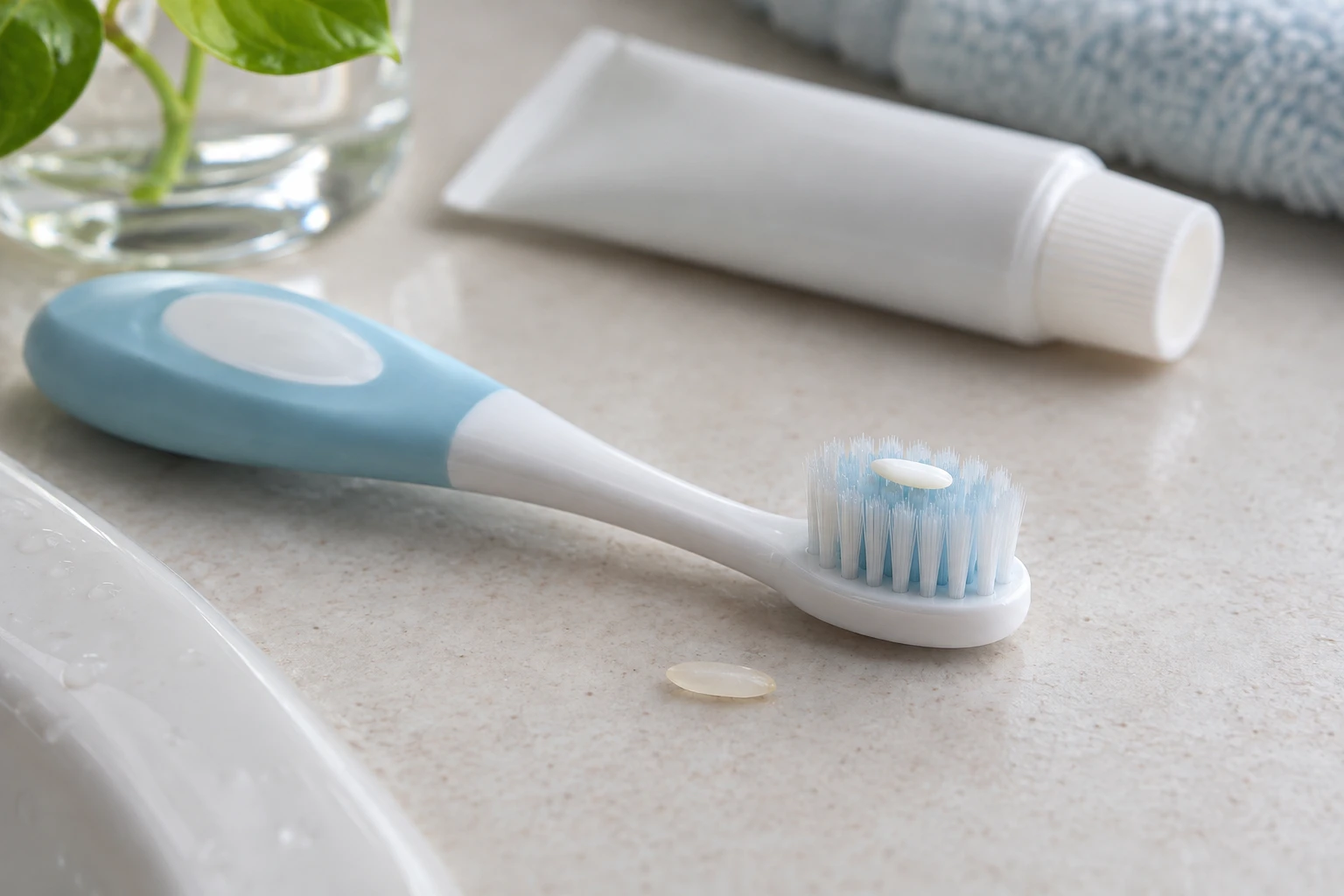
Control the toothpaste amount yourself, prevent eating it from the tube, and encourage spitting without rinsing when your child can spit.
Drinks, bottles and sweet snacks
Tooth decay risk depends on how often and how long teeth meet sugar, as well as how much sugar is eaten.
Avoid foods and drinks with added sugars for children under 2.
Do not leave your child asleep with a bottle of milk, formula or juice.

Do not dip a pacifier in sugar, jam or other sweet foods.
When to call sooner
If a tooth develops a visible hole or toothache, contact a dentist promptly instead of waiting for the next routine check-up.
Get emergency care immediately for breathing, speaking or swallowing difficulty, eye swelling or eye pain, sudden eyesight problems, major swelling inside the mouth, or trouble opening the mouth. Call your local emergency number if breathing is affected.
If none of these emergency signs is present, severe tooth or gum pain, facial swelling or fever with dental symptoms still needs an urgent dental appointment.

Questions caregivers ask
My baby cannot spit yet. Should toothpaste wait?
Being unable to spit does not mean delaying fluoride toothpaste: from the first tooth, use only the rice-grain-sized smear for a child under 3 and control it yourself.
What if my toddler refuses the toothbrush?
If your toddler resists brushing, try making it a game or brushing your own teeth alongside them, then help finish their teeth.
Should I put a knocked-out baby tooth back?
If a baby tooth is knocked out, never put it back into the socket; arrange emergency dental care because replanting can harm the developing permanent tooth.