How Long Should Baby Ride Rear-Facing?
Do not switch direction on a birthday alone. The useful boundary is the highest rear-facing height or weight allowed by that exact seat, together with every fit rule in its manual.
Summary
AAP and NHTSA guidance supports rear-facing as long as possible, until the child reaches the highest rear-facing height or weight allowed by the manufacturer. Outgrowing a rear-facing-only carrier does not automatically mean turning forward; a convertible or all-in-one seat may permit longer rear-facing use. Check standing height, seated fit, head position, weight, and any manufacturer-specific rule. Use the back seat and ask a qualified fitting service if the instructions are unclear.
Choose the correct restraint
Select a seat approved for the baby's current height, weight, and developmental needs. An infant should ride rear-facing in the back seat. The model must also fit the vehicle and be usable correctly on every trip. Registration helps families receive recall notices. A used seat needs a known history, all parts and labels, an unexpired service life, and no crash or damage that disqualifies it under the manufacturer's instructions. Marketing features never replace fit, approval, or correct daily use.
Read both manuals before installing
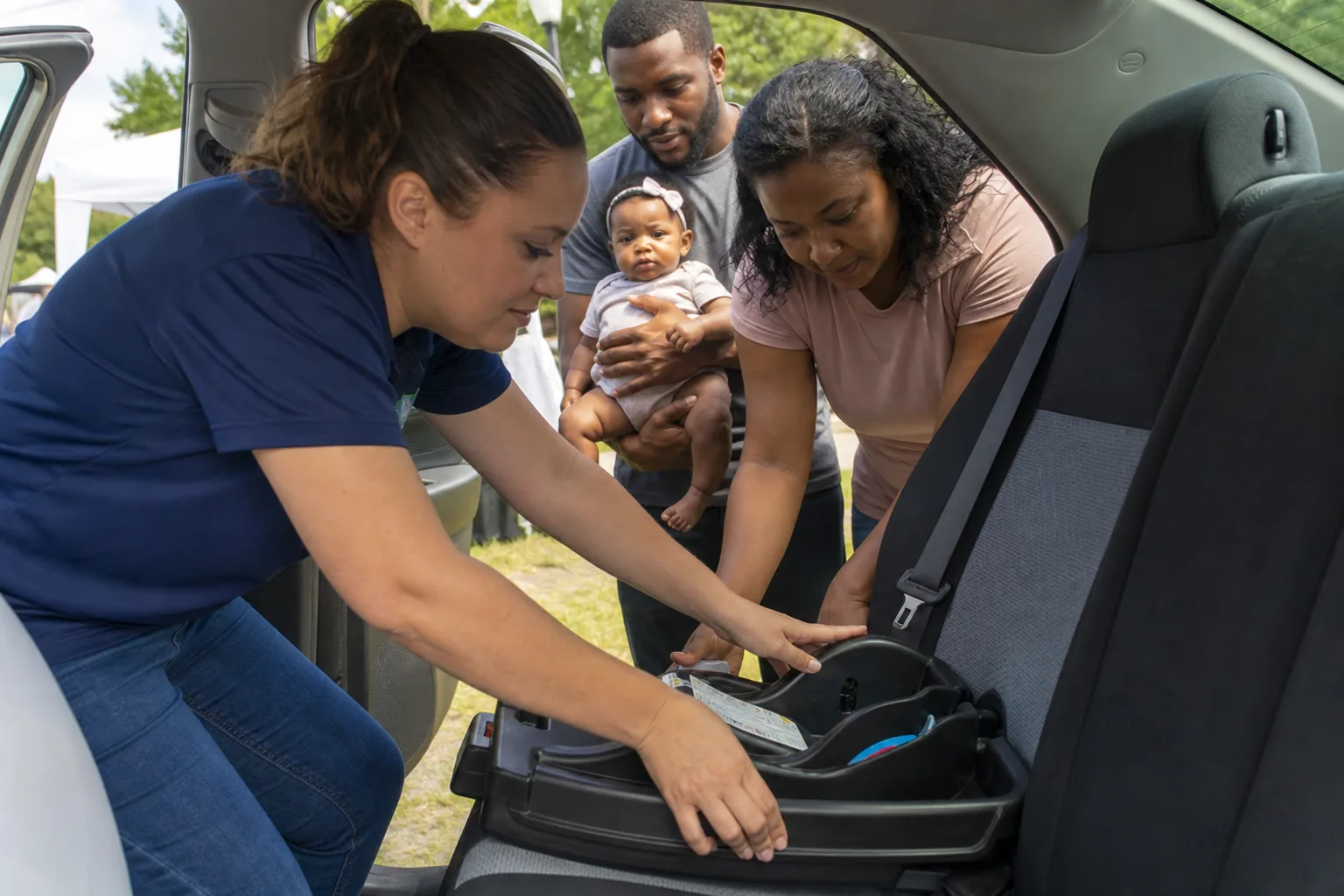
The child-seat manual explains allowed installation methods, belt paths, recline settings, inserts, carrier handle position, harness routing, size limits, cleaning, and replacement after a crash. The vehicle manual identifies seating positions, air bags, belt locking, lower anchors, and any restrictions. Use the seat belt or lower anchors exactly as directed; do not combine methods unless both manufacturers allow it. Never place a rear-facing seat in front of an active passenger air bag. When wording conflicts or remains unclear, stop and use qualified fitting help.

Fit the baby without added padding
Place the baby's back and bottom flat against the seat. For rear-facing use, route the shoulder straps through the slot specified by the manual, commonly at or below the shoulders. Remove twists, buckle every required part, and tighten until you cannot pinch extra webbing at the shoulder. Follow the product's instructions for any chest clip because approved designs differ by market. Use only inserts supplied or explicitly approved by the manufacturer. Do not add cushions, head supports, or padding behind the baby.
Test the installation at the belt path
Press and tighten according to the selected installation method. Then hold the seat or base where the belt or approved anchor strap passes through it. It should not move more than one inch side-to-side or front-to-back at that point. Movement at the far end of a rear-facing seat can be normal and is not the installation test. Confirm the required recline with the built-in indicator and manual. For an infant carrier, verify the carrier locks fully into its base before driving.
Keep clothing thin under the harness
Puffy coats, thick snowsuits, and bulky blankets can create hidden slack. Dress the baby in thin fitted layers, buckle and tighten the harness, then place a blanket or coat over the secured straps if warmth is needed. Keep all fabric away from the face and airway. Check that the baby is not overheating, and remove outer warmth as the vehicle cabin heats. Never loosen the harness to accommodate a bulky layer. A cold-weather cover must not pass behind the baby or interfere with the harness unless the seat manufacturer approves it.
Use clear stop and emergency rules
Stop promptly for chin-to-chest slumping, difficult or noisy breathing, color change, repeated vomiting, overheating, unusual limpness or sleepiness, poor feeding, or distress that does not settle. Contact the pediatrician for persistent symptoms or special travel questions involving prematurity, low birth weight, airway conditions, casts, or medical equipment. Call emergency services for severe breathing trouble, blue or gray color, seizure, marked unresponsiveness, or inability to wake. Never leave a baby unattended in a parked car, even briefly.