Sibling Jealousy: Accidents and Baby Talk

After a new sibling arrives, baby talk and toilet accidents can happen; offer calm attention and have new toileting setbacks checked for physical causes.
For caregivers of toddlers and preschoolers welcoming a new baby at home.
SUMMARY
Make room for one-on-one play and familiar routines.
Arrange a medical check for new toileting setbacks instead of assuming jealousy.
Never leave a baby alone with a toddler.
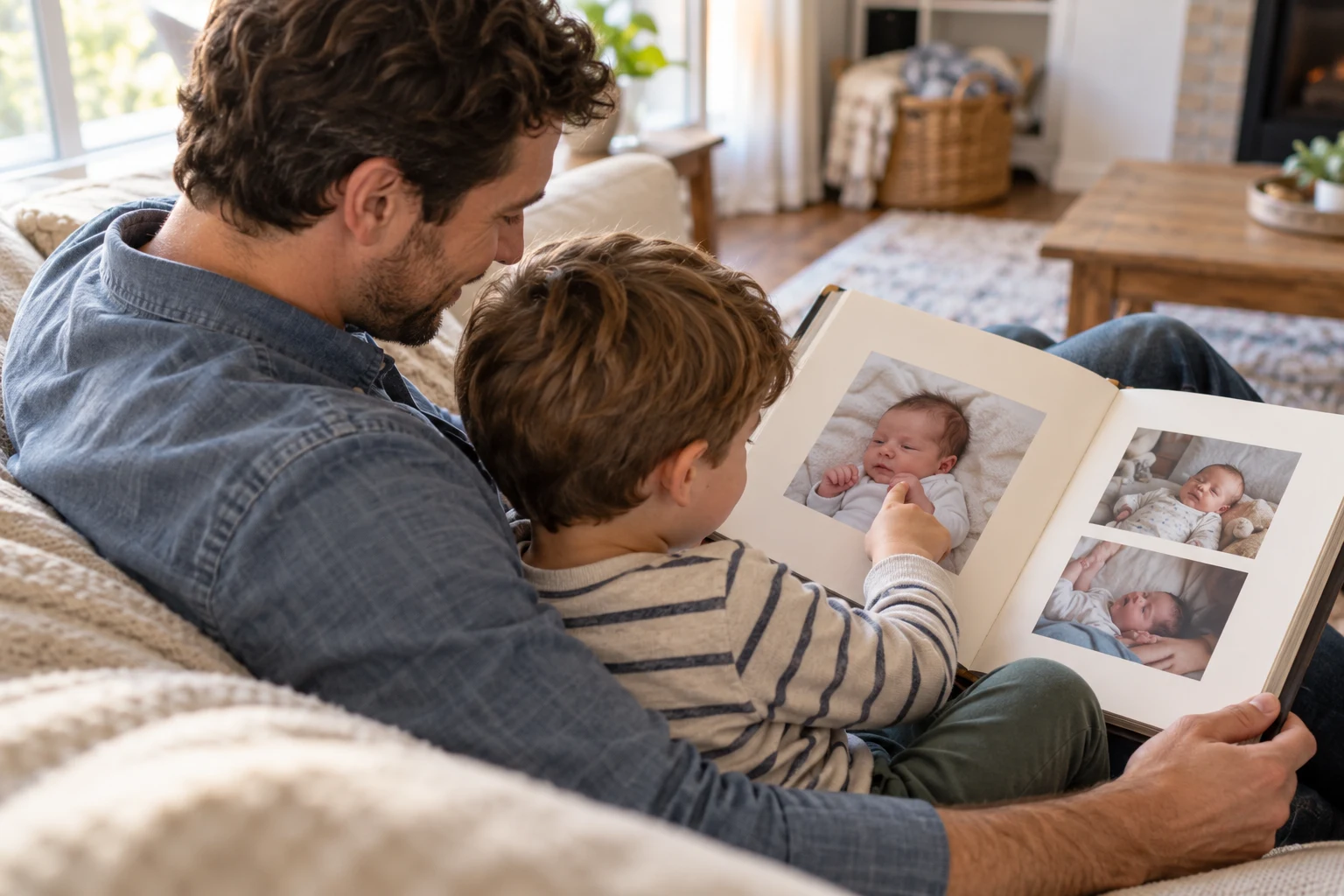
When your older child wants to be little again
An older child may be affectionate with the baby yet angry with you, quieter than usual, or more eager to be carried.
Baby talk can be part of adjusting to a new sibling.
Respond warmly to requests for comfort rather than telling your child to act their age.
Use clear, everyday words and expand what your child says.
You might say, “You want me with you; I am here.”
If your child has lost words or other skills they previously used, contact their clinician promptly rather than waiting for sibling jealousy to pass.
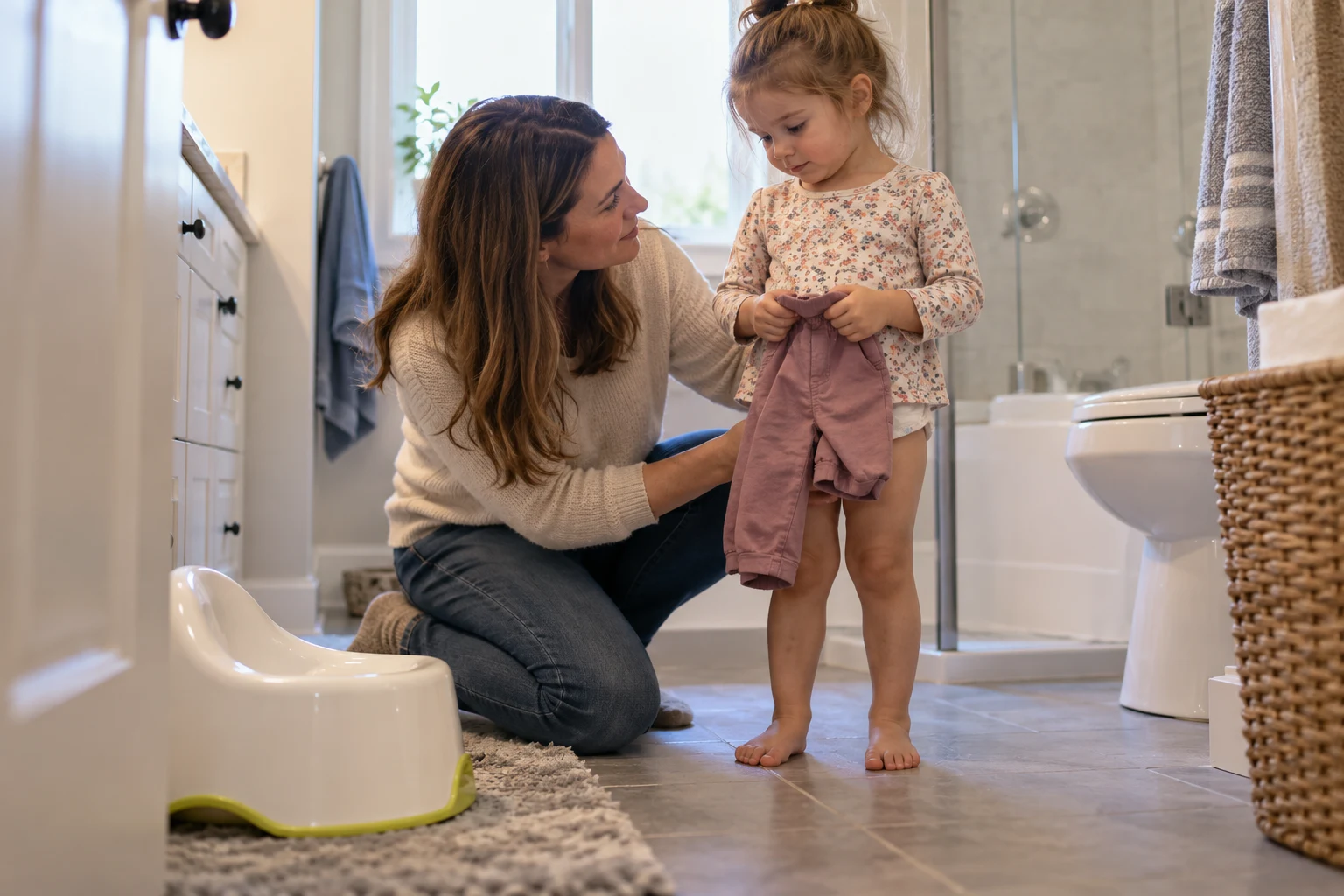
When toilet accidents return
Stay calm after an accident; do not punish or shame your child.
If accidents also happen at childcare, agree with caregivers on a supportive bathroom routine.
With constipation, softer stool can leak around hard stool stuck in the bowel, so repeated soiling may look like diarrhea and happen without the child realizing.
Repeated soiling needs a clinician’s assessment; do not try to manage it on your own.
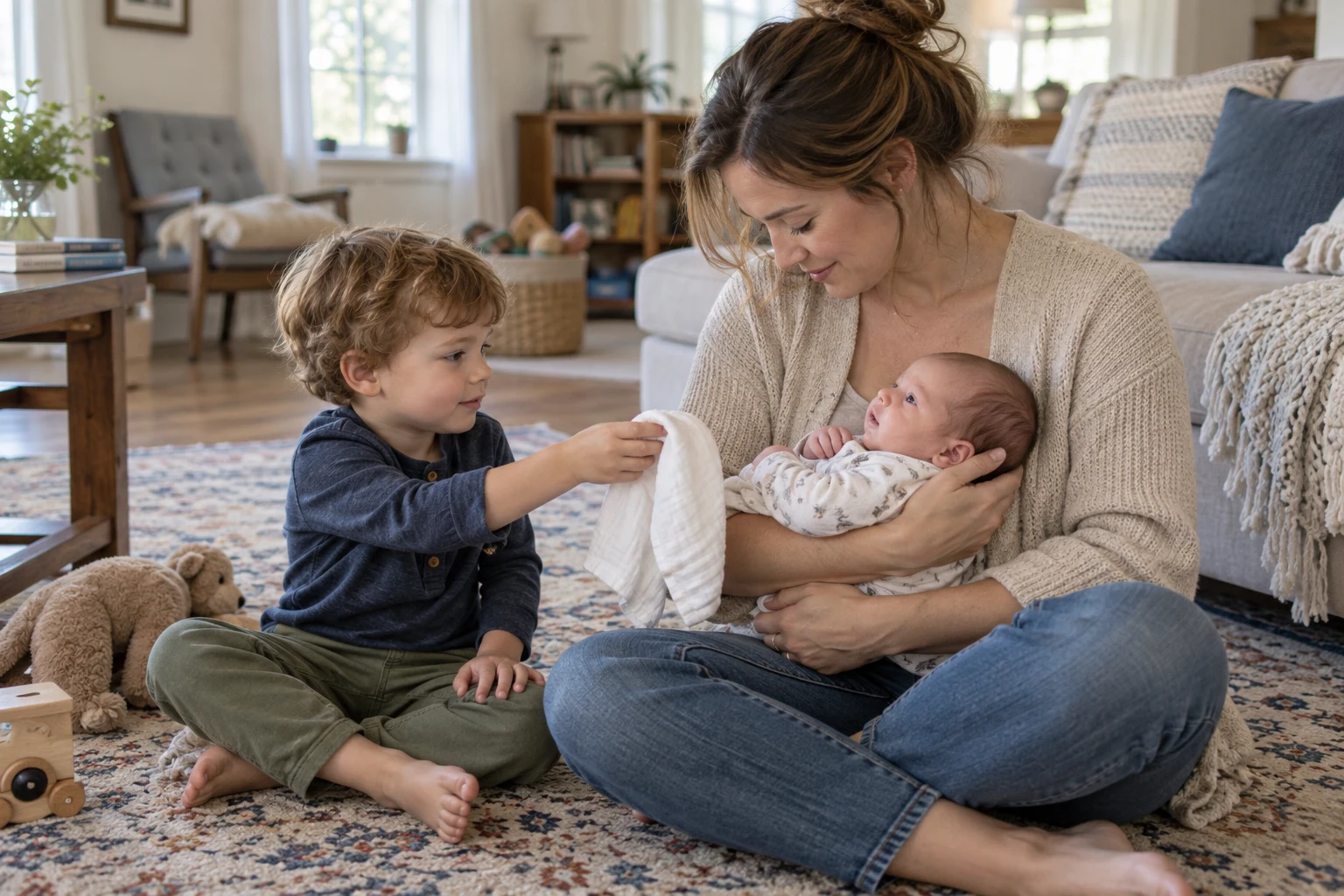
Making room for your firstborn
Keep familiar activities, such as the usual bedtime story, as steady as you can.
During a baby’s feed, invite your older child to listen to a story or talk beside you.
Ask visitors to spend time with your older child as well as greeting the baby.
Avoid pushing new toilet training immediately before or after the baby’s birth.

When jealousy turns into hitting
If your child tries to hit or bite the baby, calmly stop the contact and separate them while you help the older child settle.
You can say, “You are angry; I will not let you hurt the baby.”
Avoid comparing siblings, and keep the same rule against hurting others.
When to seek care
For a toddler or preschooler with painful peeing, or new wetting with fever, contact a clinician urgently because a urinary infection is possible.
Seek urgent medical help if soiling comes with a swollen tummy and vomiting, or with numbness or weakness in both legs.
If a child with a suspected urinary infection becomes confused, unusually drowsy, or has difficulty speaking, seek emergency care immediately.
Many toileting setbacks improve over days or weeks, but that is not a deadline for your child’s recovery.

Questions that come up at home
Should I insist that my child loves the baby?
Your older child may not feel love for the baby immediately, so allow time for their feelings to develop.
What if toilet practice has become a battle?
If toilet practice is causing distress, discuss readiness and whether a break would help with your child’s clinician.