Baby Travel Sleep: Hotel Nights, Home Reset
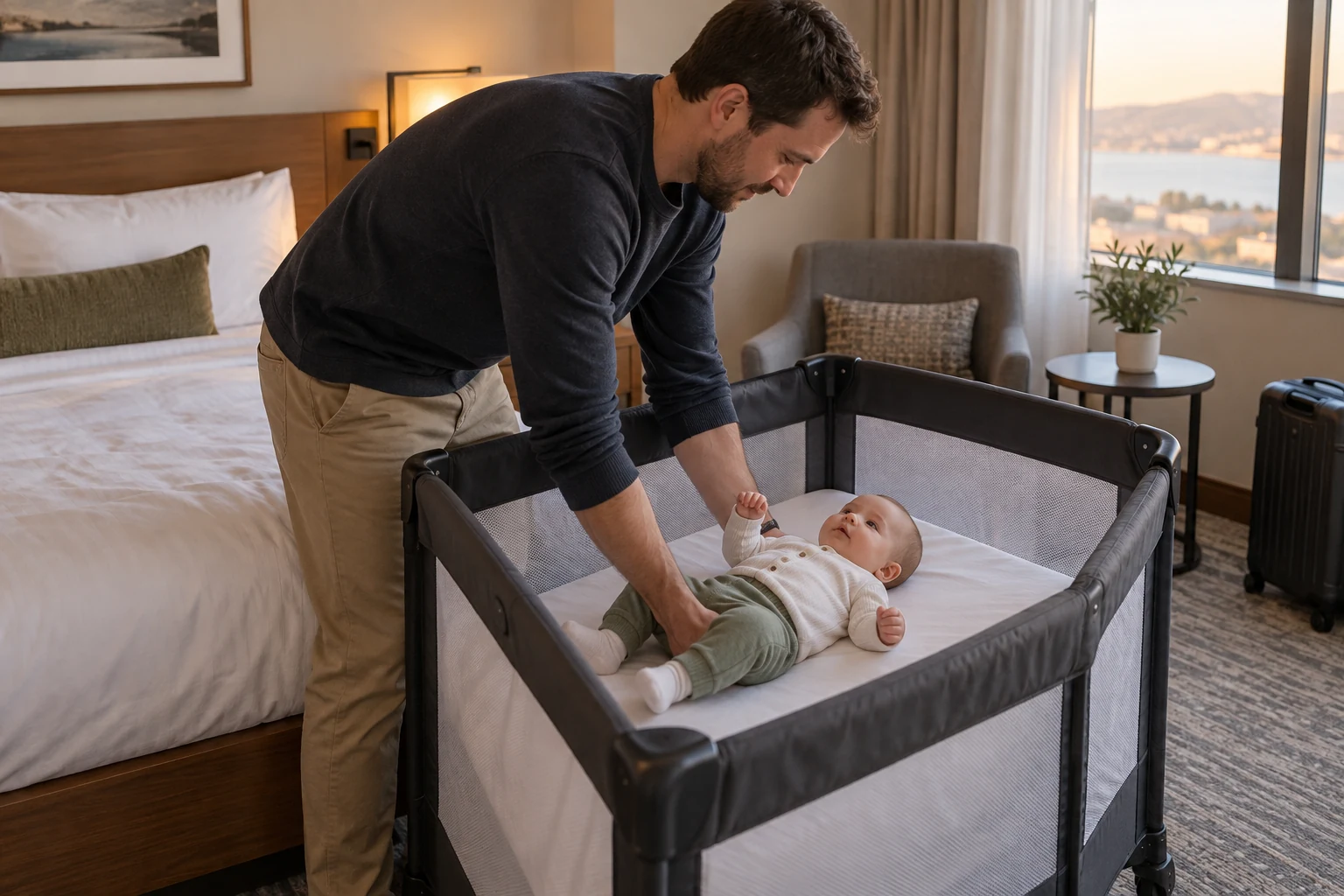
In a new room, keep bedtime familiar and the sleep space safe; back home, return to daytime light and quiet nights.
SUMMARY
On arrival, inspect the crib for broken or missing parts, loose hardware and added padding.
For every sleep, place your baby on their back on a firm, flat surface with a fitted sheet and no pillows, toys or loose bedding.
Back home, open curtains and play during the day; keep nights dim and quiet.
Before you unpack
Babies settle differently, but a familiar, soothing bedtime sequence may help in a new room.
Before booking, ask whether the lodging can provide a portable crib or play yard.
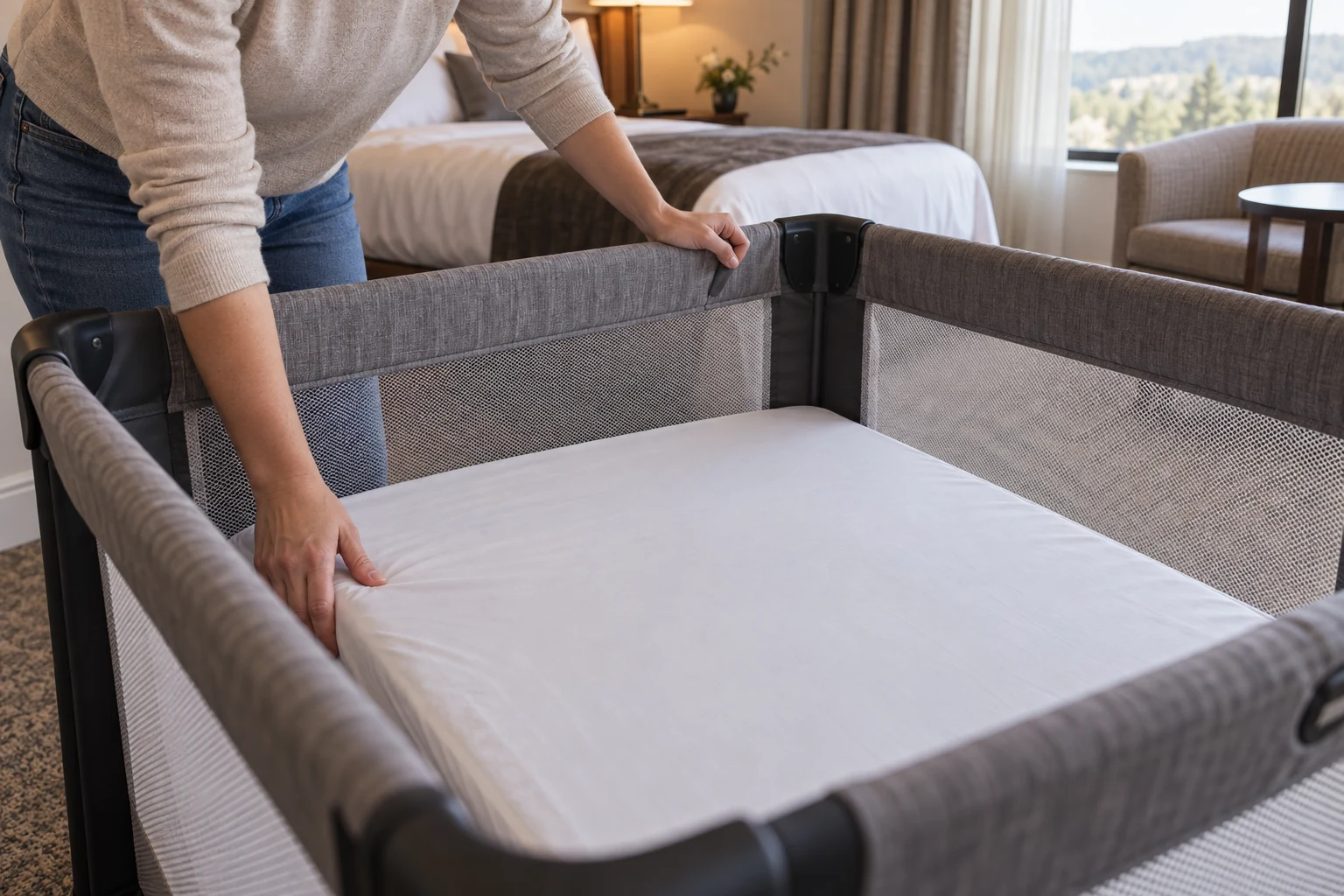
On arrival, inspect the crib for broken or missing parts, loose hardware and added padding.
Place the crib away from cords, lamps, TVs and objects that could fall into it.
Keep the sleep space safe
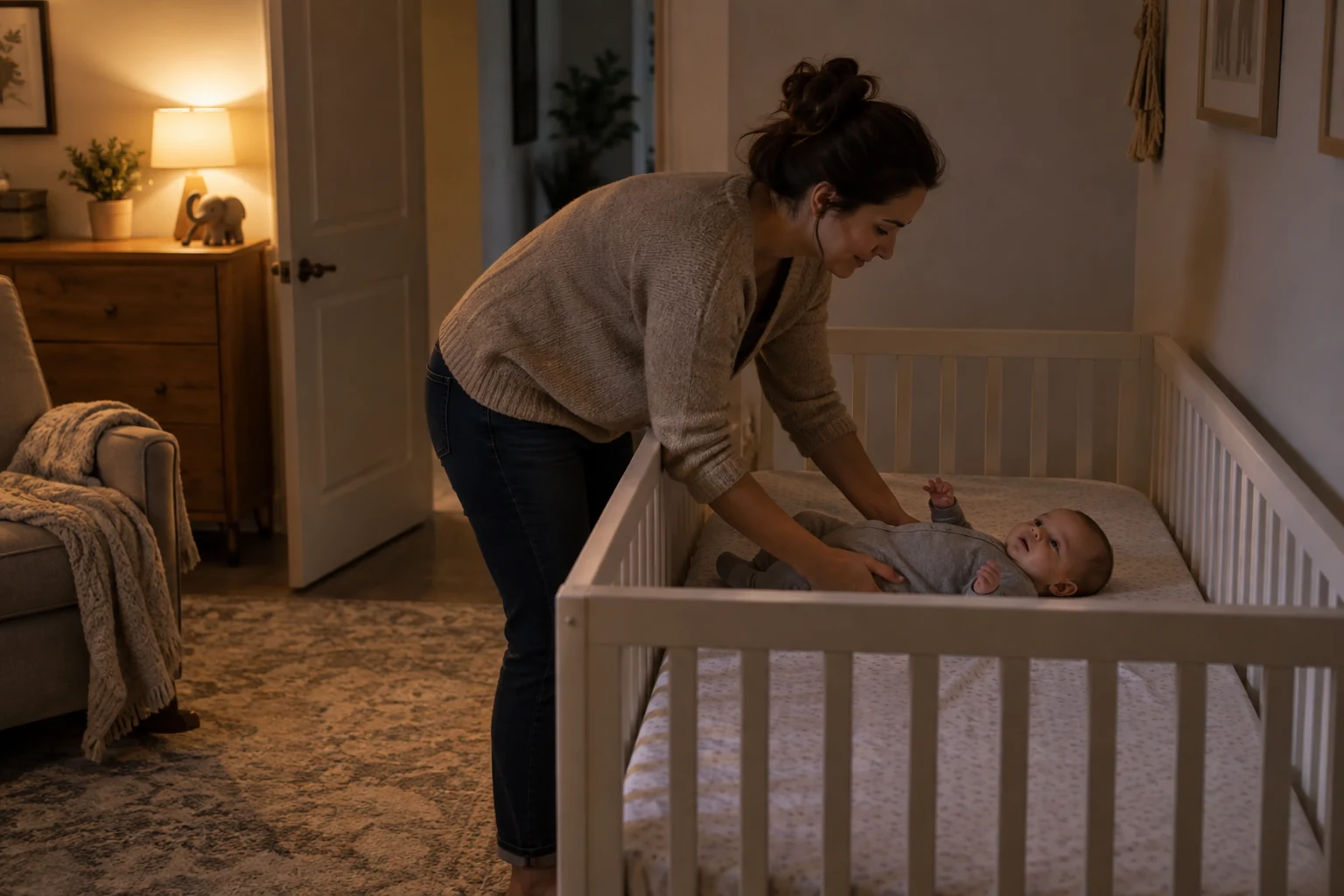
For every sleep, place your baby on their back on a firm, flat surface with a fitted sheet and no pillows, toys or loose bedding.
For babies under 6 months, keep the crib in the room where you sleep.
Even after a rough night, use the baby's safe crib or play yard rather than an adult bed.
Bring familiar bedtime cues
A familiar crib sheet can help if it fits the travel crib mattress snugly.
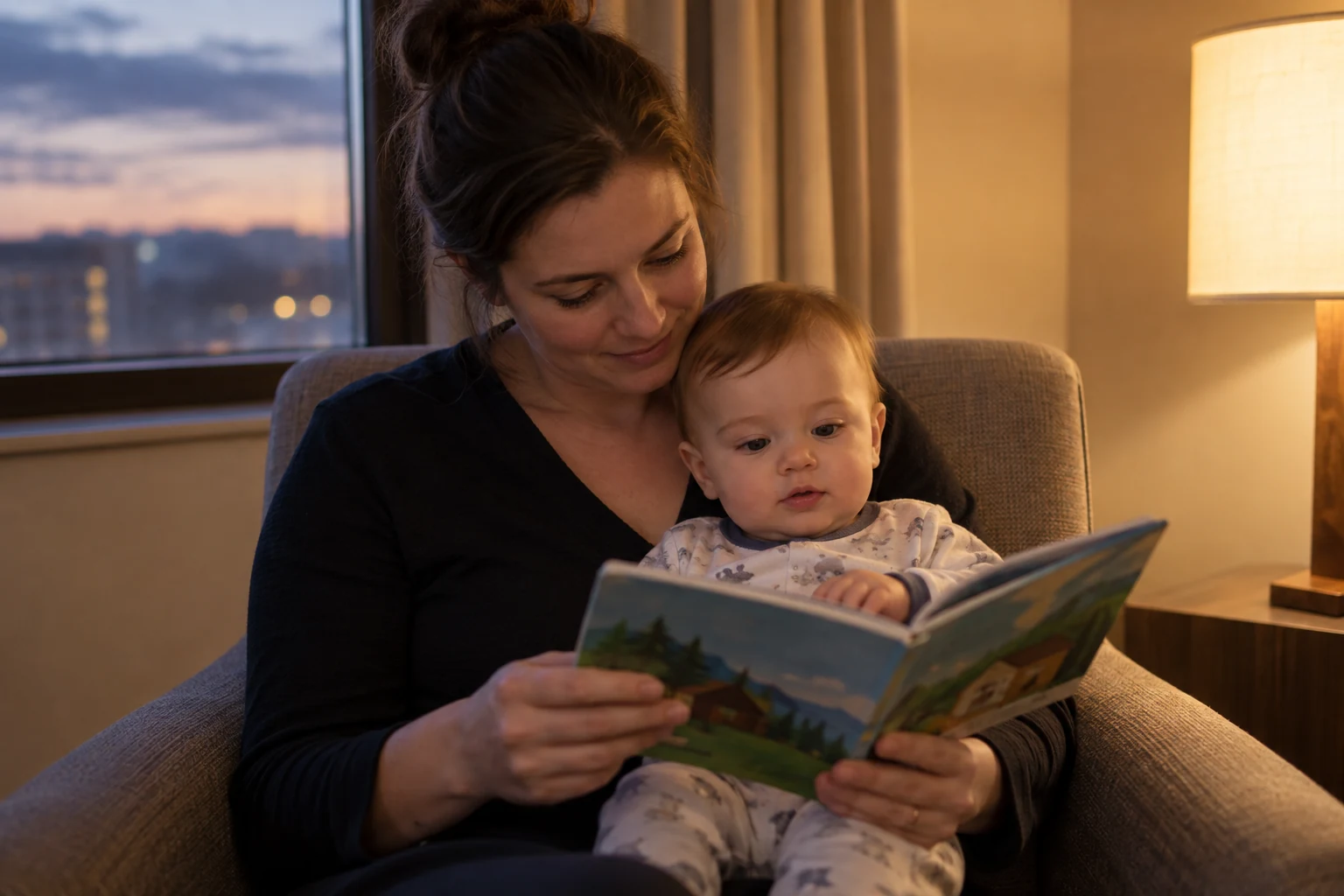
Repeat a simple wind-down sequence, such as a fresh diaper, dim lights and a short story.
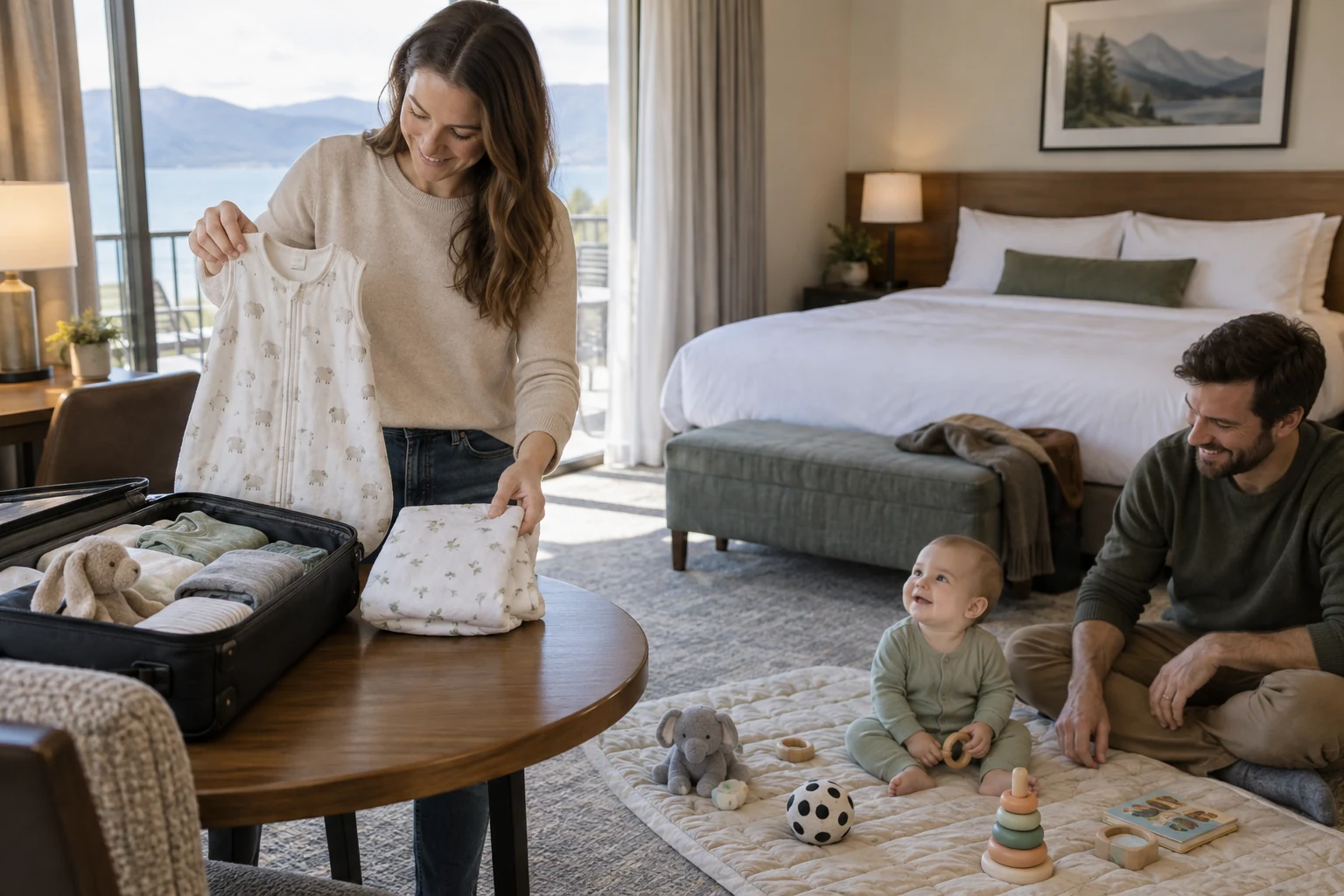
Hotel nights
If your baby wakes at night, keep lights low and voices quiet, and feed or change them as needed.
Do not leave your baby alone in the hotel room, even if you use a monitor.
When the clocks change
For a trip across time zones, you can start adjusting your child's sleep schedule 2–3 days before departure.
After crossing time zones, daytime outdoor activity or bright light can help your child adjust.
Back home
Back home, open curtains and play during the day; keep nights dim and quiet.

The next evenings
Resume your familiar, calming bedtime sequence at home.
Babies' sleep patterns vary, and illness or teething can also change sleep.
Frequently asked questions
What if the hotel crib looks unsafe?
If the supplied crib looks damaged or has extra padding, ask for a safe replacement before putting your baby down.
When should I ask for help after returning home?
If sleep problems continue after the trip or you need help with the routine, speak with your health visitor or child's clinician.
Related guides
Sources
- American Academy of Pediatrics / HealthyChildren.org — Hotel Safety Tips for Parents of Young Children: Hidden Dangers to Watch For
- American Academy of Pediatrics / HealthyChildren.org — Tips for Safe & Stress-Free Family Travel
- NIH / Safe to Sleep (NICHD) — Ways to Reduce Baby's Risk
- NHS — Helping your baby to sleep