Baby Screen Time: AAP and WHO Guidance
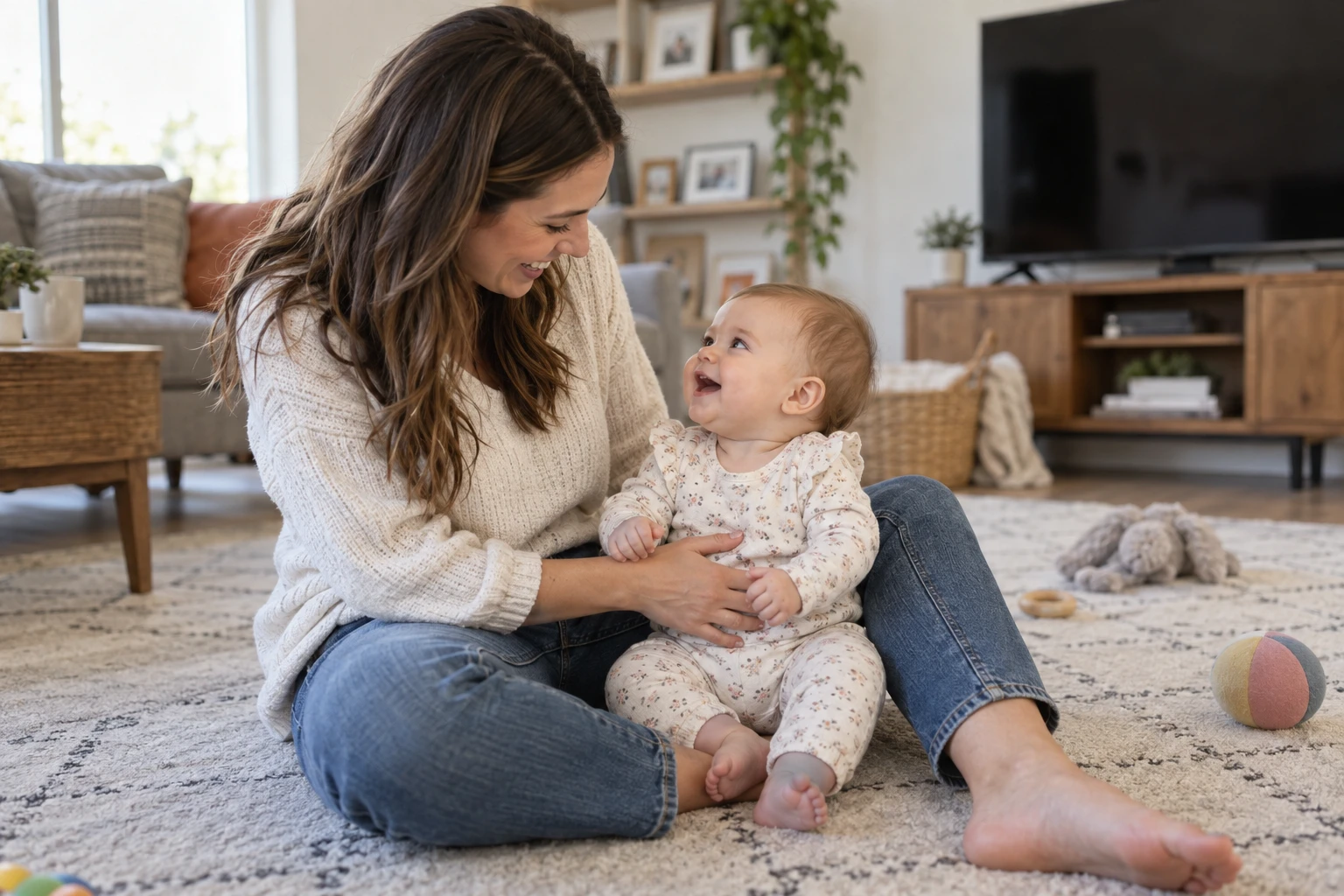
This guide is for adult caregivers of babies younger than one year. It explains the current AAP approach, WHO’s infant recommendation and practical ways to organize media use around the baby’s day. It separates published recommendations from illustrative household examples and offers a record template for family conversations. Sources were checked on September 24, 2026.
SUMMARY
WHO recommends no screen time under one. [3]
Choose face-to-face play. [3] [4]
Video chatting? Stay together and respond. [1]
Current AAP guidance asks families to limit infant screen use, share any viewing and protect time for real-world play. [1]
Why a baby’s day matters more than a stopwatch
Babies learn through people and the world around them. [12] A screen can present a face or a sound, but an infant still needs a person to respond, explain and connect the experience to what is happening nearby. [1] That is why the current AAP advice considers who is there and what the screen replaces, as well as duration. [2]
Consider a household where a television is playing during dinner preparation and another where a parent helps the baby join a grandparent’s video call. [1] [13] Both situations involve a screen, but the purpose and the adult’s participation differ. [1] For your family discussion, describe the activity, the person with the baby and the routine surrounding the use. [5]
Everyday back-and-forth communication includes looking at one another, copying a sound, sharing interest in a book and waiting for the baby’s response. [4] A conversation with an infant does not require spoken words. [4] A caregiver’s attention to expressions and gestures is part of that exchange. [4]
AAP and WHO recommendations are not identical
WHO’s 2019 guidance on activity, sedentary behavior and sleep recommends no screen time for infants younger than one year. [3] It places this advice within the whole day, alongside opportunities to move, sleep and spend quiet time reading or hearing stories with a caregiver. [3] The recommendation is not a daily allowance to use up. [3]
AAP’s current infant FAQ recommends limiting screen use, watching together and keeping media from replacing play and other activities. [1] Its policy explanation, updated June 3, 2026, moves beyond a simple time limit to consider content, context and conversation. [2] This broader approach does not mean that unrestricted infant viewing is recommended. [1]
AAP announced in January 2026 that its new policy statement and technical report replace its earlier communications and media guidance. [10]
These infant recommendations do not establish a number of minutes below which screen exposure is guaranteed harmless. [1] [3] WHO’s no-screen recommendation and AAP’s emphasis on limited, shared use should not be converted into an invented five-minute or ten-minute safety threshold. [1] [3] A timer can help implement a household plan; it cannot certify safety. [4] [1]
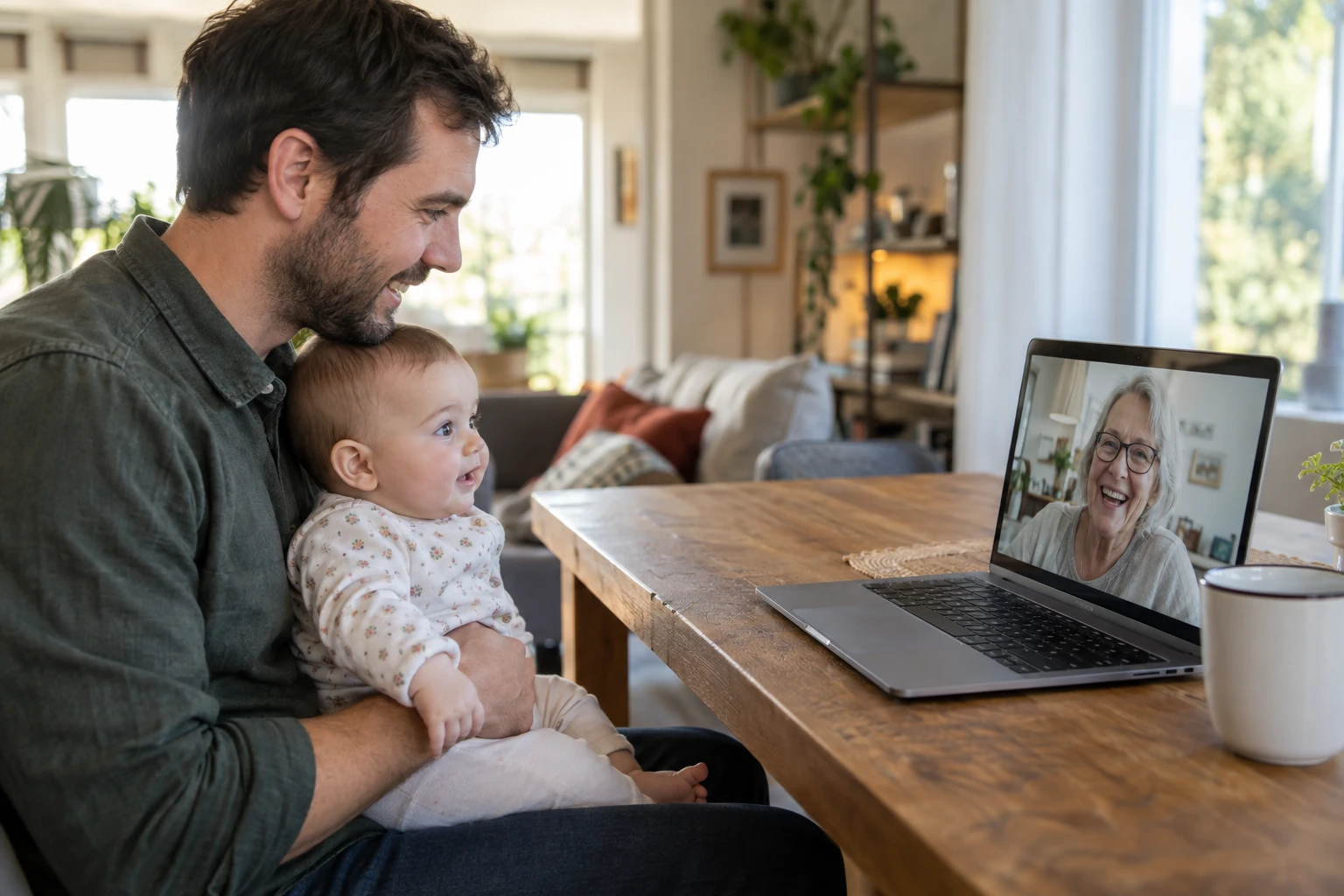
A video call is a shared interaction
AAP uses video chatting with relatives as an example of using a device together with an infant. [1] Stay with the baby, identify the person on screen and respond to what both the baby and the caller do. [1] The adult beside the baby helps connect a distant person to a familiar, immediate interaction. [1]
A practical example is to name the grandparent, describe the wave and then pause while the baby responds in their own way. [1] Let the caller know about a sound or movement from the baby and respond together. [1] The activity applies AAP’s advice to explain a family call and take part with the baby; it is not a test of the baby’s development. [1] [6]
Keep the source distinction clear: supported video calls are an AAP example, while WHO’s infant recommendation does not spell out a video-call exception. [1] [3] Do not label every video as a social interaction simply because it shows a friendly face. [1] A prerecorded program and a person who responds live are different situations. [1]
Background television and adult phones count in the plan
Background television belongs in the discussion even when nobody calls it the baby’s viewing time. [13] AAP summarizes research linking regular background TV and overall screen use with poorer language and social-emotional skills in young children. [1] A reported association does not prove that a particular child’s difficulty was caused by a particular screen exposure. [1]
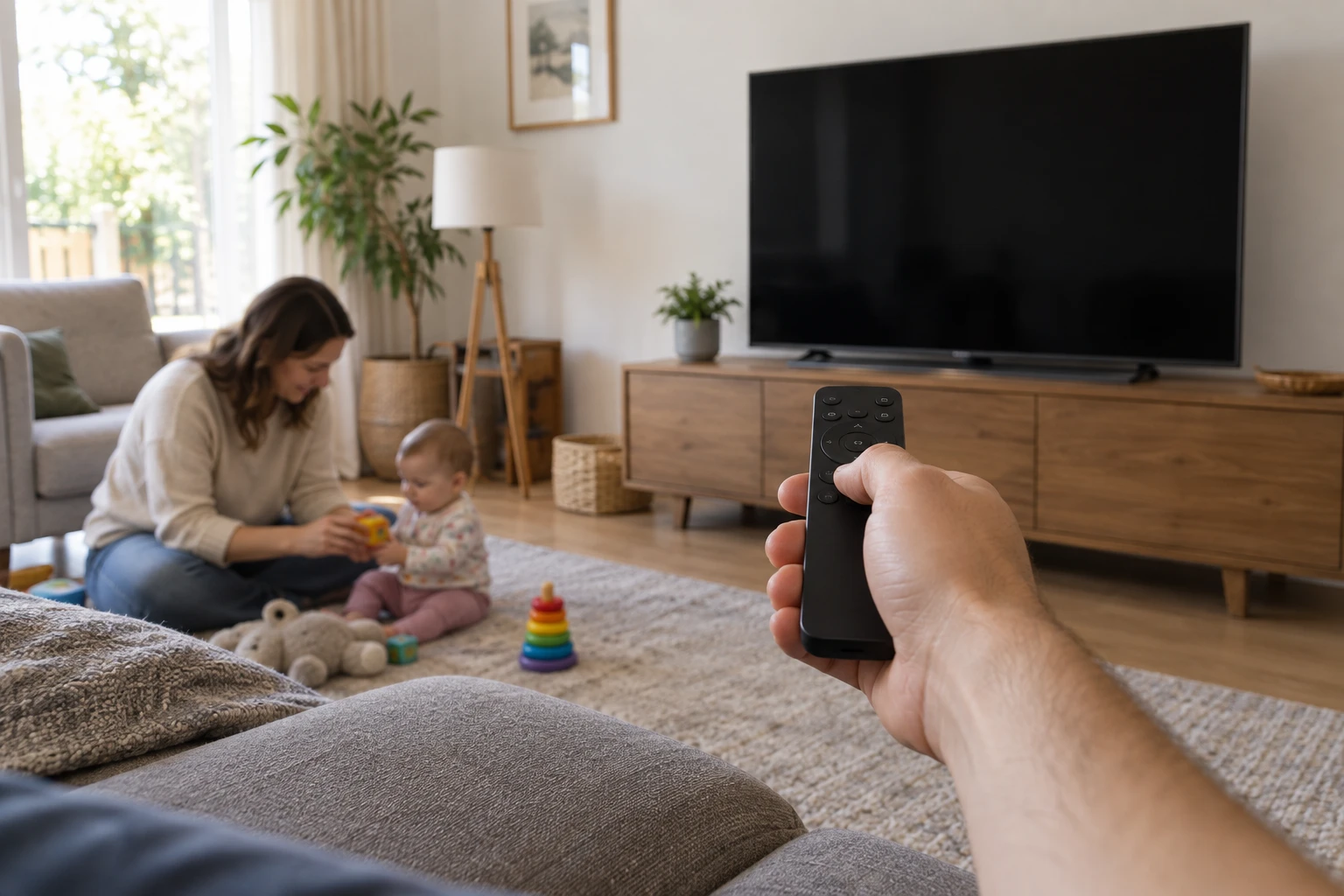
Turn off a television that no one is intentionally watching, and include the adults’ phone habits in the household plan. [5] The goal is to make space for attention and interaction. [4] A baby’s media environment includes interruptions to the caregiver, not only a device positioned directly in front of the baby. [13]
In your notes, distinguish a necessary task such as checking an appointment from scrolling that continues during play. [4] For example, you could complete the appointment check, put the phone away and return to the shared book or game. [4] This is one way to apply AAP’s advice to protect shared attention and set boundaries around adults’ devices. [4] [5]
Normal differences and different family contexts
Babies differ in how much activity they enjoy and how they respond to people or changes in routine. [12] A baby turning away, becoming sleepy or becoming fussy may be signaling that they have had enough activity. [12] Consider those responses when planning interaction; another baby’s enthusiasm for a call is not a requirement for your baby. [12]
Unsafe media habits to avoid
Avoid prolonged TV or online-video viewing for an infant. [13] Do not make screens the routine way to stop crying, induce sleep or distract a baby during feeding. [13] If media is on for the infant, stay involved and prevent autoplay from selecting an endless sequence of videos. [1] [5]
If a screen is used, stay involved
If your infant is viewing content, AAP recommends choosing material intended for young children and watching together. [1] Preview the content yourself and turn off autoplay. [5] [8] Avoid material with violence, age-inappropriate themes or heavy advertising. [5] A child-focused app or an “educational” label does not remove the need for an adult to choose and participate. [8]
Co-viewing means interacting about what is on screen. [8] Simply sitting nearby while occupied with another device is not enough. [8] Even good-quality shared content should leave room for play, sleep and ordinary contact. [13] The current recommendations do not require a baby to start educational videos, practice an app or reach a daily viewing target. [13]
Before a planned call or shared clip, decide its purpose and what you will do afterward. [5] [8] For example, your household plan might pair a family call with returning to an ordinary play activity when it ends. [5] This applies the AAP approach of co-use and leaving room for other activities; it does not prescribe a medically safe number of minutes. [1] [5]
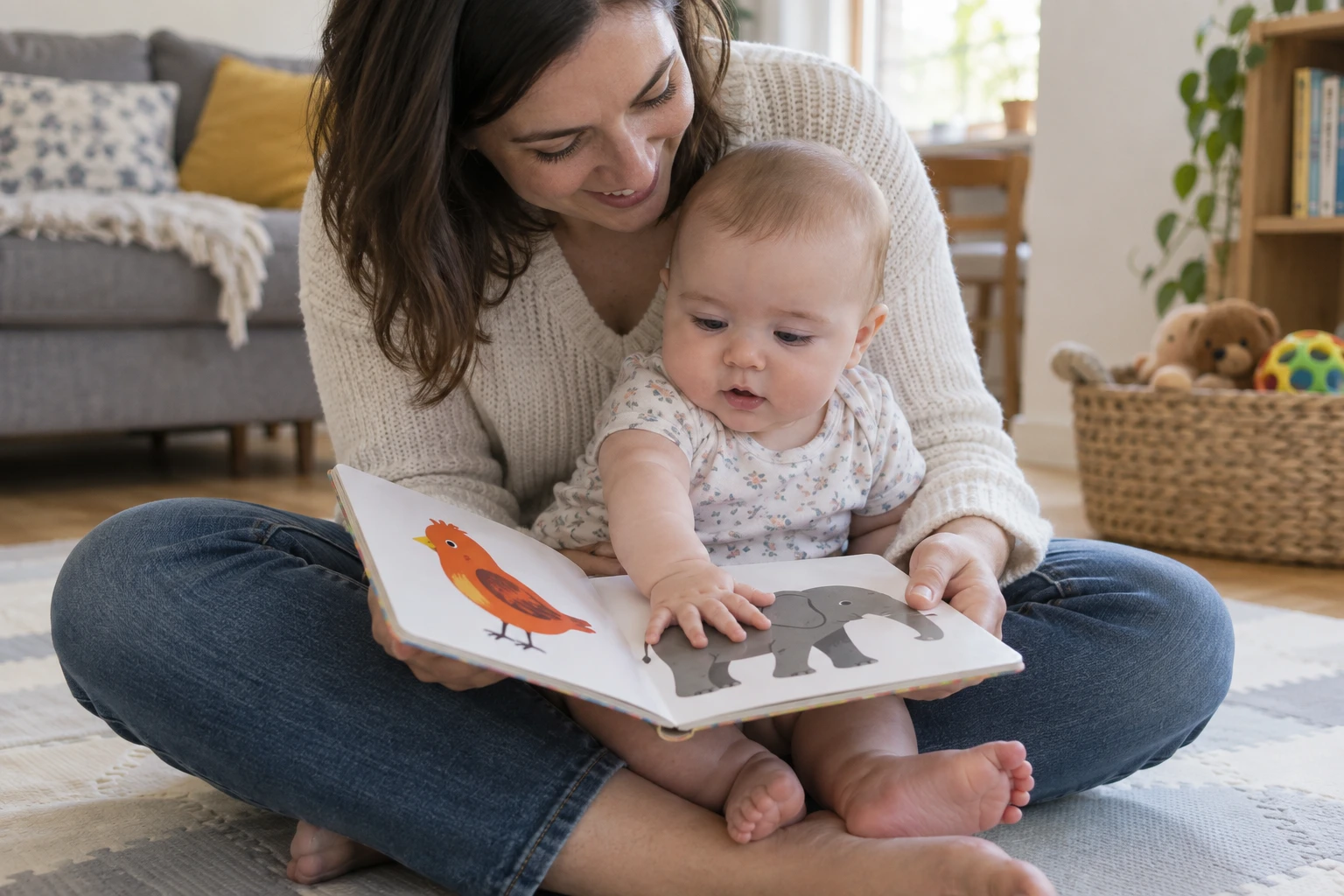
Make the alternative easy to reach
Build the day around shared reading, singing, simple face-to-face games and opportunities for movement suited to the baby’s abilities. [4] [3] WHO encourages interactive floor play several times during the day and reading or storytelling during quiet time. [3] These are options for connection, not a lesson schedule that every family must complete in the same order. [3]
Choose a play example that fits the baby’s interests and abilities rather than treating another child’s activity list as a required schedule. [12] For a baby interested in faces, that might be a supported face-to-face exchange; for a baby exploring objects, it could be a familiar book or toy together. [12] [4] These are adaptable examples of interaction, not age-based milestones that the baby must demonstrate on demand. [12] [6]
When using tummy time as one alternative, keep it for awake time. [3] WHO’s prone-play recommendation explicitly refers to awake infants who are not yet mobile. [3] Screen reduction is not a reason to stretch a play activity into sleep or to ignore the baby’s existing care plan. [3]
Protect bedtime and ordinary care
AAP recommends screen-free family routines around meals and bedtime, including the hour before bed. [2] For a baby, use that principle to keep the settling routine centered on care and interaction rather than a video. [13] An hour-before-bed boundary is a routine recommendation, not proof that earlier viewing carries no risk. [2]
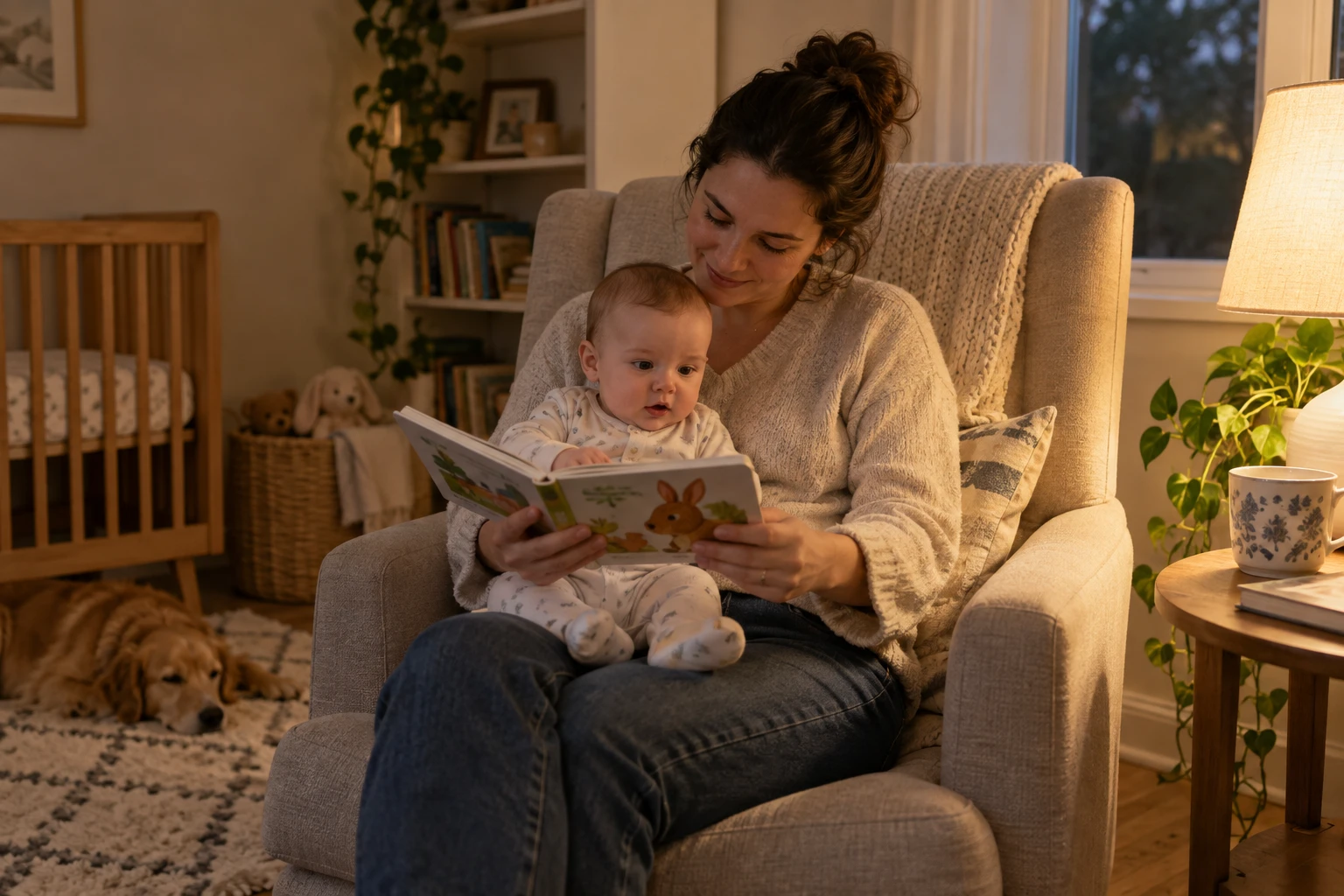
The illustration shows an awake baby held for reading before bedtime.
As a practical alternative during a familiar routine, try sharing a book, singing a song you know or talking quietly with the baby. [4] These examples apply the recommendation to make room for reading, singing and caregiver interaction. [4]
Avoid making a screen the automatic answer to every difficult moment. [13] AAP’s current explanation considers how media is used to calm or entertain a child and acknowledges pressures such as long work hours and limited child care. [2] If the routine is becoming hard to manage, include the caregiver’s need for practical support in the discussion. [12]
A family plan other caregivers can actually follow
Make the media plan for everyone who shares the baby’s care, including parents, relatives and other caregivers. [5] State which routines stay screen-free, how video calls work, who chooses any content and what replaces an unattended television. [5] [1] Review the arrangement when care schedules or the baby’s needs change. [5]

One possible handover plan is to keep the TV off during play and have an adult stay with the baby for family video calls. [5] [1] Ask everyone sharing care to discuss which parts are difficult and what practical support would help. [2] Write the same agreed plan for all caregivers and revisit it together when the care routine changes. [5]
If older children share the home, discuss where their media use takes place and how to protect the baby’s play and interaction. [5] Include necessary adult tasks such as remote work in the plan, alongside the screen-free routines you want to protect. [2] [5] Adapt the plan to the family’s actual circumstances and discuss individual care questions with the baby’s clinician. [5] [10]
What to record without grading your baby
Use the optional record below to describe situations you want to discuss with another caregiver or clinician. [5] [6] Record the purpose, approximate duration, adult participation and activities before and after the screen use. [5] [1] Separate background TV from a shared call and describe what you observed without assigning a developmental cause. [1] [6] If you do not know an item, leave it blank rather than treating this informal note as a precise measurement tool. [6]
- Date and context
- ________________
- Device and purpose
- ________________
- Approximate time; background TV separately
- ________________
- Adult present and shared interaction
- ________________
- What happened before and after
- ________________
- What we noticed; question for the clinician
- ________________
- One practical change and who will help
- ________________
Use the notes to adjust routines and to describe concerns to a clinician. [5] [6] Do not use them to score brain development or diagnose a delay. [6] AAP recommends formal developmental screening whenever a parent or pediatrician has a concern about development. [6] A household screen log is only an informal record for those conversations. [6]
When to ask for professional help
Contact your pediatrician or another child health professional when you are concerned about how your baby plays, learns, communicates or moves, or about milestones they are not reaching. [6] [11] Ask about developmental screening and share specific observations. [6] [11] Do not postpone that conversation while trying a screen-free experiment to see whether a concern goes away. [6] [11]
Tell the clinician if a skill or response that you previously saw is no longer present. [11] Describe when you noticed the change and what it looks like in everyday care. [6] A developmental concern needs assessment on its own merits; the fact that a screen was used does not identify the cause. [6] [1]
In the United States, families of children under three can contact their local early intervention program without waiting for a doctor’s referral; eligibility depends on an evaluation. [7] [11] In other countries, ask your local health professional how to access developmental assessment and support. [6] The US access route should not be assumed to apply everywhere. [7]
Ask for professional support when development worries you or the family needs help managing media routines. [6] [10] Describe the concern and everyday observations to the clinician, using the media log only as background information. [6] Do not use the log to diagnose a delay or postpone discussing a concern. [6]
Common questions
How many minutes are safe for a baby under one?
WHO recommends no screen time under one, and current AAP infant advice emphasizes limiting use, co-viewing and protecting play. [3] [1] Neither establishes a guaranteed safe minute limit. [1] [3]
Does an educational label make a video necessary?
No. [13] Babies learn best through real-world exploration and interaction. [12] [1] If content is viewed, choose it carefully and share it with an adult. [1]
Is leaving the TV on in the background relevant?
Yes. [13] Include background television in the family plan and turn off devices no one is using. [5] AAP identifies background TV as a relevant part of young children’s media environment. [13]
Can relatives video chat with the baby?
AAP gives adult-supported family video calls as an example of shared use. [1] Stay with the baby and respond together. [1] WHO’s infant recommendation does not explicitly state a video-call exception. [3]
Should I wait for less screen use to fix a concern?
Do not delay discussing a developmental concern while testing a media change. [6] [11] Tell your child’s health professional what you have noticed and ask about screening. [6] [11]
Sources and editorial note
- [1] Screen Time for Infants — American Academy of Pediatrics (2026-09-24)
- [2] Helping Kids Thrive in a Digital World: AAP Policy Explained — American Academy of Pediatrics / HealthyChildren.org (2026-09-24)
- [3] To grow up healthy, children need to sit less and play more — World Health Organization (2026-09-24)
- [4] Parents of Young Children: Why Your Screen Time Matters, Too — American Academy of Pediatrics / HealthyChildren.org (2026-09-24)
- [5] How to Make a Family Media Plan — American Academy of Pediatrics / HealthyChildren.org (2026-09-24)
- [6] Assessing Developmental Delays in Children — American Academy of Pediatrics / HealthyChildren.org (2026-09-24)
- [7] What is Early Intervention? — American Academy of Pediatrics / HealthyChildren.org (2026-09-24)
- [8] Co-viewing screens with young children — American Academy of Pediatrics (2026-09-24)
- [9] Kids & Screen Time: How to Use the 5 C’s of Media Guidance — American Academy of Pediatrics / HealthyChildren.org (2026-09-24)
- [10] A Child-Friendly Digital World: AAP Releases New Media Recommendations — American Academy of Pediatrics / HealthyChildren.org (2026-09-24)
- [11] Language Delays in Toddlers: Information for Parents — American Academy of Pediatrics / HealthyChildren.org (2026-09-24)
- [12] How Do Infants Learn? — American Academy of Pediatrics / HealthyChildren.org (2026-09-24)
- [13] Kids & Screen Time: The 5 C’s Questions to Ask for Infants — American Academy of Pediatrics / HealthyChildren.org (2026-09-24)
This article provides general parent education and does not diagnose developmental conditions or replace your child’s clinician. OhMyBaby Editorial Team prepared it; no individual medical reviewer is listed. Illustrations show example family scenes. Individual care plans and local services may differ.