Baby First Flight: Age and Ear Pain
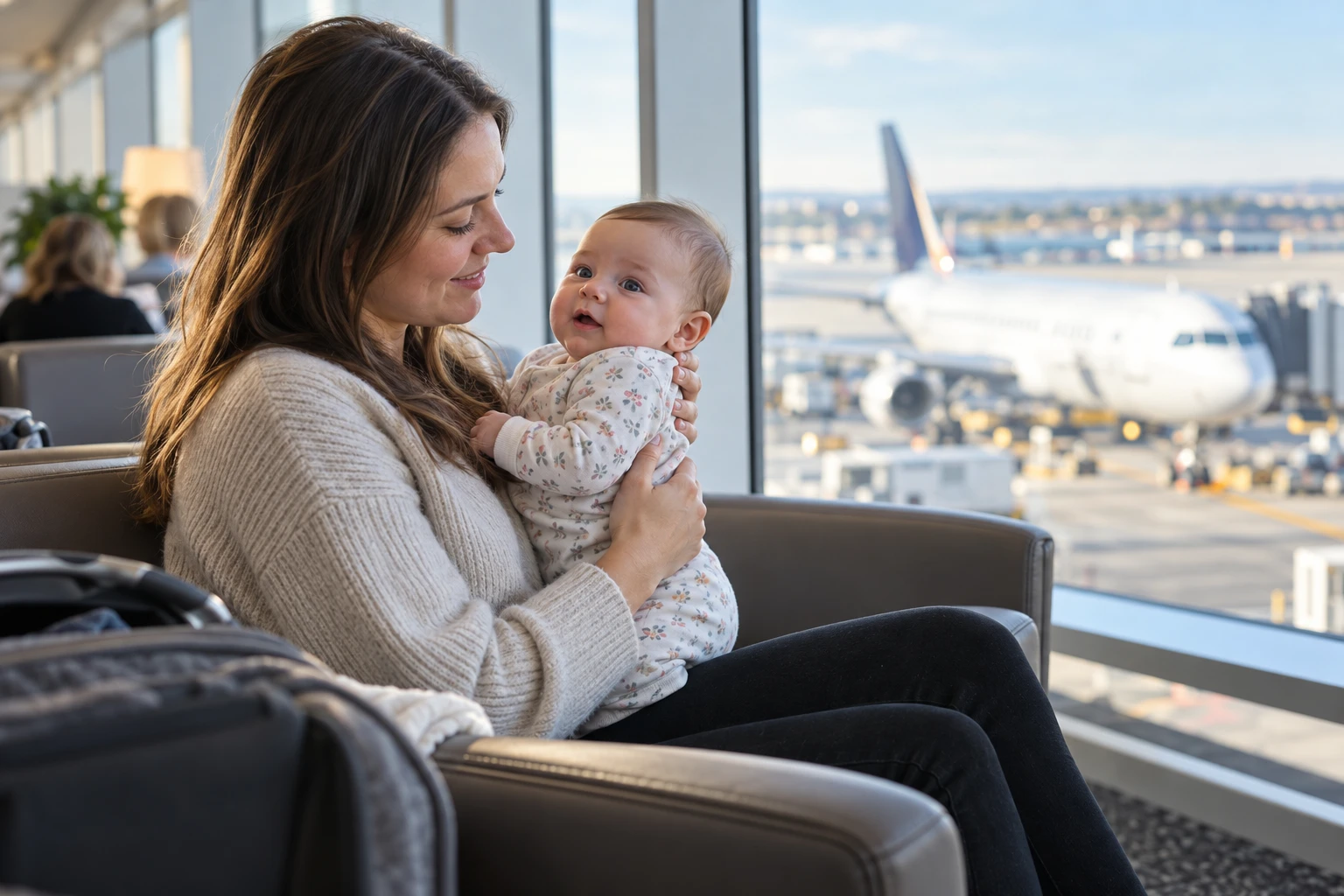
The American Academy of Pediatrics says flying is generally safe from at least 7 days old, but ideally wait until your baby is 2–3 months old.
SUMMARY
- If your baby was born prematurely or has heart or lung problems, ask their healthcare professional before flying.
- Breastfeeding, bottle-feeding or sucking a pacifier during takeoff and landing can ease ear discomfort.
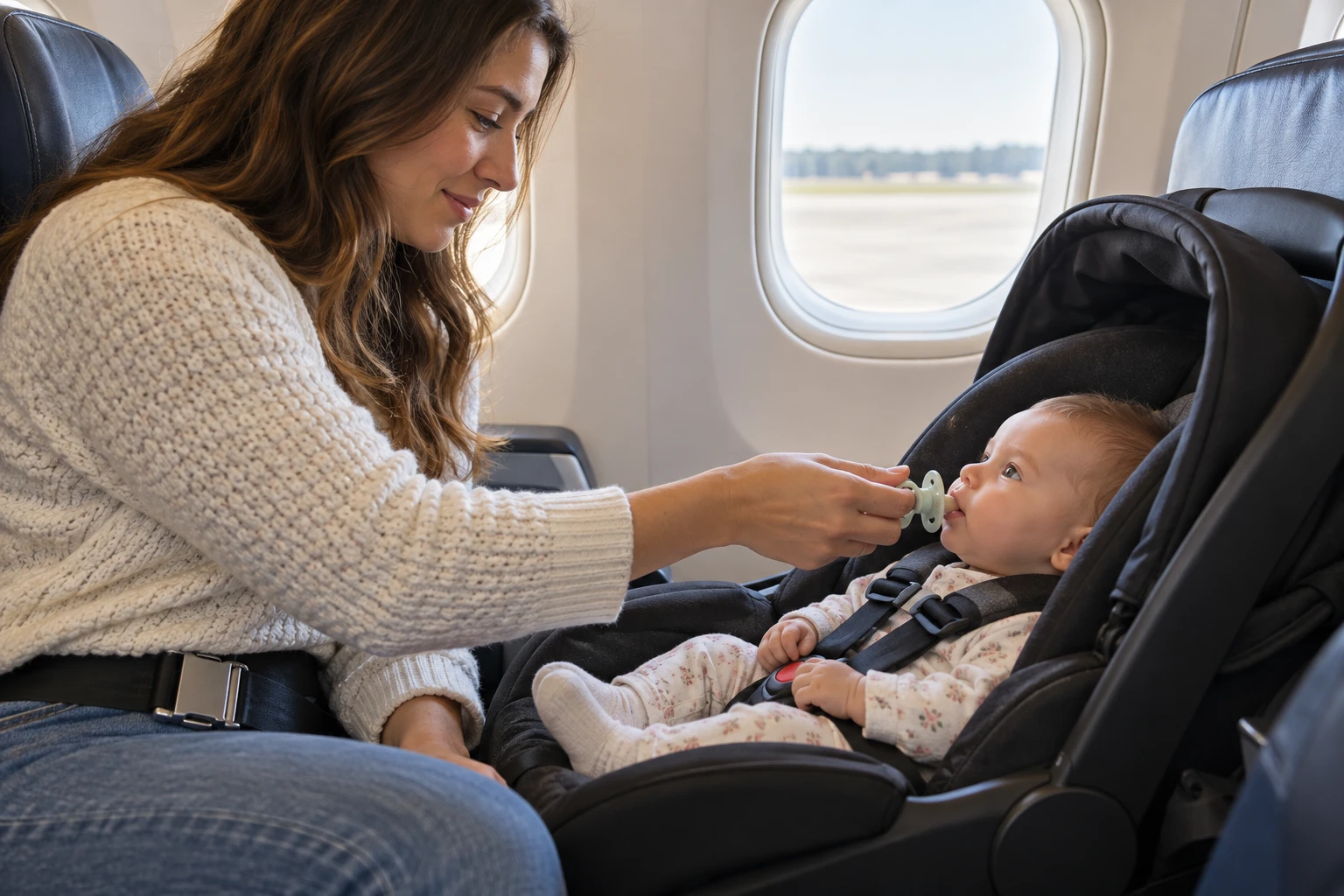
- Keep your baby secured during takeoff and landing; if feeding would require unbuckling them, offer a pacifier instead.
For caregivers planning a newborn’s or infant’s first flight, there are two decisions: whether to travel now and how to help when cabin pressure changes.
Choose the date before booking
Start with your baby’s health and how necessary the trip is.
Flights and crowded airports can increase a newborn’s exposure to infections, so delay an optional trip when possible.
If your baby was born prematurely or has heart or lung problems, ask their healthcare professional before flying.

After surgery to repair an eardrum, do not fly until the treating clinician says it is safe.
Ask the operating airline to confirm its minimum infant age and any documents required for your route.
Why takeoff and landing can hurt
The middle ear is the air-filled space behind the eardrum.
The Eustachian tube connects the middle ear to the back of the nose and throat, and it is relatively narrow in young children.
Pressure differences across the eardrum can cause ear pain, especially as the plane descends.
Swallowing helps equalize pressure in the middle ear.
Prepare before the plane starts descending
Keep your usual feeding supplies and a pacifier, if your baby uses one, within reach. Plan for both departure and descent rather than packing everything out of reach.
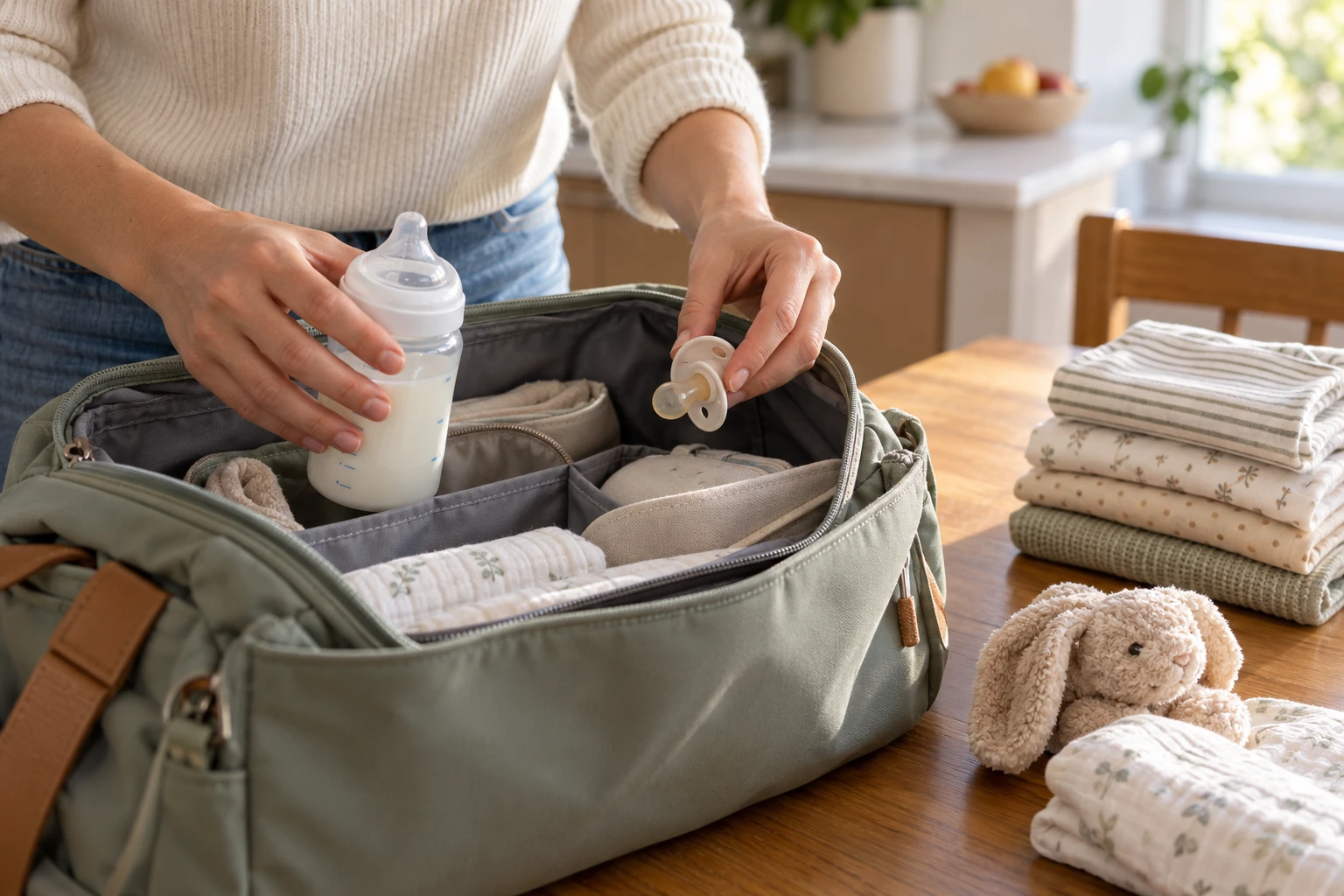
Breastfeeding, bottle-feeding or sucking a pacifier during takeoff and landing can ease ear discomfort.
Keep your baby upright when bottle-feeding.
Keep comfort and seat safety together
Comfort and restraint need to work together, especially when the plane is moving.
An aircraft-approved child restraint appropriate for your baby’s size is the safest place for them during a flight.
Medicines and pressure tricks
A medicine plan belongs in the preflight conversation, before you are trying to read a bottle in a crowded cabin.

If your baby already takes an antihistamine (allergy medicine) or decongestant (medicine for a blocked nose), ask their doctor whether to continue it during the flight.
The American Academy of Pediatrics recommends against over-the-counter cough and cold medicines for children under 4 years.
Do not give your baby medicine such as diphenhydramine just to make them sleep on the flight.
For a baby, use sucking and swallowing rather than trying the nose-pinching pressure exercise intended for older children.
After landing: what needs care?
Pressure-related ear pain usually eases within minutes as the ears adjust, although some children have pain for several hours.
After landing, notice whether your baby settles and responds to familiar sounds as usual.

Seek urgent medical assessment for sudden hearing loss, or hearing loss with ear pain or discharge.
Fluid or blood leaking from the ear can be a sign of an eardrum injury and needs medical advice.
If an eardrum injury is suspected, do not put cotton swabs or ear drops into the ear unless a doctor recommends them.
Questions caregivers ask
Should I wake my sleeping baby for landing?
Babies swallow less often while asleep, so being awake for takeoff and landing can make pressure equalization easier.
Does an ear infection always mean canceling?
If your baby has an ear infection, their doctor may recommend delaying the flight until the infection has cleared.