Swaddle Transition and the Moro Reflex

Stop swaddling as soon as your baby shows signs of trying to roll, even if the Moro reflex remains.
For caregivers of a newborn or young infant who still sleeps swaddled.
SUMMARY
- At the first rolling signs, stop swaddling.
- Choose a non-swaddling sleep sack. Keep arms free and avoid weighted products.
- Start every sleep on the back. Keep the crib clear.
Why the startle and the stop date differ
A swaddled baby may struggle to move out of a side or tummy position, increasing the risk of suffocation and other sleep-related deaths.
The Moro reflex is an involuntary response present at birth: the arms spread outward and then draw back toward the body, sometimes with crying. The Moro reflex usually disappears by about 3–4 months. Its strength and the timing of fading vary between babies.

Your clinician checks this reflex after birth and during well-child visits.
When to stop, even before a full roll
Some babies begin trying to roll as early as 2 months.
Once rolling signs appear, stop for every nap and night sleep rather than extending a one-arm-at-a-time transition.
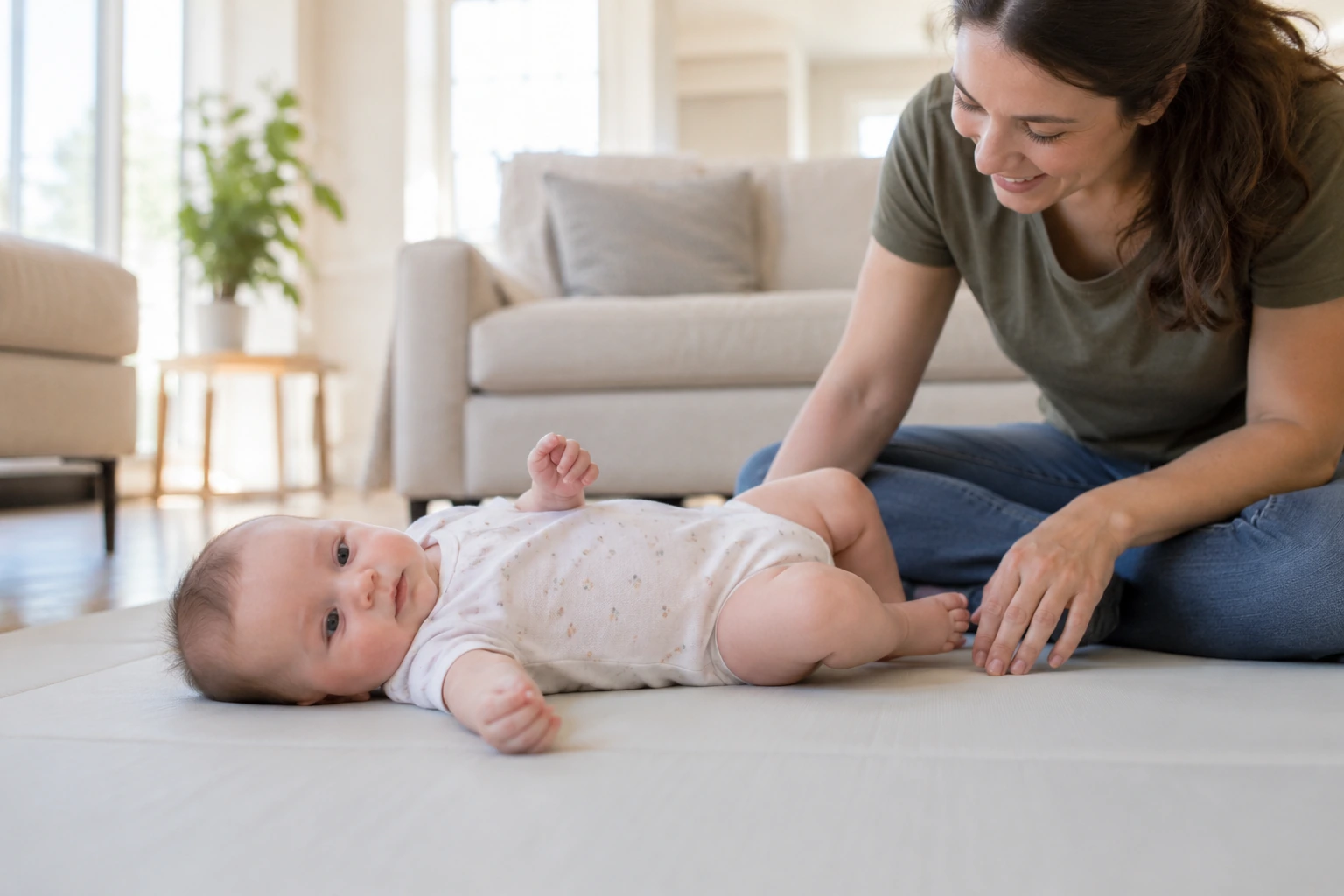
If you are unsure whether a movement is an attempt to roll, use unrestricted sleep clothing and ask your clinician.
What to use for the next sleep
A sleep sack is a sleeping bag your baby wears.
You can switch directly to an ordinary sleepsuit or a non-swaddling sleep sack that leaves the arms and body free.
Non-swaddling sleep sack
Choose a correctly sized, hoodless sack with fitted neck and armholes so your baby’s head cannot slip inside. Do not add extra blankets over a sleep sack.
“Arms-out” compression garment
A garment that compresses the arms, chest or body must also be stopped at rolling signs, even if the hands are outside.
Ordinary sleepsuit
An ordinary sleepsuit is another option; use clothing rather than adding loose blankets.
Use a firm, flat, level crib mattress with only a fitted sheet, without loose blankets, pillows, toys or positioners.
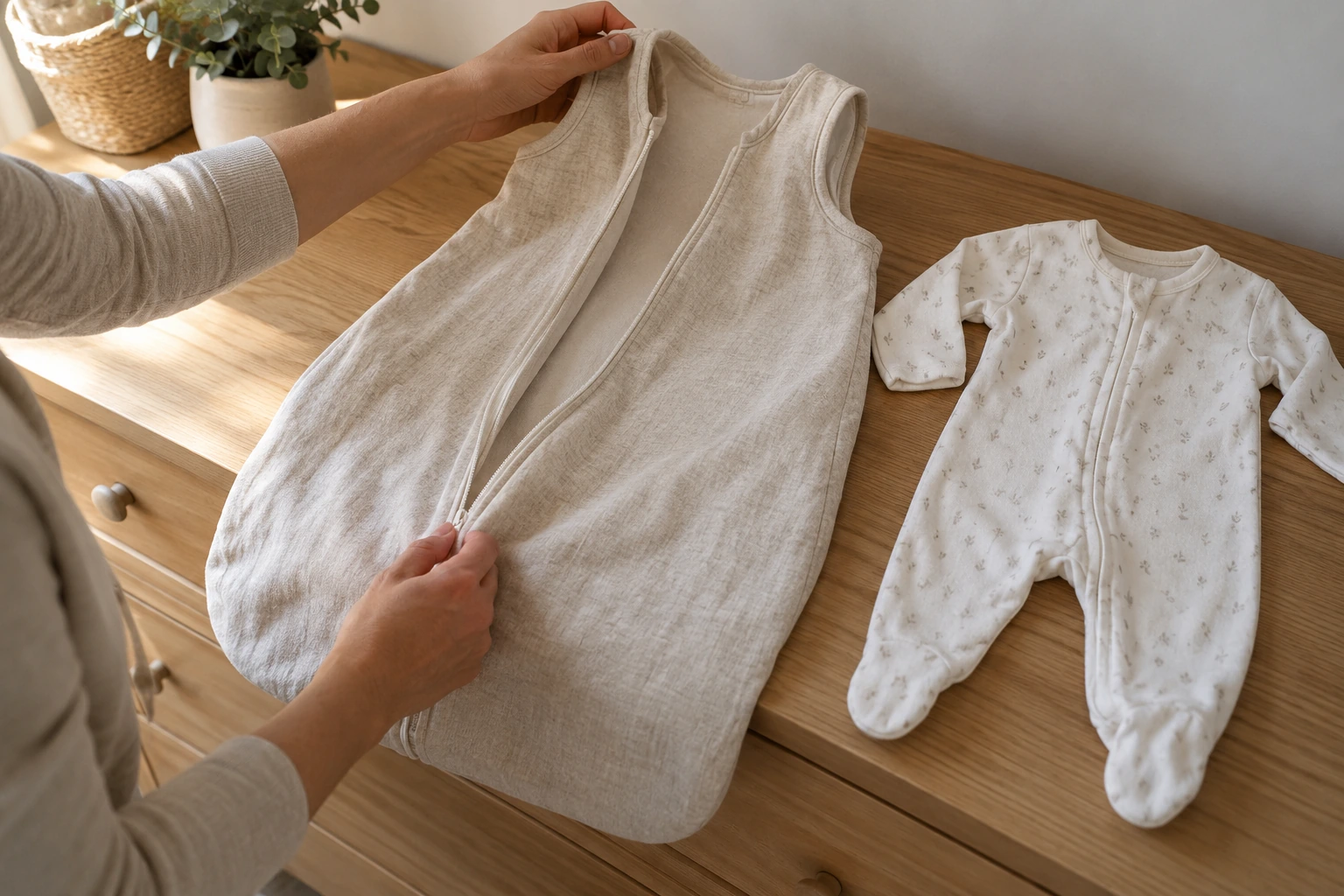
Follow the product’s size and layering instructions for the room conditions, and reduce layers if the baby’s chest or neck feels hot or sweaty.
Do not swaddle a baby with a fever or an infection, or when sharing a sleep surface with another person.
If you still swaddle before the stop point, keep the head uncovered and leave room for the hips and knees to bend.
If your baby needs more settling
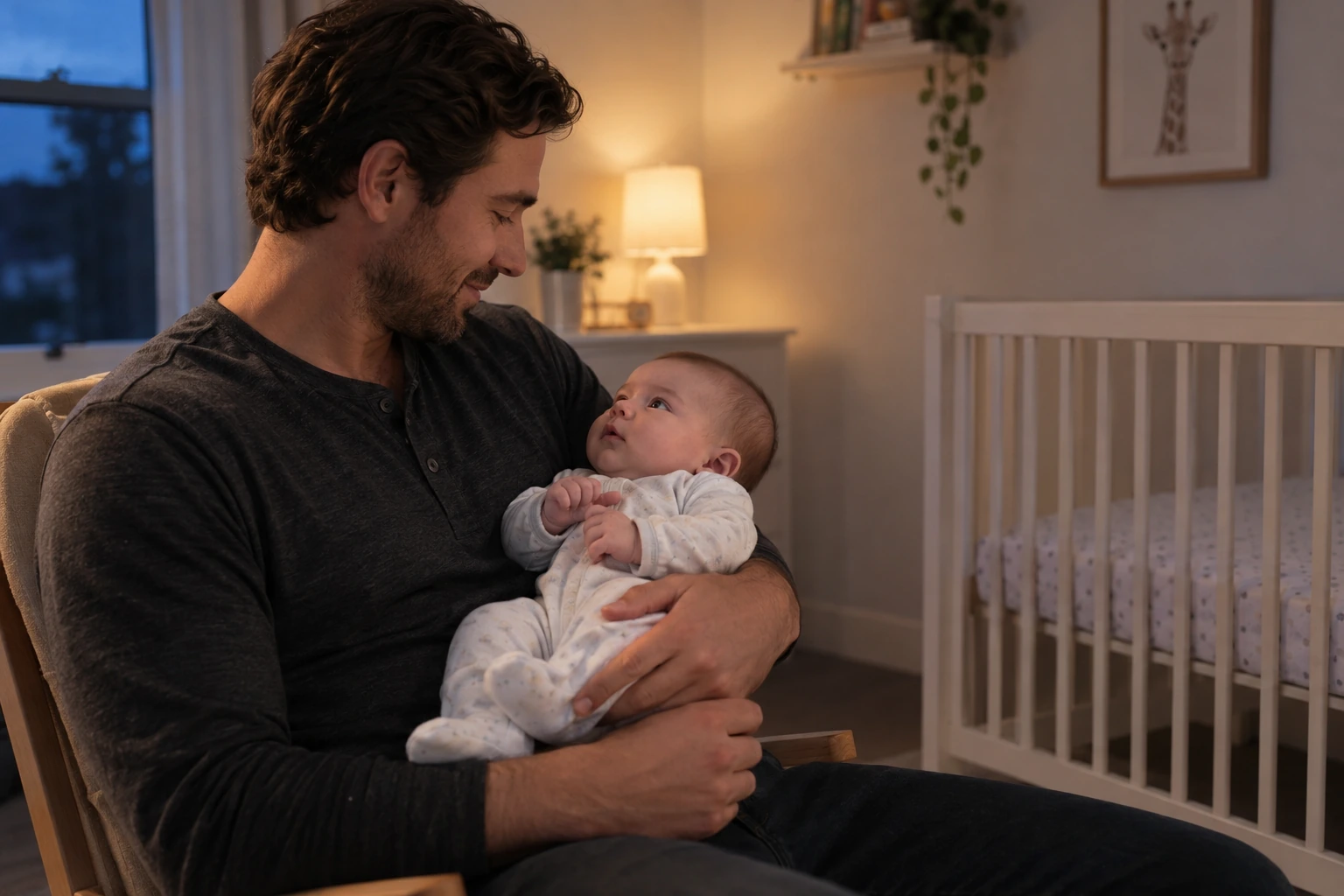
A simple bedtime routine, such as changing into sleep clothing, dimming the lights and cuddling, may help your baby settle.
If your baby needs comforting, hold them while you are awake, then return them to their own sleep space before you sleep.
Do not bring back a compression swaddle to manage waking after rolling signs.
Never use weights or devices to hold your baby in one sleep position.
When to ask for help
Tell your clinician if the startle or arm movement is noticeably different on one side. If pronounced startles continuing as your baby gets older concern you, discuss them with your clinician.

Seek emergency help for trouble breathing, blue or grey skin or lips, a baby who is difficult to wake, or a seizure.
For a baby younger than 3 months with a temperature of 38°C or higher, seek emergency care.
Questions about rolling and safety
What if my baby rolls onto their tummy after I stop?
Keep starting sleep on the back; once an unswaddled baby can roll from back to tummy and tummy to back unaided, you can leave them in the position they choose. If they roll only one way and roll onto the tummy, you can reposition them onto the back.
Does swaddling prevent SIDS?
Swaddling does not lower the risk of sudden infant death syndrome (SIDS).
Sources
- American Academy of Pediatrics — HealthyChildren.org — Swaddling: Is it Safe for Your Baby?
- National Library of Medicine — MedlinePlus — Moro reflex
- Office for Product Safety and Standards — GOV.UK — Safety alert issued for baby sleeping bags
- NICHD — Safe to Sleep — About Back Sleeping
- NHS — When to get urgent medical help for babies and children under 5