How Long Is Whooping Cough Contagious?
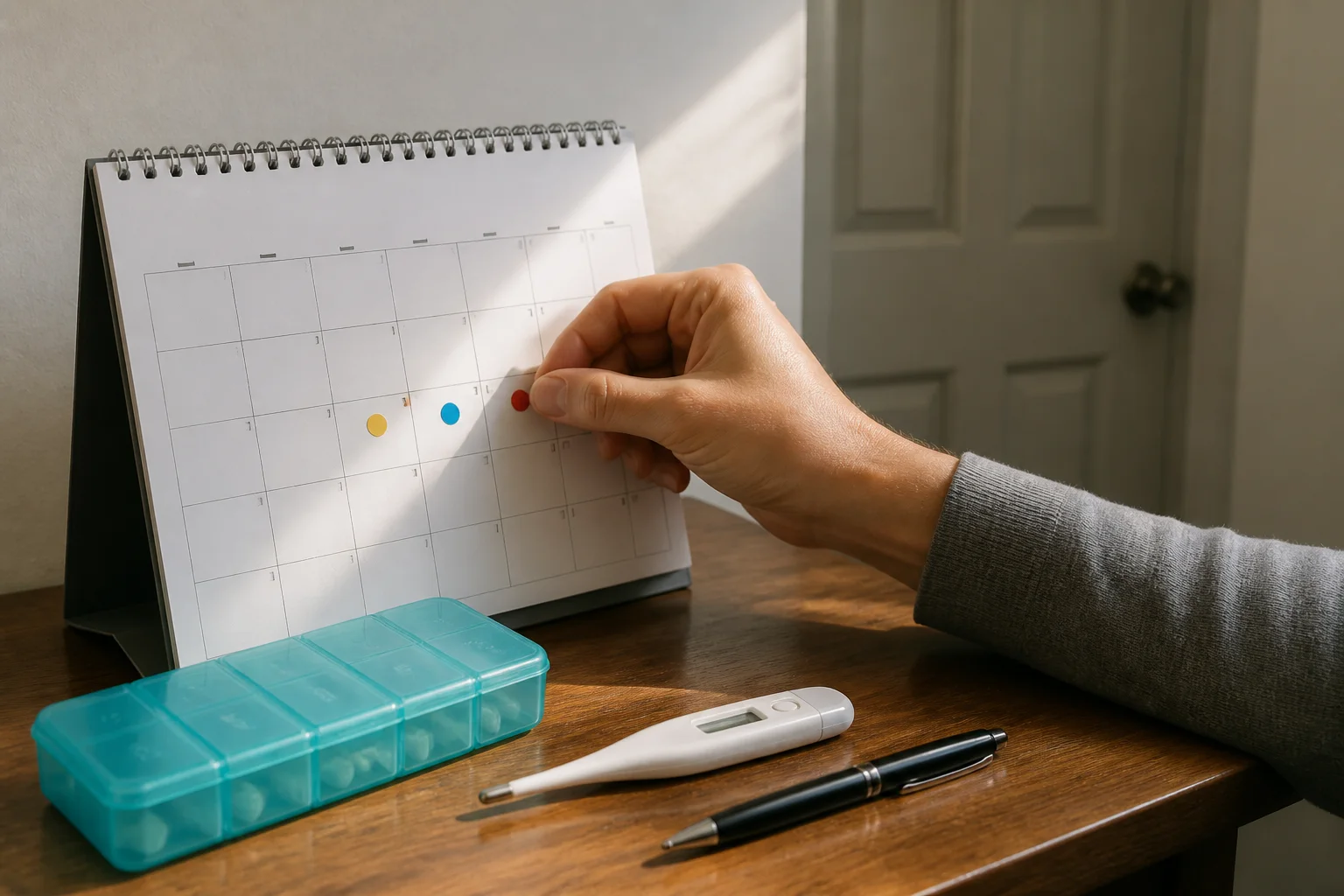
The cough can last for weeks, but the contagious period follows a different clock. Proper treatment usually ends infectiousness after five days. Without treatment, spread can continue for about three weeks after coughing fits begin.
SUMMARY
Whooping cough spreads most easily during its early cold-like stage. Effective antibiotics generally end contagiousness after five completed days. Without treatment, a person may remain contagious for about three weeks after coughing fits begin. Keep them away from babies until a clinician clears contact. Call your pediatrician today if your baby was exposed.
Two clocks cause confusion
The first clock measures infectiousness. The second measures the cough. They do not end together. Airway irritation can keep someone coughing after the bacteria stop spreading.
This explains an apparent contradiction. A treated person may still cough after isolation ends. An untreated person may spread infection before the cough becomes dramatic. Follow treatment dates, not cough volume alone.
The contagious timeline
| Stage | Typical timing | What parents should know |
|---|---|---|
| Incubation | Usually 5–10 days; up to 21 days | No symptoms yet; monitoring still matters |
| Cold-like stage | About 1–2 weeks | Highly contagious and easy to miss |
| Coughing-fit stage | Often several weeks | Spread continues early in this stage |
| Recovery | Often several more weeks | Cough may linger after infectiousness ends |
CDC infection-control guidance uses a practical rule. Effective antimicrobial treatment ends contagiousness after five days. Without treatment, infectiousness can continue through three weeks after paroxysmal coughs begin.
What “five days” means
It means five completed days of an effective antibiotic prescribed for that person. The clock does not start after the first pill. It does not apply to leftover or incorrectly taken medicine.
Only the treating clinician should confirm the end date. Missed doses, resistance concerns, or an uncertain diagnosis can change instructions. Follow local health-department rules for childcare, work, and household contact.
Protecting a baby at home
Keep the infected person in a separate space when possible. They should not hold, feed, or kiss the baby. Improve ventilation and follow masking guidance. Wash hands after coughing, nose wiping, or handling tissues.
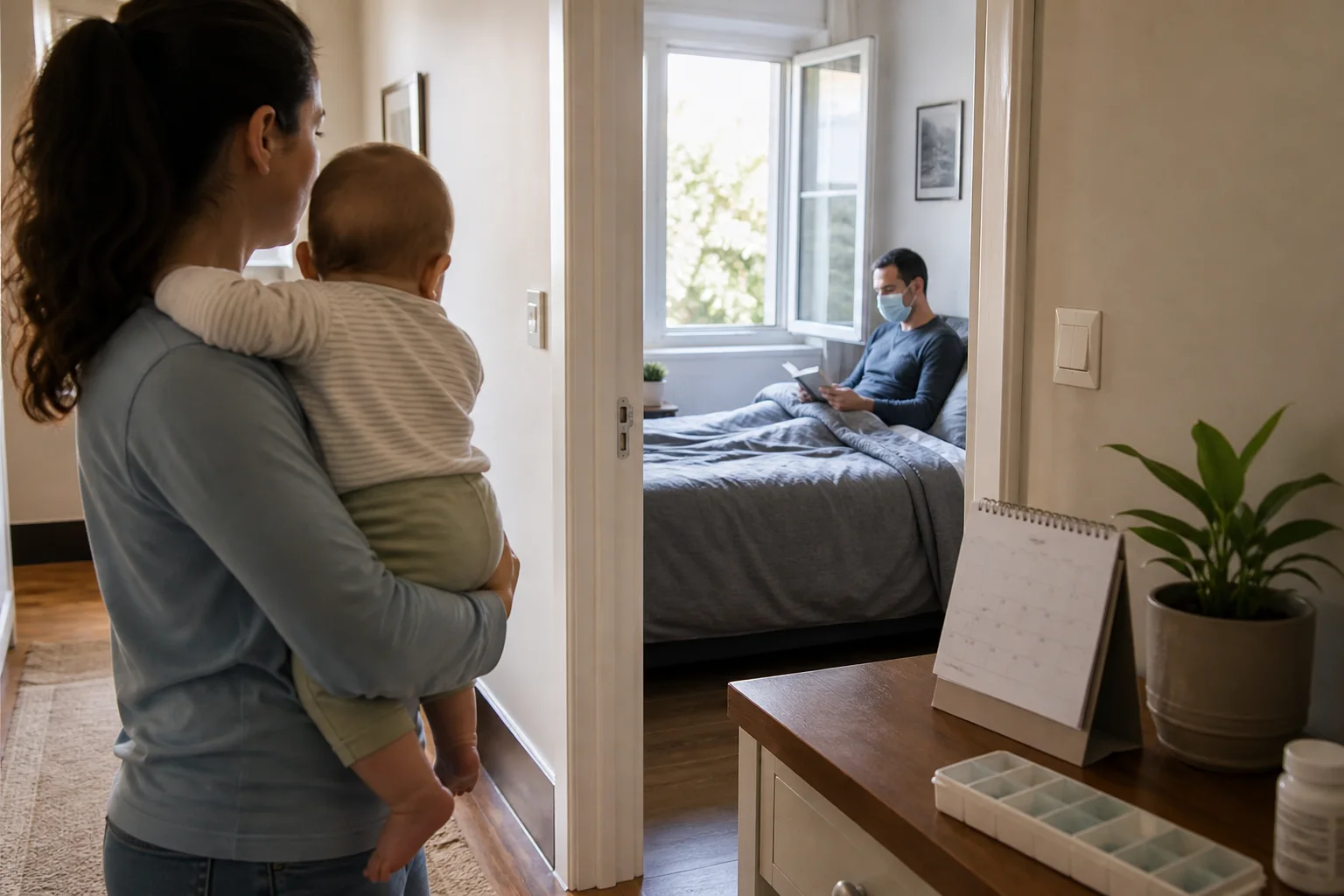
A mask and open window do not shorten isolation. They add protection while families arrange care. Babies under 12 months remain high risk, especially under four months.
If your baby already had contact
Call your pediatrician or local public-health service today. Share the baby’s age and exposure date. Also share the infected person’s cough-start and antibiotic-start dates.
CDC supports preventive-antibiotic assessment within 21 days for high-risk people. It also supports assessment for asymptomatic household contacts. Current vaccination does not cancel this evaluation.
Monitor the baby for 21 days after the last exposure. Early symptoms can resemble a cold. Young infants may show apnea without a strong cough.
When the cough continues after isolation
Pertussis can damage and irritate the airways. Recovery therefore takes time. Coughing may continue for weeks and can return with later respiratory infections.
A lingering cough does not automatically mean continued infectiousness. It also does not prove that contact is safe. Use the clinician’s clearance date. Avoid judging safety from sound alone.
Emergency signs in a baby
- Breathing stops or pauses.
- Lips, tongue, or face turn blue or gray.
- Breathing becomes severely difficult.
- Your baby becomes limp or difficult to wake.
Get emergency help now for these signs. Do not wait for a whoop or test result. Call your pediatrician promptly for worsening fits, vomiting after coughs, poor feeding, or fewer wet diapers.
Frequently asked questions
Can we end isolation when the cough improves?
Not based on improvement alone. Use the treatment date and clinician’s instructions.
Is someone contagious for the entire 100-day cough?
Usually not. The cough can outlast infectiousness by weeks. Treatment status determines the practical timeline.
Can a vaccinated relative visit during isolation?
No. Vaccination reduces risk but does not cancel the isolation period.
Read the complete parent guide. If exposure happened, use the 21-day exposure plan.
Sources
This article is general information and is not medical advice. Ask your pediatrician or public-health service for exact isolation dates.