Bronchiolitis Symptoms: When to Get Help

Bronchiolitis symptoms are usually worst on days 3–5 of the illness. For breathing pauses, blue or grey lips, or severe breathing difficulty, get emergency help immediately.
SUMMARY
- Watch the breathing. Breathing pauses, blue lips, or struggling to breathe? Get emergency help now.
- Feeding less than half the usual amount is a reason to seek medical help promptly. A dry diaper for 12 hours or more, or other signs of dehydration, needs urgent medical advice.
- After medical assessment, home care is usually suitable when breathing is comfortable and feeding remains adequate.
What bronchiolitis looks like
Bronchiolitis is a viral infection that inflames the small airways in the lungs. It mainly affects babies and children under 2 years old.
RSV is the most common cause, but several other viruses can also cause bronchiolitis. A runny or blocked nose and a mild cough often come first. The cough may then worsen, with wheezing, harder breathing and difficulty feeding.
When symptoms may get worse
Symptoms often peak on days three to five. Australian clinical guidance counts from the start of harder breathing and describes a peak about 2–3 days later.
Get help whenever breathing gets worse or emergency signs appear, whatever the illness day. Do not wait for day five. A cough can linger for weeks after the worst part has passed.
Who needs closer attention
Younger babies, premature babies, and children with chronic lung disease, congenital heart disease or weakened immune systems have a higher risk of severe bronchiolitis.
Emergency, urgent advice or home care
Emergency help now
Grunting or skin pulling in under the ribs is a sign of breathing difficulty that needs emergency help now.
Get emergency help now for breathing pauses, blue or grey lips, severe breathing difficulty, a floppy baby, or a baby who is hard to wake.
If emergency signs appear, call your local emergency service immediately.

Prompt medical assessment
Seek prompt medical advice when symptoms worsen or your baby is not drinking enough.
- A baby under 3 months with a temperature of 38°C or higher needs urgent medical assessment without delay.
- For a baby older than 3 months, a temperature of 39°C or higher also needs urgent medical advice.
- Feeding less than half the usual amount is a reason to seek medical help promptly.
- A dry diaper for 12 hours or more, or other signs of dehydration, needs urgent medical advice.
- Fast breathing at rest or unusual sleepiness also needs prompt medical assessment.
Seek advice earlier if you are worried. You do not need to wait for every warning sign.
Seek medical assessment early if your baby is under 10 weeks old, was born prematurely, or has chronic lung disease, congenital heart disease or a weakened immune system.
Home care after assessment
After medical assessment, home care is usually suitable when breathing is comfortable and feeding remains adequate. If breathing or feeding gets worse at home, seek medical advice again.
Feeding and checking overnight
If your baby can no longer suck or drink, go to an emergency department.
Offer smaller feeds more often, whether your baby has breast milk or formula. Saline nose drops may help at feeding time when a blocked nose makes feeding difficult.
Check your baby regularly, including during the night.
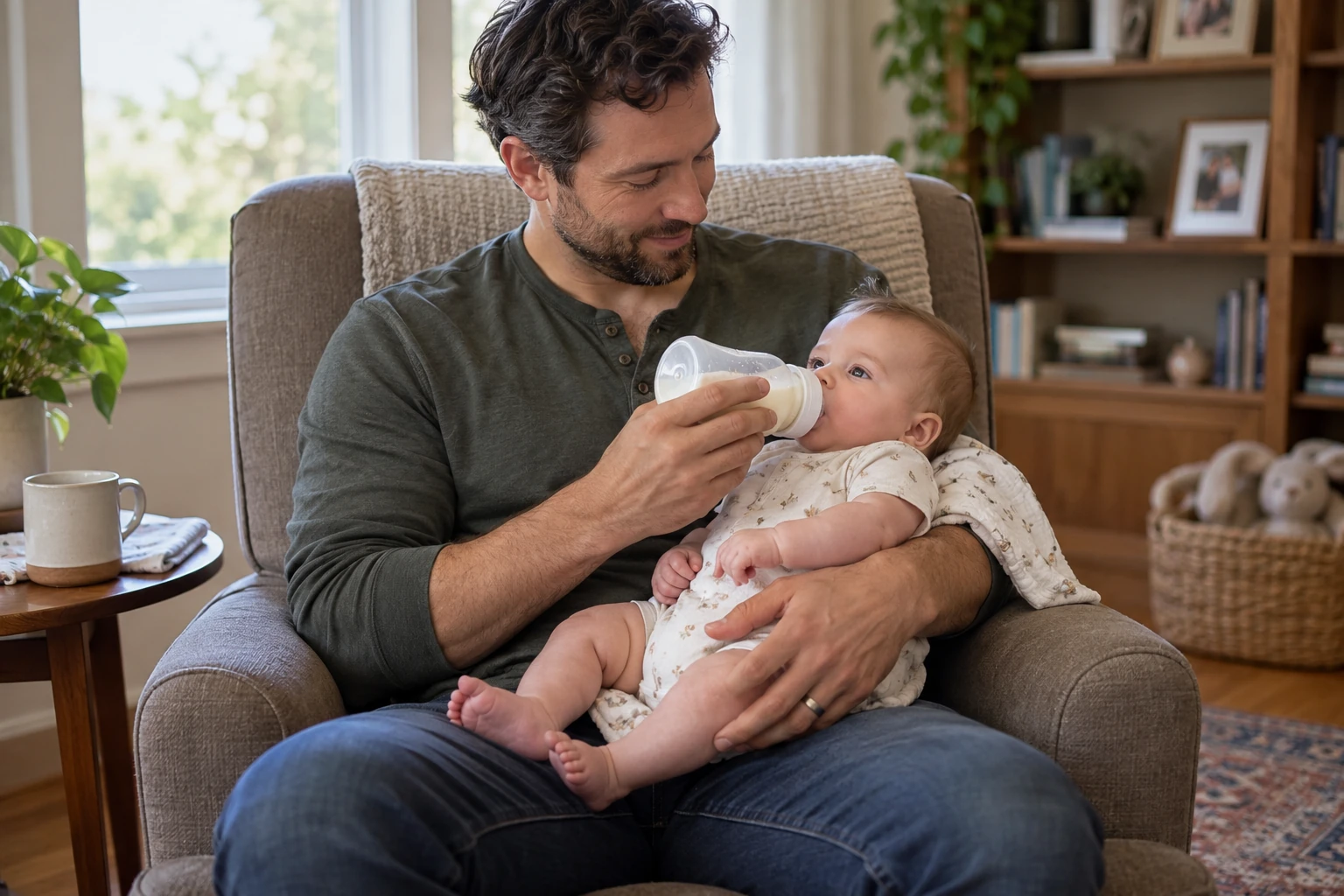
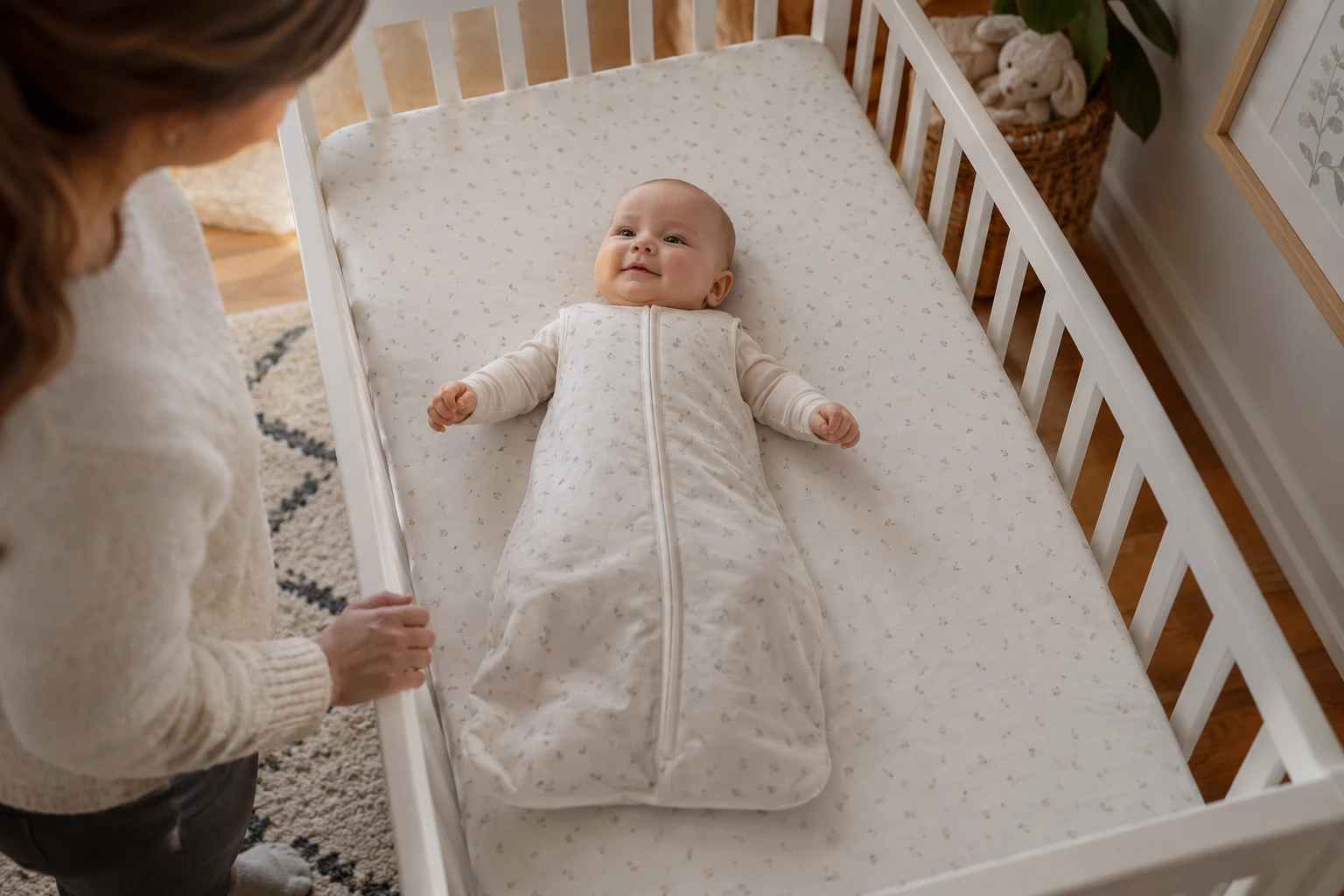
Upright when awake, flat for sleep
Follow this infant sleep guidance throughout the first year. For premature babies, count that year from the due date, not the birth date.
Keep your baby upright while awake to help breathing feel easier. For every sleep, place your baby on their back. Use a firm, flat mattress in a clear cot.
Keep pillows, loose blankets and soft toys out of the sleep space. Do not raise the mattress or use pillows to prop your baby up for sleep. Do not fall asleep holding your baby on a sofa or armchair.
What medical care can do
Clinicians usually diagnose bronchiolitis from the symptoms and examination. Routine tests are often unnecessary. Antibiotics, cough mixtures and asthma medicines do not treat bronchiolitis itself.
Some babies need hospital support with oxygen or fluids when breathing or feeding becomes difficult.

Reducing spread at home
Wash hands often and clean frequently handled toys and surfaces to reduce virus spread. Keep smoke and vaping away from your baby and out of your home.

What to tell the medical team
When asking for help, describe your baby’s age, illness start, breathing changes, feeding, temperature and last wet diaper.
Questions parents ask
What if my baby cannot drink at all?
If your baby can no longer suck or drink, go to an emergency department.
Does every baby need an RSV test?
Routine virus testing is not usually needed to guide bronchiolitis care.
Sources
- NHS — Bronchiolitis
- The Royal Children’s Hospital Melbourne — Kids Health Info: Bronchiolitis
- The Royal Children’s Hospital Melbourne — Clinical Practice Guidelines: Bronchiolitis
- Canadian Paediatric Society — Caring for Kids — RSV (Respiratory syncytial virus)
- NHS — Sudden infant death syndrome (SIDS)