Baby Won't Stop Crying: What to Check
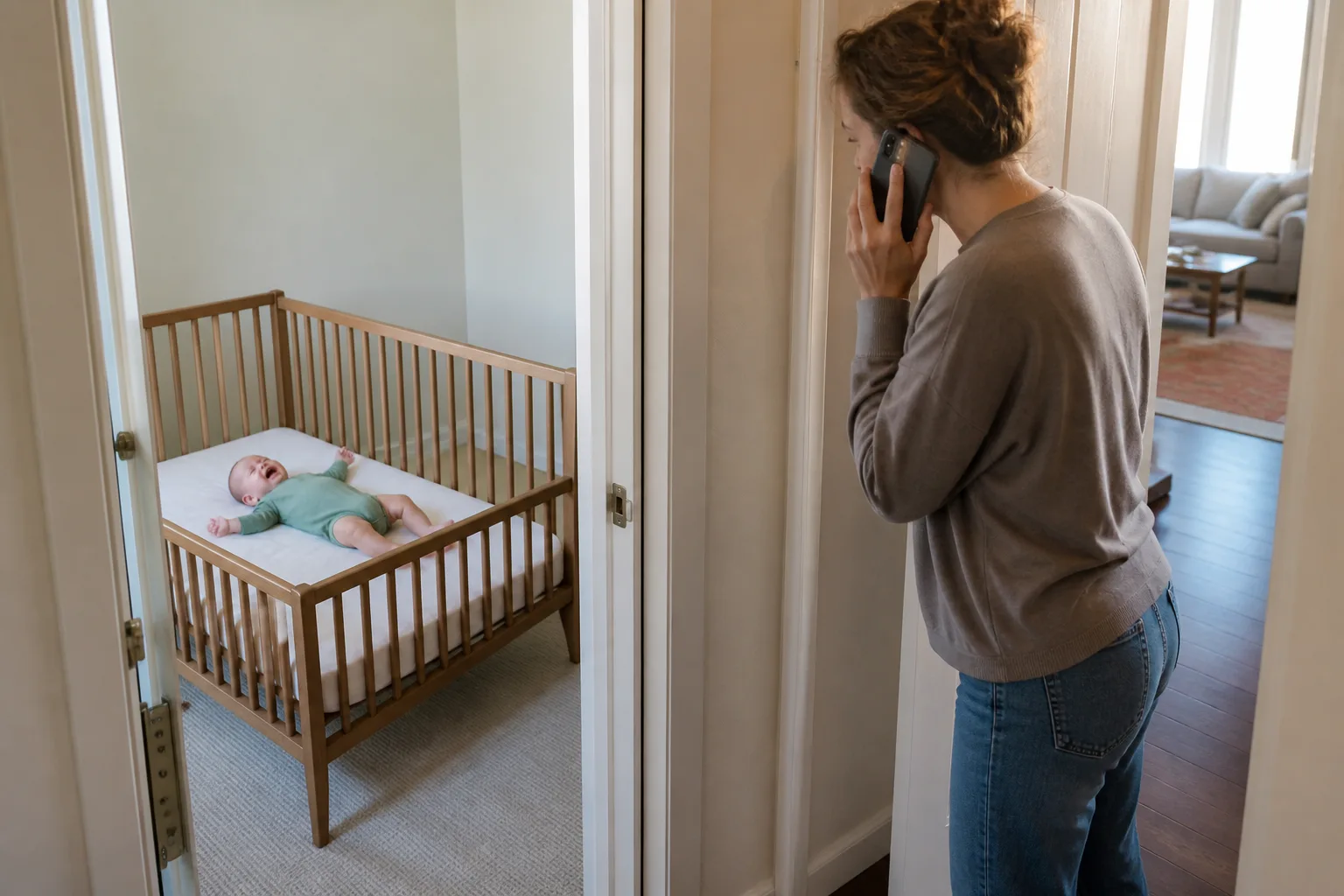
When crying continues, use a fixed order instead of guessing from the sound. Check urgent signs, feeding, sleep and stimulation, ordinary discomfort, then pain or illness. If frustration rises, a safe crib break and another adult's help protect both baby and caregiver.
SUMMARY
Look first for breathing trouble, blue or gray color, a seizure, limpness, poor responsiveness, and severe vomiting. Then check the last feed, tired cues, diaper, clothing, temperature, skin, movement, vomiting, wet diapers, and rash. Try one calm response at a time. Call your pediatrician for an unusual or inconsolable cry, especially with another symptom. Never shake, hit, or cover the mouth of a baby.
Step 1: rule out an emergency
Call your local emergency service if your baby has severe breathing difficulty or pauses, becomes blue, gray, very pale, or blotchy, has a seizure, is floppy or difficult to wake, or has repeated forceful vomiting with rapid worsening. An infant who cannot feed because breathing is hard also needs urgent help.
A baby younger than three months with a temperature of 38°C or higher needs prompt medical advice. Do not keep working through a home checklist when an urgent sign is present. The checklist is for organizing observation, not delaying care.
Step 2: check feeding without assuming every cry is hunger
Note the last feed and look for a group of early hunger cues: waking and becoming alert, rooting, opening the mouth, moving hands toward the face, and sucking fingers or lips. Offer a feed according to your baby's plan. Watch for fullness cues and do not pressure the baby to finish a fixed amount.
If the baby refuses repeatedly, takes much less than usual, cannot stay awake, vomits repeatedly, or has fewer wet diapers, call your pediatrician. Illness and pain can interfere with feeding even when a baby is hungry.
Step 3: lower stimulation and check tired cues
Yawning, eye rubbing, slow blinking, looking away, jerky movement, sudden fussiness, or loss of interest can signal fatigue. Dim lights, lower voices, reduce passing between adults, and slow your movements. Choose one gentle method, such as calm holding or soft speech, before changing strategies.
Place your baby on the back on a firm, flat infant sleep surface. Keep pillows, loose bedding, toys, and positioners out. An unsafe sleep position is never a solution to persistent crying.
Step 4: check ordinary discomfort from head to toe
- Check the diaper and clean irritated skin gently.
- Feel the chest or back rather than judging temperature from hands and feet alone.
- Remove tight clothing, twisted fabric, or a strap pressing the skin.
- Look in skin folds and check every finger and toe for a tightly wrapped hair or thread.
- Notice swelling, an injury, a distended abdomen, or crying when one area moves.
Comfort needs also matter. A baby may want close, calm contact. The American Academy of Pediatrics describes crying as communication. Responding calmly to a young baby does not spoil them.
Step 5: reassess for pain or illness
Measure temperature and observe breathing, skin color, feeding, vomiting, stools, wet diapers, rash, movement, alertness, and response to your voice. A cry that is constant, cannot be consoled, or is clearly unlike the normal cry can be a sign of illness. The NHS advises getting medical help for those changes.
Call the pediatrician even if you cannot name the cause. Share the baby's age and whether the baby was premature, when the episode began, temperature and measurement method, recent feeds, wet diapers, vomiting, rash, medicines, injuries, and sick contacts.
Change one safe thing at a time
Rapidly cycling through feeding, bouncing, toys, loud sound, and several rooms may increase stimulation. When there is no urgent sign, try one simple response and watch what changes. Keep the sequence slow enough to observe breathing, color, and engagement.

Some healthy babies have periods of intense crying even after their needs have been checked. That does not make the distress unreal, and it does not mean the caregiver has failed. Persistent or changing crying still deserves clinical advice when you are concerned.
Write a short timeline
Record the start and end of episodes, what happened beforehand, feeds, sleep, stools, wet diapers, vomiting, temperature, and what helped. A brief video of an intermittent cry or movement can be useful if it does not delay care. Clear observations help a clinician decide whether the baby needs examination.
Protect the caregiver-baby pair
If anger, panic, or exhaustion is rising, put your baby on the back in an empty safe crib and leave the room briefly. Breathe, drink water, and call a trusted person to take over. Check back regularly and return when you can respond safely.
The Children and Families Agency of Japan advises placing the baby in a safe place and stepping away when necessary. Never shake, hit, throw, or cover the baby's mouth. If you are afraid you may hurt the baby, call emergency or crisis support and ask another adult to come immediately.
Frequently asked questions
How long is too long for a baby to cry?
There is no single minute limit that replaces the baby's condition. Urgent signs need action immediately; an unusual, persistent, or inconsolable cry with another symptom needs medical advice.
Is it safe to step away?
Yes, when the baby is on the back in an empty safe crib and no urgent medical sign is present. A brief break is safer than handling a baby while losing control.
What if I still feel something is wrong?
Call your pediatrician or urgent medical service. You do not need to diagnose the cause before asking for an assessment.
Sources
This article provides general information and is not medical advice. Contact your pediatrician for persistent crying or individual concerns, and use local emergency services for urgent signs.