Tired Baby Cues: Before the Cry

A tired baby does not always become quiet. Some babies yawn and look away; others become fussy, jerky, or suddenly active. The useful clues are the baby's body, time awake, and response to a calmer environment—not one special cry.
SUMMARY
Common tired cues include yawning, eye rubbing, slow blinking, looking away, losing interest, fussiness, and less coordinated movement. Reduce light, noise, play, and repeated handling. Use a calm routine, then place your baby on the back on a firm, flat sleep surface with the sleep space empty. Recheck for illness if the crying remains unusual or cannot be soothed.
Early tired cues can be quiet
The earliest change may be less engagement. Your baby may stop following a face, turn the head away, stare into the distance, blink slowly, or become still. Yawning and eye rubbing are familiar signs. Younger babies may show subtler changes, while older babies may become clingy or lose interest in play.
UNICEF's soothing guidance lists yawning, rubbing the eyes, and slow blinking as tired cues. No single cue proves tiredness. Combine several observations with how long your baby has been awake and what has happened in the room.
Overtired and overstimulated can look louder
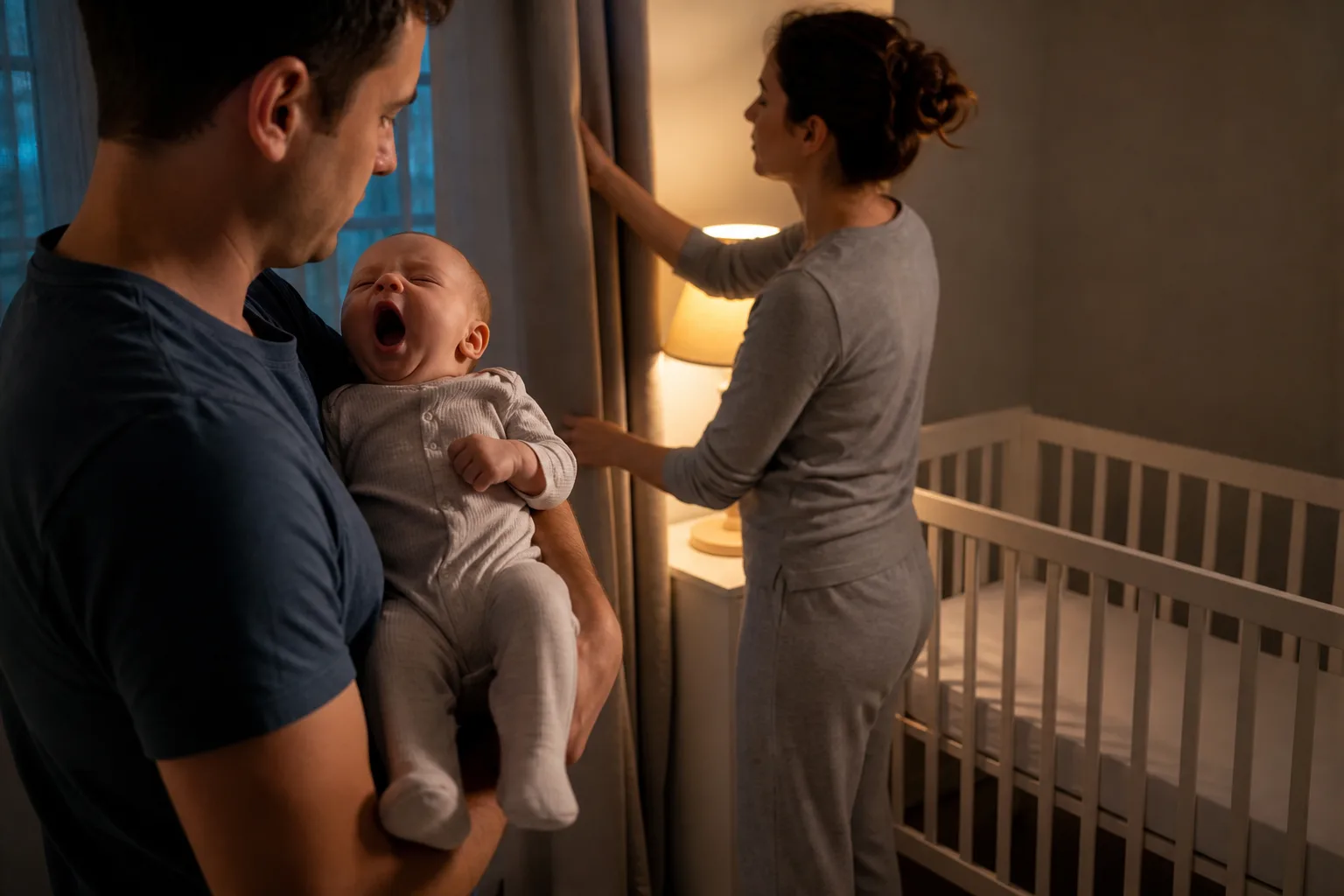
As fatigue builds, movements may become jerky or poorly organized. A baby may arch, turn away, cry when passed between adults, or seem sensitive to light and sound. Some babies appear energetic because their activity increases. Adding toys, bouncing, loud shushing, and repeated position changes can create more input than the baby can manage.
Overstimulation is not a diagnosis and there is no exact wake-time rule that fits every baby. Age, health, feeding, and the quality of the last sleep all affect tolerance. Your baby's changing behavior is more useful than forcing a schedule to the minute.
How to reduce stimulation
- Move to a quieter space and dim bright light.
- Ask extra adults to pause interaction and lower their voices.
- Hold your baby securely and slow your movements.
- Choose one familiar settling method instead of switching rapidly.
- When drowsy or asleep, place your baby in the safe sleep space.
You can offer a feed when hunger cues are also present. Hunger and fatigue often overlap. Avoid assuming that every sleepy cry needs more milk, and avoid keeping a clearly tired baby awake to reach an arbitrary clock time.
Safe sleep remains part of settling
Place your baby on the back for every sleep on a firm, flat surface intended for infant sleep. Keep pillows, loose blankets, toys, bumpers, and positioners out. If your baby falls asleep in a sitting device, follow current pediatric safe-sleep advice about moving them to an appropriate surface as soon as practical.
Do not use stomach sleeping, weighted items, or soft bedding as a way to stop crying. A calm baby still needs a safe sleep setup. Ask your pediatrician for individual guidance if reflux, prematurity, a medical device, or another condition affects sleep instructions.
When it may be more than tiredness
Restart the whole-body check if the cry is new, very different, weak, continuous, or impossible to soothe. Check temperature, breathing effort, skin color, feeding, vomiting, rash, wet diapers, movement, and responsiveness. The NHS advises seeking medical help when a baby's crying is constant and cannot be consoled or does not sound like the usual cry.
Call emergency services for breathing pauses or severe breathing difficulty, blue or gray color, a seizure, or a baby who is floppy or difficult to wake. A temperature of 38°C or higher in a baby younger than three months needs prompt medical advice. Contact your pediatrician when feeding drops, vomiting repeats, wet diapers decrease, or your concern persists.
Keep a short pattern note
For several days, note when tired cues start, the previous sleep, the feeding time, the amount of stimulation, and what settling step helped. The goal is not to create a rigid schedule. It is to recognize your baby's earlier, quieter cues and begin the routine before distress becomes intense.
If the pattern changes abruptly, include that in a medical call. A baby who usually settles with reduced input but suddenly does not may need reassessment for discomfort or illness.
Frequently asked questions
Does eye rubbing always mean sleep?
No. It can be a tired cue, but irritation can also cause rubbing. Check for redness, discharge, swelling, or injury and seek advice when those signs are present.
Why does my tired baby fight sleep?
Fatigue, stimulation, hunger, discomfort, and developmental changes can overlap. Simplify the environment and use a consistent, gentle routine.
What if calming the room does not help?
Check basic needs and illness signs again. Contact your pediatrician if the crying is unusual, persistent, or accompanied by feeding, breathing, temperature, color, or responsiveness changes.
Sources
This article provides general information and is not medical advice. Ask your pediatrician about persistent crying, sleep concerns, or symptoms specific to your baby.