Baby Toys by Age: Birth to 18 Months
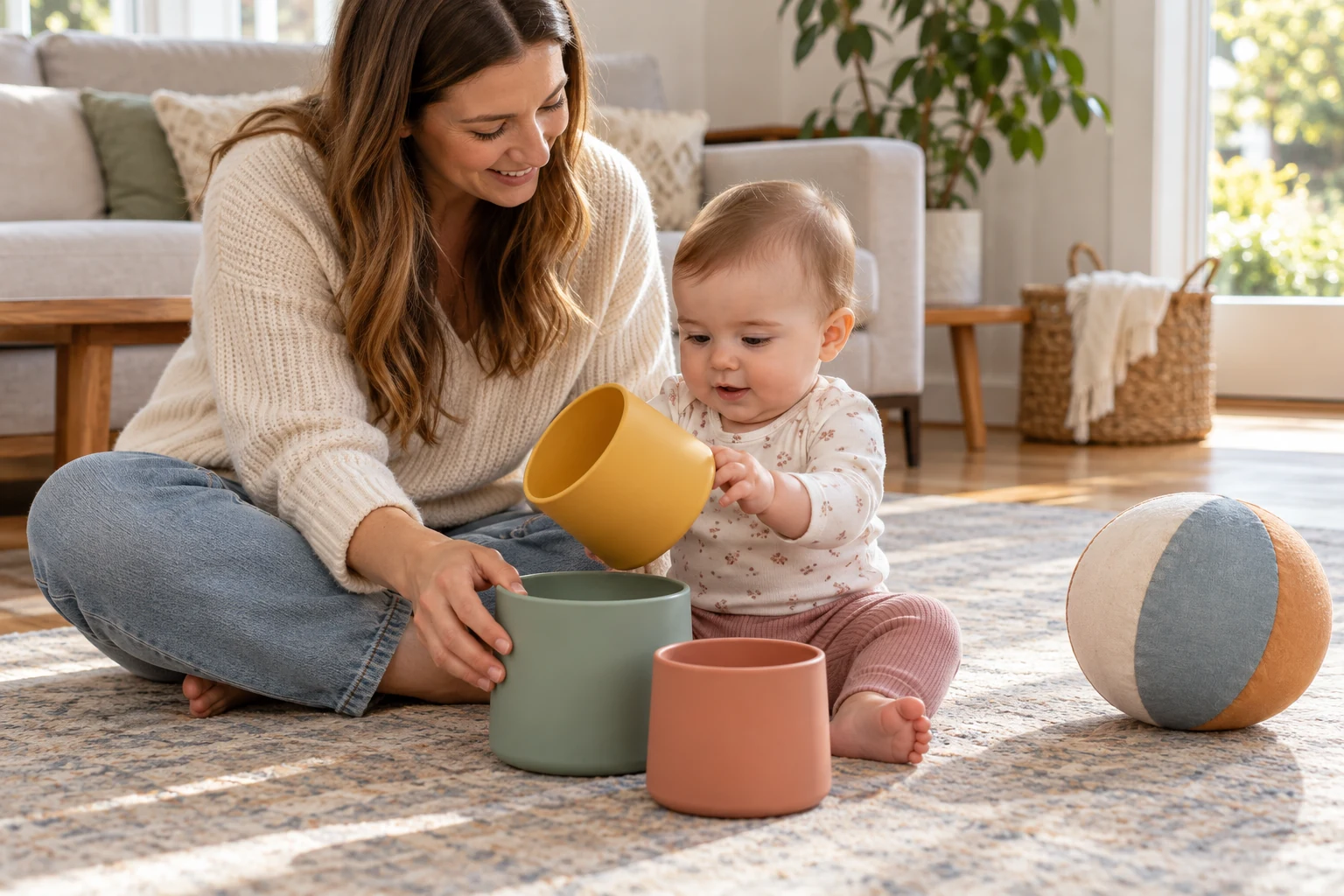
For babies from birth to 18 months, choose toys that meet the product’s age guidance and match what your child can explore with you now.
SUMMARY
- Check the age label first.
- A toy marked unsuitable for children under 3 is unsuitable throughout this 0–18-month guide.
- Match the play to the skill you see: looking, reaching, filling a container or beginning to pretend.
- Remove a toy from play if it cracks, comes loose or sheds small parts.
Choose for today’s play
Use the age bands below as shopping starting points.
Keep the product’s safety restrictions and your child’s abilities in view.
No particular toy is required for the next milestone.
A useful toy does not have to be expensive.
0–3 months: looking and listening
By 2 months, most babies look at faces and can watch a toy for several seconds.
For early looking play, try a high-contrast cloth book while you talk to your baby.

4–6 months: reaching and holding
By 4 months, most babies hold a toy placed in their hand; by 6 months, most reach for a wanted toy and explore objects with their mouth.
For grasping and mouthing, try an easy-to-hold rattle or sturdy cloth book designed for your baby’s age.
A baby-safe mirror is another option for looking.
With your baby on their back, slowly move a bright toy and watch whether they follow it.
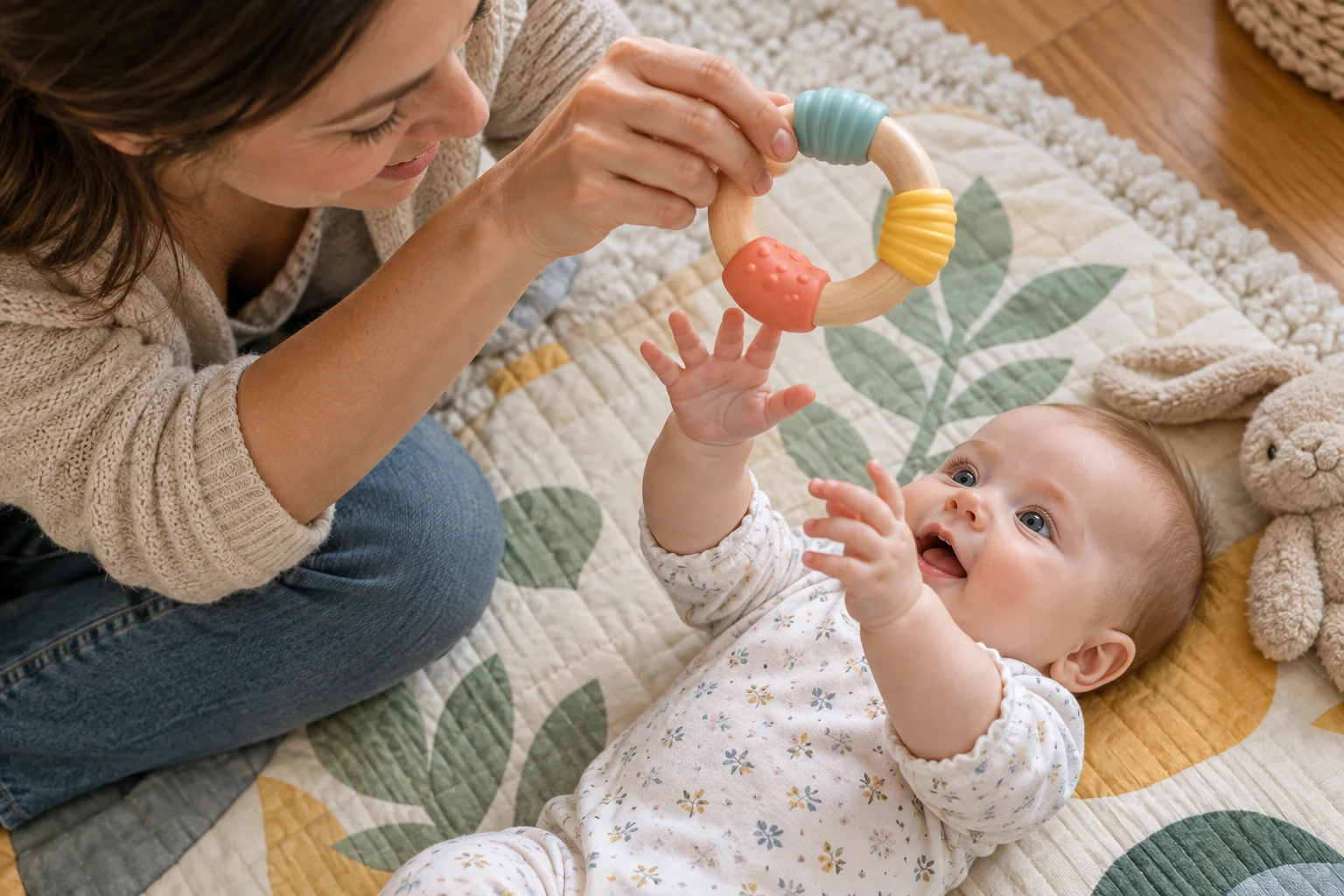
7–9 months: passing and banging
By 9 months, most babies pass objects between hands and bang two things together.
Large sturdy cups and blocks offer things to bang together or pass back and forth with you.
10–12 months: in and out
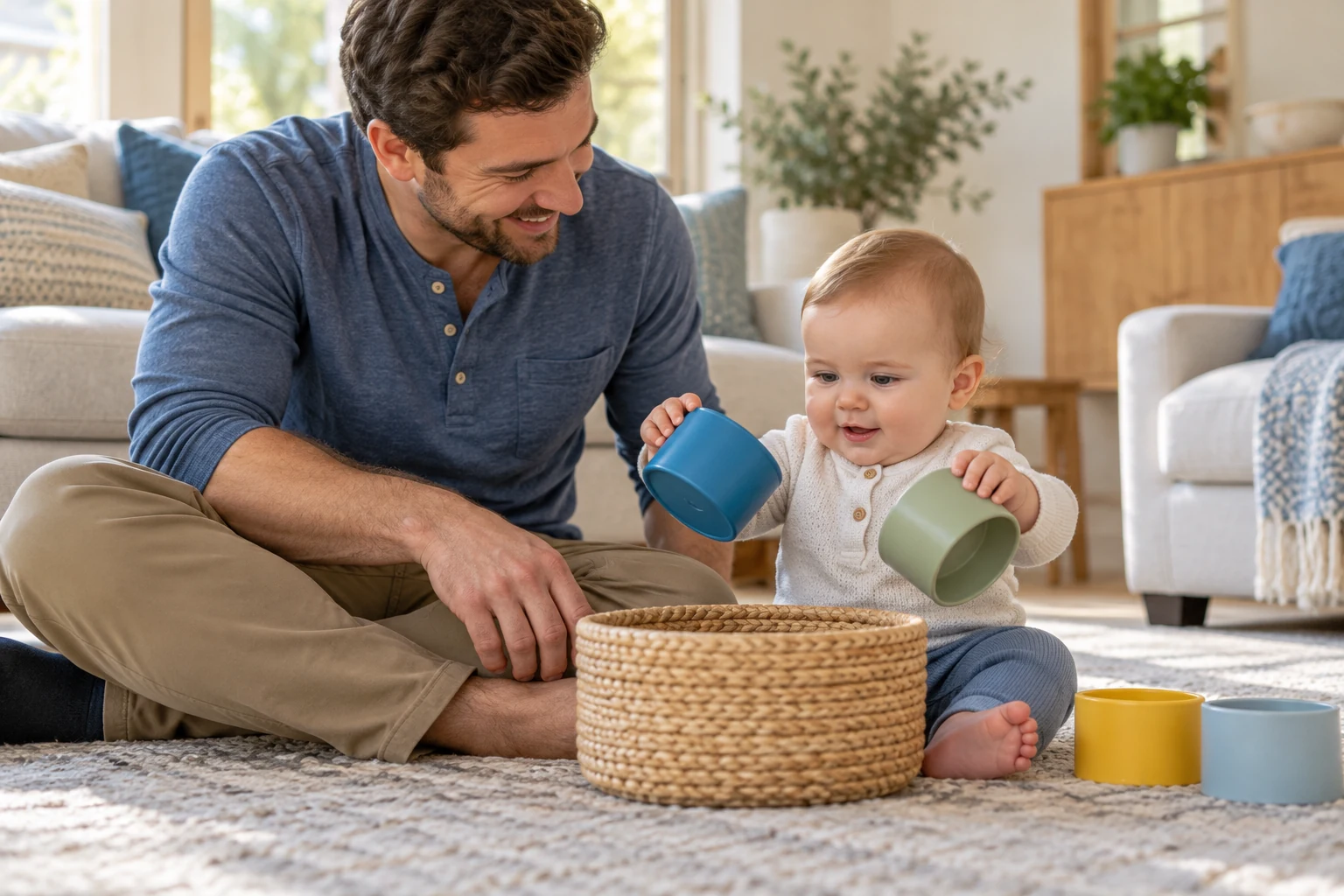
By 12 months, most babies put an object into a container and look for something they have seen you hide.
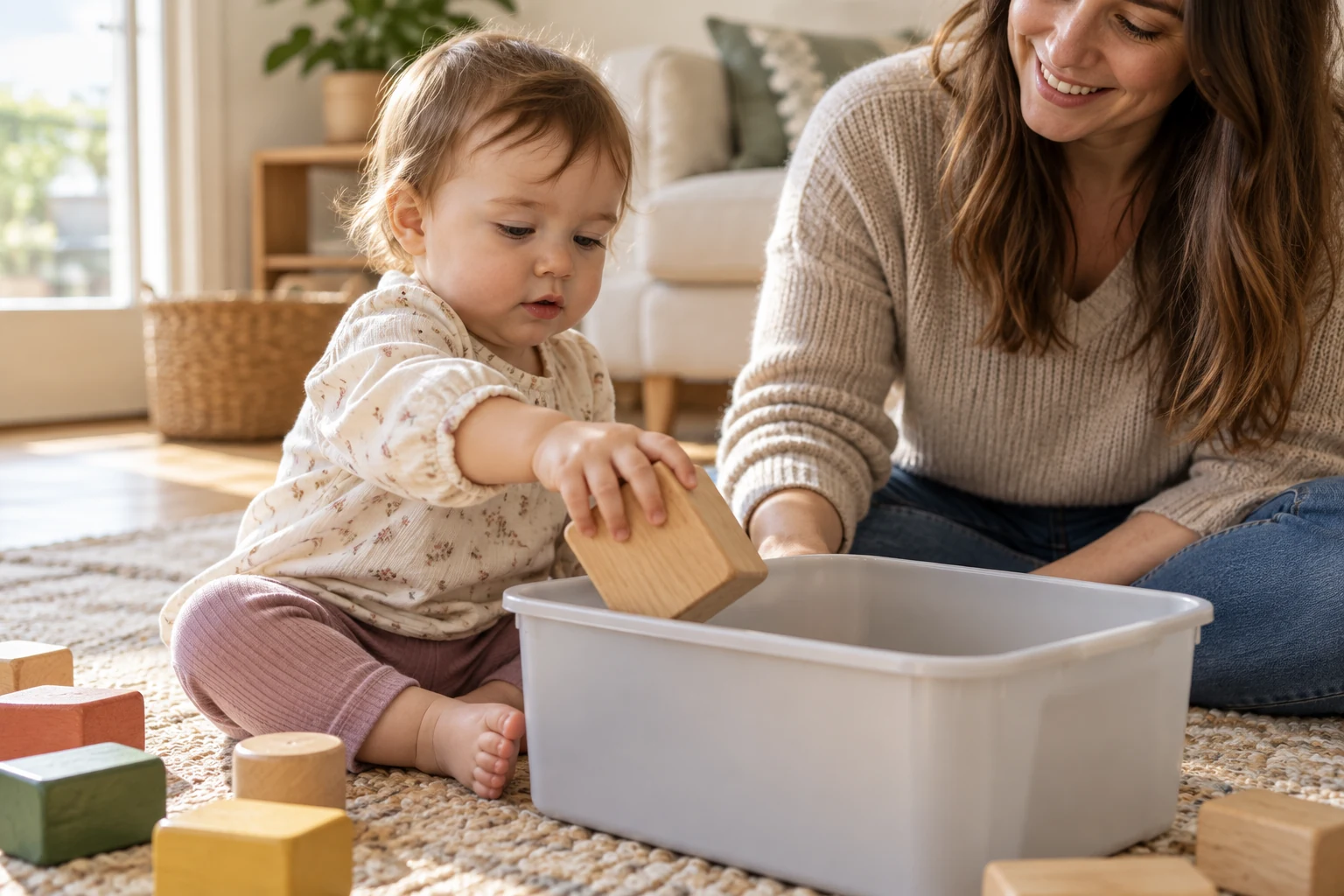
When your baby is ready to put things into a container, offer large blocks and a wide cup or tub for filling and emptying together.
13–18 months: copying everyday life
By 15 months, most children stack at least two objects; by 18 months, most use toys simply, such as pushing a car, and scribble.
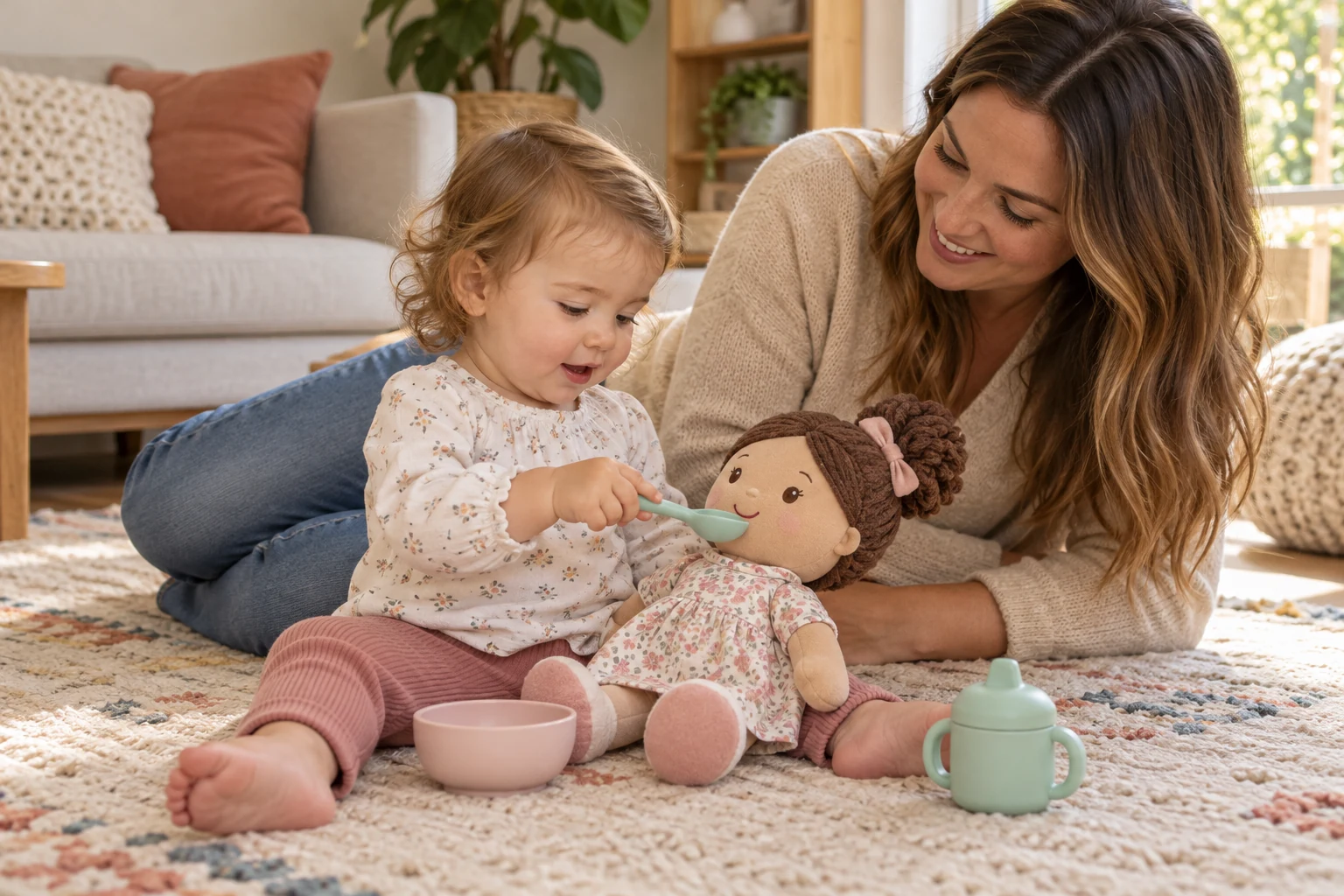
At 18 months, try a doll or stuffed animal and a toy spoon for pretend feeding together.
For your toddler, rolling a large ball back and forth and talking about pictures in a book are other shared-play choices.
Before a toy enters the play area
Keep small parts away, and avoid toys with long cords, sharp edges or pieces that can break off.
Prefer battery-free toys.
If a toy uses batteries, its compartment must be securely screwed shut.
Keep water beads and loose high-powered magnets out of your baby’s play area.
Avoid loud toys, keep hanging crib toys out of reach, and remove the hanging toys when your baby pushes up on hands and knees or reaches 5 months, whichever happens first.
When your baby becomes sleepy, move them onto their back in a safe sleep space with no toys, pillows or loose bedding.
Keep older siblings’ small-part toys separate and watch closely with a new toy.
Stop using recalled products.
When to pause or ask for help
If your baby turns away, yawns or becomes upset, pause and comfort them rather than pushing on with the toy.
If your child loses a skill, misses an age milestone or you have developmental concerns, talk with their clinician promptly and ask about developmental screening.
Seek emergency medical care immediately if you suspect your child swallowed a button battery or magnet.
If a choking child has a silent or ineffective cough or cannot breathe in properly, shout for help immediately and begin age-appropriate choking first aid.
If a choking child becomes unconscious, call your local emergency number and start CPR.
Never sweep blindly inside their mouth.
Questions that come up while shopping
Should I replace toys every month?
You can keep using a toy across age bands if it remains intact, meets its age restrictions and still suits your child’s interests and abilities.
Can an ordinary cup be a toy?
A sturdy unbreakable household cup can be used for shared play if it has no sharp edges or small detachable parts.
What about an educational screen toy?
For this age range, limit screen use to video calls with loved ones and support learning through talking, playing and interacting.