Baby Fine Motor Development by Age
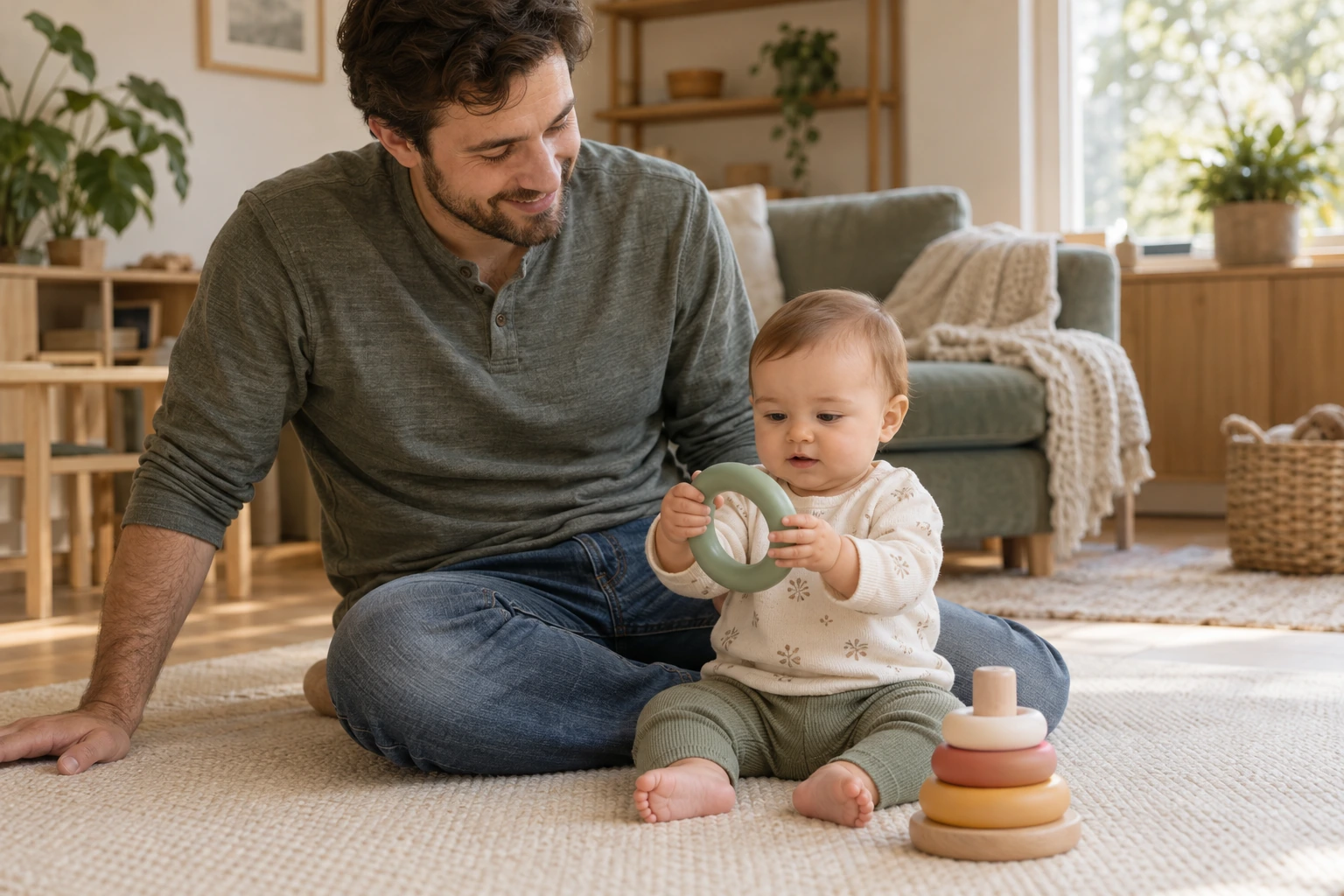
Most babies can transfer objects by 9 months, use a thumb-and-index pinch by 12 months, and stack at least two objects by 15 months.
SUMMARY
- Choose toys and parts larger than your child’s mouth, and follow the age warnings on the packaging.
- Offer big toys to reach for.
- If your child is missing milestones, ask their doctor about development.
For caregivers of newborns, babies and toddlers up to 24 months, the useful question is what your child does with their hands now and which safe activity to offer next.
How to read your baby’s hand skills
Fine motor development means learning to control the hands and fingers for tasks such as grasping, picking up objects and using a spoon. The ages in the table are checkpoints for skills most children can do by that age, rather than average starting ages.
Children develop at different rates, and one different timing pattern does not by itself establish a developmental delay. For a baby born prematurely, use corrected age when comparing development during the first 2 years.
Calculate corrected age in weeks as weeks since birth minus the number of weeks born before 40 weeks of pregnancy. For example, a baby born at 32 weeks who is now 16 weeks old has a corrected age of 8 weeks.
Watch ordinary play with a familiar toy, then compare what you see with the relevant checkpoint.
Birth to 6 months: opening, holding, reaching
A newborn may close their fingers around your finger when the palm is touched; this grasp reflex is an automatic response.

| Age checkpoint | What to look for |
|---|---|
| 2 months | By 2 months, most babies open their hands briefly. |
| 4 months | By 4 months, most babies hold a toy placed in their hand, swing an arm at toys and bring their hands to their mouth. |
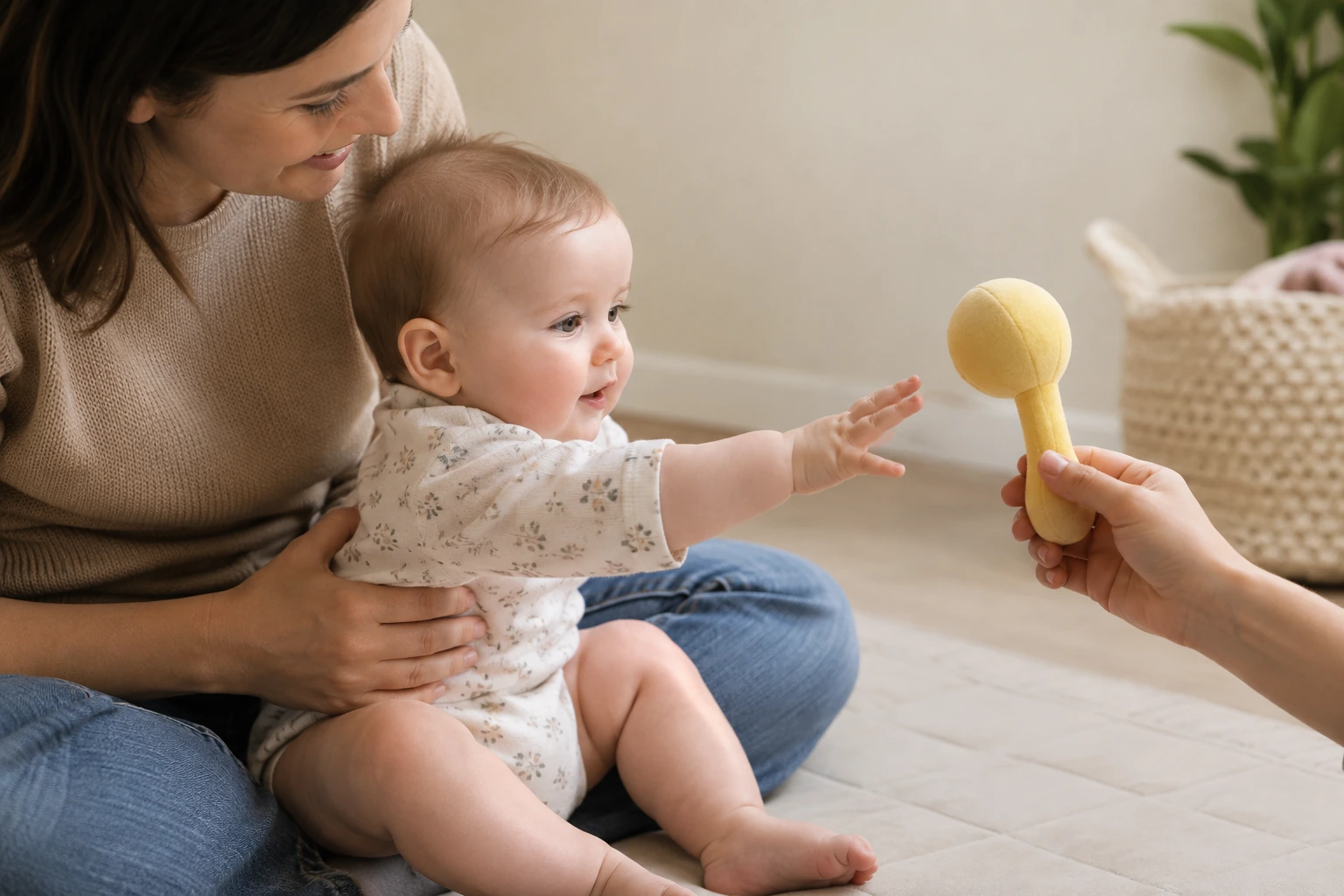
| 6 months | By 6 months, most babies reach to grab a toy they want. |
If your baby is still learning to sit, support them while offering a toy. If your baby becomes upset during play, take a break and comfort them.
9–12 months: transferring and pinching
A pincer grasp uses the thumb and index finger together, while a raking grasp draws an item toward the palm with the fingers.
| Age checkpoint | What to look for |
|---|---|
| 9 months | By 9 months, most babies move objects between hands, bang two objects together and rake food toward themselves with their fingers. |
| 12 months | By 12 months, most babies pick things up between thumb and index finger and put an object into a container. |
Notice whether your child uses the whole hand or brings the thumb and index finger together.
Try taking large blocks out of a container and putting them back together.
15–24 months: blocks and everyday tasks
| Age checkpoint | What to look for |
|---|---|
| 15 months | By 15 months, most children can stack at least two objects, such as blocks. |
| 18 months | By 18 months, most children scribble and try to use a spoon. |
| 24 months | By 24 months, most children hold something in one hand while using the other, try toy switches or knobs, and eat with a spoon. |
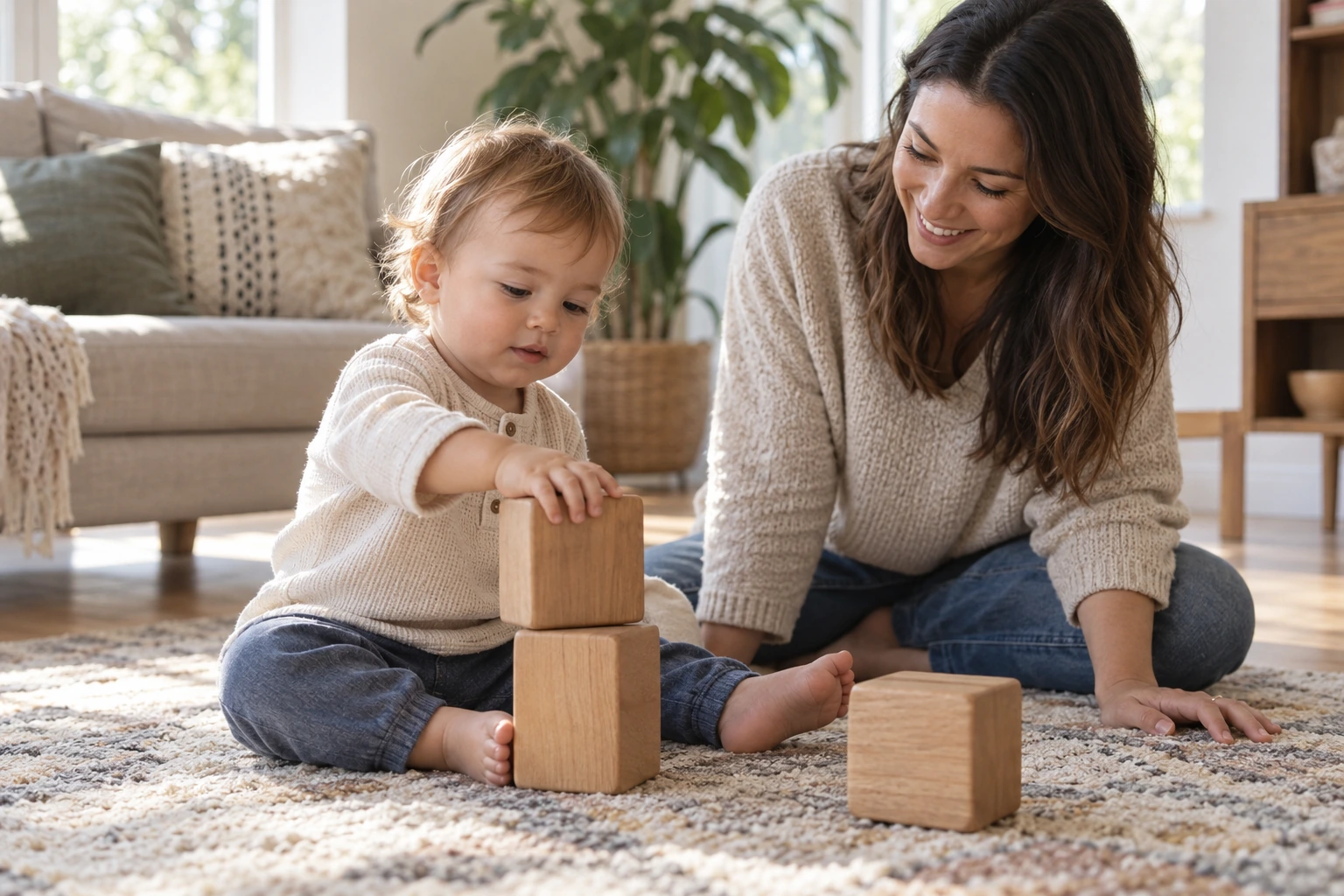
Build with big blocks together. You can stack the blocks and let your toddler knock them down.
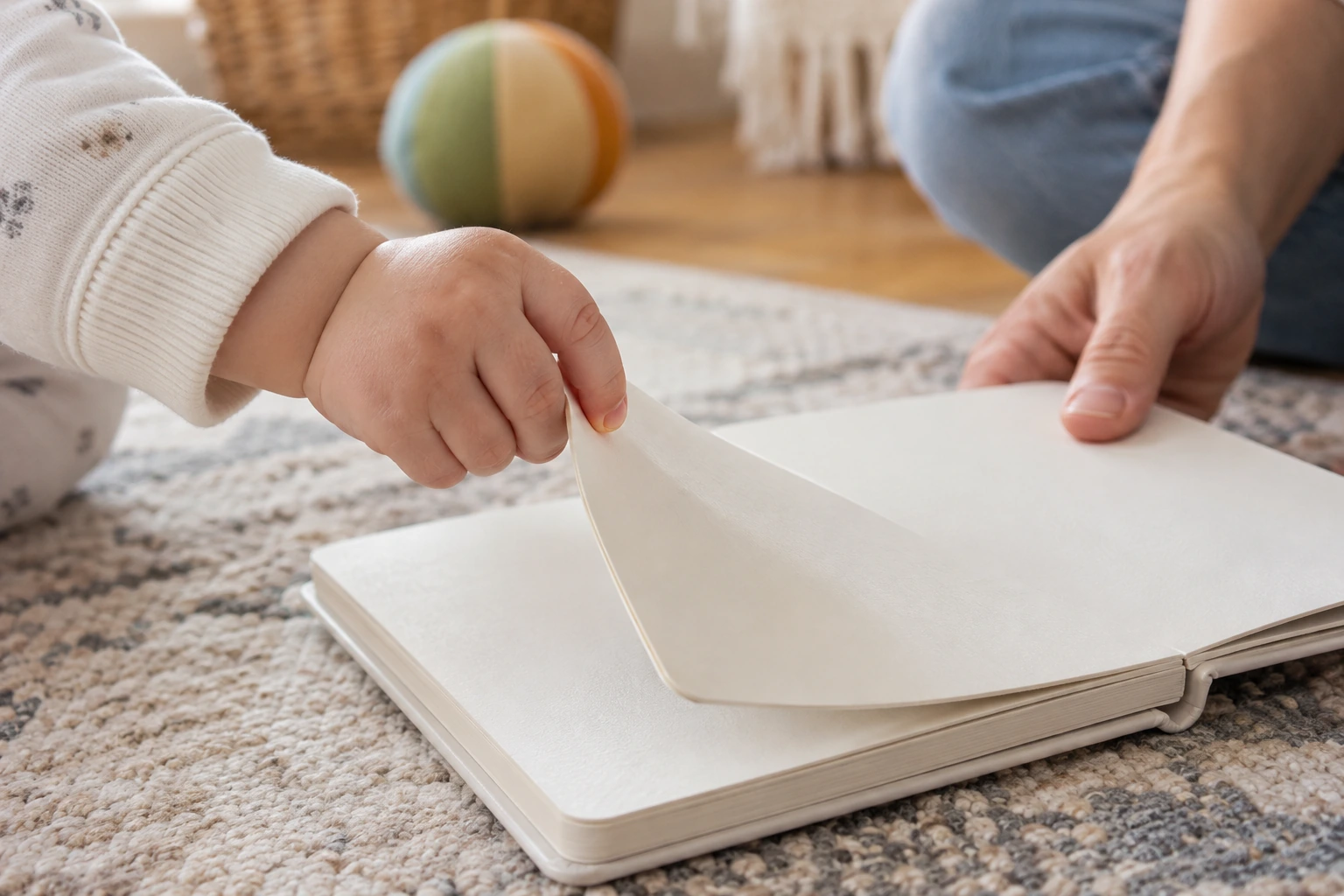
For toddlers, offer chances to scribble, turn book pages and open or close suitable containers.
Choose safe play materials
Choose toys and parts larger than your child’s mouth, and follow the age warnings on the packaging.
Never give babies small toy parts. Keep loose button batteries and magnets out of reach, and check that toy parts and seams remain secure.
Never lift a baby by their grip on your fingers; they can let go suddenly.
When to ask for help
Contact your child’s doctor without waiting if they lose a skill they previously had or you have concerns about their development. In the first 3 months, using only one hand or one side of the body is a reason to talk with your baby’s doctor.

- If your baby is not reaching to grab a toy by 6 months, discuss this with their doctor.
- If your baby is not moving objects between hands by 9 months, discuss this with their doctor.
- If your baby is not picking things up between thumb and index finger by 12 months, discuss this with their doctor.
- If your toddler is not stacking two objects by 15 months or scribbling by 18 months, discuss this with their doctor.
Ask about developmental screening and whether further assessment or support is needed.
Questions about hand play
Do I need a special toy to reach the next milestone?
No particular toy is necessary for your child to reach the next developmental milestone.
Does using one hand more mean my toddler is right- or left-handed?
Do not pressure your toddler to use one hand rather than the other; a clear hand preference can take several years to develop.
Is emptying a box at 9 months the same as putting a block in it?
At 9 months, emptying a container and putting blocks back with you is a suggested game; putting an object into a container independently is a 12-month checkpoint.
Sources
- Centers for Disease Control and Prevention — Milestone Moments
- American Academy of Pediatrics — HealthyChildren.org — How to Buy Safe Toys
- American Academy of Pediatrics — HealthyChildren.org — Corrected Age For Preemies
- American Academy of Pediatrics — HealthyChildren.org — Newborn Reflexes
- American Academy of Pediatrics — HealthyChildren.org — Hand and Finger Skills: 1 Year Olds