Safe Floor Play and Babyproofing
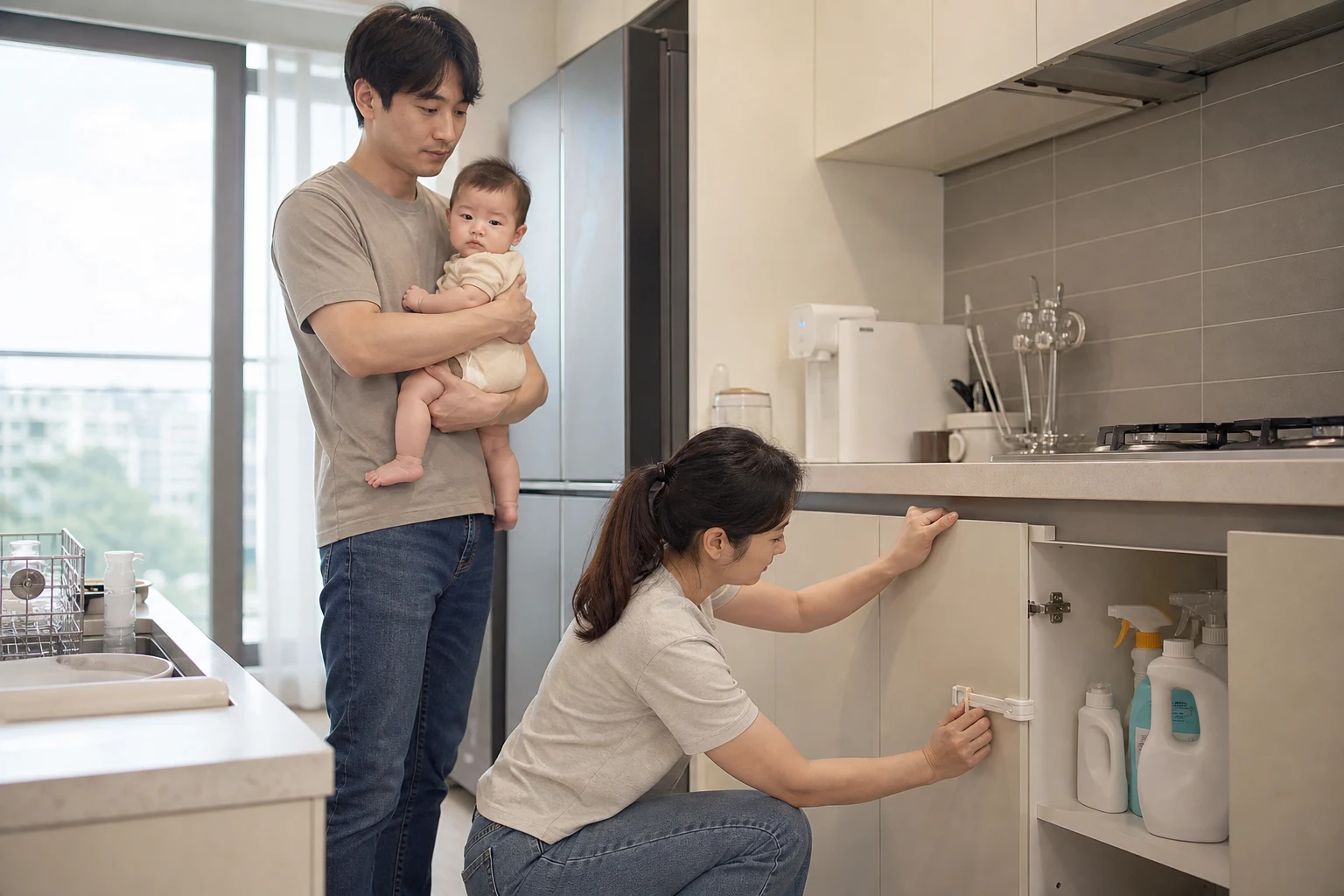
A useful play zone is not a padded container; it is a clear, stable floor area where the baby can turn, reach, sit, and crawl while an attentive adult stays nearby. Start small enough to supervise well, then expand after each adjacent room has been checked and secured.
SUMMARY
Move care to floor level once rolling can begin, keep one hand on the baby on any elevated surface, and never rely on straps alone. Anchor climbable furniture, use hardware-mounted gates at stair tops according to instructions, keep windows guarded and screens out of the safety plan, close or latch hazardous rooms, and store poisons locked, high, and in original containers. Avoid wheeled baby walkers. Recheck after visitors, repairs, deliveries, and developmental jumps.
Prepare one movement skill ahead
Start with clear supervised movement zone. Rolling, pivoting, sitting, crawling, pulling up, and cruising can appear between ordinary days. Do not wait for a milestone to become consistent before changing the environment. Move routine care toward floor level, keep a hand on the baby whenever elevation cannot be avoided, and assume anything visible may soon be reachable. A clear floor and a nearby attentive adult support both learning and injury prevention.
Inspect from the baby's eye level
Move through every accessible room on hands and knees. Look under sofas, between cushions, behind doors, beside appliances, near windows, around chargers, and wherever visitors or older children leave belongings. Pick up coins, button batteries, magnets, balloon pieces, caps, plastic bags, and detachable toy parts. Check pet food, litter, plants, bins, purses, medicines, vaping products, alcohol, and cleaning supplies. Repeat this check as the baby reaches higher and begins climbing.
Create clear supervised floor movement
Develop floor-level care. Use a firm, stable floor area without loose cords, unstable objects, sharp edges, hot items, open water, or small pieces. Stay close enough to intervene without holding the baby in a forced posture. Free movement lets the baby practice turning, reaching, sitting, and crawling. Avoid wheeled baby walkers, which do not teach walking and can provide fast access to stairs, burns, and objects that were otherwise out of reach.
Anchor lock guard and separate
Complete anchors gates locks and guards. Anchor dressers, bookcases, television stands, and televisions with hardware suited to the wall and product. Keep furniture away from windows, make blind cords inaccessible, and use operable guards where appropriate because a screen does not stop a fall. Install suitable gates at stairs according to instructions, lock medicines and cleaners, close hazardous rooms, and separate babies from cooking, hot drinks, fireplaces, tubs, buckets, toilets, pools, tools, and firearms.
Treat devices as backup layers
A latch, gate, monitor, play yard, or corner pad can fail, be left open, or become unsuitable as the child grows. Test hardware, fasteners, gaps, recalls, and fit regularly. Hardware-mounted gates are generally needed at stair tops; follow the exact manufacturer and local guidance for the site. Never climb over a gate while carrying a baby. Keep keys and release mechanisms available to adults but inaccessible to children. Active supervision remains the primary layer.

Observe development without forcing one style
Babies may belly crawl, scoot, roll toward objects, move backward first, use hands and knees, or briefly pass through crawling. Observe progress, comfort, symmetry, tone, and the whole developmental picture rather than grading one style. CDC milestones describe what most children can do by an age, not a pass-fail deadline. Consider corrected age after prematurity. Do not pull limbs into position, repeatedly test a skill, or imitate therapy exercises without individualized instruction.
Know when to contact the pediatrician
Use recheck after every change. Contact the pediatrician if movement stays markedly one-sided, one arm or leg is used much less, the baby seems extremely stiff or floppy, movement appears painful, progress stops, feeding or breathing is difficult, or a skill already gained disappears. Describe birth and medical history, corrected age, daily floor opportunities, which side is preferred, associated symptoms, and when the change began. A short video of a non-emergency concern may help if it can be recorded safely.
Respond to injuries and urgent changes
After a fall or impact, breathing trouble, unresponsiveness, seizure, repeated vomiting, worsening confusion, unequal pupils, severe bleeding, obvious deformity, sudden profound weakness, or a very ill appearance requires emergency help. Follow local emergency guidance and do not delay to search online. Do not shake the baby, manipulate the neck, or force movement to test an injured limb. Button-battery or magnet ingestion, poisoning, burns, and water incidents also need immediate expert direction.
Frequently asked questions
Can one wet diaper rule out dehydration?
No. Use the full-day trend, feeding, and whole-body signs.
Should I give water to fix a low count?
Not to an infant under six months unless a clinician specifically directs it. Ask your pediatrician.
Can I wait until the log is complete?
No. Emergency signs or a clear contact threshold take priority over documentation.
Sources
This article provides general information and is not medical advice. Ask your pediatrician about reduced urine, feeding concerns, or guidance tailored to your baby.