Baby Temperature Measurement Methods
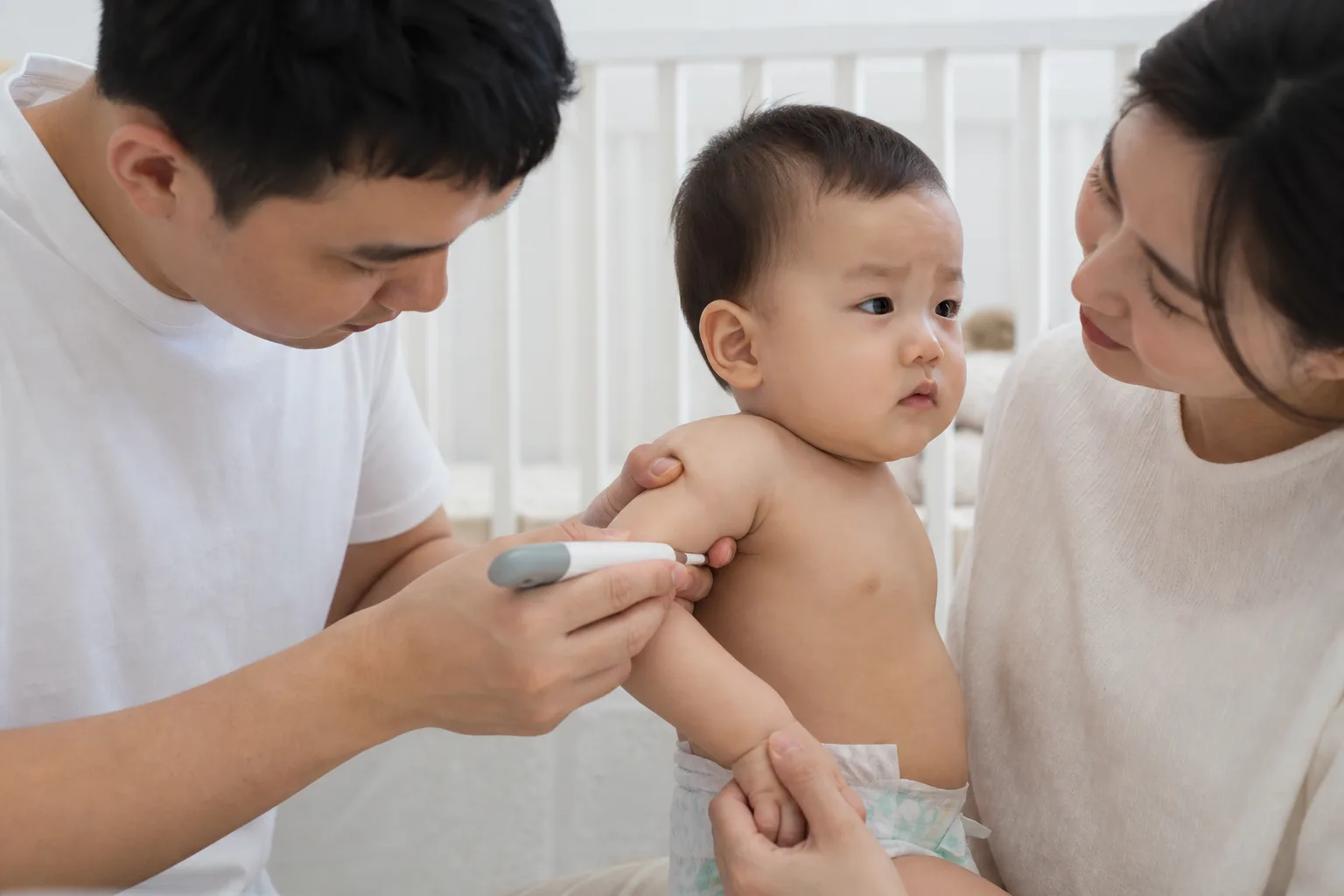
Choose a digital thermometer method that fits the baby's age and use it exactly as directed. The reading site matters: rectal, forehead, ear, and armpit values are not interchangeable labels for one number.
Summary
AAP guidance describes rectal temperature as most accurate, especially under 3 months; forehead is next most accurate, and armpit is the least accurate but can screen any age. Use only devices approved for the baby's age, label multi-use thermometers by site, clean them as instructed, and never force a method when the baby resists. Ask a clinician to demonstrate if unsure.
Start with exact age and a digital device
A few weeks matter in fever decisions, so record the date of birth or exact age rather than writing only 'baby.' Use a digital thermometer designed for the child's age and follow its instructions. Touching the forehead can suggest warmth but cannot confirm a temperature. Do not use a mercury glass thermometer; breakage can expose the family to toxic mercury. Avoid forehead strip thermometers because they are not sufficiently accurate for clinical decisions.
Keep the body site attached to every number
A reading without its site can be misleading because rectal, forehead, ear, oral, and armpit methods do not perform the same way. Do not add or subtract a fixed amount to convert one site into another. AAP guidance describes rectal temperature as the most accurate, especially for infants under 3 months, with forehead measurement next. Armpit measurement is the least accurate but can be used for screening. If a screening value is high or the baby looks ill, contact a clinician and report the method instead of using a lower reading to dismiss concern.

Use the method safely and consistently
Read the manufacturer's age limits and positioning instructions. Label a multi-use probe for one body site so it is not moved between rectal and oral use. Clean it before and after use according to the package. For an armpit reading, place the tip against bare skin high in the armpit and gently hold the arm against the body until the device finishes. For a rectal reading, ask a clinician to demonstrate safe technique; never force the thermometer, stop if there is resistance, and use another clinician-approved plan if you are not confident.
Avoid measurements distorted by the situation
A hot bath, heavy wrapping, vigorous activity, or a very warm room can temporarily affect a reading. When the baby otherwise looks well, remove excess layers and allow the baby to settle before repeating according to the device instructions. Do not delay contact for a young infant or a sick-looking baby while waiting for ideal conditions. Record why a value may have been affected and what changed before the repeat.
Interpret 38 degrees with age, not in isolation
A temperature of 38.0°C (100.4°F) or higher is fever. A baby younger than 3 months at that level needs immediate medical contact, even if the baby appears fairly comfortable. Call the pediatrician or local urgent medical service and report the site and time. Do not wait for the number to rise, repeat a difficult measurement many times, or give fever medicine first to see whether it falls. For older babies, the number still does not replace behavior, breathing, hydration, duration, medical history, or clinician advice. Follow the thresholds and pathway used in your country and by your baby's clinician.
Know when the number is not the main issue
Seek emergency help for severe breathing difficulty, blue or gray lips or skin, difficulty waking, abnormal unresponsiveness, a seizure, stiff neck, or a rash that does not fade when pressed. Those signs matter before a temperature is measured and even when the value is below 38°C. Promptly contact a clinician for poor feeding, fewer wet diapers, persistent fever, unusual drowsiness or agitation, repeated vomiting, or a caregiver's strong concern.