Baby Fever Log for Pediatrician
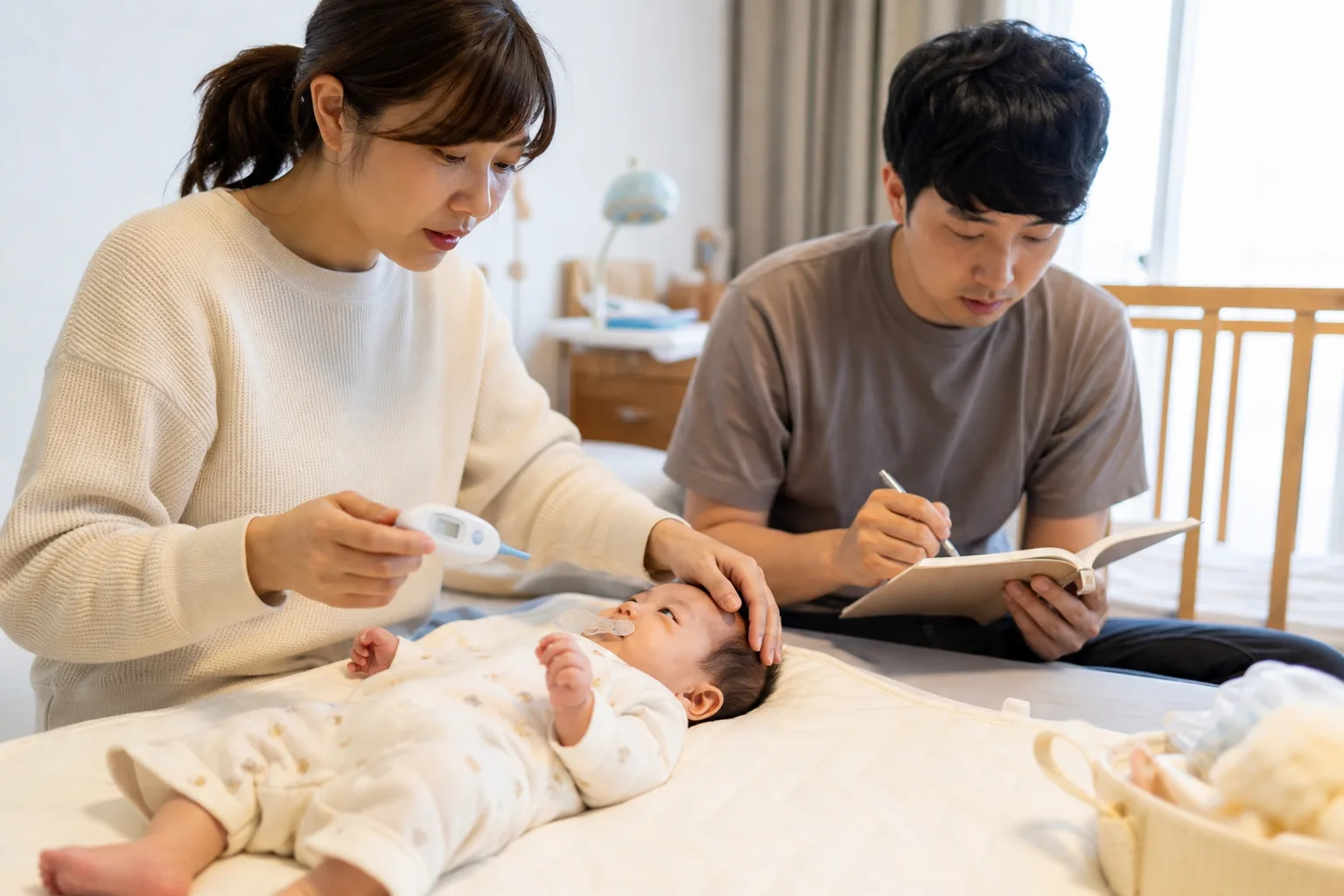
A useful fever log is short, timed, and specific. Record what you measured and observed; do not convert between body sites, estimate a reading from touch, or wait to complete a perfect table before calling.
Summary
Use one line per check: time, exact reading and unit, body site, device, and why you rechecked. Add age, feeding, wet diapers, breathing, color, alertness, rash, vomiting, diarrhea, seizure, and unusual pain. If medicine was directed, record the name, concentration, amount, and time. Bring the latest pattern, but urgent age or whole-body signs take priority.
Keep the body site attached to every number
A reading without its site can be misleading because rectal, forehead, ear, oral, and armpit methods do not perform the same way. Do not add or subtract a fixed amount to convert one site into another. AAP guidance describes rectal temperature as the most accurate, especially for infants under 3 months, with forehead measurement next. Armpit measurement is the least accurate but can be used for screening. If a screening value is high or the baby looks ill, contact a clinician and report the method instead of using a lower reading to dismiss concern.
Record feeding, urine, and behavior
Note feeds offered and taken, vomiting or diarrhea, and the last clearly wet diaper. Record breathing effort, skin and lip color, alertness, consolability, rash, pain, and any seizure. If medicine was recommended, write the exact product name, concentration, amount, and time. Do not alternate medicines or calculate doses from memory. Fever medicines are used for discomfort under age- and weight-appropriate guidance, not to force a normal number or prove that the illness is harmless.

Give the clinician a concise handoff
Start with the baby's exact age and major concern. Then state the highest measured temperature, unit, body site, device, and time. Give the trend only if the methods were comparable. Describe breathing, color, responsiveness, feeding, urine, rash, vomiting, diarrhea, seizure activity, and relevant medical conditions. List any medicine exactly as given. This structure communicates far more than saying the baby 'felt very hot' or sending an app screenshot without measurement context.
Interpret 38 degrees with age, not in isolation
A temperature of 38.0°C (100.4°F) or higher is fever. A baby younger than 3 months at that level needs immediate medical contact, even if the baby appears fairly comfortable. Call the pediatrician or local urgent medical service and report the site and time. Do not wait for the number to rise, repeat a difficult measurement many times, or give fever medicine first to see whether it falls. For older babies, the number still does not replace behavior, breathing, hydration, duration, medical history, or clinician advice. Follow the thresholds and pathway used in your country and by your baby's clinician.
Know when the number is not the main issue
Seek emergency help for severe breathing difficulty, blue or gray lips or skin, difficulty waking, abnormal unresponsiveness, a seizure, stiff neck, or a rash that does not fade when pressed. Those signs matter before a temperature is measured and even when the value is below 38°C. Promptly contact a clinician for poor feeding, fewer wet diapers, persistent fever, unusual drowsiness or agitation, repeated vomiting, or a caregiver's strong concern.