Baby Sign Language: Which Signs First?
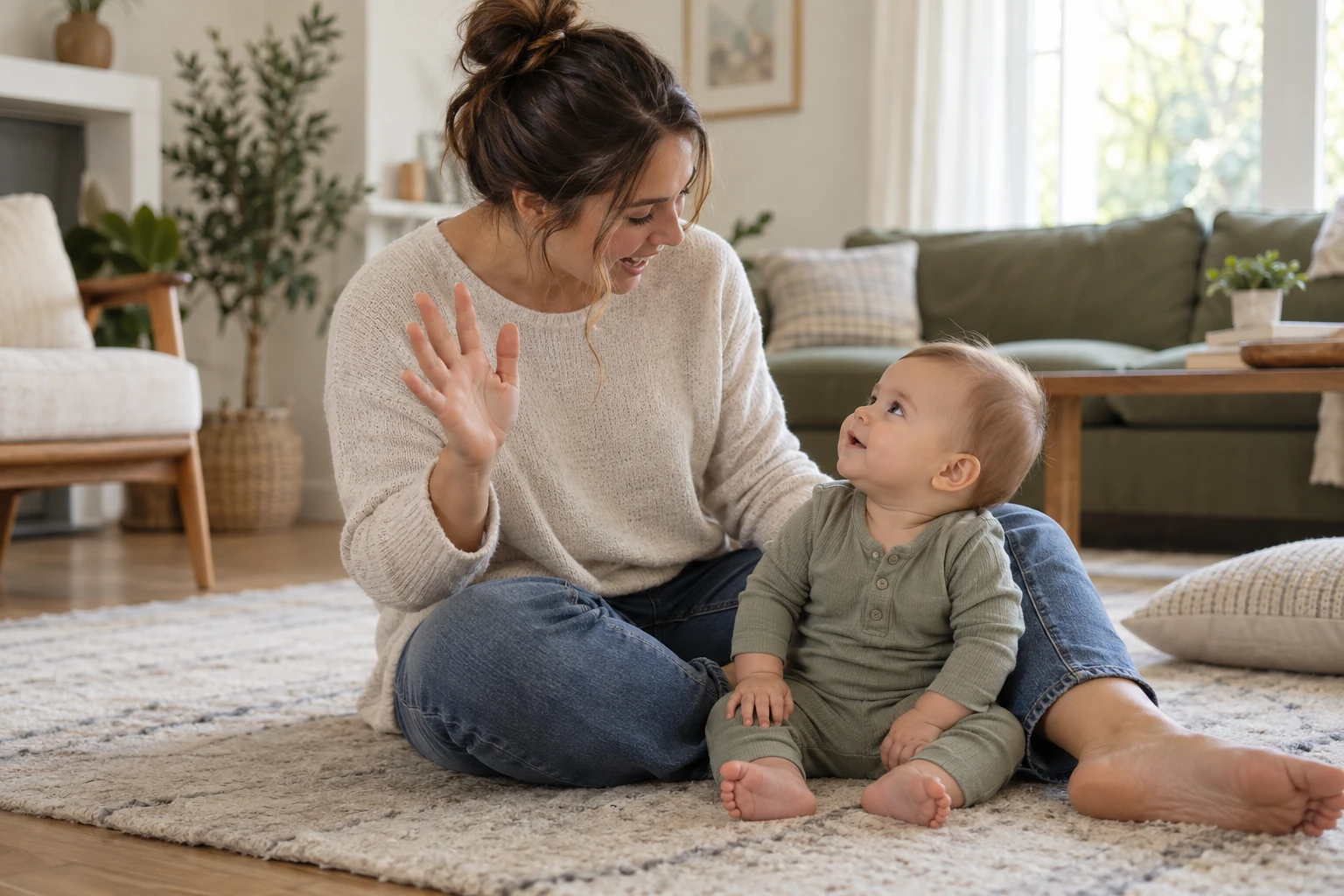
Baby Sign Language starts with a few useful gestures shown alongside spoken words, so your baby has another way to communicate before talking.
SUMMARY
Choose a few words your baby encounters often, such as milk, more or up.
Say the word as you show the sign.
If your baby loses a communication skill, seek advice from their clinician urgently rather than waiting for signing practice to help.
What baby signing can do
Reaching, lifting the arms and pushing something away are already ways babies communicate; baby signing adds consistent gestures for familiar meanings.
Full sign languages, such as American Sign Language, have their own grammar and vary by country or region.
A small randomized trial in typically developing infants with good language input found no language advantage from baby signing, so earlier speech should not be promised.
When to begin
You can add gestures to play during the 6–12-month period without expecting an immediate copy.
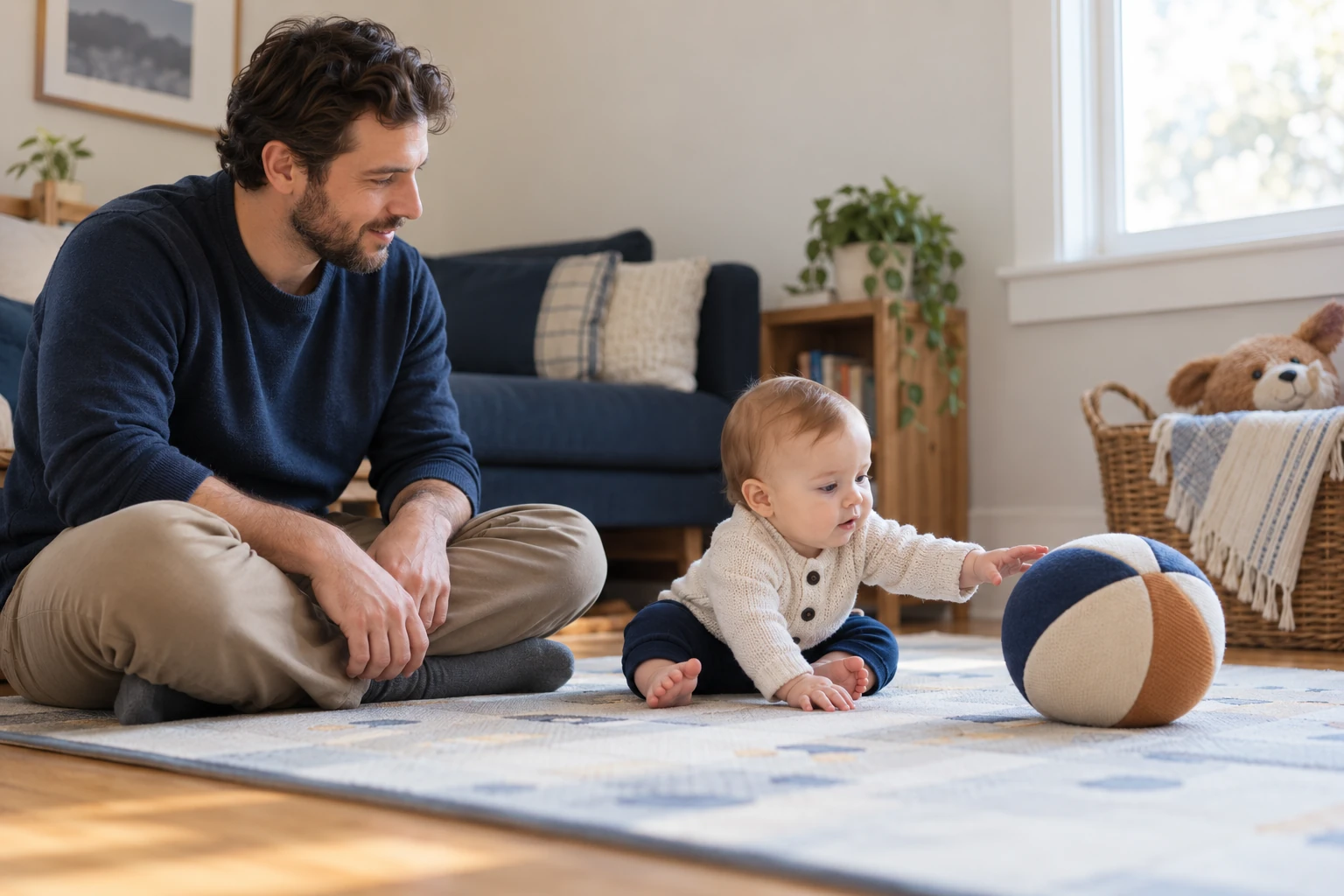
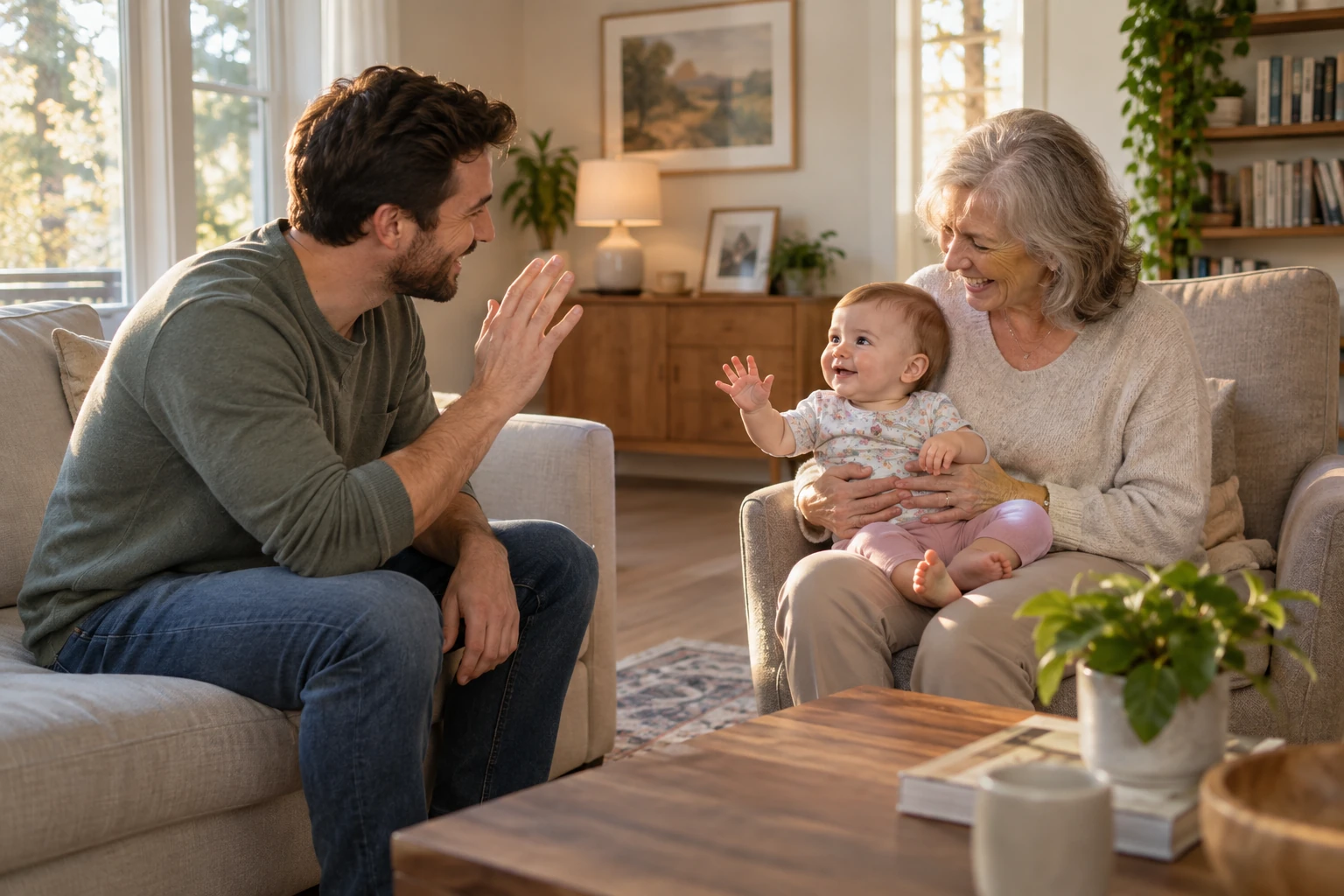
Between 7 months and 1 year, babies commonly communicate through gestures such as waving or holding up their arms.
US pediatric guidance notes that some babies shown signs at 6 or 7 months may use them as early as 8 or 9 months, but this is not a deadline.
Useful gestures for everyday moments
If your baby already uses a gesture for something, keep responding to that gesture.
| Word or meaning | Gesture to try | Everyday opportunity |
|---|---|---|
| Bye-bye | Wave while saying “bye-bye.” | Saying goodbye |
| Up | When your baby lifts their arms to be picked up, say “up” as you respond. | Being picked up |
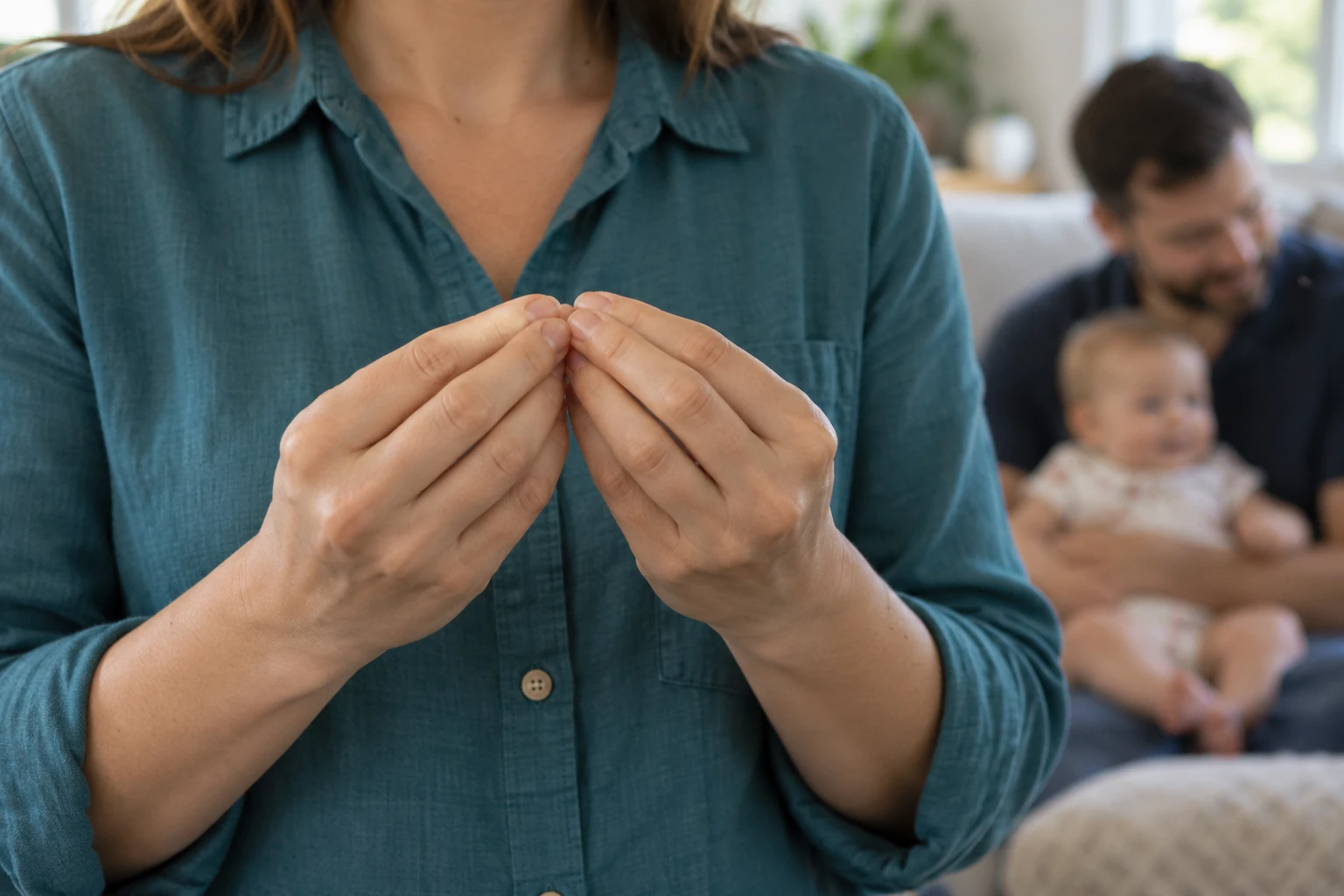
| More | For “more,” you can bring the fingertips of both hands together while saying the word. | Another turn at play |
| Milk / all done | For words such as milk or all done, agree on a gesture with the other caregivers and use it consistently. | Familiar feeding routine |
How an ordinary exchange works
Join what your baby is looking at and name the object or action.
- Show the same gesture during the real activity, without asking for a performance each time.
- Pause for your baby’s turn, then respond to their look, sound or gesture.
- Welcome imperfect attempts.
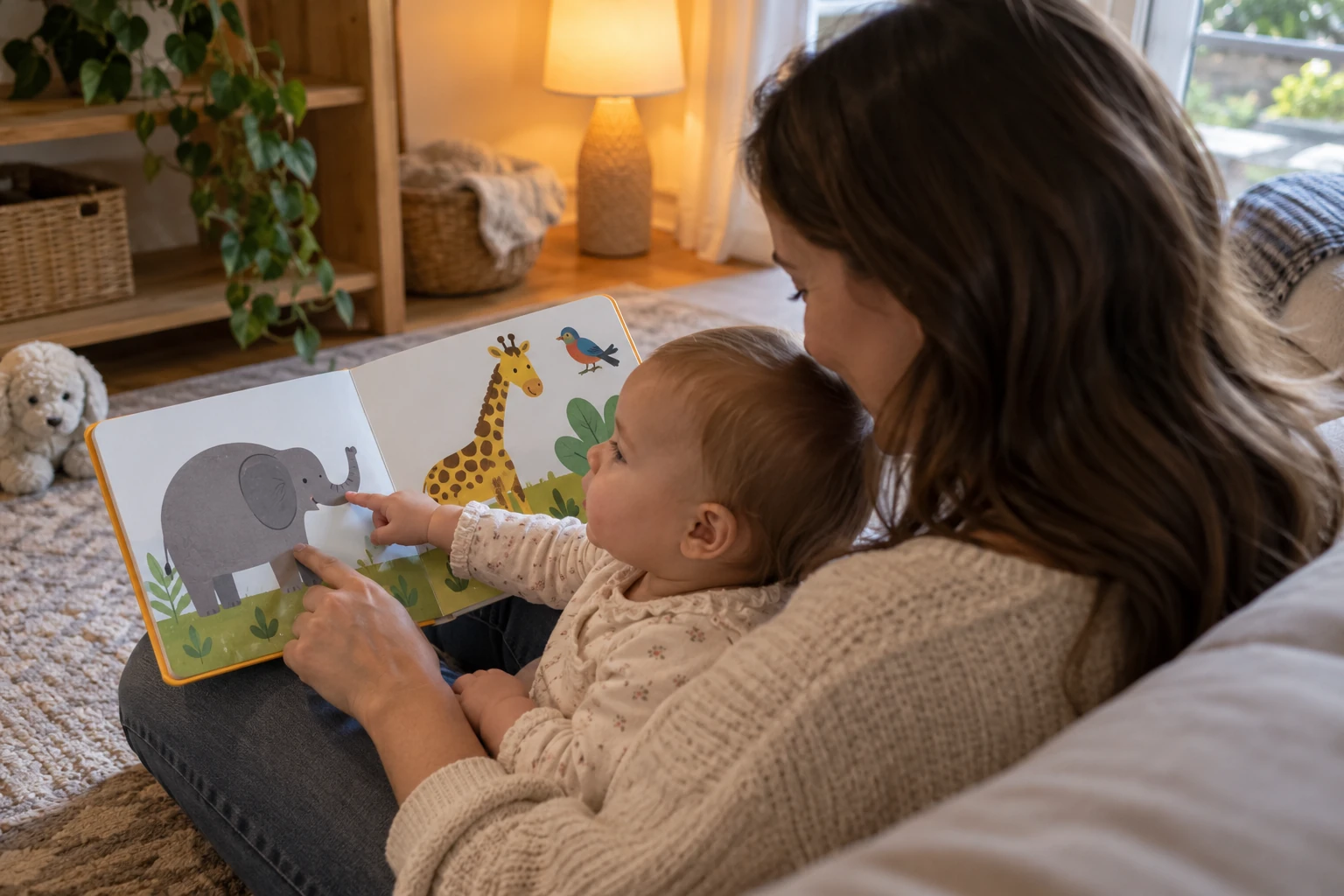
During book sharing, name the picture your baby points to and let the exchange continue.
When the signs are unclear or absent
Watching without copying can be part of learning, and babies develop at different rates.
If a gesture is unclear, check the situation and agree on its meaning with the people who regularly care for your baby.
When signs accompany speech rather than replace it, pediatric guidance says they do not get in the way of learning to talk.
If signing becomes upsetting, stop the practice and return to a comfortable interaction.
Demonstrate with your own hands; do not force your baby’s hands or make a feed or cuddle depend on a sign.
When to ask for support
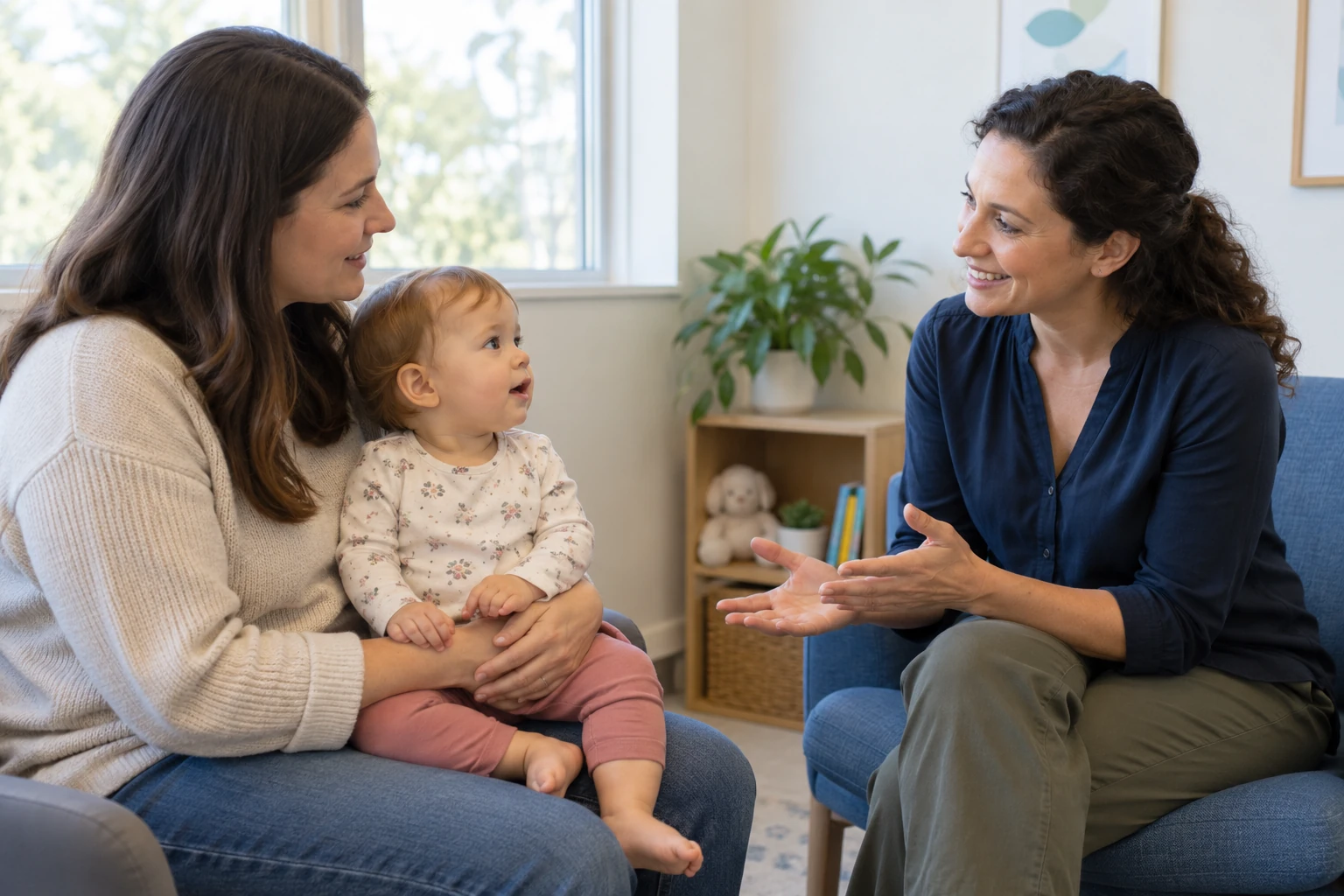
At 12 months, if your baby is not using gestures such as waving or is not saying any words, discuss it with their clinician.
If your baby does not turn toward sounds or you are concerned about hearing, ask their clinician about a hearing assessment.
A clinician may arrange hearing testing and a speech-language assessment when communication seems delayed.
Questions caregivers ask
Do I need a sign for a word my baby already says?
If your baby already has a word or their own gesture for a meaning, you do not need to add a new sign for it.
Can we sign while speaking more than one language?
Use the languages you feel comfortable speaking, and share the meaning of your family’s gestures with other caregivers.
Does a deaf baby need a different approach?
For a deaf or hard-of-hearing baby, seek early support for accessible language, spoken or signed, rather than relying only on a few baby signs.
Sources
- American Academy of Pediatrics / HealthyChildren.org — Baby Sign Language: These Hands Were Made for Talking
- NHS — Listening and learning: 6 to 12 months
- Public Health England — Rapid Review to Update Evidence for the Healthy Child Programme 0–5
- NHS / South Yorkshire and Bassetlaw Healthier Together — Your child's development
- National Institute on Deafness and Other Communication Disorders / NIH — Speech and Language Developmental Milestones