BLW vs Spoon Feeding: When and How

Baby-led weaning and spoon feeding can be combined; start solids around 6 months when your baby is developmentally ready.
SUMMARY
For the next meal, choose an iron-containing food and prepare a soft texture and shape your baby can manage.
Keep your baby alert and upright in a high chair, and stay with them throughout eating.
When can we start?
Look for these signs together: steady head control while sitting, reaching for food and bringing it to the mouth, and swallowing rather than pushing food out.

Starting solids before 4 months is not recommended.
If your baby was born prematurely, ask their healthcare professional when to start.
What changes between the methods?
Baby-led weaning, or BLW, means offering finger foods for your baby to feed themselves from the start.
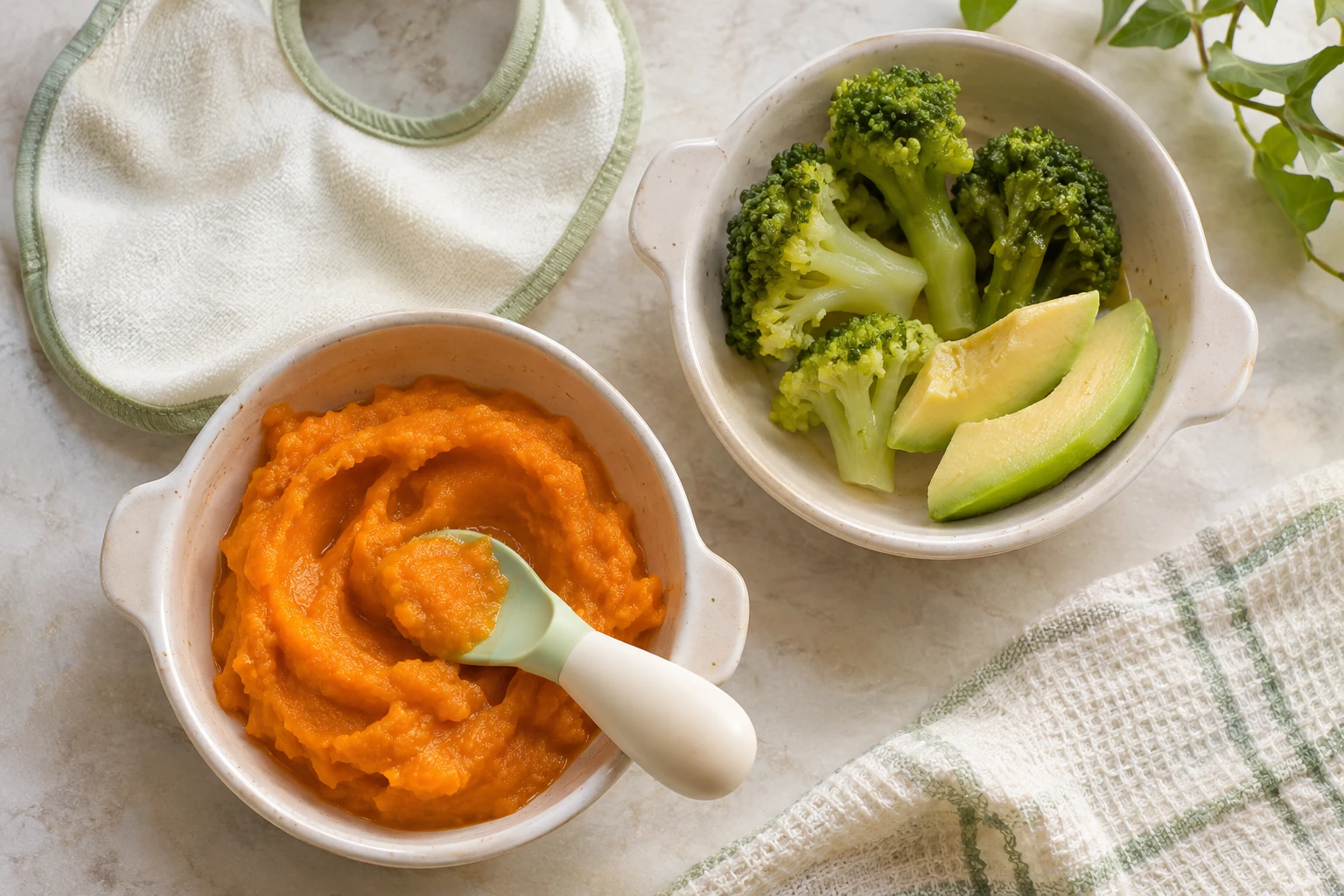
With spoon feeding, a caregiver offers puréed or mashed food on a spoon.
| Method | What it offers | What to plan for |
|---|---|---|
| Baby-led weaning | Finger foods give your baby practice coordinating hands and eyes and exploring textures. | BLW still requires food to be softened and cut into suitable shapes. |
| Spoon feeding | Smooth spoon-fed food may suit babies who need more time to accept textures. | Move from smooth food to mashed, lumpy and finger foods as soon as your baby can manage them. |
A mixed approach lets you offer mash on a spoon and suitable finger foods at the same meal.
Expect mess while your baby explores food; a washable mat can make clearing up easier.
Build the meal around food, not the label
Include iron-containing foods such as meat, iron-fortified infant cereal, tofu, beans or lentils when solids begin.
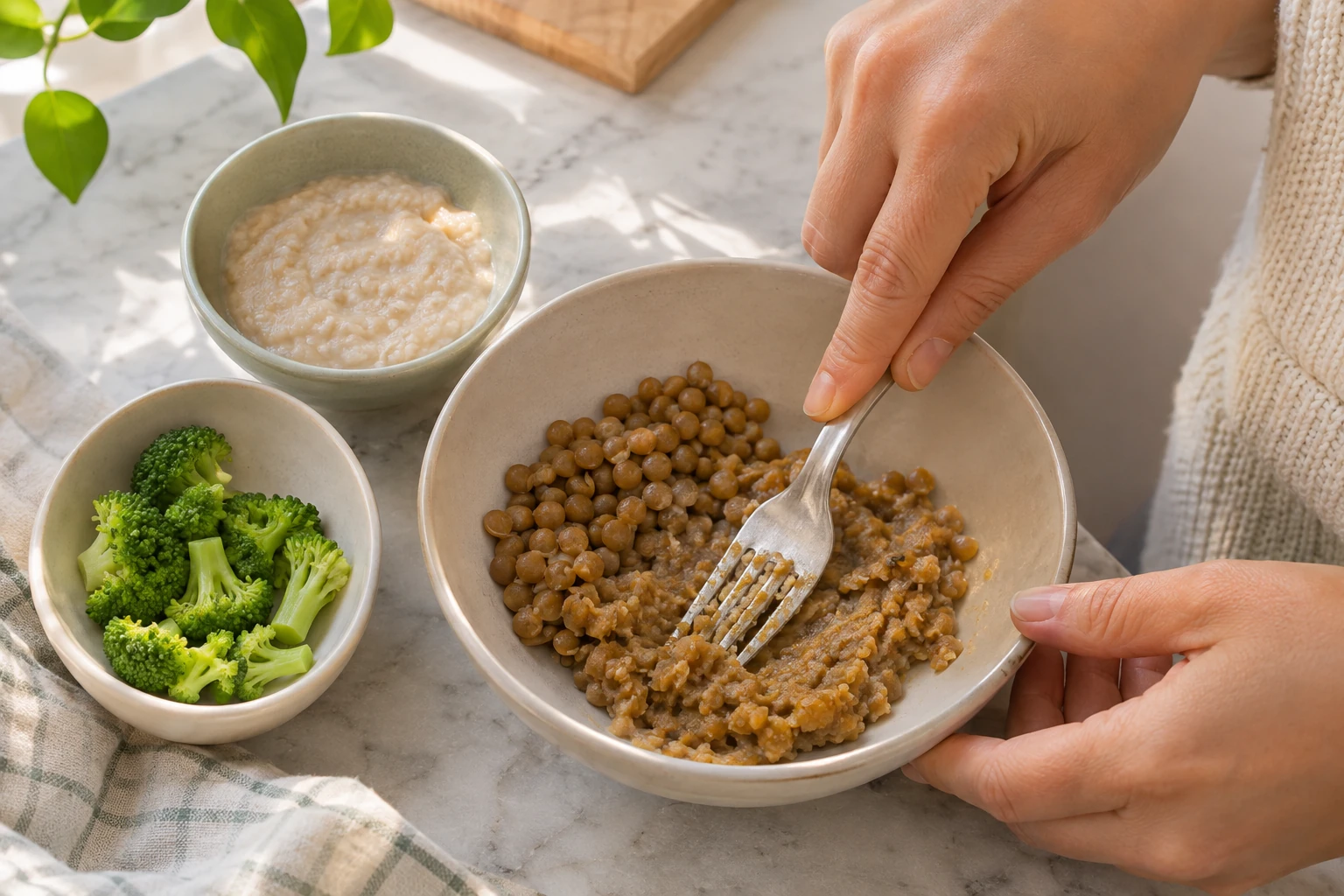
Pairing plant sources of iron with vitamin C foods, such as broccoli, helps iron absorption.
For a mixed meal, offer mashed lentils on a spoon alongside soft cooked broccoli and potato batons.
Introduce foods that can cause allergies one at a time and in very small amounts so you can notice a reaction.
If your baby has severe eczema or an egg allergy, ask their clinician when and how to introduce peanut safely.
Get emergency help immediately if a food reaction causes breathing difficulty or sudden swelling of the throat or tongue.
Prepare food for safer eating
Cook firm foods until they mash easily with a fork.
Early finger foods should be soft and long enough to stick out of your baby’s fist.

Do not offer whole nuts or hard raw carrot or apple pieces to your baby.
Cut grapes and cherry tomatoes into quarters, and remove hard pips, stones and bones from foods.
Mix nut butter into food or spread it thinly rather than offering a spoonful on its own.
Neither feeding method removes choking risk, so food preparation and supervision matter with both.
Let your baby set the pace
Eating more on some days and less on others is normal as babies learn about food.
When spoon feeding, wait for an open mouth and stop if your baby closes their mouth or turns away.

Choose an unrushed time when your baby is not too tired, and never force them to finish.
Gagging, choking and getting help
Gagging is usually noisy and can happen while your baby learns to handle solid food.
If a baby under 1 year is still conscious but cannot breathe properly or cough effectively, get emergency help immediately and give back blows, followed by chest thrusts if choking continues and the baby remains conscious.
If a choking baby is or becomes unconscious, place them on a firm, flat surface, call emergency services on speakerphone and start cardiopulmonary resuscitation (CPR) without leaving them.
Never sweep inside your baby’s mouth blindly with a finger.
Seek urgent medical advice if your baby coughs or chokes while eating or has a wet, gurgly voice after feeding.
Two practical questions
Do extra night wakes mean it is time to start?
Chewing fists, waking more at night or wanting extra milk do not by themselves mean your baby is ready for solids.
Should solids replace a milk feed straight away?
From 6 months to under 12 months, breast milk or infant formula remains the main source of nutrition while solid foods gradually take a larger role.