Baby Hives: Causes and What to Do
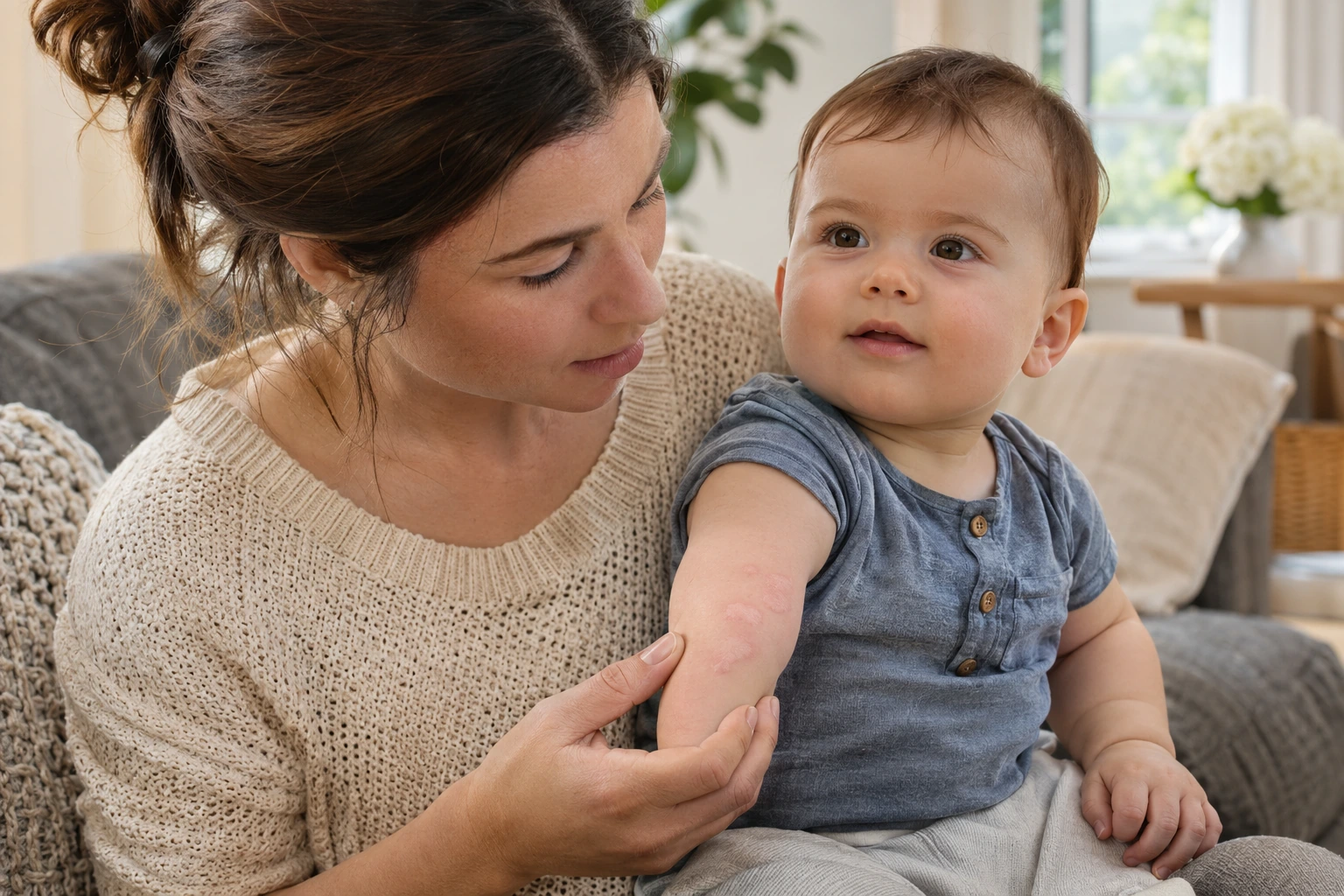
Baby hives are raised, often itchy welts that can fade in one place and reappear elsewhere.
For caregivers of babies under one year
SUMMARY
First check your baby’s breathing, mouth and tongue, and whether they respond normally.
If your baby is younger than 1 year and has hives all over, seek medical care now.
First: when to get help now
Call your local emergency number immediately if your baby has trouble breathing or swallowing, sudden swelling of the lips, mouth, tongue or throat, or becomes limp or unusually unresponsive.
If your baby has a fever and a rash that does not fade when pressed, call your local emergency number immediately.
Hives with vomiting also need immediate medical help because a serious allergic reaction is possible.
If your baby shows signs of anaphylaxis (a severe allergic reaction) and has a prescribed adrenaline device, use it according to their action plan and call an ambulance immediately.
Antihistamines do not treat anaphylaxis.
For a baby younger than 6 months with hives, arrange prompt pediatric assessment.
If your baby is younger than 3 months and has a temperature of 38°C or higher, seek urgent medical advice now.
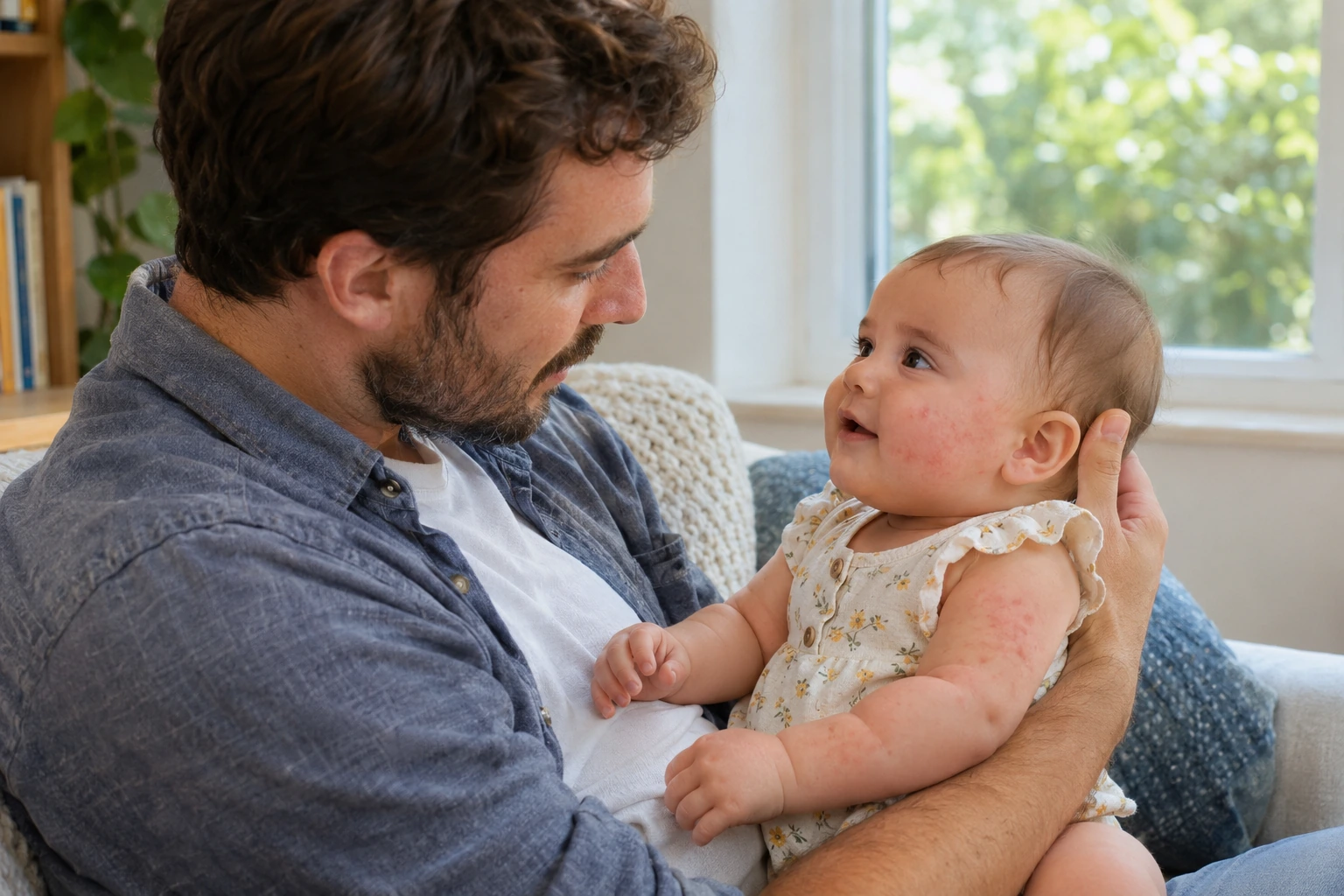
Why did one patch vanish and another appear?
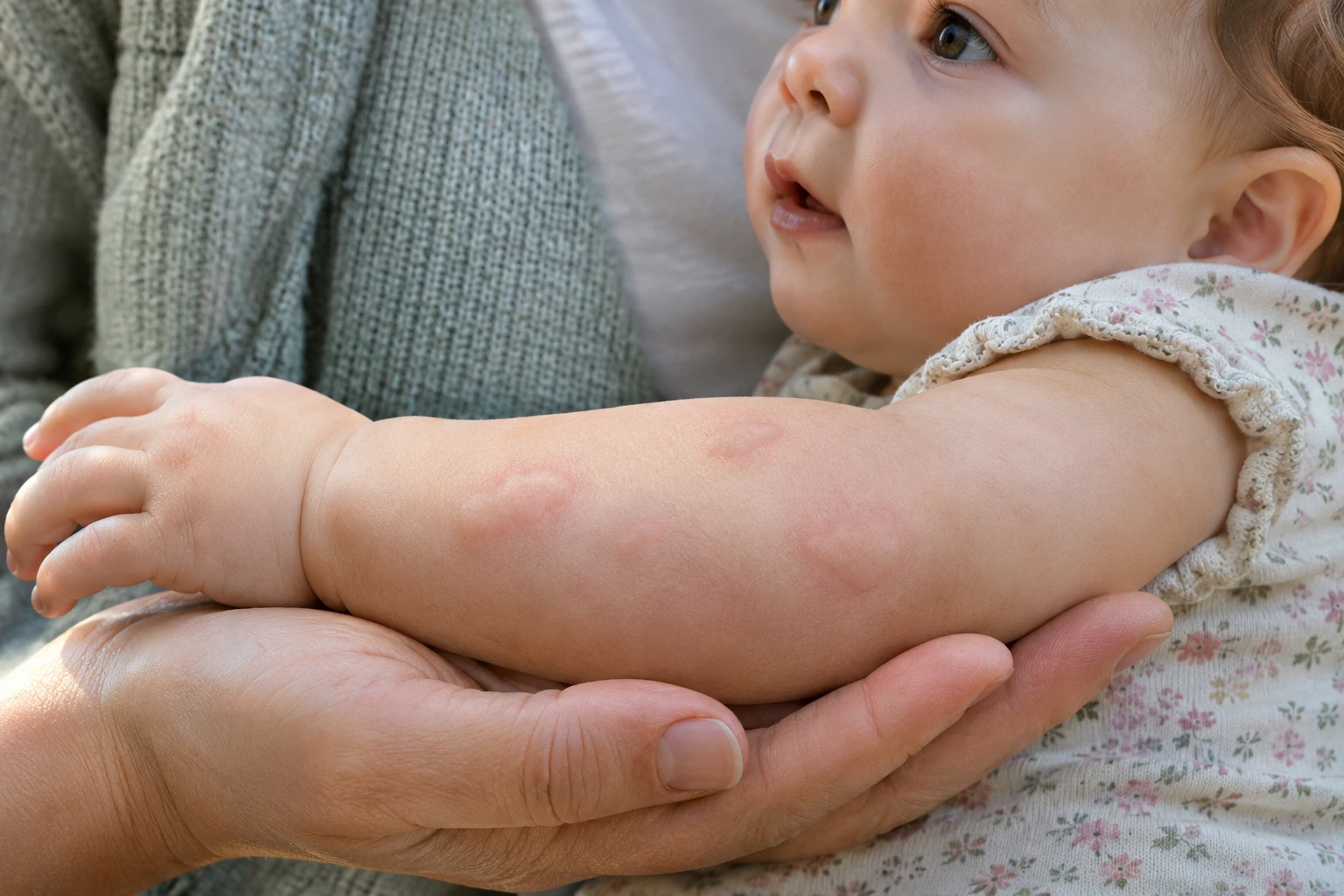
An individual hive usually fades within 24 hours, while new ones may appear nearby or elsewhere.
The overall episode can come and go for days or weeks even though each spot fades sooner.
On darker skin, hives may be close to the surrounding skin colour, so look for raised areas as well as colour changes.
What may have triggered it?
Hives develop when cells release histamine, a chemical involved in the skin’s reaction.
Viruses are a common cause of hives in children.
Hives may appear while recovering from an illness, and sometimes no cause is found.
Other possible triggers include foods, medicines, insect stings, heat, cold and pressure on the skin.
If it followed food or medicine
Brief episodes repeatedly following the same food within 1–2 hours make an allergy more likely.
Timing alone cannot confirm a food allergy.

Call your baby’s clinician or seek medical care now if hives start after eating a high-risk food such as nuts, fish, shellfish or eggs.
If a food seems to trigger a reaction, stop giving that suspected food and discuss it with your baby’s clinician before trying it again.
Seek medical care now if hives start after a prescription medicine.
Hives during antibiotic treatment can come from the infection itself, so a clinician needs to assess whether the medicine is responsible.
A photo and a brief note of when the rash started, recent foods or medicines, and other symptoms can help the clinician assess the pattern.
What to do for an otherwise well baby
If your baby is otherwise well and none of the urgent situations above applies, focus on comfort and watch for new symptoms.
If a substance touching the skin triggered a small local patch, gently wash it off with soap and water.
For itching, gently apply a clean cloth dampened with cool water.
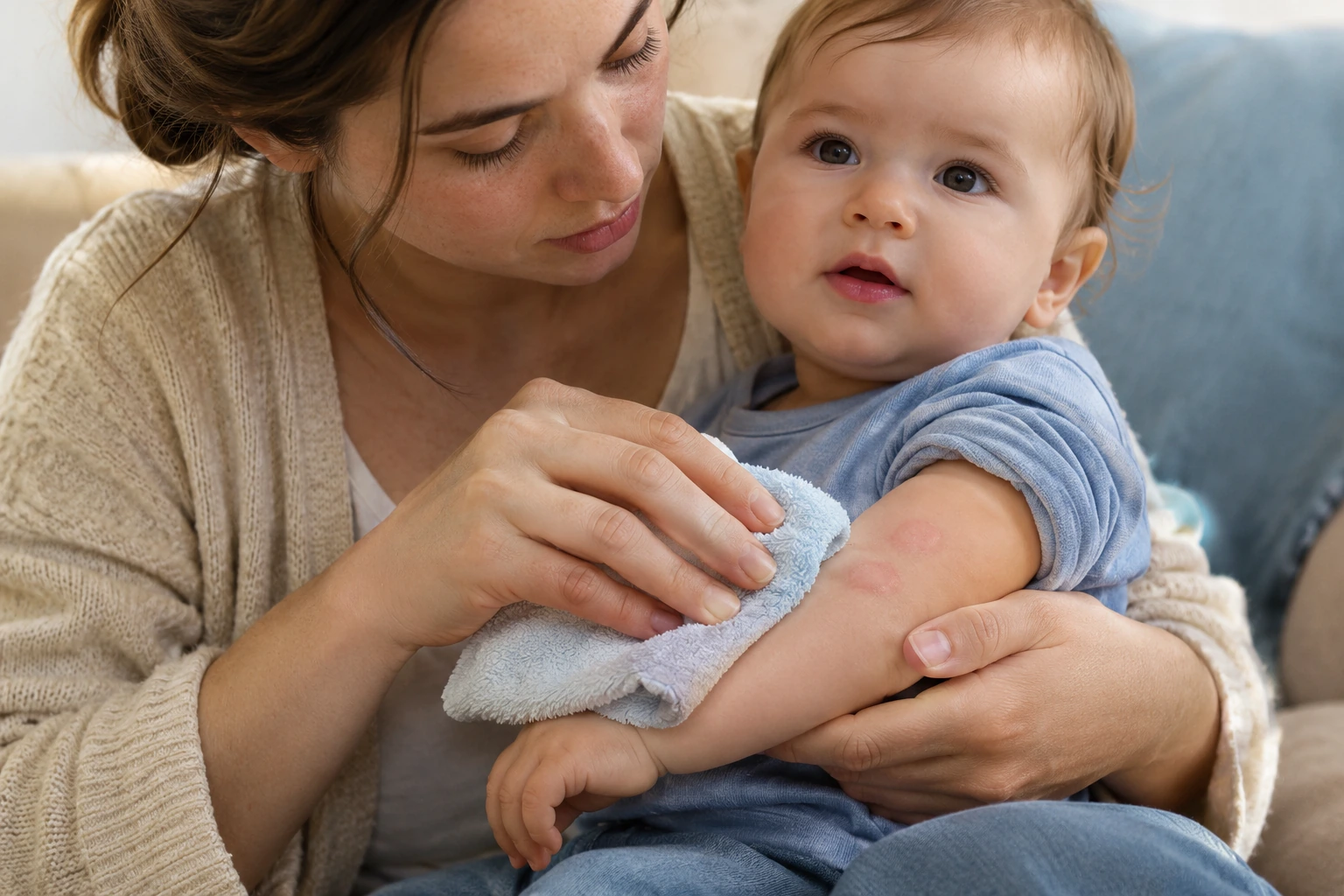
Use loose clothing and avoid overheating or hot baths, which can aggravate hives.
Mild hives that do not itch or bother your child may need no medicine.
Before giving medicine
Ask your baby’s clinician or a pharmacist which non-drowsy antihistamine, a medicine that reduces itching and swelling, is suitable for your baby, if any.
Steroid creams do not treat hives effectively.
Avoid giving ibuprofen while your baby has hives because it can make them worse.

When the pattern needs a review
Get medical advice promptly if hives come with fever, bruising or joint pain.
If hives are not improving after 2 days, keep returning or are spreading, seek urgent medical advice now.
A mark that stays in the same place instead of fading, especially if painful or bruised, needs a clinician’s review.
Hives on most days for more than 6 weeks need review for chronic urticaria.
Other questions caregivers ask
Can another child catch it?
Hives themselves do not spread from person to person, but a virus causing them may be contagious.
Does every episode need allergy testing?
Routine allergy tests are usually unnecessary for a short episode.
A clear reaction after a particular food or medicine may justify targeted assessment.