Safe Baby Bath Setup
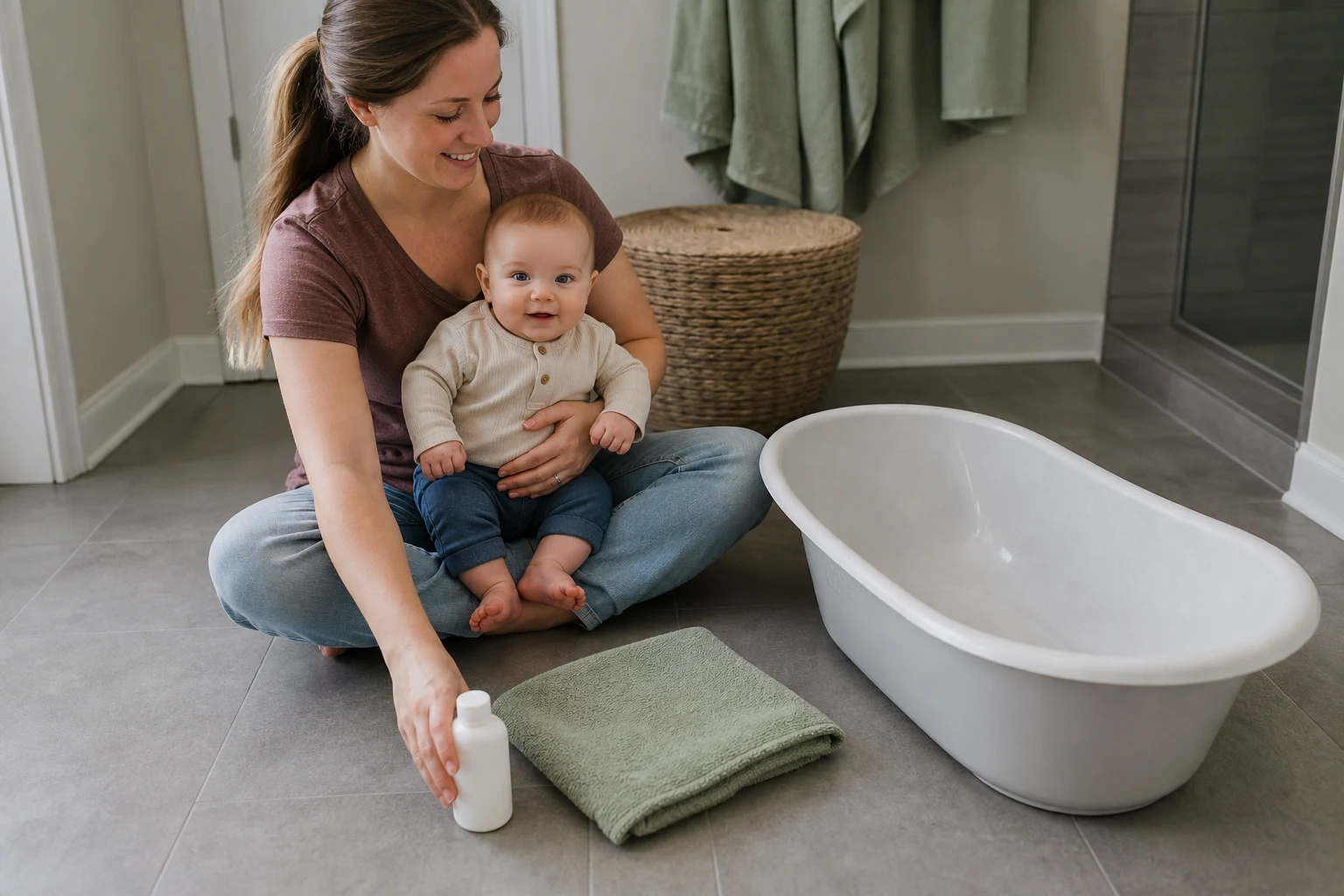
Bath safety begins before water is added. Put every item within reach, place the tub on a stable low surface, remove distractions, check the room and water, and plan how to lift, wrap, moisturize, and dress the baby without walking away.
SUMMARY
Use a stable infant tub or approved bathing area, lukewarm water, and continuous adult contact. A bath seat or older sibling is not a substitute for supervision. Keep phones aside and ignore the door; if you must leave, take the baby with you. Use plain water or a small amount of mild fragrance-free cleanser only where soiled. Have a soft towel, clean cotton clothing, and fragrance-free cream or ointment open and ready. Store cleanser, detergent, and moisturizer out of reach after use and keep laundry products in their original closed containers.
Prepare before the bath
Begin with everything within reach. Put the infant tub on a stable low surface and place a soft towel, clean clothes, mild fragrance-free cleanser, and moisturizer within reach. Remove phones and distractions. Check the room and water before bringing the baby to the bath. Plan the entire sequence, including how you will lift, wrap, moisturize, and dress the baby. A bath seat, sibling, or nearby adult doing another task is not continuous supervision. If you must leave, take the baby with you rather than leaving even briefly.
Keep water lukewarm and time brief
Hot water can increase dryness and itch. For dry or eczema-prone skin, dermatologists commonly recommend a five-to-ten-minute lukewarm bath. An infant does not need a long soak or heavy lather to become clean. Keep one hand on the baby, support the head and body according to age, and watch comfort and temperature. End the bath if the baby becomes cold, very distressed, unusually sleepy, or difficult to support safely. Frequency can vary with age, skin condition, climate, and the clinician's plan.
Clean only what needs cleaning
Use plain water for much of the body and a small amount of mild fragrance-free cleanser on dirty or smelly areas. Avoid bubble bath, fragranced soap, deodorant soap, antibacterial wash for routine bathing, scrubs, and rough cloths. Wash skin folds gently and rinse residue without repeated rubbing. Fragrance-free is different from unscented: unscented products may contain masking fragrance. Introduce one new product at a time so a reaction is easier to identify. Store every container closed and out of reach after the bath.
Pat dry and seal in moisture
Use stable floor-level tub. Wrap the baby promptly to maintain warmth, then pat rather than rub with a soft towel. Leave the skin slightly damp and apply a thick fragrance-free cream or ointment promptly. For very dry or eczema-prone skin, thick products usually seal water better than thin lotion. Use gentle strokes and do not massage inflamed or painful skin. Apply prescription topical medicine only in the order, amount, location, frequency, and duration given by the baby's clinician.
Support the barrier between baths
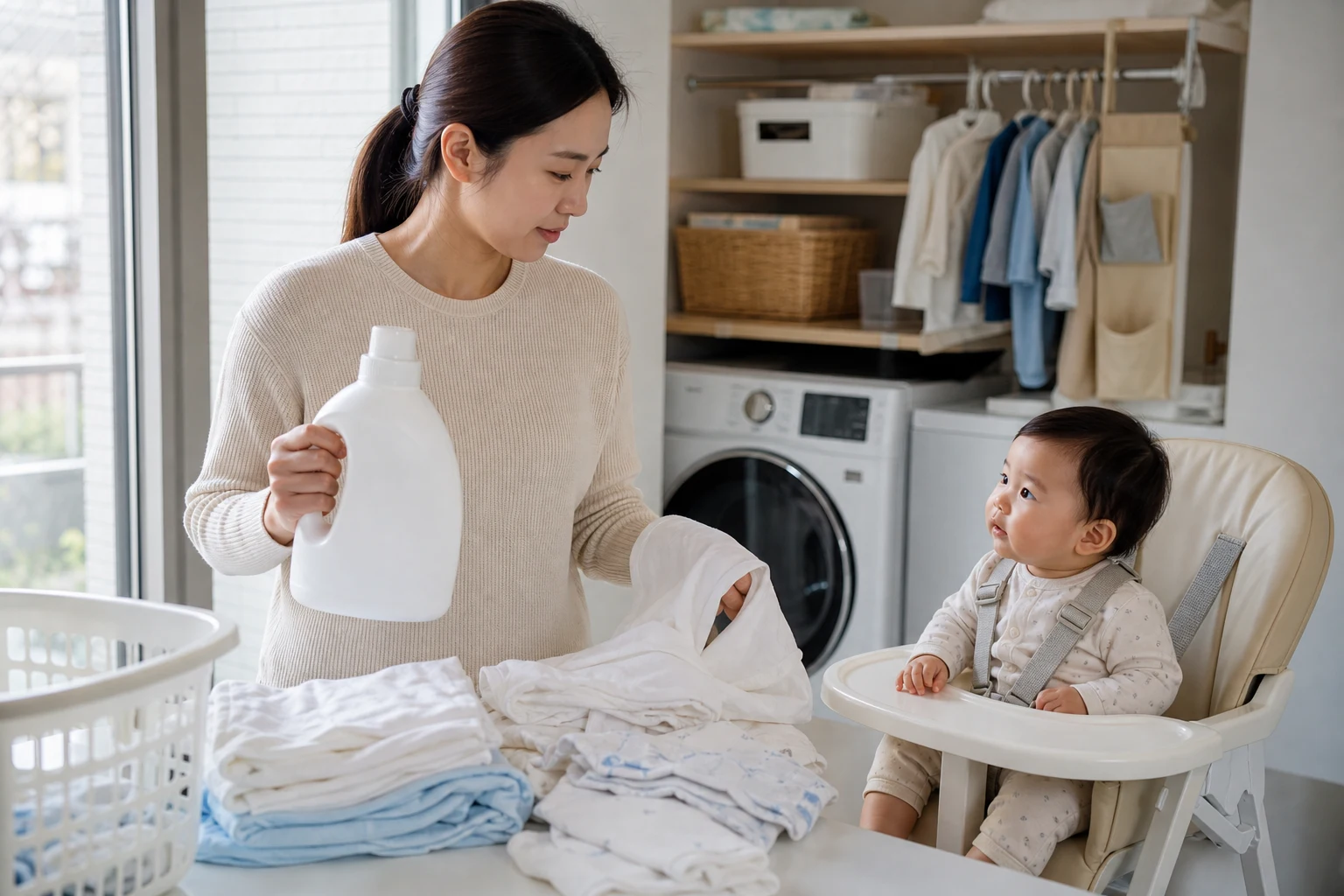
Choose continuous adult contact. Reapply moisturizer as the care plan directs or when dryness returns. Dress the baby in soft breathable layers and avoid overheating and sweaty friction. Keep nails smooth to reduce scratch damage. If laundry products seem irritating, use fragrance-free dye-free detergent and avoid dryer sheets and fabric softener. Clean saliva, milk, and food gently, then restore moisturizer where appropriate. Do not apply powder, essential oil, antiseptic, antibiotic cream, or another child's prescription as an experiment.
Observe texture comfort and spread
Look at the skin in ordinary light and describe what you can observe: dry, rough, scaly, cracked, red or darker than usual, warm, swollen, painful, itchy, wet, crusted, blistered, or spreading. Note sleep, feeding, scratching, temperature, and the baby's overall behavior. Eczema can wax and wane and is not contagious, but damaged skin can become infected. Redness looks different across skin tones, so do not rely on color alone. A simple timeline and consistent routine are more useful than changing several products at once.
Recognize possible infection
Know fragrance-free supplies. Yellow or honey-colored crusts, oozing, pus bumps, blisters, increasing pain, warmth, swelling, rapidly spreading change, fever, or a baby who looks unwell needs medical assessment. Do not pop blisters, peel crusts, scrub, or cover a worsening rash with an unadvised medicine. A photograph in normal light can help a non-emergency consultation when taken without distress. Bring the product and medicine list, when the change began, and what happened after bathing or moisturizing.
Use urgent and emergency thresholds
Contact the pediatrician when dryness or eczema is not improving with the agreed routine, itch repeatedly disrupts sleep, the skin cracks or bleeds, or infection is suspected. Seek emergency help for breathing difficulty, rapidly spreading face or neck swelling, blue or gray color, widespread blistering or peeling with illness, seizure, marked limpness, or difficulty waking. Stop the bath and address the baby first. Completing a skin diary, washing off every product, or waiting for a photograph must never delay urgent care.
Frequently asked questions
Can one wet diaper rule out dehydration?
No. Use the full-day trend, feeding, and whole-body signs.
Should I give water to fix a low count?
Not to an infant under six months unless a clinician specifically directs it. Ask your pediatrician.
Can I wait until the log is complete?
No. Emergency signs or a clear contact threshold take priority over documentation.
Sources
This article provides general information and is not medical advice. Ask your pediatrician about reduced urine, feeding concerns, or guidance tailored to your baby.