Kawasaki Disease: Early Signs and Care

A child with fever lasting 5 days or longer needs medical assessment today; Kawasaki disease is one possible cause.
SUMMARY
Seek advice sooner if your child is unwell or has fever with red eyes, mouth changes, a rash, or swollen hands or feet.
Breathing difficulty or being hard to wake needs emergency help now.
What is Kawasaki disease?
Kawasaki disease usually affects children under 5 and causes blood-vessel inflammation, including in the arteries supplying the heart.
Prompt treatment reduces the risk of heart-artery damage, and most children recover with appropriate treatment.
Which early changes should I notice?
Signs can appear on different days, and a child does not have to show every sign.
| Area | Changes you may notice |
|---|---|
| Eyes | Both eyes may look bloodshot, usually without pus-like discharge. |
| Mouth | Lips may become red and cracked, and the tongue may look red and bumpy. |
| Skin | A rash may appear on the body or limbs. |
| Hands and feet | Palms and soles may turn red, with swelling of the hands or feet. |
| Neck | Lymph nodes in the neck may swell, often on one side. |
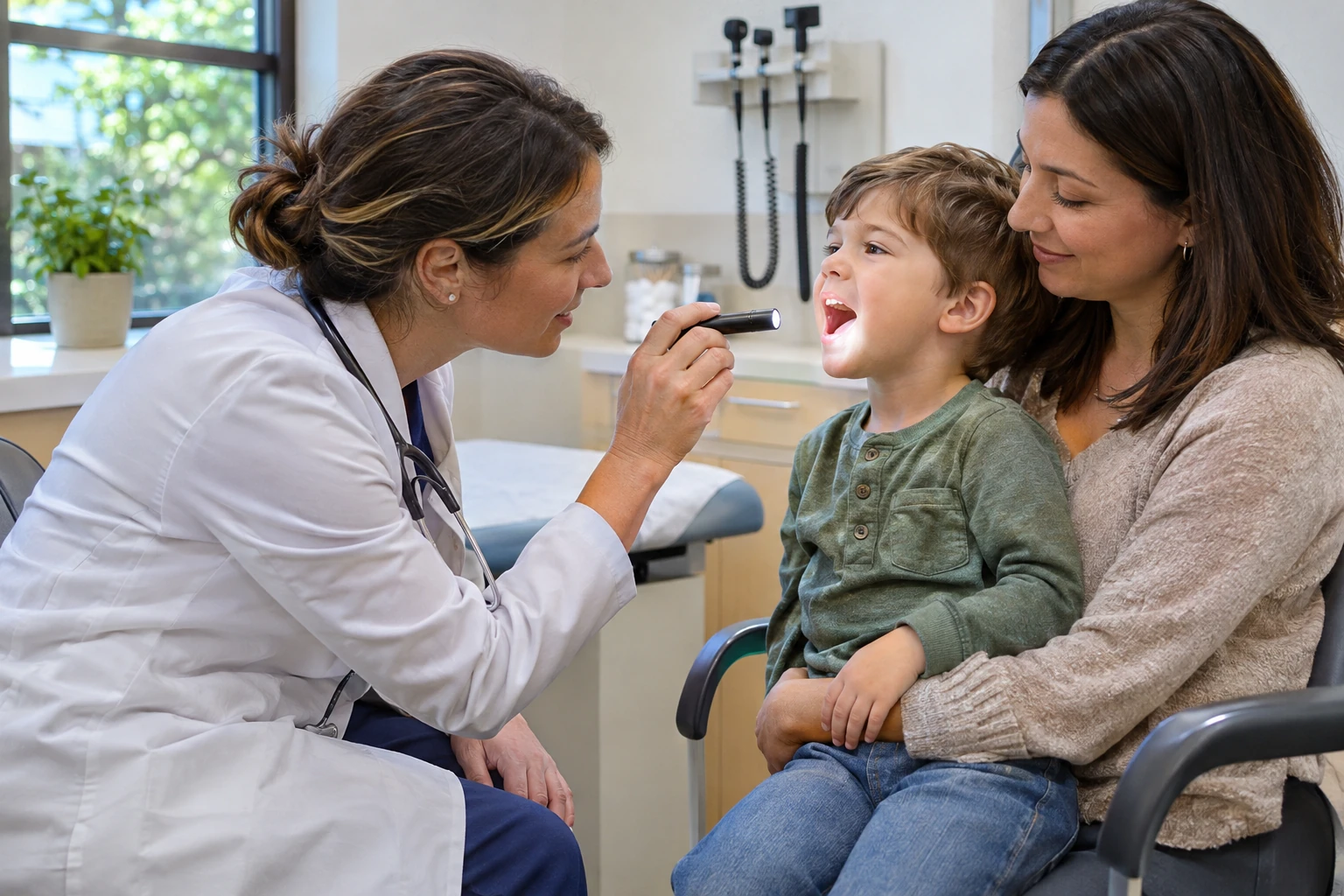
Children may also be unusually irritable.
Babies under 12 months may have prolonged fever with fewer typical signs and a higher risk of heart-artery complications.
Redness of palms and soles can be harder to see on darker skin.
When should we get help?
Depending on the clinical findings, a clinician may diagnose Kawasaki disease before day 5.
Count the day fever began as day 1.
A baby under 3 months with a temperature of 38°C or higher, or a suspected fever, needs urgent medical advice now.
At age 3 to 6 months, a temperature of 39°C or higher, or a suspected high fever, also needs urgent medical advice.
With fever, much less urine, sunken eyes or no tears when crying are reasons to seek urgent advice.
With fever, a rash that does not fade under pressure, a stiff neck or a first seizure also needs emergency help immediately.
Tell the clinician when fever began and about changes that have already disappeared.
What can I do while arranging care?
Offer fluids and continue usual breastfeeding while arranging care.
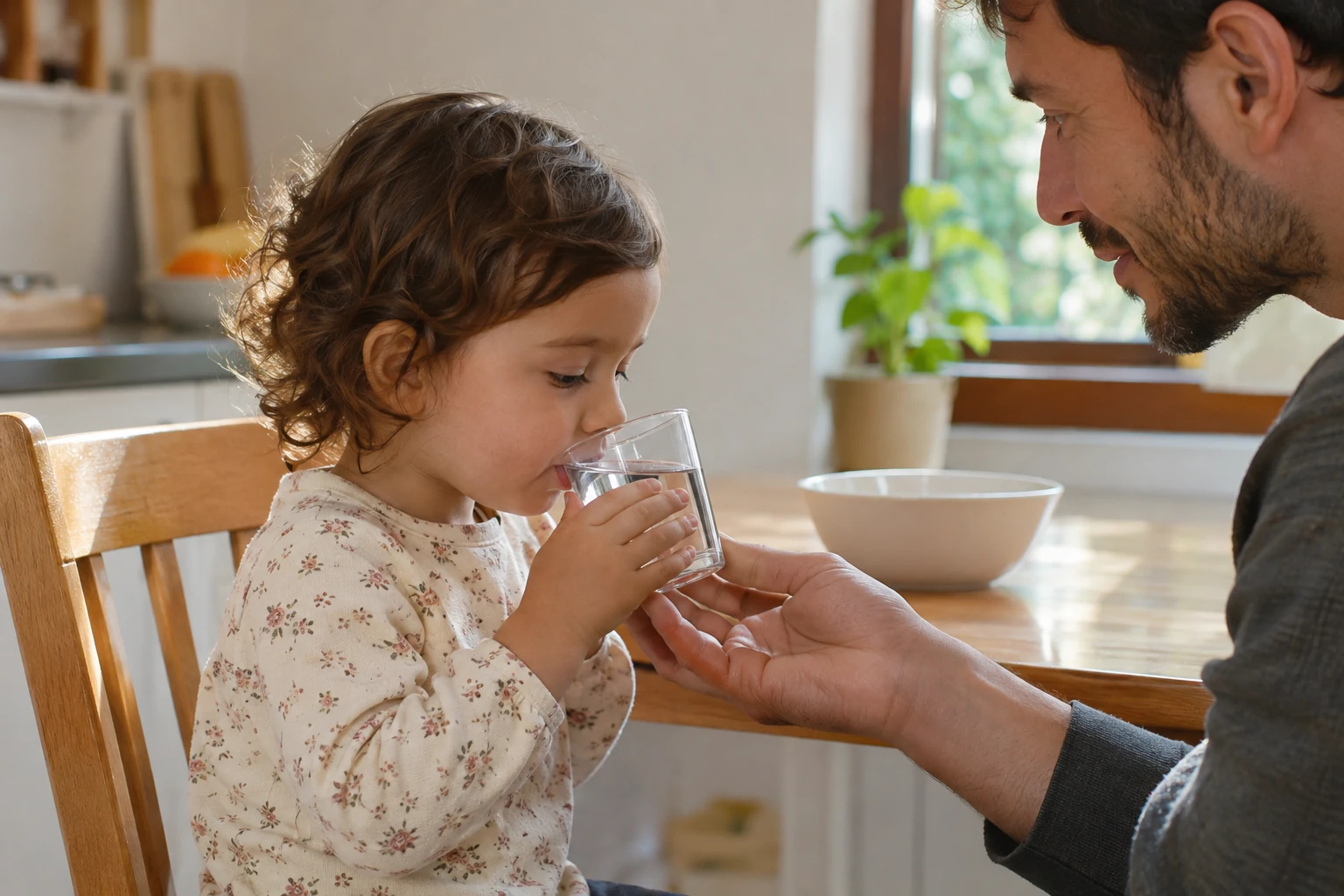
Do not sponge your child down to cool them or wrap them in excessive layers.
For distress or discomfort, check that any fever medicine is suitable for your child's age and condition, and ask a pharmacist or clinician if unsure.
Do not give aspirin to a child under 16 unless a healthcare professional has prescribed it.
Do not alternate paracetamol and ibuprofen unless a healthcare professional tells you to.
What happens during assessment and treatment?
There is no single confirming test; clinicians use examination and, as needed, blood tests, urine tests and a heart ultrasound.
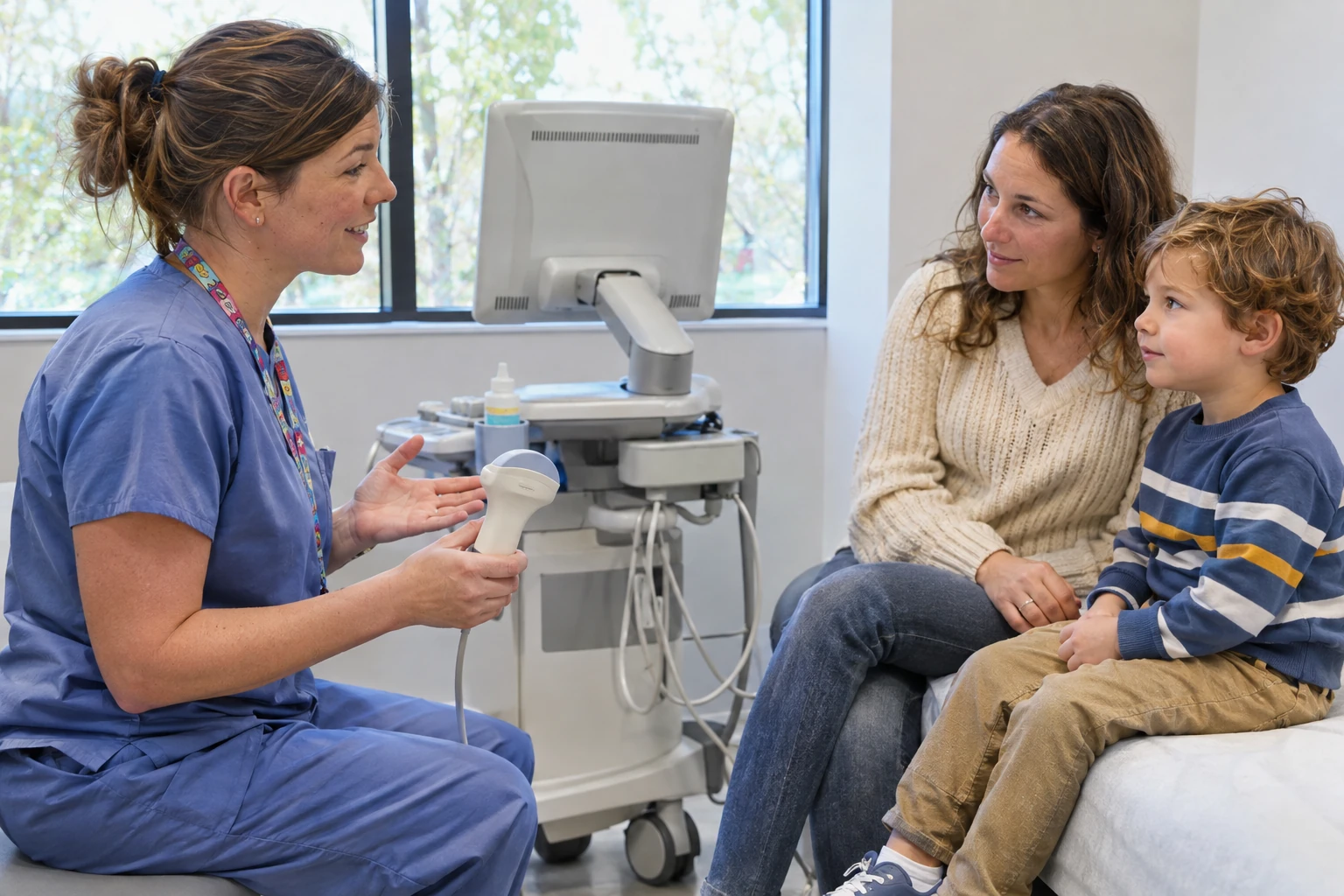
A normal early heart ultrasound does not rule out Kawasaki disease.
Hospital treatment usually includes intravenous immunoglobulin, an antibody medicine given into a vein, and aspirin supervised by the care team.
If aspirin has been prescribed, check with the team before giving ibuprofen because it can interfere with aspirin's protective effect.
What needs attention after discharge?
Even after fever settles, heart follow-up depends on the examination and scan findings.
Contact the treating team promptly if fever or Kawasaki-like symptoms return after discharge.
After immunoglobulin, ask the team when measles, mumps, rubella and chickenpox vaccines can be given, because these may need to be delayed.
Questions that often come up
Can another child catch it?
Its cause is unknown, and Kawasaki disease itself does not spread from person to person.
Should I wait for peeling skin?
Peeling around fingers and toes often appears later, so do not wait for peeling to seek assessment.