Baby Nail Trimming: A Gentle First-Year Guide
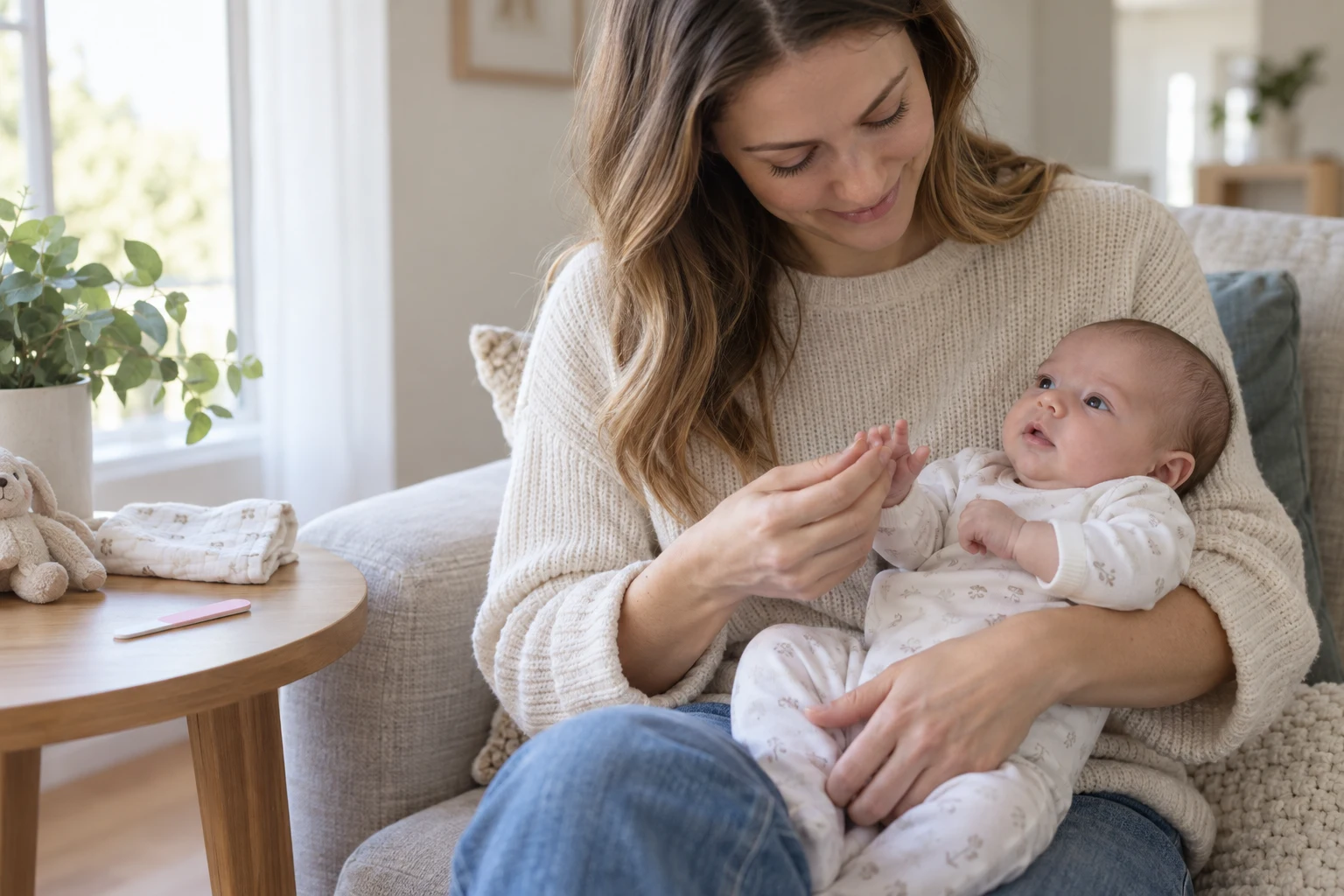
Tiny fingers make a familiar household task feel surprisingly unfamiliar. This guide walks through baby nail trimming from the first weeks to the end of the first year, including what to prepare, how to think about timing, and what to tell a pediatrician if something goes wrong. The aim is a manageable care routine, with room to pause and ask for a demonstration.
SUMMARY
Choose a calm moment. S5
Gently pull the finger pad away from the nail. S2
Trim only the nail, then smooth rough edges. S2
What nail care is trying to achieve
Newborn nails are usually soft and flexible, but a long or uneven edge can still scratch the baby or another person. S1
Newborns have limited control of their movements and may accidentally scratch their own face. S1
Think of the task as looking after an edge you can actually see. A useful question is, “Which part needs attention today?” That is more specific than deciding that every finger must look freshly trimmed. A photo of another baby’s manicure cannot tell you what your own baby needs. This guide separates routine grooming from a skin injury or a possible infection because those are different conversations with different next steps.
When to begin and how often to check
Some babies are born with long nails, so nail care may be needed from the newborn period rather than starting on a fixed monthly birthday. S5
Fingernails may need attention at least weekly, sometimes twice a week in the early weeks, whereas toenails may need trimming only once or twice a month. S1 S4
Treat those intervals as examples and trim or file according to the nail’s actual length and roughness. S3
A calendar reminder can be a prompt to look, rather than an instruction to cut. For example, your note might say “check hands and feet” instead of “clip all nails.” This distinction is especially useful when more than one adult shares care. It leaves a clear question for whoever is holding the baby and avoids turning a suggested interval into a household rule that nobody remembers choosing.
Choose a simple tool you can control
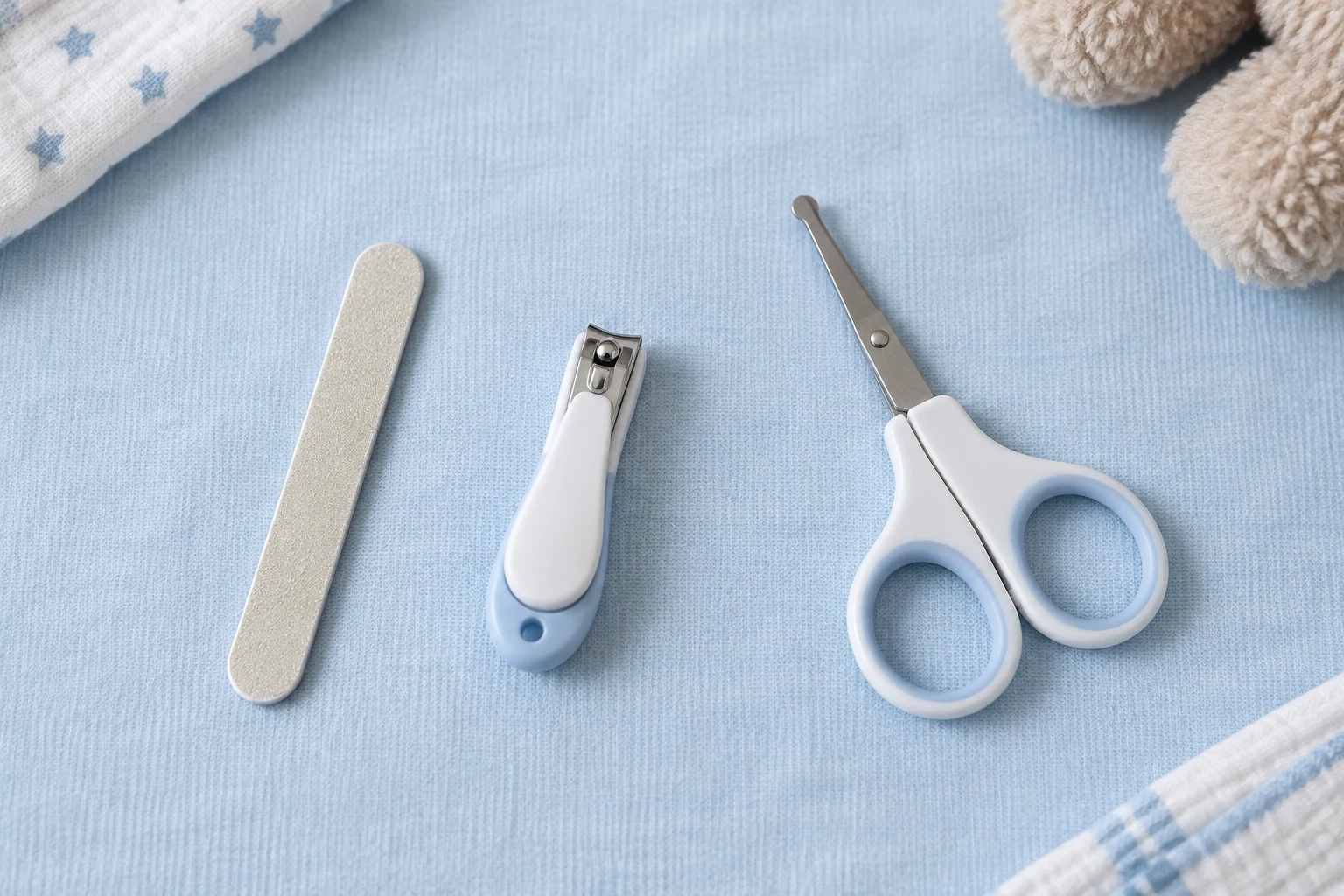
A nail file or emery board can shorten and smooth newborn nails without using a cutting blade. S1
If you use a cutting tool, choose baby nail clippers or small baby scissors with blunt, rounded tips rather than adult-sized clippers. S1 S5
You do not need to make this a shopping project. The decision here is between filing and using a baby-sized cutting tool, not between a long list of accessories. If a product has settings or replaceable parts, its own instructions belong beside it. This article does not compare brands or establish that a powered file is better than a simple board. Ask for a practical demonstration with the tool you actually intend to use.
Prepare the moment before the movement
Use enough light to see clearly, and consider working with another adult so one person holds the baby while the other tends the nails. S3
A sleeping or relaxed baby may be easier to manage, and after a bath is another option if the baby remains quiet. S4 S5
Include the hands, feet and nails in ordinary gentle cleaning during the baby’s care routine. S1 S8
Before picking up a tool, decide who is doing what. One adult can say which hand is being worked on, while the other can say when the baby needs a break. If you are alone, you can first rehearse the position with empty hands. These are ways to organize the task, not a requirement to finish every nail in a single sitting or to make a sleepy baby stay asleep.
The hand position that matters
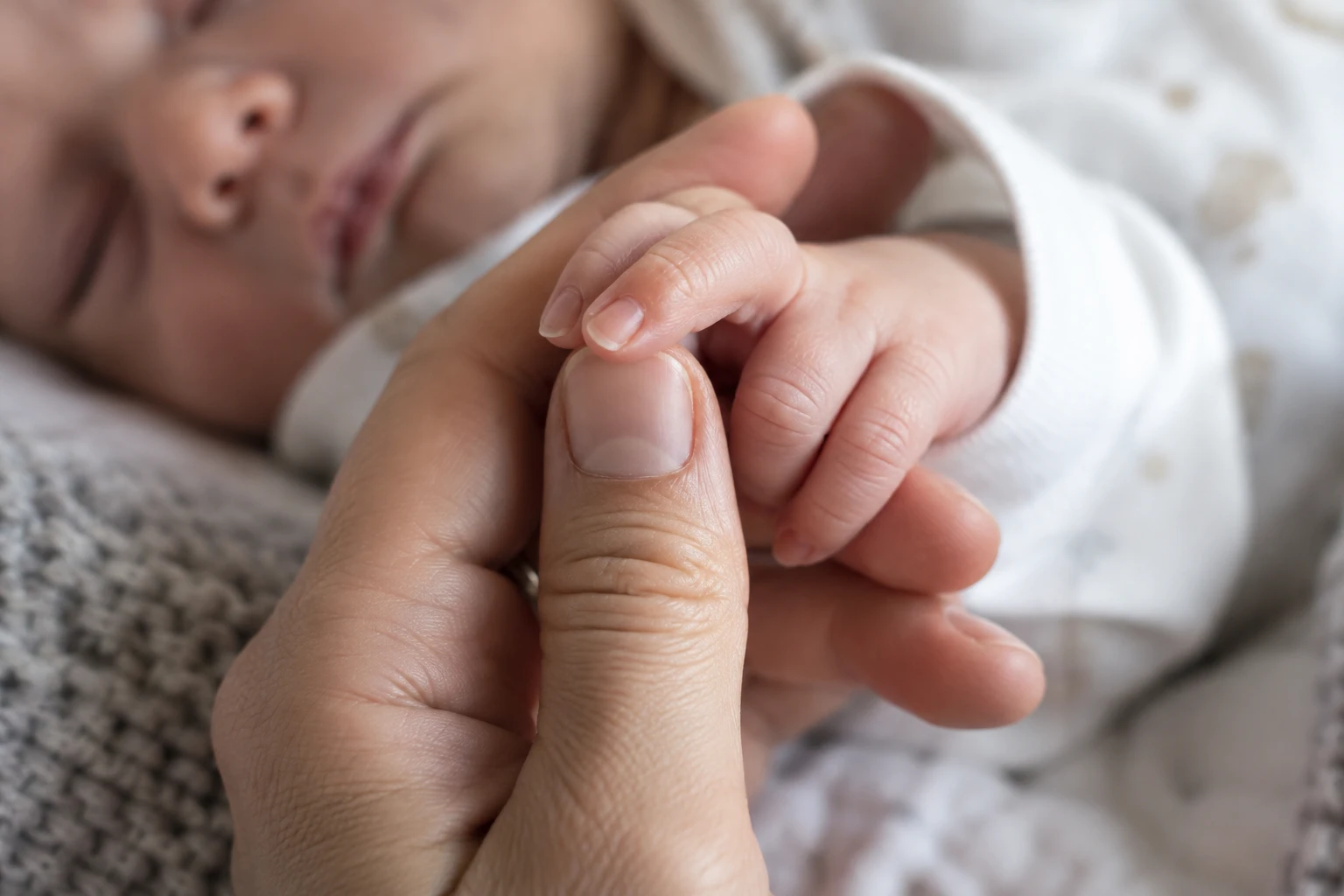
Support the finger and gently move its pad down and away from the nail so the skin is clear of the cutting edge. S2
Keep the cut on the nail rather than the fingertip skin, because clipping the skin causes pain and bleeding. S2 S4
After trimming, use an emery board to smooth any sharp or uneven nail edges. S2
The important visual detail is the gap between the part you plan to shorten and the skin underneath. Our photographs illustrate preparation and hand position; they are not a live assessment of your baby’s fingers. If you cannot tell those parts apart, that is a specific question to bring to a nurse or pediatrician: “Can you show me where the nail edge ends on this finger?” That question is more useful than asking whether you are generally good or bad at nail care.
When the baby moves or the plan changes
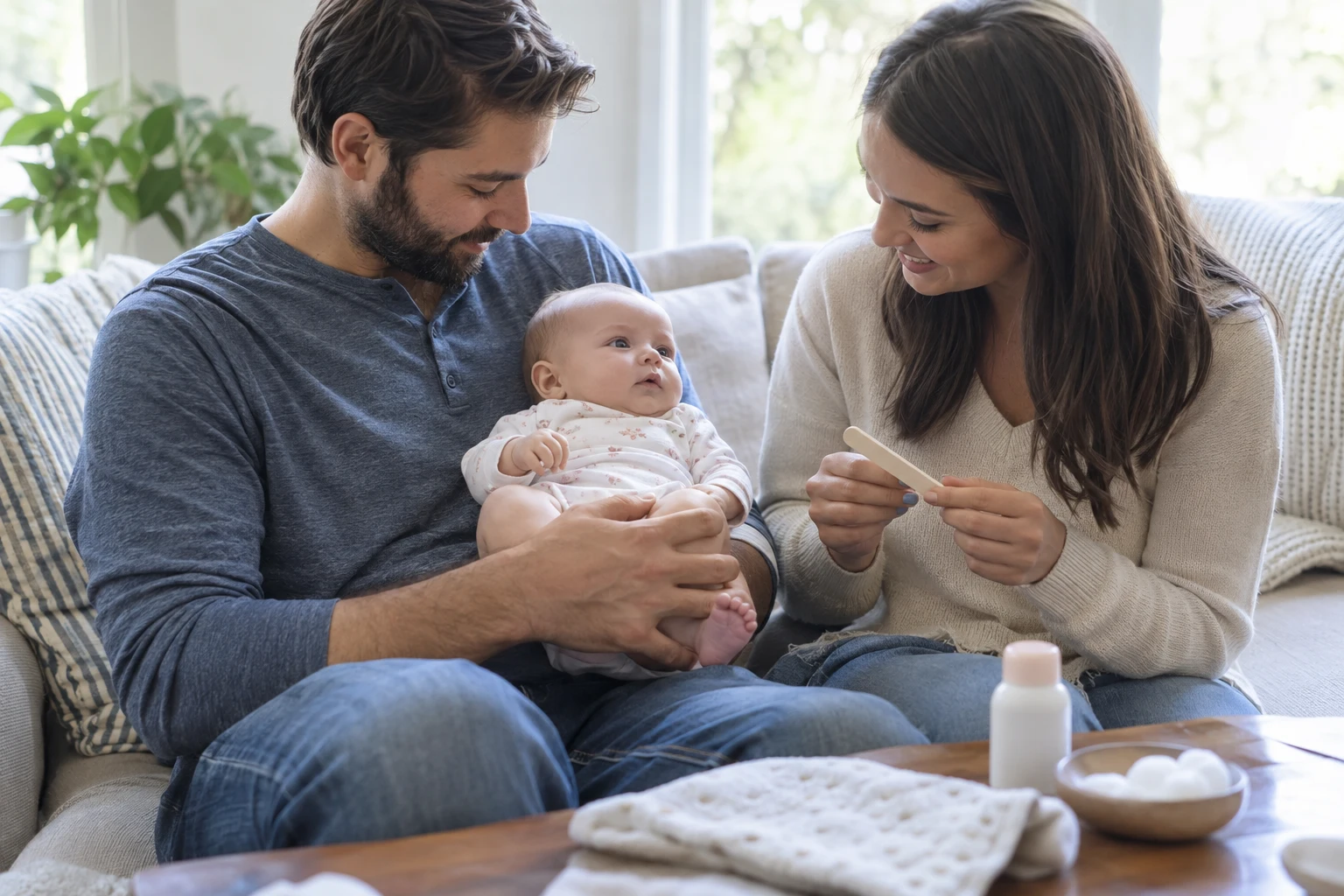
If the baby is no longer calm, pause and return to nail care when the baby is relaxed again. S3 S5
Calm talking or singing may help during nail care, and a toy or activity can provide a distraction for an older baby. S3
A stopped session still gives you information. You might have learned that the room was awkward, that another pair of hands would be welcome, or that the time you chose did not work today. Write down the practical obstacle in ordinary language. “Could not see the thumb clearly” is an actionable note; “baby impossible” is not. You can make a new plan without judging either yourself or your baby.
Toenails need their own look
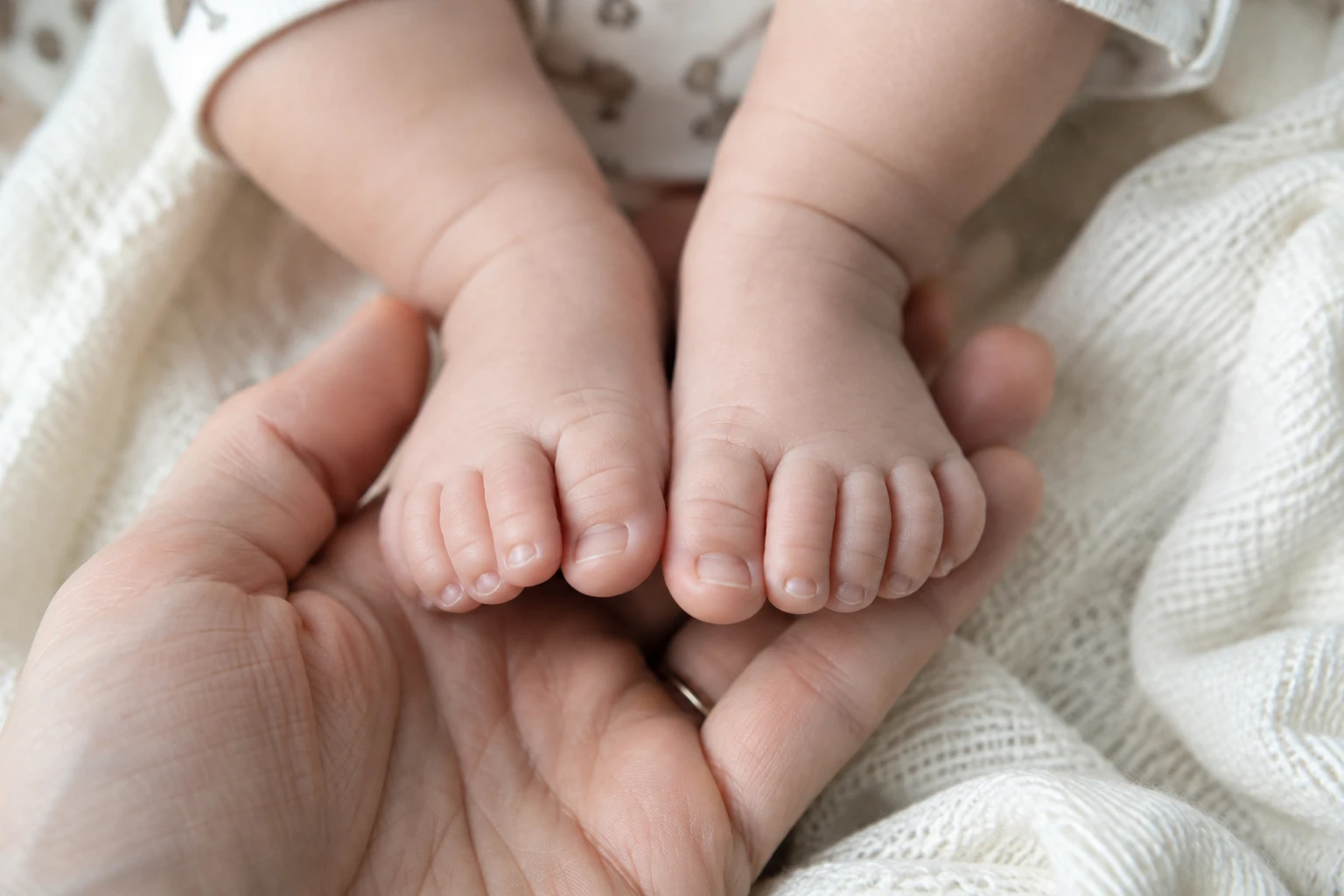
Cut toenails straight across rather than cutting down into the corners. S3
Soft baby toenails can look tucked into the surrounding skin, but redness, inflammation or hard skin beside the nail needs attention. S4
Describe what you see instead of deciding from a photograph that a toenail is ingrown. Which toe is involved? Is the change beside the nail or on the nail itself? When did you first notice it? These observations belong in a conversation about the baby in front of you. They do not require you to name a condition, and they do not turn a grooming session into treatment.
Shortcuts to avoid
Do not bite or peel off the baby’s nails, because these methods can lead to infection. S2 S4
Do not use adult-sized clippers on a newborn’s tiny nails, because they can catch the fingertip or toe instead. S1
If mittens are used for scratches, also allow the baby plenty of time with uncovered hands to explore. S2
A family suggestion can be well meant without being the method you choose. You can keep the discussion short: “We are using a baby file and following the same steps each time.” There is no need to settle every story about what an older relative used to do. A shared plan is easier to describe when it names the actual tool and the person responsible for the next check.
If you nick the skin
For a small nail-trimming cut, gently press a sterile gauze pad against the skin to stop the bleeding. S10
Wash and dry your hands before handling a cut or graze. S6
Once bleeding has stopped, rinse a small superficial wound with clean tap or bottled water and clean the surrounding skin with soap and water. S6
Avoid bandages on a baby’s finger because of the choking risk. S10
If you suspect that the skin beside your baby’s nail is infected, or you are unsure, take your baby to a doctor. S3
The infant-specific dressing advice matters here. In this guide the baby-specific instruction is used for that situation. If a clinician examines an injury and gives an individual dressing plan, ask them to show you exactly how to follow it. Do not try to reconcile different instructions by guessing at a smaller version of an adult bandage.
When to get medical help
Seek emergency help if bleeding cannot be stopped or the wound is deep or severe. S6
Under UK NHS guidance, seek urgent medical advice if a cut is swollen and red with worsening pain, or if pus is coming out of it. S6
Under UK NHS guidance, seek urgent medical advice for a baby younger than 3 months with a temperature of 38°C or higher or whom you think has a high temperature, and for a baby aged 3 to 6 months with a temperature of 39°C or higher or whom you think has a high temperature. S7
A baby with fever who is hard to wake or has difficulty breathing needs emergency help rather than waiting for a routine nail-care appointment. S7
These are escalation instructions, not a way to diagnose the cause at home. When calling, lead with the baby’s age and the current problem, then explain that nail care happened beforehand. That order keeps the conversation focused on what is happening now. The linked pages identify their own region rather than pretending every healthcare system works the same way.
In the UK, NHS urgent advice uses 111 and emergency advice uses 999; outside the UK, use the corresponding local services. S6 S7
A small record for the next caregiver
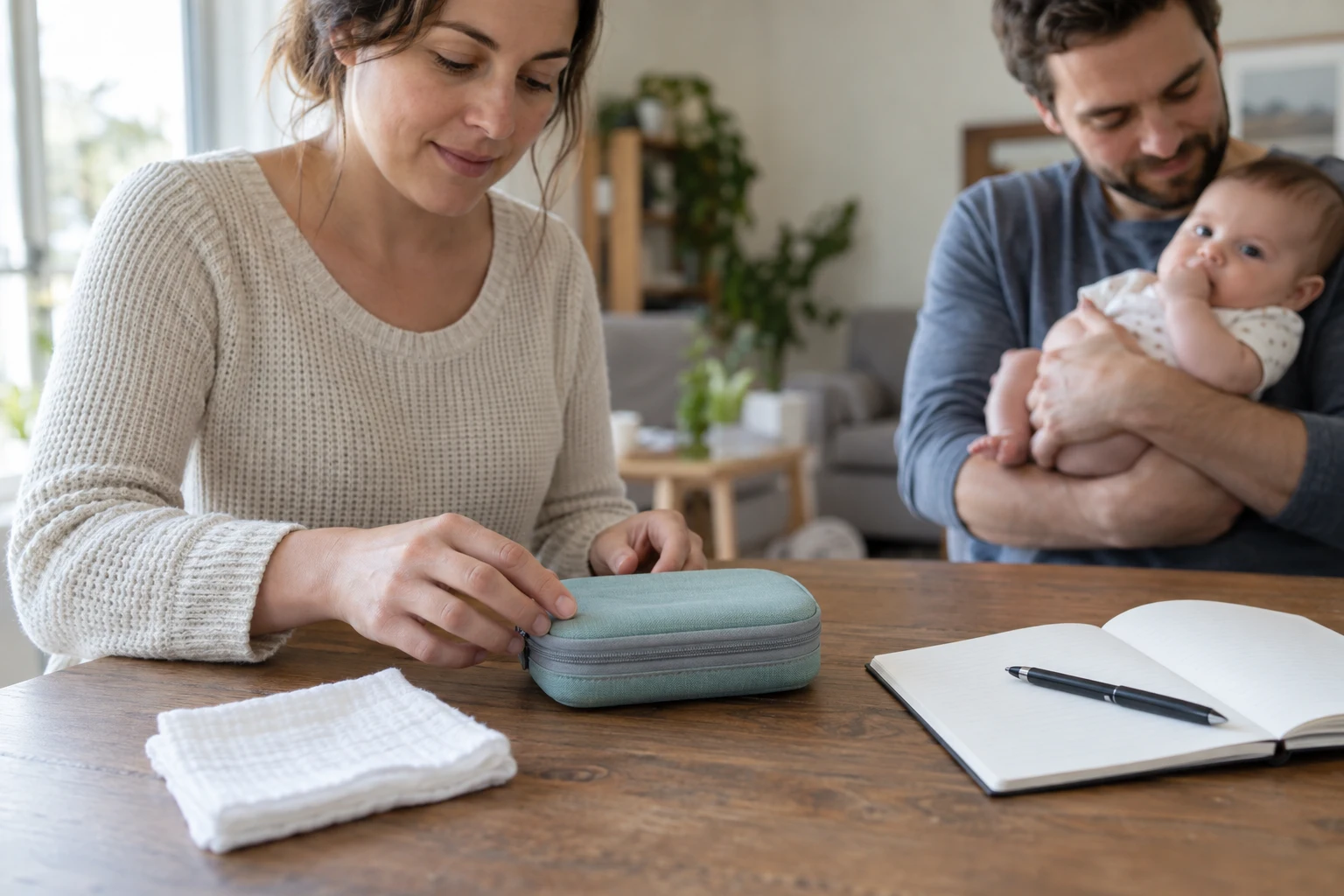
This is an optional household note, not a medical chart or a test of your parenting. A short entry can capture what happened without asking the next adult to reconstruct the whole afternoon. Use everyday descriptions and leave blank anything you did not observe. If you are taking the note to an appointment, it can also hold the questions you want answered, so the visit does not become a memory exercise.
Date / time:
Baby’s age:
Hand or foot and exact finger / toe:
What I noticed:
Tool used and what was done:
Any cut or bleeding, and whether it stopped:
Any redness, swelling, discharge or other change:
Temperature and measurement time, if taken:
Who was contacted and their instructions:
Question for the next caregiver or clinician:
For a shared household routine, the note can be as simple as “filed the rough edge on the right thumb; left foot still to check.” Keep observations separate from conclusions. “Red area beside the nail” describes something you saw; naming an infection asserts something different. You can also write “unsure” when that is the accurate answer. A clear uncertainty is more useful than a confident label copied from an online picture.
Two everyday ways to use the plan
Imagine that one caregiver notices a rough thumbnail during a clothing change. The practical question is not whether the whole nail-care routine is overdue. It is what was noticed, which thumb it was, and who will look at it next. An optional note could read: “Left thumbnail has an uneven edge; please check it when you next do nail care.” That is a handoff request, not a diagnosis or a demand for immediate cutting. The other caregiver can then use the preparation and timing steps above instead of guessing what the first person meant.
Now imagine that nail care stopped halfway through because you could not find a comfortable position. The next entry might say: “Right hand checked; left hand not started. Please show me a better way to hold the fingers.” This records what actually happened without calling the attempt a failure. At the next discussion, you can point to the hand-position photograph and describe the exact difficulty. If the advice you receive differs from this general guide, ask the clinician which part applies specifically to your baby and how they want you to proceed.
For an appointment, useful questions include “Which tool would you demonstrate?”, “Can you show the difference between nail and skin here?”, and “What change would make you want us to call again?” These are conversation prompts rather than a checklist that must all be answered at once. Choose the question that matches your uncertainty, and record the answer in the words the clinician uses. The purpose is to leave with a practical next step you understand.
Questions caregivers ask
Do I have to wait a month before the first trim?
A newborn who already has long nails may need nail care; the NHS does not set a one-month waiting rule. S5
Can I file instead of using clippers?
A nail file or emery board is an option for shortening and smoothing newborn nails. S1
Should the toenails follow the fingernail schedule?
Toenails grow more slowly than fingernails and generally need trimming less often. S4
What if a cut keeps bleeding?
If bleeding cannot be stopped, seek emergency help. S6
You can bring this guide to a routine conversation and point to the exact step that feels difficult. Perhaps choosing the tool is straightforward, but separating the fingertip skin is not. Perhaps nail care is comfortable but you want help interpreting a toe’s appearance. Asking about one concrete uncertainty makes the discussion more focused than asking for a general verdict on your entire routine.
Official sources
- S1: Nail care for newborns — MedlinePlus, U.S. National Library of Medicine; US; 2026-09-20
- S2: Nailing It: How to Trim Your Baby’s Fingernails — American Academy of Pediatrics; US; 2026-09-20
- S3: How to cut your baby's nails — Pregnancy, Birth and Baby — Healthdirect Australia, Australian Government funded; Australia; 2026-09-20
- S4: Nail Care: Fingers and Toes — American Academy of Pediatrics; US; 2026-09-20
- S5: Washing and bathing your baby — NHS; UK; 2026-09-20
- S6: Cuts and grazes — NHS; UK; 2026-09-20
- S7: High temperature (fever) in children — NHS; UK; 2026-09-20
- S8: Hygiene for infants — East of England Community Health and Care NHS Trust; UK; 2026-09-20
- S10: Caring For Your Baby’s Nails — Eastern Health / Newfoundland and Labrador Health Services; Canada; 2026-09-20
Parent education for caregivers of babies under one year; not a diagnosis, prescription or substitute for individual medical care. No clinician has reviewed this article. Photographs are AI-generated illustrations of care settings.