Baby Massage: Timing, Touch and Oils

For baby massage, choose a calm, awake moment, use gentle strokes and stop if your baby seems uncomfortable.
For parents and other adults caring for a newborn or young infant, the first decision is whether your baby welcomes touch right now. Start with that decision before choosing a sequence or buying an oil.
Massage can be a chance to bond and relax together.
SUMMARY
- Postpone massage if your baby is hungry, tired, unwell or has open skin wounds.
- Test an oil on a small area first and use only a little.
- You do not have to use every massage technique.
When can a newborn start?
Gentle, nurturing touch can begin from birth, with guidance from maternity or neonatal staff.
For a massage routine at home, one UK recommendation is to wait until 4–6 weeks after birth.
These recommendations describe different settings: early comforting touch and a planned home massage. For a family starting at home, the later timing offers a practical point to discuss with their baby’s clinician.
If your baby was born prematurely or is receiving medical care, ask their care team to show you suitable touch before starting a home routine.
Choose the moment and prepare
Choose a time when your baby is quiet, rested and alert, and you feel relaxed too.
Do not massage straight after a feed.

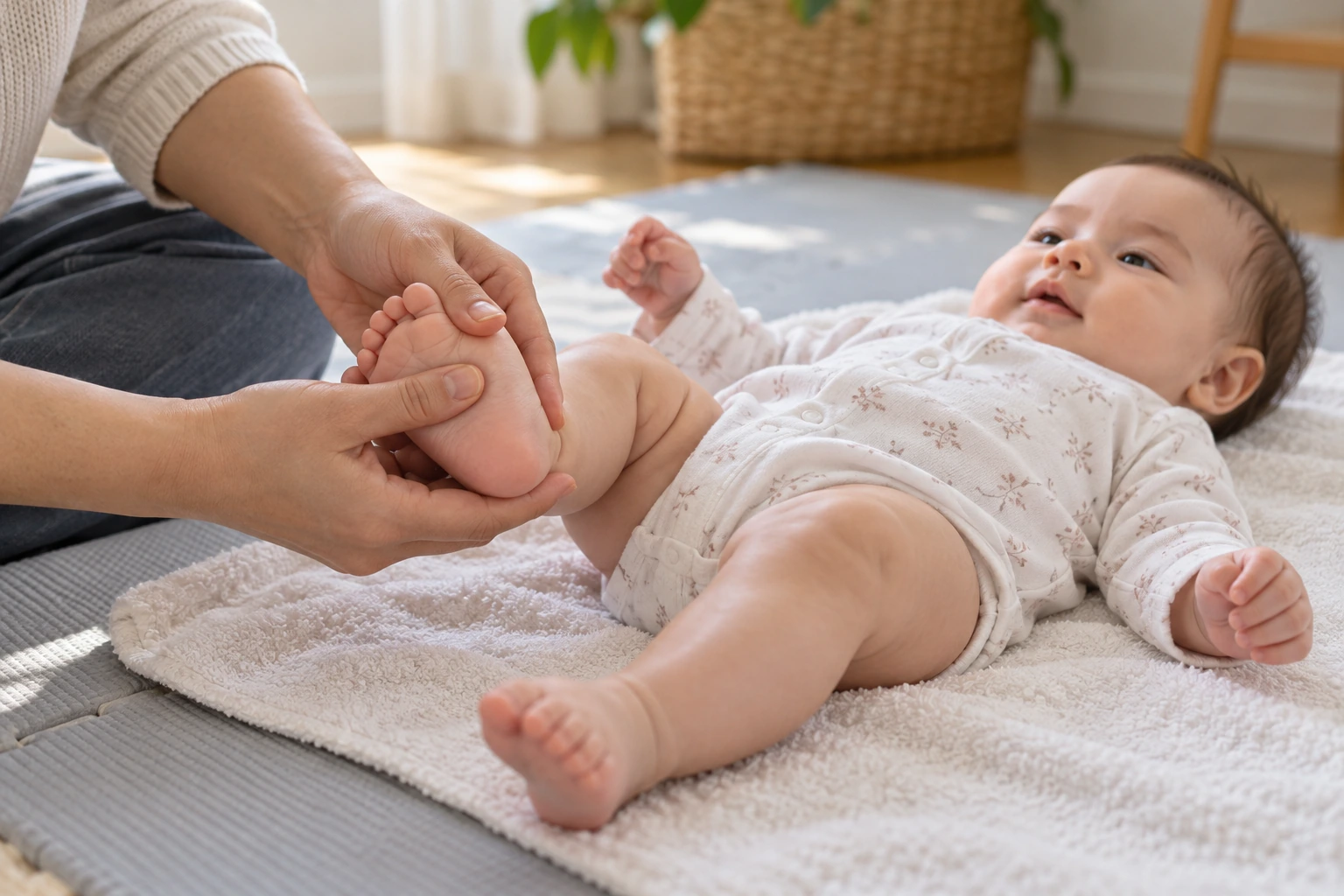
A floor-level setup keeps the routine simple: sit beside the mat and arrange the things you will use before undressing your baby.
Use a warm room and a changing mat covered with a soft towel.
Remove sharp or spiky jewellery.
Have a diaper, wipes and clothes within reach for afterwards.
Try one area before moving on
Choose an easy starting point such as a foot. Watch your baby’s face as you touch; move on only while the experience remains comfortable.
| Area | Gentle movement | Condition or precaution |
|---|---|---|
| Feet | For the feet, use slow, gentle strokes along the sole from heel to toes. | Stop if your baby seems uncomfortable. |
| Legs | For the legs, make smooth strokes from ankle toward thigh, avoiding the genital area. | Genital area excluded |
| Arms | For the arms, stroke gently from shoulders toward wrists. | Keep oil off your baby’s hands, and wipe their fingers clean if any gets on them. |
| Tummy | If your baby’s tummy feels soft and is not full, you can try gentle clockwise circles over it. | Avoid the belly-button area until the cord has completely healed. |

Choosing an oil or lotion
Oil advice differs among services. The UK, US and Australian options below reflect their respective guidance; for eczema or another skin condition, discuss the product with your baby’s clinician before choosing one.
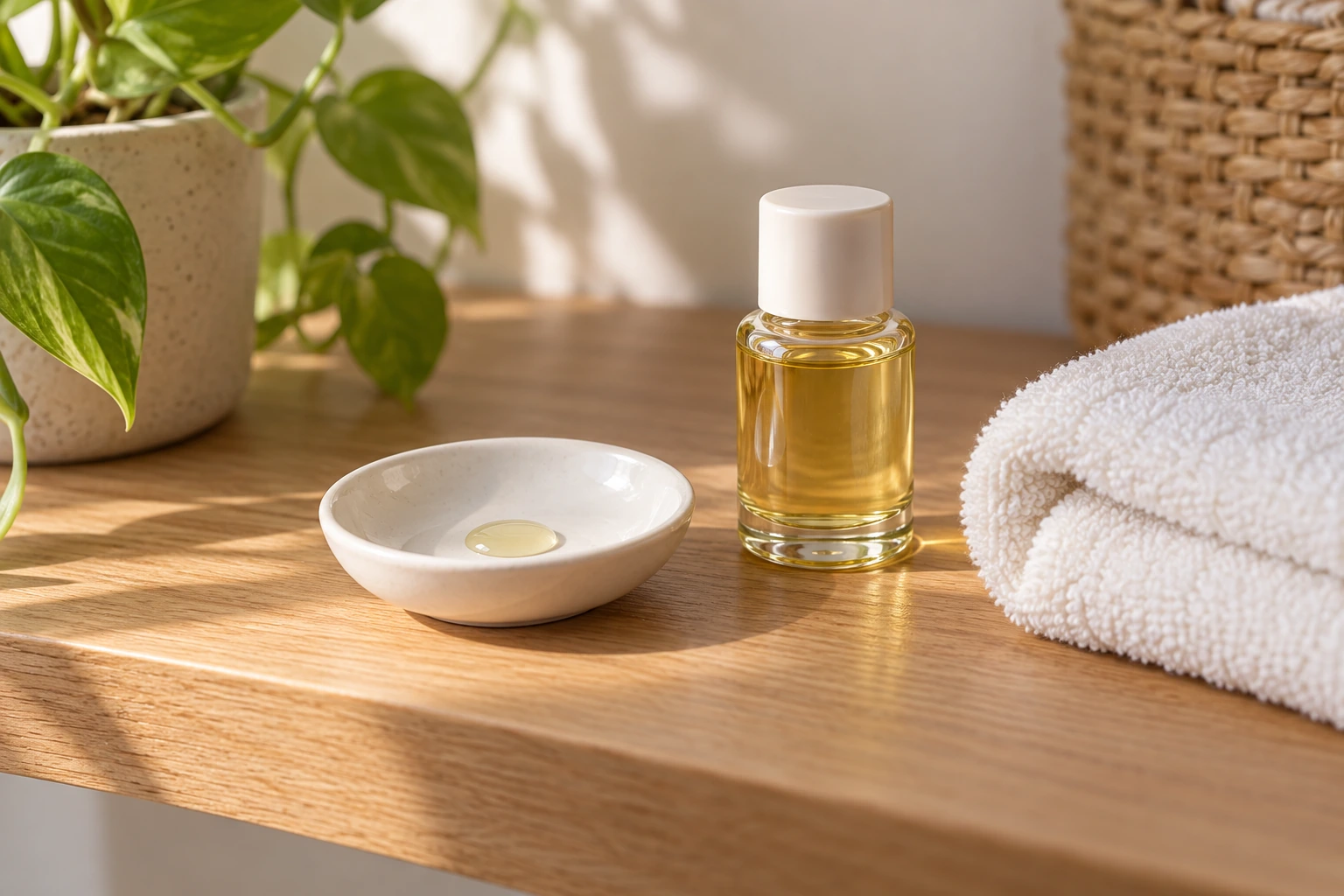
UK guidance lists sunflower, grapeseed and fractionated coconut oils as massage options.
US guidance suggests coconut oil and advises against adult massage oils, hand lotion and nut-based oils.
The UK guidance above advises against essential, olive, mustard, mineral, nut-based and wheatgerm oils for baby massage.
Australian guidance describes using either a cream or an oil for massage.
Warm a little oil in your hands before starting.
Too much oil makes your baby slippery to pick up.
If your baby has eczema or broken skin, avoid oils containing potential allergens such as peanut or sesame.
When to stop or get help
Discomfort is a reason to pause. Illness signs call for a different decision: getting help rather than continuing the session.
Some babies do not enjoy massage at first or are not ready for it yet.
If your baby becomes fussier, stop and try again another time.

Seek emergency help now if your baby has trouble breathing or is difficult to wake.
If your baby is under 3 months old and has a temperature of 38°C or higher, get immediate medical help.
If you are worried about your baby’s symptoms or unsure what to do, seek urgent medical advice now.
Questions during a massage
Does every session need a full-body routine?
You can choose the strokes your baby enjoys without completing a full-body routine or following a fixed order.
How long should I wait after feeding for a colic routine?
For colic-relief massage, one US recommendation is to wait at least 30 minutes after a feed and massage only when your baby is quiet and alert.
Sources
- Just One Norfolk / East of England Community Health and Care NHS Trust — Baby Massage
- NSW Health / Western Sydney Local Health District — Baby massage
- Derbyshire Community Health Services NHS Foundation Trust — Baby massage
- American Academy of Pediatrics / HealthyChildren.org — The Benefits of Baby Massage
- NHS — When to get urgent medical help for babies and children under 5