Support Baby Vision and Hearing
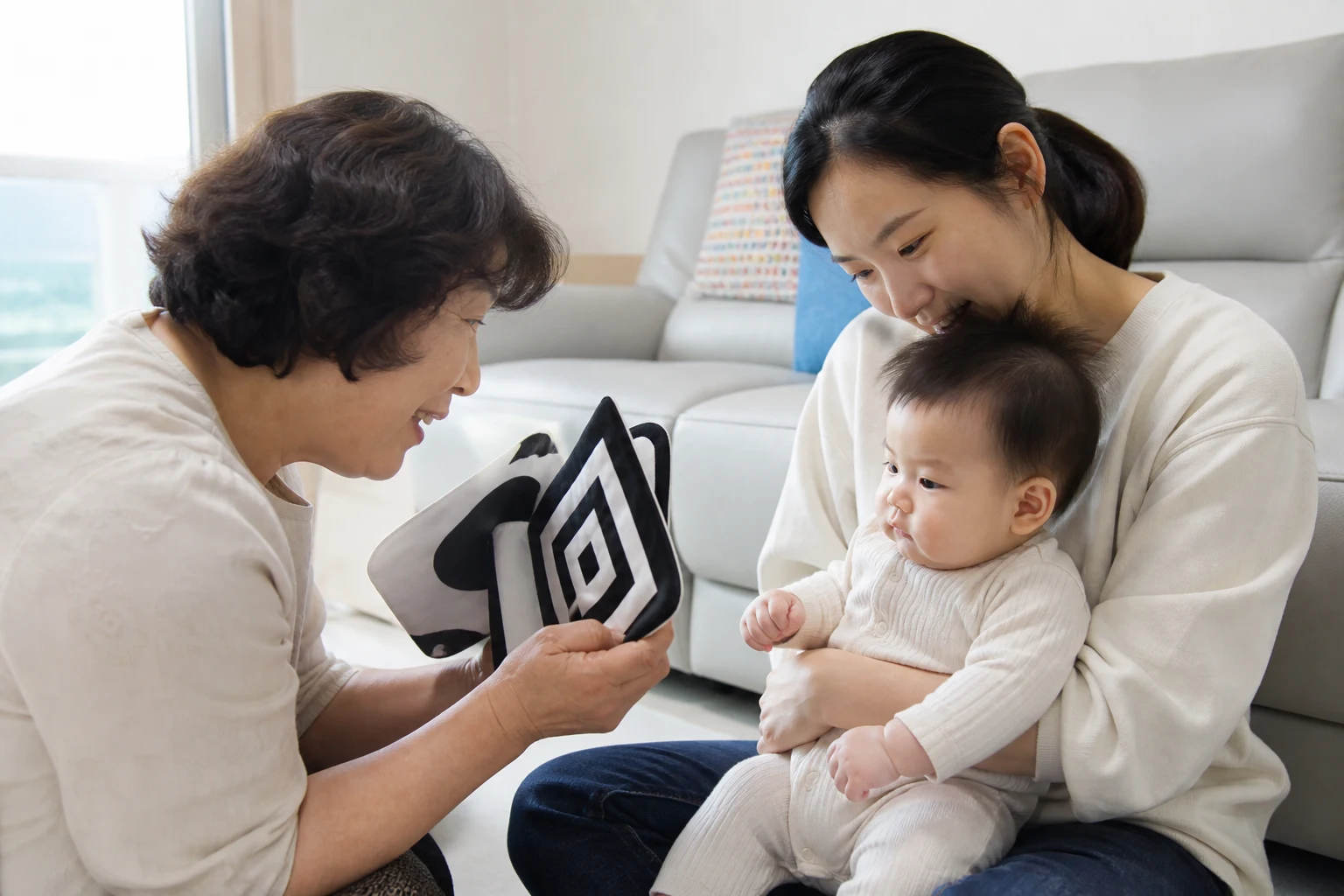
The most useful sensory play is ordinary human interaction. Hold the baby securely at a comfortable close distance, pause for looking, copy sounds, describe routines, sing softly, and share a simple book. Offer one safe object at a time and allow the baby to look away or rest. More intensity does not produce faster development.
Summary
Use normal conversational volume and protect babies from sustained loud sound. Do not place speakers, headphones, flashing toys, or bright lights close to the face or ears. Vary carrying and play direction so both sides receive natural opportunities, while following any clinical plan for a diagnosed condition. Keep toys out of the sleep space and use awake supervised play only. Routine eye and hearing checks remain necessary.
Use gentle everyday interaction
Hold the baby securely, talk at normal conversational volume, imitate sounds, sing softly, name routines, and share simple books. Pause so the baby can answer with a look, movement, or sound. Vary safe awake positions and the caregiver's side. Limit screens and avoid headphones, speakers close to the ear, flashing toys, and direct bright light. Stop when the baby looks away, fusses, squints, or becomes tired.

Observe patterns instead of testing
Choose several calm awake periods and record what happens naturally. Hunger, fatigue, illness, deep concentration, background noise, lighting, and distance can change one response. Do not clap near an ear, bang objects, shine a bright light into the eyes, or rapidly sweep a toy as a pass-fail test. A repeated pattern across days is more useful to a clinician than one dramatic attempt.
Confirm screening and follow-up
Find the written newborn hearing-screen result and ask whether each ear passed or needs another test. A screening result does not diagnose hearing loss. When follow-up is recommended, schedule pediatric audiology promptly and reschedule any missed appointment. NIDCD describes screening by 1 month, diagnostic follow-up ideally by 2 to 3 months after a non-pass, and early intervention after confirmed hearing loss. Do not wait for obvious speech delay.
Keep routine professional checks
Pediatric eye examinations and hearing surveillance can find concerns that families cannot see at home. A passed newborn hearing screen does not rule out hearing changes later, and some vision problems have no obvious warning sign. Share pregnancy, birth, prematurity, family history, infections, medicines, neonatal care, ear infections, eye appearance, developmental progress, and any risk factor. Ask whether formal ophthalmology, audiology, or early-intervention referral is appropriate.
Know when to seek assessment
Report absent or lost responses, strong one-sided responses, no tracking, persistent eye misalignment, white or gray pupil, rapid eye movements, drooping lid, persistent redness or discharge, constant tearing, marked light sensitivity, no response to sound, reduced babbling, or concern about communication. Bring the screening record and a short non-emergency video only when it can be captured without provoking symptoms.
Recognize urgent changes
Sudden loss of vision or hearing, chemical exposure to an eye, penetrating eye injury, severe eye pain, major head trauma, seizure, weakness, altered consciousness, breathing trouble, or a very ill appearance needs urgent or emergency help. For chemical exposure, follow local poison or emergency guidance immediately rather than waiting for an appointment. Do not rub the eye, remove an embedded object, insert ear tools, or delay care while performing more home tests.