Secure Furniture, Stairs & Windows
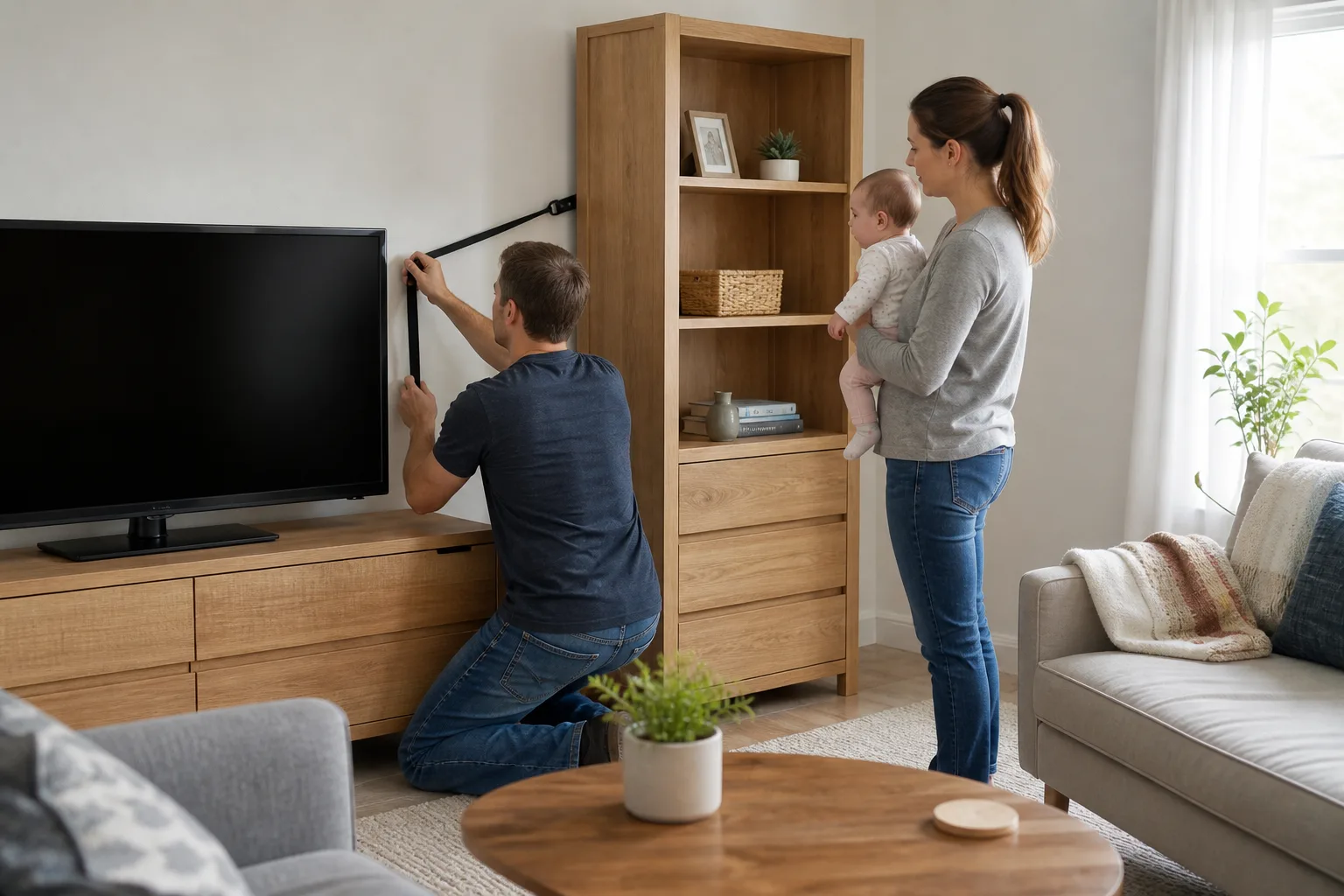
A barrier is useful only when it matches the hazard and is installed correctly. Anchor heavy objects to the building structure, use the correct gate for the stair location, and keep climbable furniture and cords away from windows.
SUMMARY
Use manufacturer-approved anti-tip hardware and fasteners suitable for the wall or floor; anchor dressers, bookcases, televisions, and ranges instead of trusting weight alone. At the top of stairs, use a gate designed for that location and screwed into secure structure, never a pet gate or pressure-only substitute. Window screens do not prevent falls. Use appropriate guards or stops, limit openings as local guidance requires, and keep at least one usable fire-escape window where required. Replace reachable window cords and keep cribs, beds, toys, and furniture away from windows.
Start before the next skill
Begin with approved anti-tip hardware. A baby may roll, pivot, crawl, climb, pull to stand, or reach farther before adults expect it. Finish high-consequence changes before independent mobility, then reassess at every new skill. Babyproofing is not a one-time purchase or a substitute for supervision. It is a repeating process: remove the hazard, block access when removal is impossible, install the correct device according to instructions, test it, and keep watching how the baby interacts with the room.
Audit from floor level
Use hardware-mounted stair-top gate. Get down along the baby's usual path and look under furniture, beside appliances, behind curtains, and inside every door or drawer the baby could reach. Pull gently on cords and objects to learn what can fall. Use a small-parts tester approved for the local market when appropriate rather than guessing from sight. Remove coins, batteries, magnets, caps, plastic bags, sharp objects, pet items, and loose hardware. Repeat the scan after visitors, repairs, deliveries, cleaning, or room rearrangement.
Prevent falls and entrapment
Install barriers that match the location. At the top of stairs, use a gate designed for stair-top use and attached securely to structural material; a pet gate or pressure-only substitute is not appropriate there. Window screens do not prevent falls. Use suitable guards or opening limiters, maintain the required fire-escape option, and keep beds, cribs, chairs, shelves, and toys away from windows and balconies. Check rail spacing, door pinch points, and gaps where a head or body could become trapped. Never rely on a closed-looking door without testing its latch.
Anchor furniture and appliances
Apply window guard not screen. Dressers, bookcases, televisions, and ranges can tip when a child opens drawers, climbs, or pulls upward. Use manufacturer-approved anti-tip hardware and fasteners compatible with the wall or floor. Secure each item independently when required, close drawers, and avoid placing attractive objects high enough to invite climbing. A heavy product can still tip. Test the installation after moving furniture and inspect straps, brackets, and fasteners over time. Keep the baby outside the work area until every tool and loose screw is removed.
Lock poisons and ingestion hazards
Store medicines, vitamins, cleaners, alcohol, cannabis products, nicotine, cosmetics, button batteries, magnets, and pesticides in original containers inside locked storage that the baby cannot reach. Child-resistant packaging is not childproof and does not replace a lock. Do not leave a dose, cleaning bucket, handbag, visitor's medicine, or spent battery on a counter. Secure battery compartments and dispose of batteries promptly according to local rules. Post local poison and emergency contacts where caregivers can find them without unlocking the phone or searching the internet.
Remove cords choking and suffocation risks
Choose cordless window coverings where young children live. Keep monitor, lamp, charger, appliance, and curtain cords out of reach and away from sleep and play spaces. Remove small objects, broken toy parts, loose balloons, plastic film, and bags. Check toys for age suitability and secure battery compartments. Do not tie a pacifier, toy, necklace, or cord around the baby's neck or attach long strings to clothing or the sleep area. Supervision matters because a newly mobile baby can reach behind furniture and into bags within seconds.
Control heat water and electrical risks
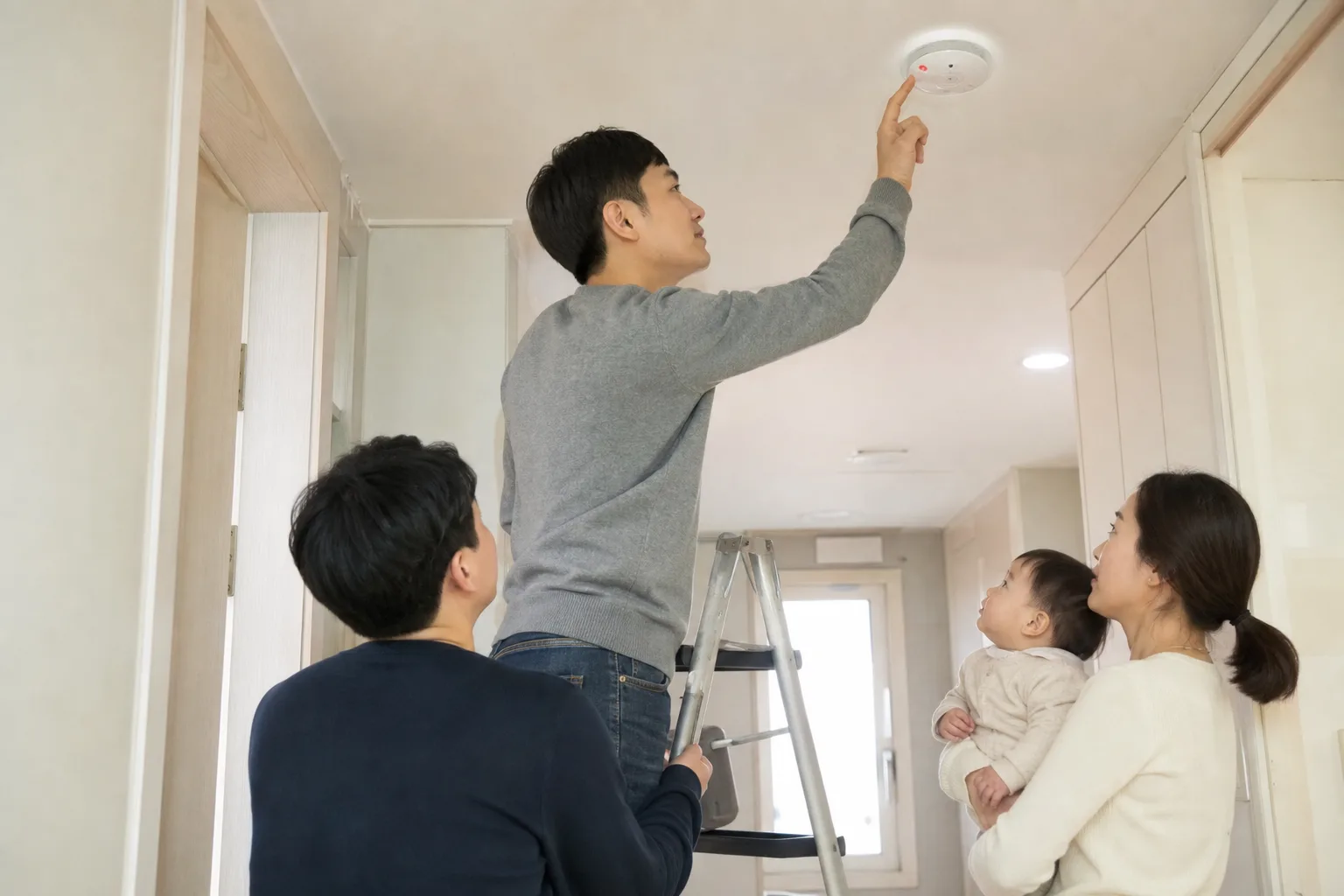
Block access to stoves, heaters, fireplaces, hot drinks, cords, and appliance controls. Turn pot handles away from edges and keep the baby out of the kitchen during active cooking. Store knives and matches in locked spaces. Empty tubs, buckets, and containers immediately and use continuous touch supervision around any water. Set up smoke and carbon-monoxide alarms as local codes and manufacturer instructions require and test them on schedule. Cover unused outlets with products that cannot become choking hazards, and replace damaged cords instead of hiding them.
Know what to do after an incident
Plan cordless clear window zone. Remove the baby from ongoing danger and check breathing, color, responsiveness, bleeding, burns, and behavior. Severe breathing trouble, blue or gray color, choking without effective sound or cough, seizure, inability to wake, uncontrolled bleeding, or a major burn needs emergency help. Suspected poisoning, magnet ingestion, or button-battery ingestion needs immediate expert contact; do not induce vomiting or give food or drink unless instructed. For this under-one audience, never give honey. Ask the pediatrician about persistent pain, vomiting, behavior change, or other concerns.
Frequently asked questions
Can one wet diaper rule out dehydration?
No. Use the full-day trend, feeding, and whole-body signs.
Should I give water to fix a low count?
Not to an infant under six months unless a clinician specifically directs it. Ask your pediatrician.
Can I wait until the log is complete?
No. Emergency signs or a clear contact threshold take priority over documentation.
Sources
- U.S. CPSC — Childproofing Your Home
- AAP / HealthyChildren — Home Safety for Young Children
- AAP / HealthyChildren — Safety for Your Child: 6 to 12 Months
- U.S. CPSC — Window Covering Cords
- National Capital Poison Center — Kids Will Swallow Anything
- National Capital Poison Center — Button Battery Guidance
This article provides general information and is not medical advice. Ask your pediatrician about reduced urine, feeding concerns, or guidance tailored to your baby.