Late Baby Nap Affects Bedtime

A late nap is not automatically a problem. It matters when the same timing repeatedly delays bedtime or reduces nighttime sleep while the baby otherwise appears ready for a different pattern.
SUMMARY
Track several ordinary days before changing the schedule. Note when the late nap starts and ends, how long bedtime takes, total 24-hour sleep, night waking, feeding, and next-day mood. If the pattern is consistent, adjust the late nap or earlier naps in small steps and preserve a calm bedtime routine. A very tired baby may still need a short bridge nap; forcing a long final wake period can worsen settling.
Start with several ordinary days
Begin with several-day bedtime pattern. Record nap start and end times, bedtime, morning wake time, and night waking across several typical days. Add feeding, wet diapers, mood, and alertness. A single skipped nap after travel, vaccination, teething, a noisy outing, or illness does not prove a transition. Look for the same change in the same part of the day. Keep the record brief enough to use while caring for the baby. If the baby looks ill, contact a clinician instead of waiting for a perfect data set.
Count total sleep, not naps alone
Review late nap timing and length. CDC lists 12–16 hours of total sleep per 24 hours, including naps, for infants 4–12 months. This is a broad population recommendation, not a target that every baby must reach on every day. Add daytime and nighttime sleep rather than judging nap number by itself. A baby may take fewer longer naps or more short naps. The useful question is whether the full-day pattern supports comfortable alertness, effective feeding, development, and a workable night, without a growing sleep deficit.
Read readiness as a cluster
Check small gradual adjustment. Readiness is more plausible when the same nap is repeatedly refused or delayed, a late nap repeatedly pushes bedtime, and the baby remains content and alert during the former nap period. Feeding, urine, behavior, and total sleep should remain reassuring. Crying from exhaustion, falling asleep during every feed, repeated accidental sleep, and worsening night waking can mean the change is too fast. No single yawn, clock time, or social-media wake window can replace the baby's repeated pattern.
Change one part at a time
Choose the nap with the clearest repeated change. Shift its timing or reduce its role gradually rather than moving every nap and bedtime on the same day. Preserve a reasonably consistent morning start and a calm pre-sleep routine. During a three-to-two transition, some days may still need a short third bridge nap. During schedule disruption, return to the pattern that protects sleep. Small changes reveal cause and effect; a complete overnight redesign makes it impossible to know whether fussiness came from too little sleep, illness, hunger, or the new schedule.
Protect safe sleep during every nap
Each nap follows the same safe-sleep rules as nighttime: place the baby on the back on a firm, flat, level infant sleep surface with a fitted sheet only. Keep pillows, blankets, bumpers, toys, wedges, and positioners out. A car seat, stroller, swing, sofa, or adult bed is not the regular home nap space. If sleep begins in a sitting device after travel, move the baby to the usual safe surface as soon as practical. Schedule experiments never justify an inclined or padded sleep product.
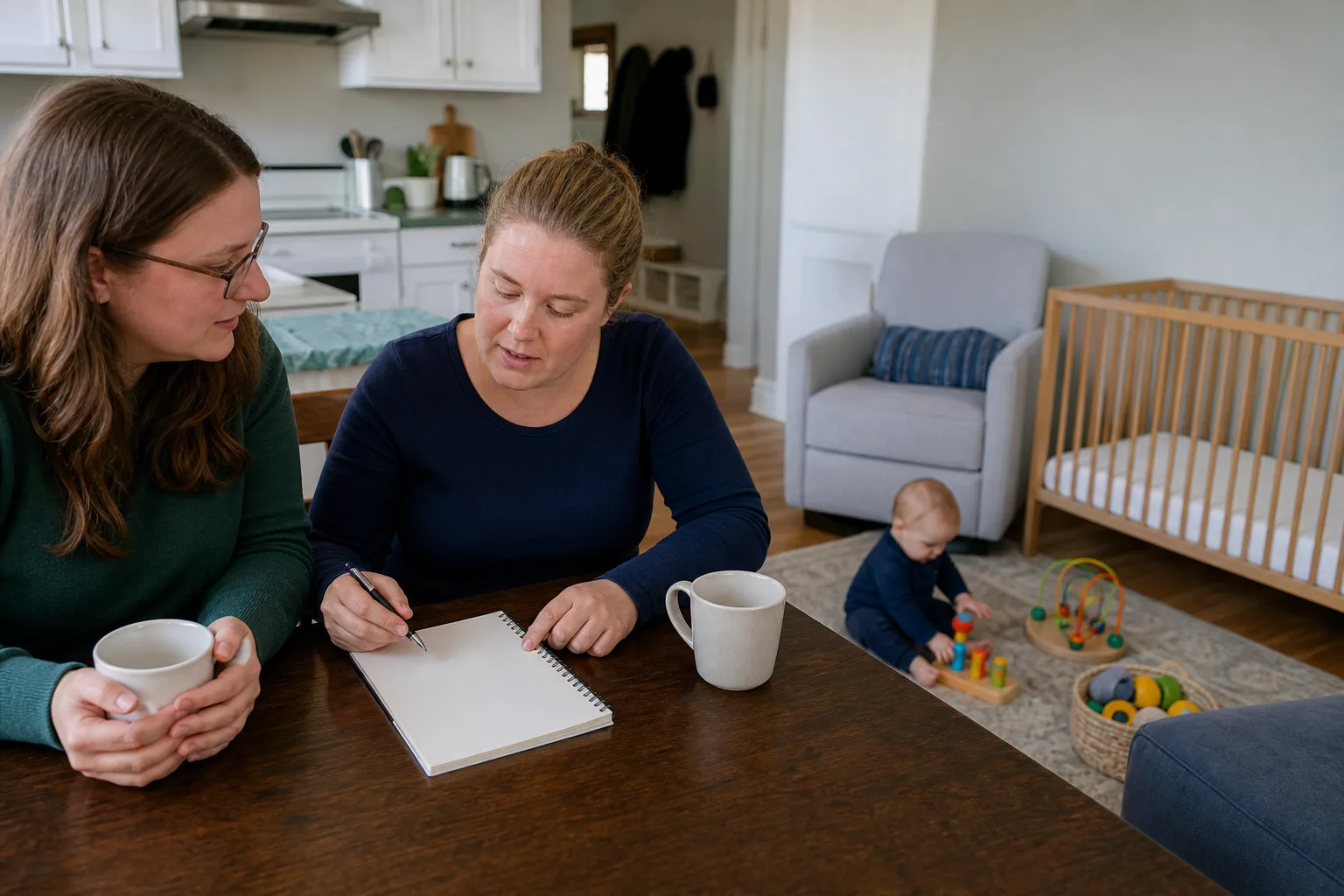
Respond to a late nap without a battle
A late nap is not automatically wrong. First ask whether it repeatedly delays bedtime, shortens nighttime sleep, or leaves the baby wide awake at the usual bedtime. If it does, review the preceding naps before simply forcing the baby to stay awake. A short bridge nap may be safer and calmer than an overtired final stretch. Adjust in small increments and watch several days. Protect a predictable wind-down, dim evening stimulation, and normal feeding. Do not wake abruptly from every nap merely to match a chart.
Pause when another factor is active
Discuss bridge nap when overtired when the pattern changes with illness, poor feeding, fewer wet diapers, fever, pain, repeated vomiting, breathing concerns, or developmental regression. Travel, a new caregiver, a room change, daylight shifts, and learning to roll or crawl can temporarily disturb sleep. During those periods, prioritize safety, comfort, feeding, and recovery. Resume schedule decisions when ordinary behavior returns. If the baby was premature or has a medical or feeding plan, use corrected age and clinician guidance rather than a generic nap-transition age.
Know urgent signs
A nap transition does not explain severe sleepiness or impaired responsiveness. Seek emergency help for difficulty waking, marked limpness, severe breathing trouble, blue or gray color, or a seizure. Contact the pediatrician promptly for a sudden major increase in sleep, feeding much less, fewer wet diapers, unusual snoring, suspected pauses in breathing, persistent distress, or loss of developmental skills. Do not wait to finish a sleep log, and do not assume a sick or dehydrated baby simply needs one fewer nap.
Frequently asked questions
Can one wet diaper rule out dehydration?
No. Use the full-day trend, feeding, and whole-body signs.
Should I give water to fix a low count?
Not to an infant under six months unless a clinician specifically directs it. Ask your pediatrician.
Can I wait until the log is complete?
No. Emergency signs or a clear contact threshold take priority over documentation.
Sources
This article provides general information and is not medical advice. Ask your pediatrician about reduced urine, feeding concerns, or guidance tailored to your baby.