Baby Sticky Eye and Tear Duct Guide

A watery or sticky eye is common in infancy, but the discharge color by itself does not name the cause. The eye white, eyelid, comfort, age, and pattern over time provide the context that makes the observation useful.
SUMMARY
Repeated watering or stickiness, often in one eye while the eye white remains clear and the lid is not swollen, can fit delayed tear drainage. Redness across the eye white, lid swelling, pain, light sensitivity, cloudiness, injury, or a baby who seems unwell changes the assessment. Clean hands and a fresh damp pad for each gentle wipe reduce contamination. Do not share towels or start leftover drops. A red, sticky eye in a newborn, rapid swelling, severe pain, or a cloudy cornea deserves prompt medical advice.
Evidence anchors: American Academy of Pediatrics / HealthyChildren — Tear Duct: Blocked · NHS — Conjunctivitis
How tears normally leave the eye
Tears spread across the eye with each blink, then normally drain through tiny openings near the inner eyelids into a channel that leads toward the nose. In some babies, the final part of that pathway is still narrow or covered by a thin membrane. Tears then pool, overflow onto the cheek, and leave mucus or crust at the lashes. Because drainage is the issue, the pattern may be much stronger in one eye and may recur after sleep, wind, or a mild cold.
This mechanical explanation is useful because it separates drainage from inflammation. A blocked or immature tear pathway does not automatically mean that the surface of the eye is infected. The stagnant tear film can collect debris and support bacterial growth, so discharge may appear, but the eye white can remain mostly clear and the eyelid can remain comfortable. The combination of findings, not one patch of yellow material, determines whether the pattern still resembles simple drainage delay.
Drainage delay and conjunctival inflammation
A drainage pattern often centers on watering, intermittent stickiness, and crust at the lashes, with little redness of the eye white between cleaning episodes. Conjunctivitis more often adds diffuse redness across the white surface and may affect both eyes, especially when linked with a respiratory illness or household spread. Allergy can cause itching and bilateral watering in older children, but itching is difficult to identify reliably in a young infant. These patterns overlap, so they guide a conversation rather than provide a home diagnosis.
The eyelid and the baby's behavior add important context. Increasing lid swelling, warmth, tenderness, a baby who resists light or opening the eye, or obvious pain moves the concern away from an uncomplicated drainage delay. A cloudy-looking cornea, different pupil appearance, injury, or chemical exposure also requires direct assessment. Photographs can record a change, but lighting can create false redness or conceal swelling. A clinician can examine the cornea and deeper structures in ways a phone image cannot.

What the white of the eye and eyelid reveal
Parents naturally focus on the discharge because it is easy to see, yet the surrounding anatomy is often more informative. Observe whether redness covers the eye white or is limited to mildly irritated skin where tears have run. Compare the eyelids for swelling and whether the baby opens both eyes similarly. Notice if the lashes are merely stuck after sleep or rapidly become coated again after cleaning. One or both eyes, constant or intermittent watering, and comfort during feeding and play all refine the description.
Age matters especially in the newborn period. A red, sticky eye in a baby under one month can have causes that require prompt treatment and should not be watched casually at home. The threshold also falls when the baby was exposed to an eye infection, has fever, feeds poorly, or seems generally unwell. The point is not to make parents memorize every diagnosis. It is to recognize which contextual changes make a familiar-looking sticky eye a different clinical problem.
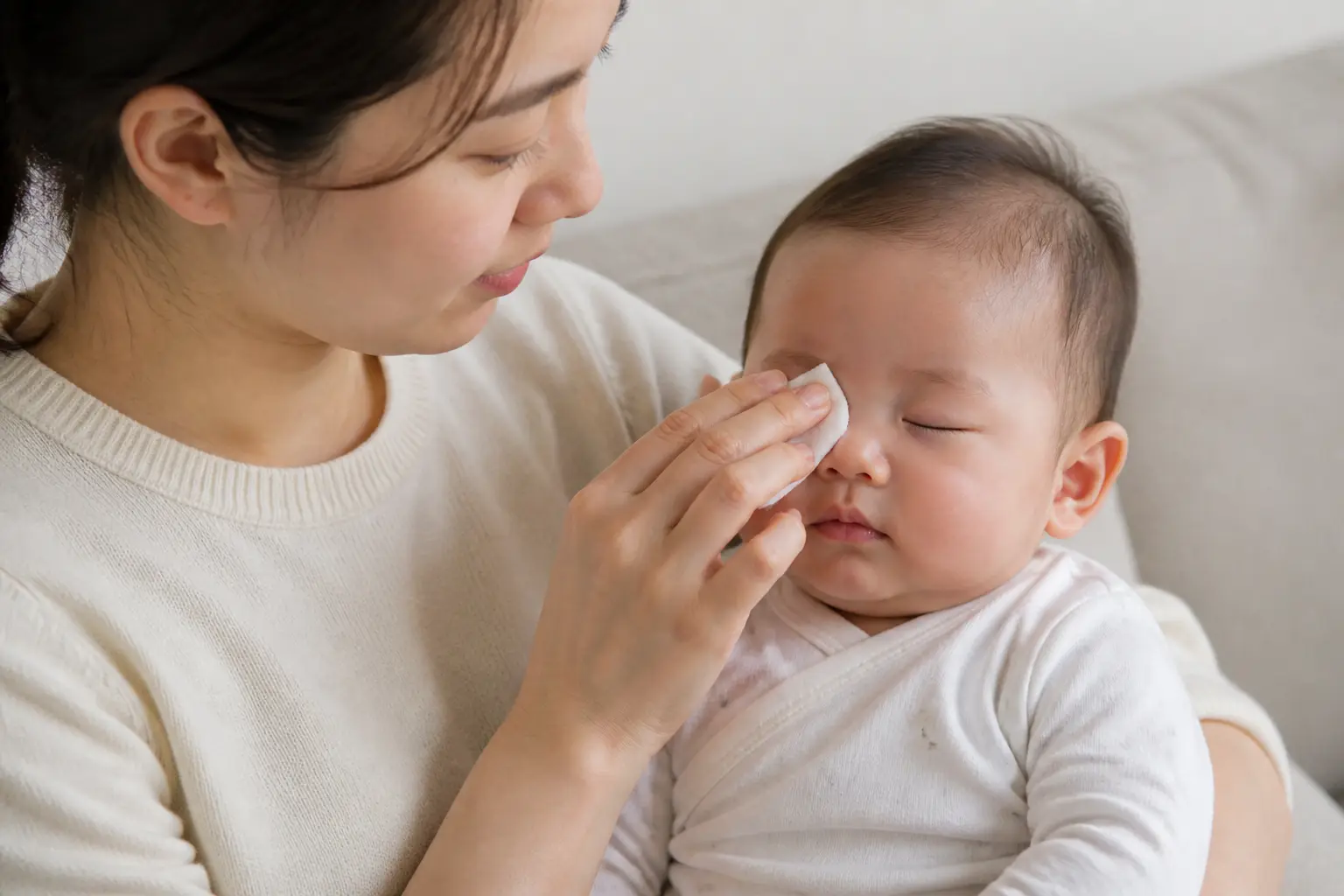
Gentle cleaning is comfort care, not a diagnosis
Cleaning removes material that glues the lashes and irritates the nearby skin; it does not prove or cure the underlying cause. Clean hands and a fresh pad reduce the chance of moving organisms from the adult's hands, the used material, or the other eye. Water that is safe for the purpose and a comfortably damp, not hot, pad can soften crust before it is lifted away. Rubbing the eyeball, scraping dry crust, or repeatedly passing the same pad back across the lid adds irritation.
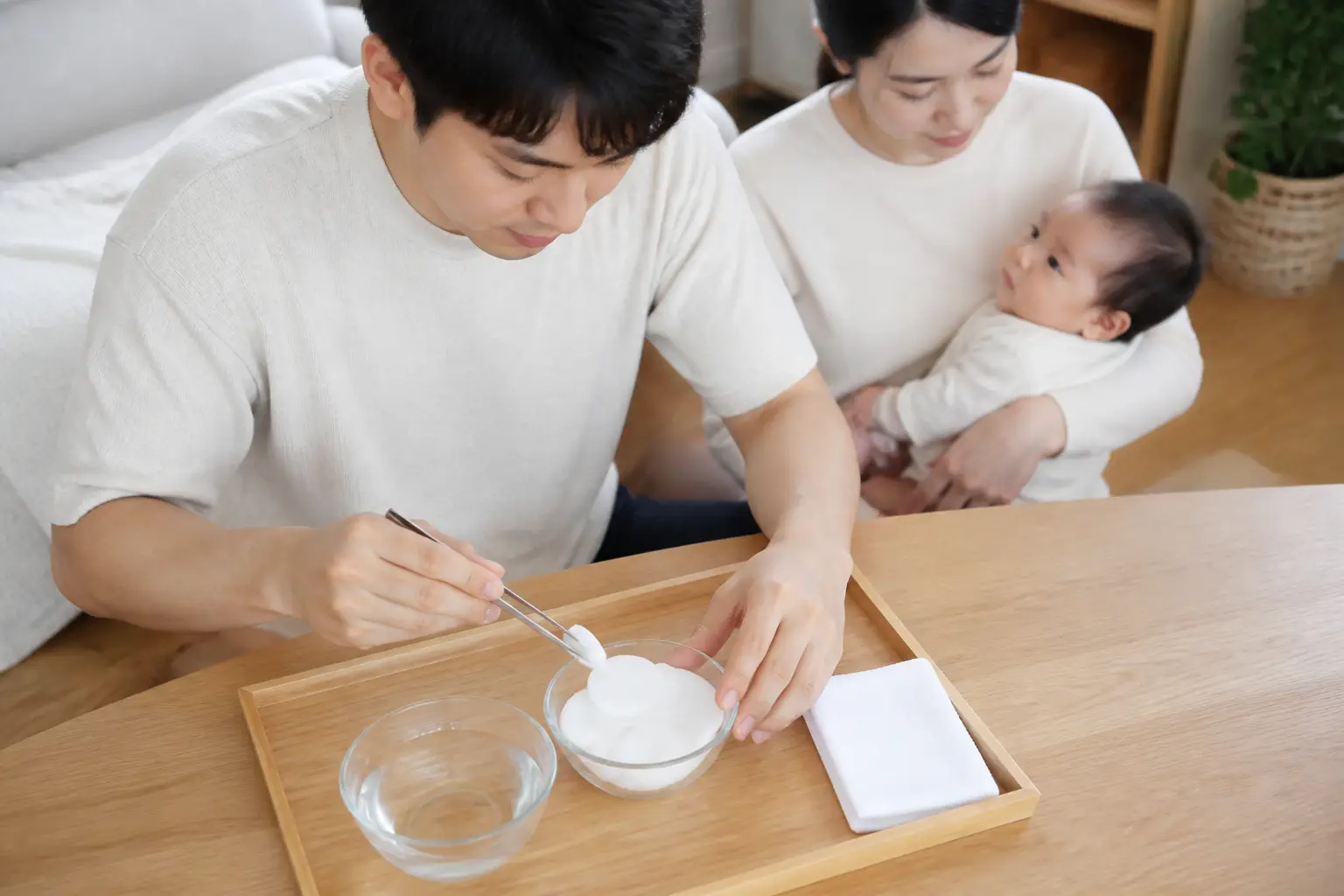
A simple clean-to-used workflow is easier to maintain than a complex ritual. Prepare enough pads before holding the baby, keep clean items separate, and place each used pad directly into a discard or laundry container. Towels and pillowcases should not be shared when infection is possible. Handwashing after care matters because the cause may not yet be clear. Cleaning frequency should follow comfort and soiling rather than an attempt to keep the eye continuously spotless.
Action steps
- Wash and dry your hands before and after eye care.
- Use a fresh, comfortably damp pad; soften crust before lifting it away.
- Make one gentle pass, discard the pad, and use a new one for the next pass or the other eye.
- Keep clean and used supplies separate and do not share face towels.
- Stop and seek advice if cleaning causes pain, bleeding, or reveals marked redness or swelling.
Massage guidance is not identical everywhere
Families often find tear-duct massage instructions online, but official resources and clinical practices do not describe every technique in exactly the same way. Pressure, direction, frequency, and even whether massage is recommended can depend on the baby's examination and the clinician's approach. Pressing the eyeball or improvising force near a swollen, painful area is not appropriate. This is a good example of an action that benefits from demonstration rather than a text-only guess.
If the pediatrician or eye clinician recommends massage, ask them to show the exact starting point, direction, pressure, frequency, and reasons to stop. Perform it only with clean hands and keep fingernails away from the eye surface. Massage should not delay assessment of redness, swelling, pain, or a baby who is unwell, and it is not a substitute for prescribed treatment when infection is diagnosed. If no individualized instruction has been given, gentle cleaning and observation remain the parts a family can safely describe and maintain.
When infection precautions become relevant
A drainage problem itself is not something another family member catches, but a baby can also have infectious conjunctivitis or respiratory illness at the same time. Diffuse redness, discharge returning quickly, both eyes becoming involved, or similar symptoms in household members makes hygiene more important while medical advice is sought. Handwashing before and after care, separate towels, and avoiding contact between used materials and shared surfaces reduce spread without requiring the whole home to become sterile.
Do not use another person's drops, leftover antibiotic drops, breast milk, herbal preparations, or contact-lens products in the baby's eye. Different eye products have different purposes, concentrations, preservatives, and contamination risks. A clinician may decide that prescribed treatment is needed after examining the baby, but discharge color alone cannot select a medicine. If drops are prescribed, clarify which eye, how many drops, how often, how long, storage, and what change should prompt review.
A useful record goes beyond a close-up photo
A close-up can show discharge or redness, but it can also exaggerate color and hide the baby's general condition. Pair any photo with the date and time, which eye is affected, whether the eye white is red, whether the lid is swollen, how quickly discharge returns after cleaning, and whether the baby seems comfortable. Note fever, respiratory symptoms, feeding, and exposure to another person with red eyes. This turns an image into a timeline rather than an isolated visual impression.
Use similar lighting and distance if photographs are repeated, and never force the eyelids open for the camera. A short daily comparison is usually more useful than dozens of images taken in minutes. Record what was actually done, including cleaning, any clinician-directed massage, and prescribed drops, so another caregiver does not repeat or miss care. The record supports a conversation; it cannot rule out corneal disease, measure vision, or replace an examination.

The usual course and the role of follow-up
Many congenital tear-drainage obstructions improve as the pathway develops during the first year, which is why observation and comfort care are common when the eye itself looks healthy. Improvement may be gradual: fewer episodes, less constant watering, or longer intervals between cleaning can all be meaningful. A cold may temporarily make watering worse because swelling near the nose affects drainage. That fluctuation does not erase the need to review any new redness, swelling, pain, or general illness.
Persistence still deserves planned follow-up. Different services use somewhat different timing for referral or a procedure, often considering symptoms, infections, age, and local practice. If watering and discharge continue toward or beyond the first birthday, repeatedly infect the surrounding tissues, or interfere with comfort, ask the pediatrician or eye service how they monitor and when they consider referral. A planned review prevents families from choosing between two extremes: assuming it must resolve or seeking an invasive answer immediately.
When medical review should move sooner
Prompt review is appropriate for a newborn with a red, sticky eye, increasing redness of the eye white, marked eyelid swelling, tenderness, fever, poor feeding, or a baby who appears unwell. Eye pain, strong light sensitivity, inability to open the eye, a cloudy cornea, an unusual pupil, injury, or chemical exposure also requires timely direct assessment. These features matter because conditions affecting the cornea or tissues around the eye cannot be evaluated safely from discharge color alone.
Rapidly spreading swelling around the eye, severe pain, reduced responsiveness, breathing difficulty, or a serious chemical injury may require emergency care according to local services. Do not delay urgent help to finish cleaning or take a better photograph. If the baby is stable enough for a call, state the age, affected eye, onset, redness, swelling, comfort, fever, feeding, recent illness or exposure, and all products used. Ask your pediatrician for an individualized threshold when the baby is premature or medically vulnerable.
Action steps
- Seek prompt medical advice for a red, sticky eye in a newborn or increasing redness, swelling, pain, fever, or poor feeding.
- Seek urgent help for a cloudy cornea, serious injury or chemical exposure, rapidly spreading swelling, severe pain, or reduced responsiveness.
- Do not delay care for another cleaning attempt or photograph.
- Report age, side, onset, redness, swelling, comfort, fever, feeding, exposure, and every product used.

How to interpret a calmer eye
A calmer eye is one that stays comfortable and open, with a clear cornea, little or no redness of the white, less lid swelling, and longer intervals before watering or crust returns. Discharge may vary from morning to evening, so improvement is a trend rather than one clean photograph immediately after wiping. The baby should also remain well overall, feeding and waking normally. General illness can change the significance of an otherwise mild eye finding.
Continue ordinary face care without repeatedly manipulating the eye. If symptoms recur during colds but settle afterward, include that pattern at the next routine visit. If they become more frequent, switch sides, involve both eyes with redness, or require increasingly frequent cleaning, arrange review. The aim is not to label every episode at home. It is to preserve comfort and hygiene, recognize changes that alter risk, and give the clinician a clear account when examination becomes useful.
Frequently asked questions
Does yellow discharge always mean infection?
No. Discharge can collect when tears do not drain well. Redness of the eye white, swelling, pain, age, general illness, and examination provide the needed context.
Should I clean from the inner corner outward?
Use the direction demonstrated by your local clinician or service. The universal principles are clean hands, a fresh pad for every pass and eye, softening crust first, and never rubbing the eyeball.
Can I use leftover eye drops?
No. The bottle may be contaminated, expired, intended for another condition, or contain an unsuitable medicine. Use only a product prescribed or recommended for this baby now.
Should I massage the tear duct?
Ask the clinician who examined your baby. Techniques and recommendations vary; if advised, request a demonstration of position, pressure, direction, frequency, and stop signs.
When does a persistent blocked duct need follow-up?
Plan review if symptoms persist toward or beyond the first birthday, become more troublesome, or infections recur. Referral and procedure timing depend on symptoms, age, and local practice.
Sources
This guide provides general education and does not replace diagnosis or an individualized plan from your pediatrician.